

Victorian Mahogany Extending Table
A victorian mahogany extending table brings robust timber and ingenious mechanical design together to anchor a nineteenth-century dining room.

Victorian Mahogany Extending Table
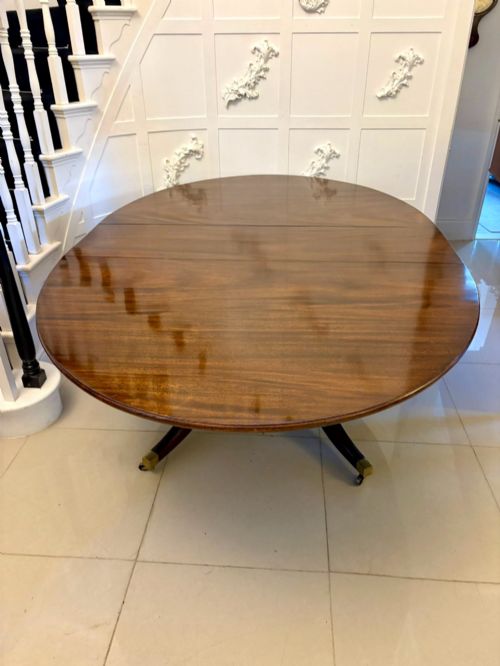
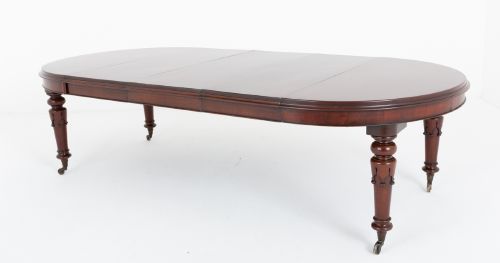
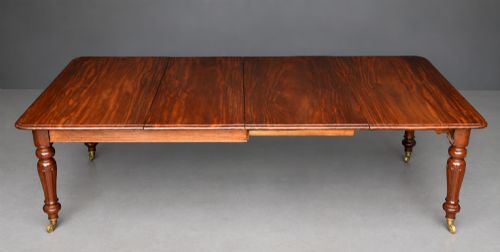
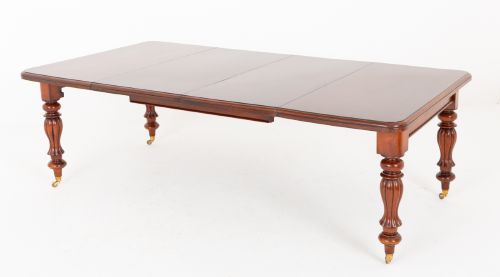
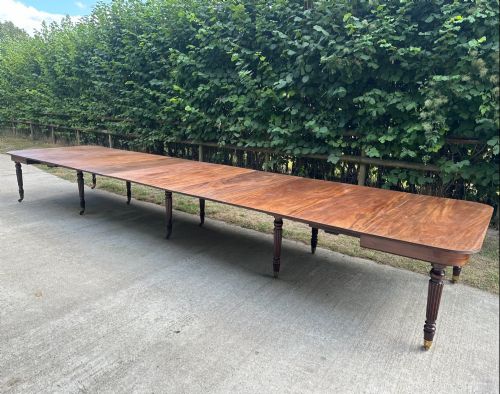
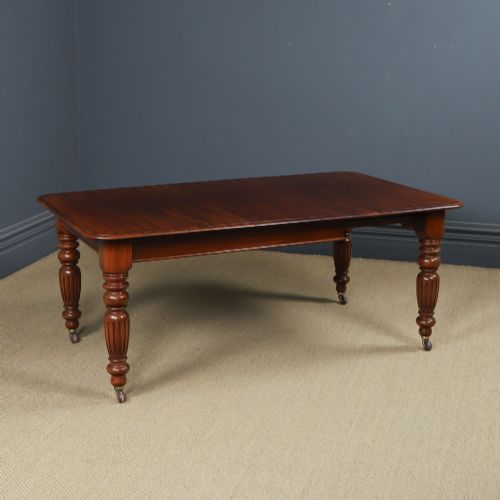
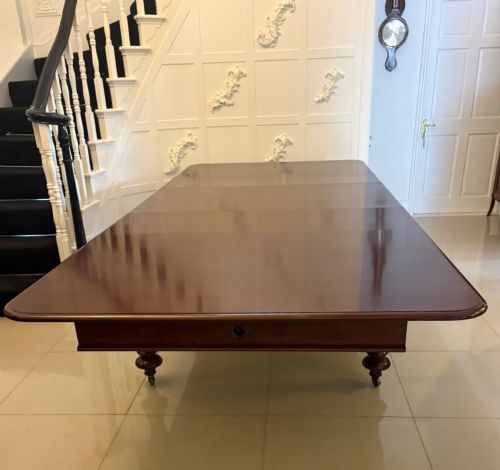
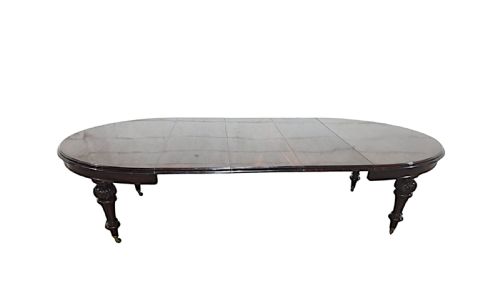
A victorian mahogany extending table is a heavy dining surface designed to expand with removable leaves or internal winding mechanisms to accommodate larger gatherings. These pieces originate primarily from the nineteenth century, spanning periods from William IV through mid-Victorian decades and into later revivals.
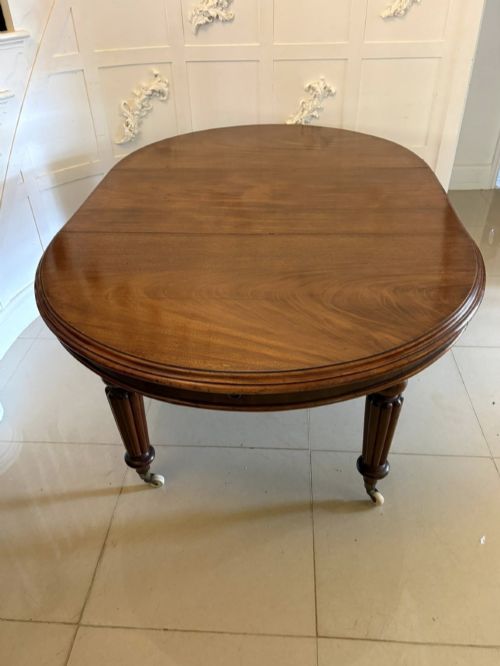
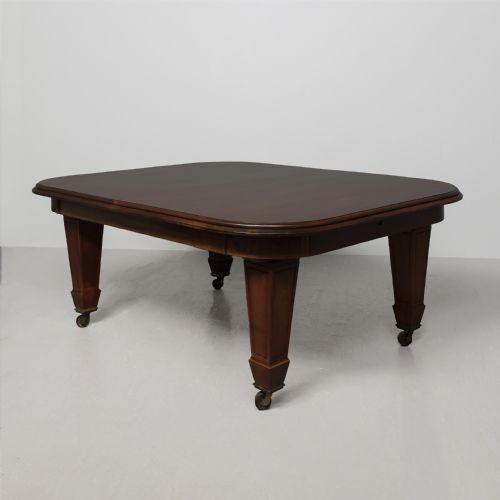
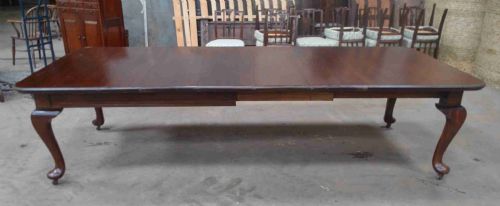
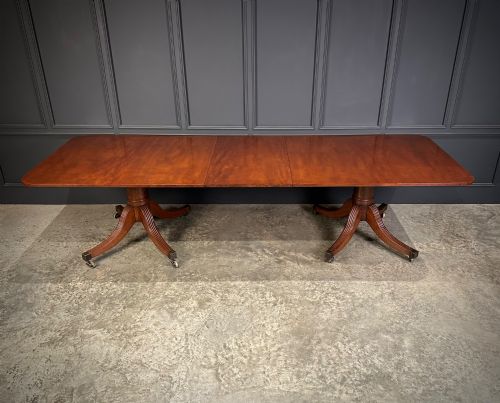
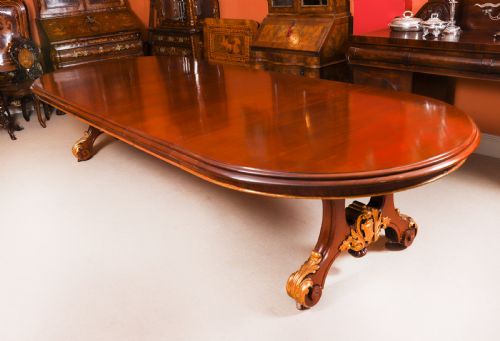
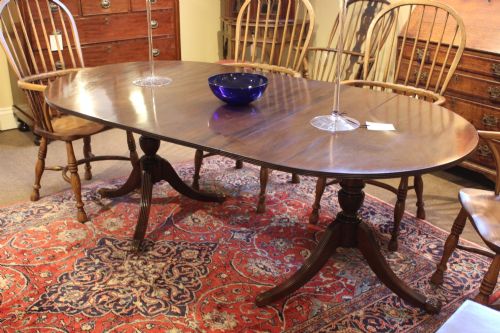
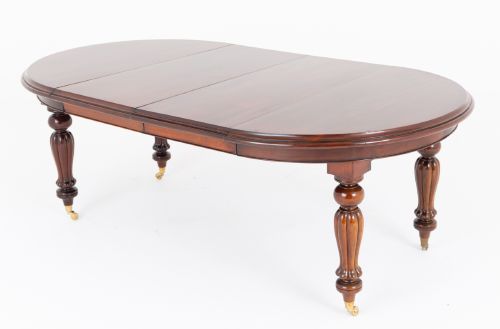
Buyers will most frequently encounter rectangular or oval formats resting on twin or triple pedestals, or upon solid corner legs fitted with castors. Many incorporate multiple extra leaves that allow the timber top to expand significantly from modest day-to-day proportions.
The aesthetic bridges formal Regency lineage with heavier Victorian proportions, often displaying rich grain figures or deep reddish-brown tones. These tables serve dining rooms ranging from compact six-seater layouts up to extensive twenty-seater versions.
Materials and Construction
Makers utilised solid mahogany and figured mahogany veneers over dense secondary timbers to build tops capable of supporting heavy loads. Flame mahogany appears frequently on premium surfaces, displaying dramatic natural grain patterns enhanced by careful polishing.
Mechanical ingenuity defined the period, incorporating metal wind-out screw mechanisms operated by a crank handle to part the frame smoothly. Brass components, including internal tracks and castor wheels on the legs, facilitated the movement of heavy multi-pillar bases.
Materials recorded across the inventory include solid mahogany, flame mahogany veneers, brass mechanisms, and ceramic castors.
Evaluating the Build
Quality rests heavily on the selection of timber, where regular straight-grained mahogany gives way at the higher end to richly figured or flame varieties with deep natural chatoyancy. The density and matching of the additional leaves relative to the main top also indicate the original maker's investment in materials.
The sophistication of the internal extending mechanism dictates operational success, ranging from simple pull-out drawer actions to complex brass wind-out gearboxes. Stability across multiple pedestals and the integration of substantial brass castors reveal the underlying standard of cabinet-making.
Gillows·Wylie and Lochead·F and J Smith·William and Gibton
The Victorian Mahogany Extending Table Glossary
- Flame mahogany
- A veneer cut from the branch junction of the tree, producing a distinctive flickering flame-like pattern. It was reserved for the most prominent surfaces of dining tables.
- Wind-out mechanism
- An internal metal screw system operated with a crank handle to separate the table halves. This allowed a single person to expand the frame evenly for extra leaves.
- D-end
- A table end shaped in the form of a semicircle resembling the capital letter D. These sections often detach or serve as console elements when the table is fully closed.
- Castor
- A small wheel fitted to the base of table legs to allow smooth movement across carpets and flooring. They are frequently cast in brass and mounted on ceramic or metal sockets.
- Pedestal
- A central column support resting on carved feet rather than standard vertical corner legs. Twin and triple pedestal configurations provided greater legroom for diners.
Victorian Mahogany Extending Table: Frequently Asked Questions
How do wind-out mechanisms operate?
A detachable metal crank handle fits into a discrete socket beneath the table rim. Turning the handle rotates internal metal screws that gently part the wooden halves.
This action creates the central gap required to drop in one or more matching timber leaves. The mechanism ensures the table frame opens evenly without straining the joints.
How many people can these tables seat?
Capacity depends entirely on the presence and number of removable leaves deployed within the frame. Smaller formats comfortably seat six guests for everyday dining.
Fully extended versions utilising multiple extra leaves can accommodate twelve to twenty people. The absence of corner legs on pedestal designs significantly improves legroom.
Can extra leaves be stored separately?
Removable leaves are constructed to lift entirely out of the table frame when the dining surface is reduced. They must be stored flat in a dry environment to prevent warping.
Because mahogany is sensitive to humidity shifts, storing leaves away from direct heat sources ensures they continue to align flush with the main top.