

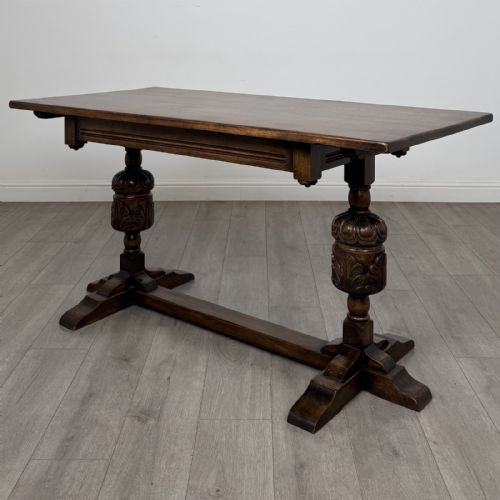
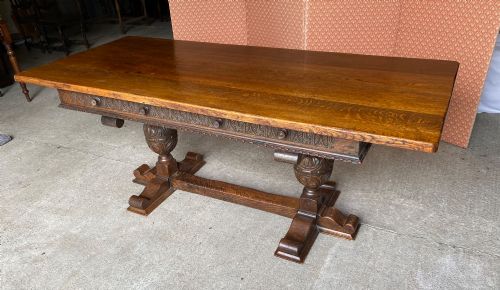
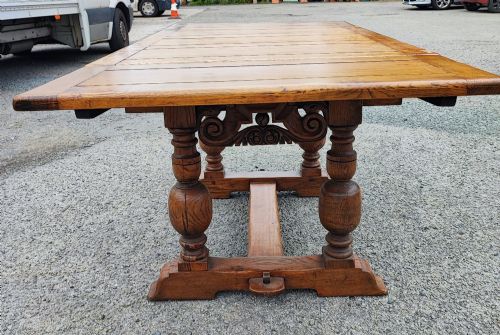
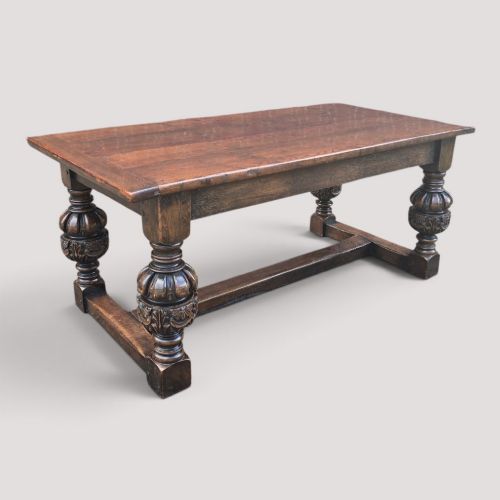


Bulbous Leg Table
A bulbous leg table brings heavy, turned timber presence into a room, offering substantial dining or serving surfaces shaped by centuries of revival design.
Bulbous Leg Table
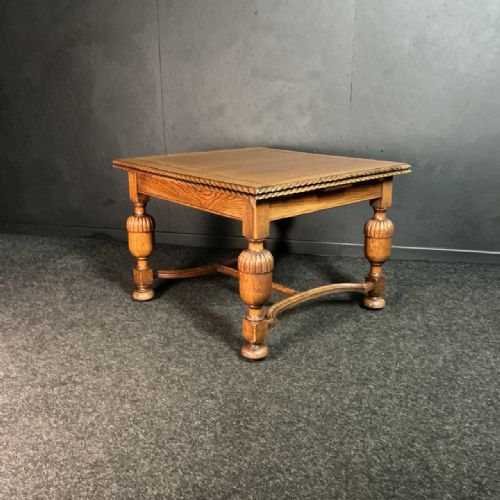
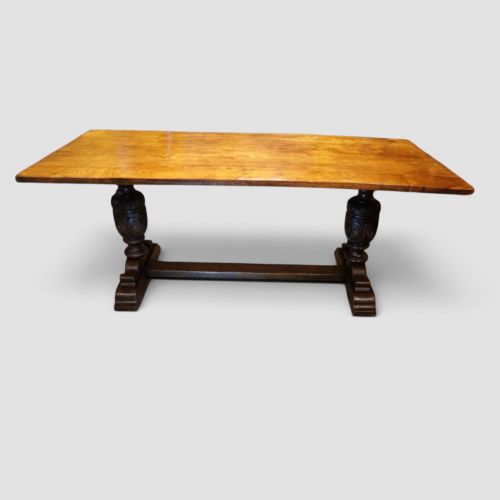
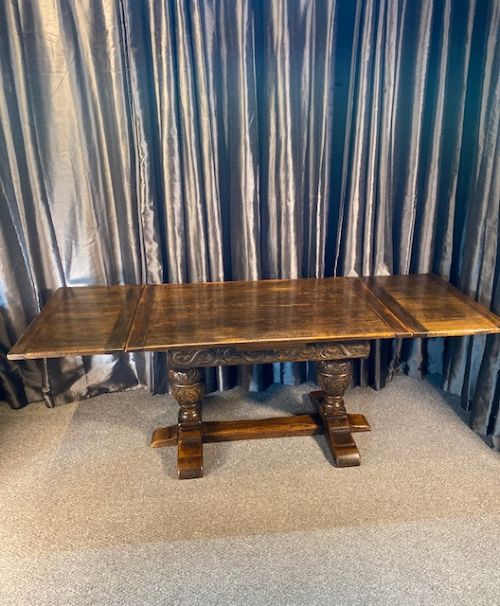
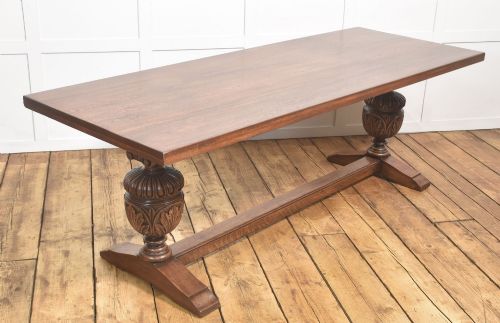
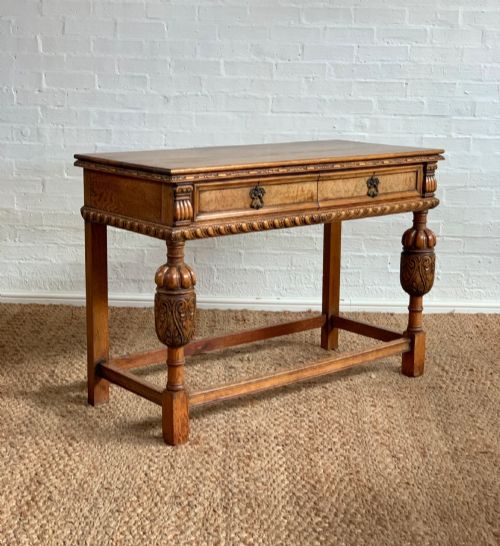
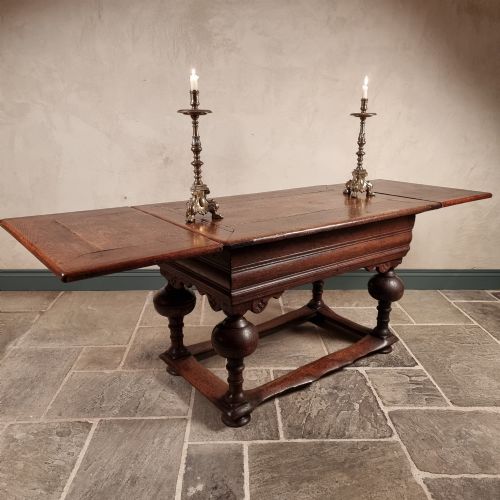
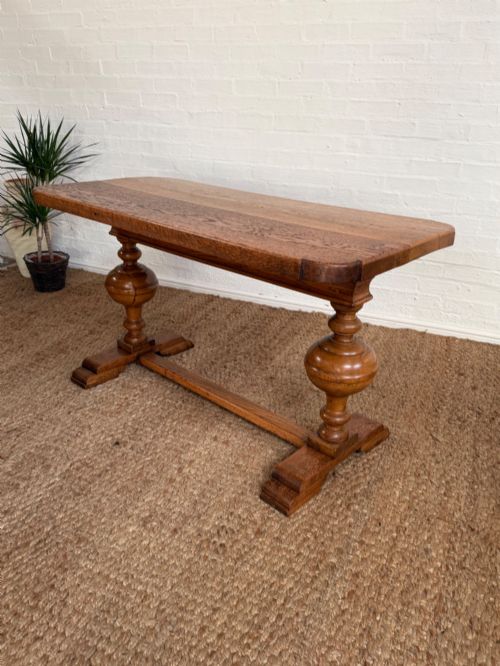
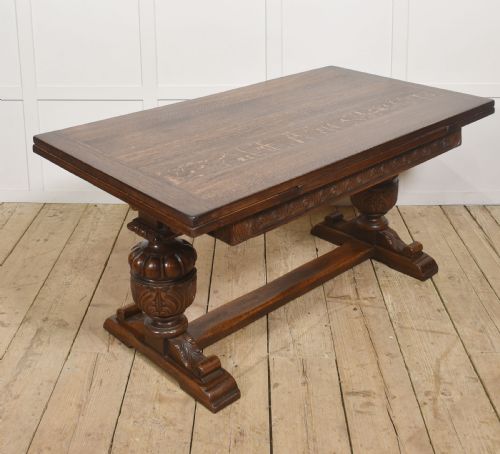
A bulbous leg table centres on solid timber construction, most commonly appearing as refectory dining tables, extending draw leaf designs, and smaller occasional or coffee tables. These pieces span from seventeenth century originals to twentieth century revivals, including Edwardian and interwar interpretations.
The form relies heavily on vernacular farmhouse and formal dining traditions, bringing robust proportions and carved underframes into domestic spaces. Buyers seeking this phrase typically encounter oak refectory tables with heavy turned supports, alongside occasional tables and serving trolleys.
Origins stretch across English styles such as Jacobean, Elizabethan, and Tudor revival, alongside continental Dutch influences. The overriding characteristic is the prominent, swelling turnery of the legs, which anchors the entire piece visually.
How they were made
Construction relies primarily on solid oak, frequently paired with walnut and augmented by wood inlay, brass fittings, and metal elements such as castors. Timber components are joined with traditional framing methods to support heavy tops and extending draw leaf mechanisms.
Carving and turning define the structural legs, shaping thick sections of wood into swelling profiles through manual lathe work and chisel detailing. Surfaces are finished to display the natural grain of the oak or walnut, sometimes incorporating contrasting wood inlay.
Bulbous Leg Table Retail Price Guide 2026
Typical asking prices for bulbous leg table among the pieces listed under this phrase on Sellingantiques today, from the lower quarter to the upper quarter. They describe what is for sale here now, not the wider market.
Some oak trolleys arrive equipped with lift-off trays and wheels, proving that even heavy revival furniture occasionally needed to be pushed around.
What varies in quality
Quality rests in the depth and crispness of the carved turnery on the legs, where deeply undercut profiles and balanced proportions distinguish finer workshops from simpler production. The choice of timber grain and the integrity of extending draw leaf mechanisms also separate standard examples from superior items.
Subtleties in historical execution, such as the integration of brass hardware and the weight of the solid timber top, determine the standing of each piece. Maker attribution, when present, adds documentary weight to the physical substance of the construction.
Beresford and Hicks London·Maple and Co
The Bulbous Leg Table Glossary
- Refectory table
- A long dining table historically used in monastic dining halls, adopted domestically in oak for heavy daily use. These forms dominate the heavier end of the selection.
- Draw leaf table
- An extending table with leaves stored beneath the main top that pull out to lengthen the surface. This mechanism allows the table to accommodate more diners without removing the central top.
- Jacobean Revival
- A nineteenth and twentieth century design movement copying the dark oak, heavy turning, and geometric panelling of the early seventeenth century. It accounts for many of the revival pieces found here.
- Bulbous leg
- A heavily turned, swelling table support characteristic of Elizabethan and seventeenth century furniture. This prominent swelling form defines the entire aesthetic of the underframe.
- Occasional table
- A small, movable table intended for specific, intermittent use rather than central dining. These lighter pieces often feature circular tops and refined turnery.
Bulbous Leg Table: Frequently Asked Questions
How do draw leaf extensions work?
Draw leaf mechanisms allow two end leaves to slide out from beneath the primary central top, rising smoothly into place to extend the surface length.
This system keeps the main surface stable while providing extra dining capacity when required for gatherings.
Where were these tables used?
These tables served primarily as communal dining surfaces in large halls and farmhouses, anchoring the room with their heavy timber proportions.
Smaller iterations, such as occasional tables and trolleys, functioned as movable serving pieces or side furniture in domestic interiors.
How can I tell an older table from a revival?
Differentiating period pieces from revivals involves examining tool marks, timber shrinkage patterns, and the specific construction joints used in the frame.
Many examples on the market date from nineteenth and twentieth century revival movements like Jacobean or Elizabethan styles rather than the seventeenth century.