


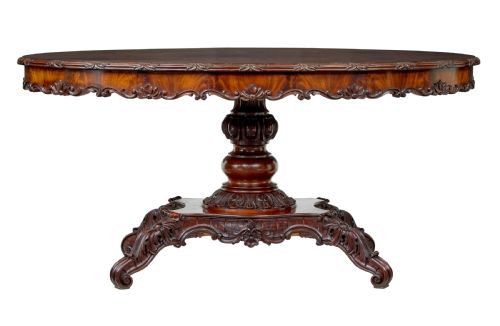


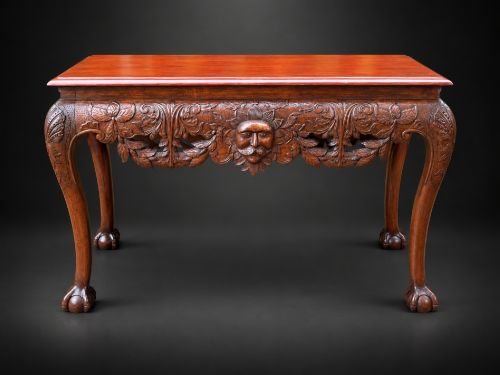


Carved Apron Dining Table
A carved apron dining table brings solid timber work and ornamental skirt detailing straight to the dining room.
Carved Apron Dining Table
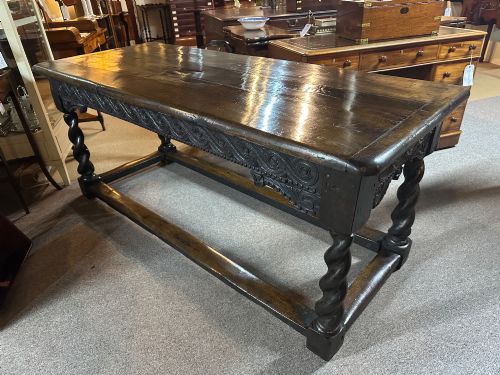
When you search for a carved apron dining table, you are looking at substantial timber boards raised on legs or trestles, featuring ornamented wooden skirts beneath the top surface. These dining tables appear across multiple historical periods, ranging from early seventeenth century refectory examples to later Edwardian and Victorian creations.
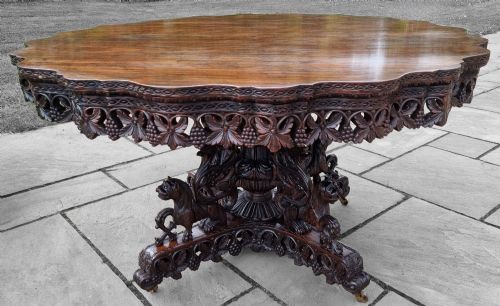
The pieces on this page span various regional interpretations and revival movements, including Jacobean Revival, Adam Revival, French Provincial, and Anglo-Indian designs. You will encounter dining tables, centre tables, serving tables, and dresser bases sharing this distinctive under-top ornamentation.
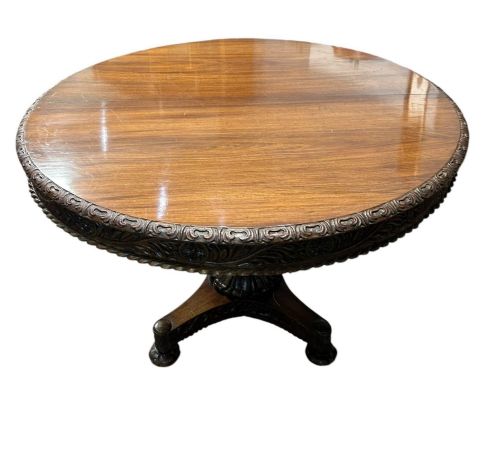
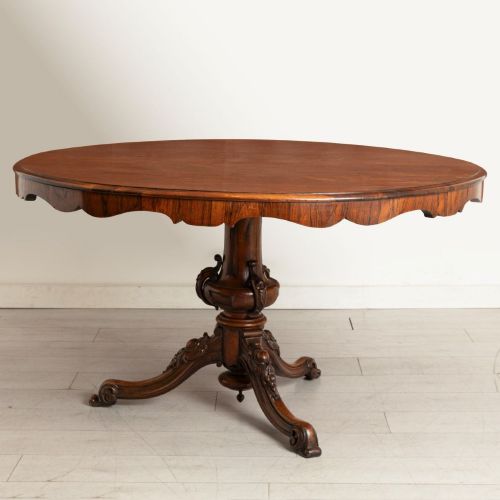
Forms vary from sturdy oak refectory boards to rosewood tilt-top tables and mahogany centre pieces that seat multiple guests. The carved apron acts as the visual transition between the horizontal surface and the vertical supports.
How they were made
Carpenters constructed these tables predominantly from hardwoods and softwoods such as oak, mahogany, walnut, rosewood, padauk, and pine, occasionally incorporating brass fittings or parquet surfaces. Timber selection dictated the structural capability of the frame, allowing makers to carve intricate motifs directly into the wooden aprons beneath the top boards.
Joinery methods relied on traditional pegging, mortise and tenon joints, and draw leaf mechanisms to ensure stability across refectory and extending formats. Hand carving tools shaped the linear, floral, or classical relief patterns into the solid wood skirts of the tables.
Carved Apron Dining Table Retail Price Guide 2026
Typical asking prices for carved apron dining table among the pieces listed under this phrase on Sellingantiques today, from the lower quarter to the upper quarter. They describe what is for sale here now, not the wider market.
Listings feature oak, mahogany, rosewood, padauk, walnut, and pine across seventeenth century to 1930s periods.
What varies in quality
The distinction between ordinary and superior pieces rests on the depth and execution of the timber carving and the integrity of the original construction. Tables retaining their authentic top boards and uncompromised structural frames command greater interest from discerning buyers.
Material choice also drives the graduation in quality, with dense native oaks, rich figured mahognies, and exotic padauks representing the upper tiers of craftsmanship. The harmony between the carved apron and the supporting legs demonstrates the maker's mastery.
The Carved Apron Dining Table Glossary
- Apron
- The horizontal timber member fixed beneath the top of a table, connecting the legs and frequently carrying carved decoration.
- Refectory table
- A long, narrow dining table traditionally used in monastic dining halls, typically constructed from heavy oak with stretcher supports.
- Draw leaf table
- An extending table featuring two leaves hidden beneath the main top that pull out to lengthen the surface.
- Tilt-top table
- A round or oval table with a mechanism allowing the top to pivot into a vertical position when not in use.
- Centre table
- A freestanding table designed to be viewed from all sides, placed centrally in a room rather than against a wall.
Carved Apron Dining Table: Frequently Asked Questions
How do I seat guests comfortably?
Check the clearance beneath the carved apron to ensure adequate leg room for diners sitting along the sides of the table.
Extending mechanisms such as draw leaves allow you to adjust the surface length according to the number of people dining.
Where should I place a centre table?
Centre tables work best positioned in the middle of a spacious room where their detailed aprons and legs remain fully visible.
Ensure there is enough walking space around the perimeter of the furniture for movement and chair placement.
How do I care for antique timber?
Keep wooden surfaces away from direct heat sources and strong sunlight to prevent the timber from drying out or splitting.
Apply natural beeswax periodically to nourish the grain and maintain a protective sheen on the carved details.
How do I identify different periods?
Examine the wood species, tool marks, and construction joints to help determine the era in which the piece was constructed.
Stylistic indicators such as Jacobean strapwork or Adam neoclassical motifs point directly to specific historical revivals.