
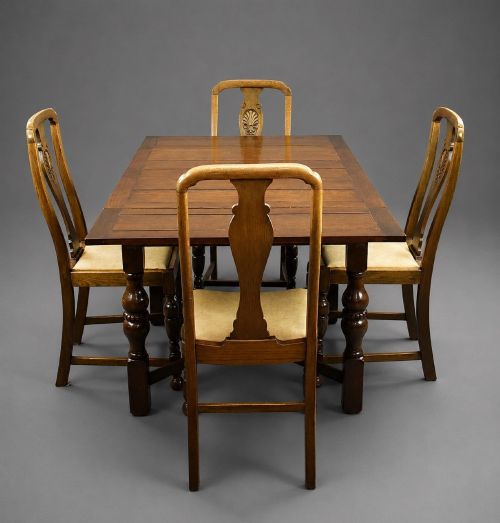
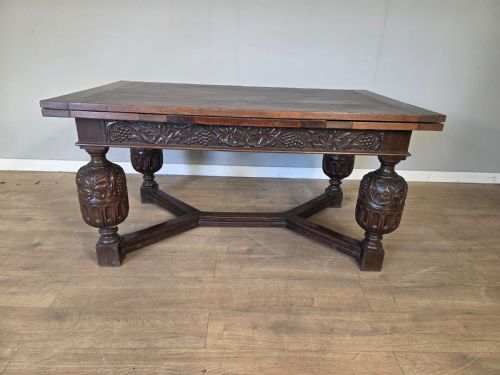
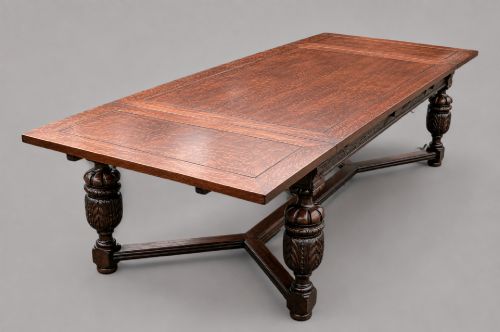
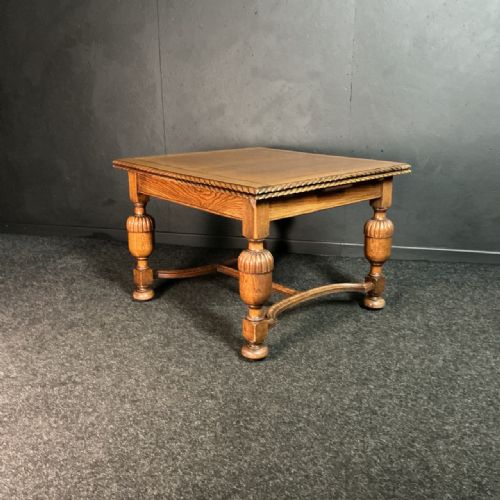
Oak Extending Table
An oak extending table brings centuries of practical engineering and rich timber grain straight into the dining room.
Oak Extending Table
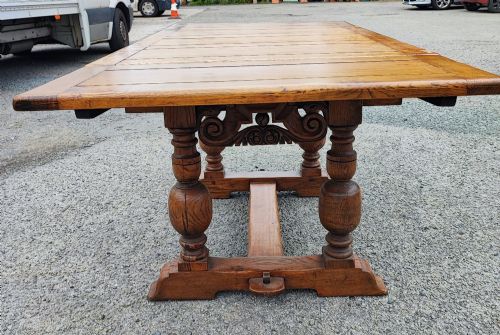
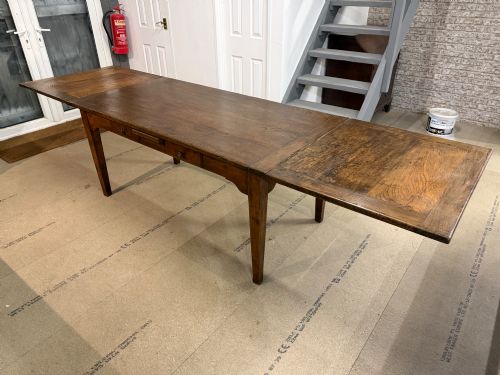
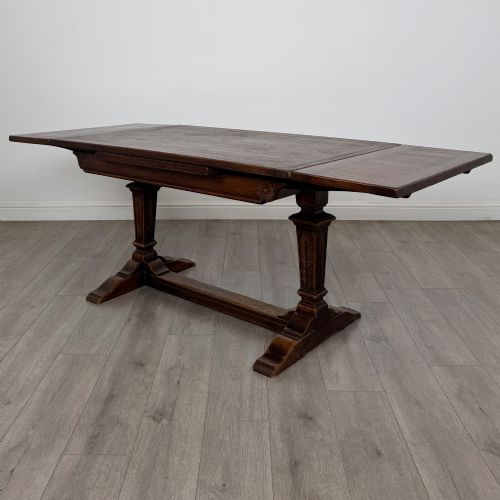
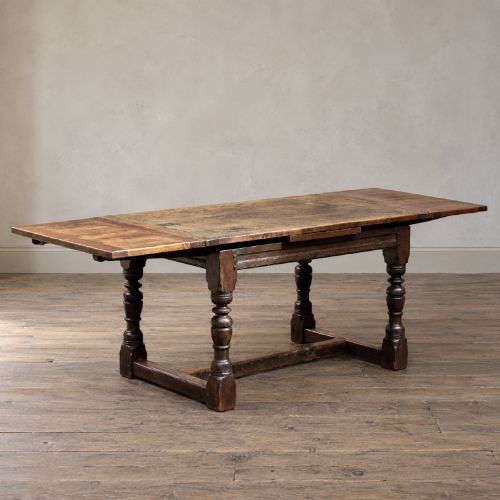
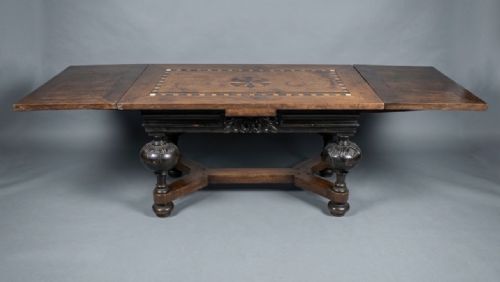
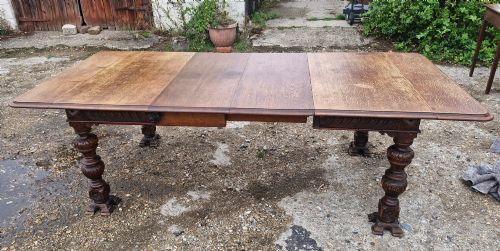
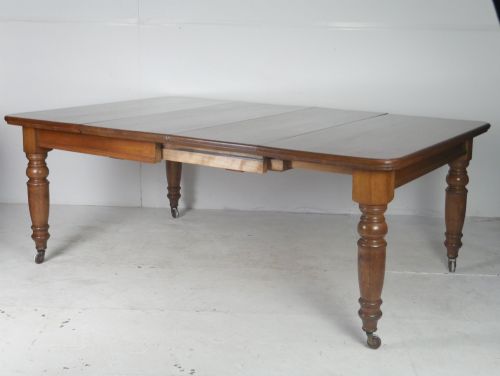
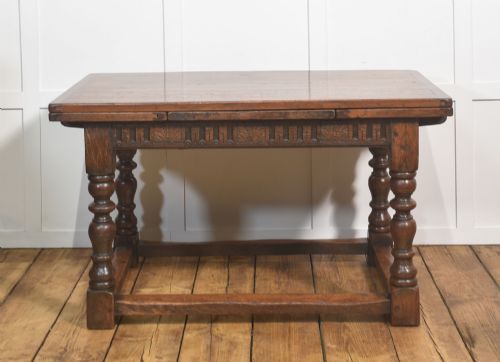
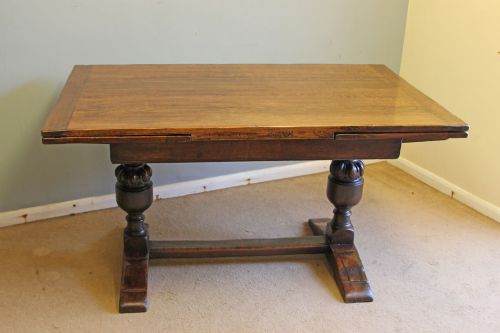
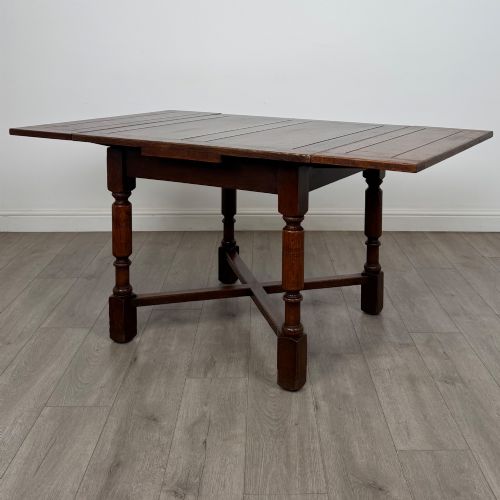
When searching for an oak extending table, buyers encounter a robust piece of furniture designed to adapt for larger gatherings through clever mechanisms. The selection spans sturdy nineteenth-century dining tables, early twentieth-century draw leaf formats, and revival pieces rooted in earlier centuries.
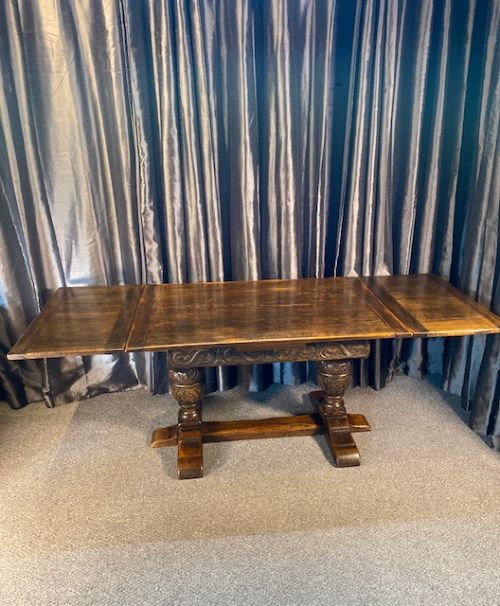
Most examples found in daily browsing rely on draw leaf systems or additional drop-in leaves supported by sturdy frames. These range from heavy refectory formats used in country kitchens to refined Victorian wind-out designs and Arts and Crafts creations.
Beyond standard dining formats, the category occasionally includes smaller metamorphic library book slides, console variants, and massive boardroom tables built to seat dozens. Solid oak and pollard oak dominate the offerings, frequently paired with fruitwood or brass fittings.
Materials and Construction Methods
Makers relied primarily on solid oak, frequently selecting figured pollard oak or warm golden variants to showcase distinctive grain patterns. Timber selection dictated both the weight and the durability of the frame, ensuring the furniture could handle daily family use.
Extension systems required precise joinery, utilising sliding draw leaves, wind-out mechanisms with winding handles, or folding leaves supported by gatelegs. These engineering solutions allowed heavy tables to expand smoothly while maintaining structural integrity under a loaded spread.
Oak Extending Table Retail Price Guide 2026
Typical asking prices for oak extending table among the pieces listed under this phrase on Sellingantiques today, from the lower quarter to the upper quarter. They describe what is for sale here now, not the wider market.
One extraordinary nineteenth-century boardroom piece listed here accommodates up to thirty diners for grand feasts.
Judging Quality in Extendable Oak
Quality rests on the integrity of the extending mechanism and how smoothly the leaves operate within the main frame. Superior examples maintain a level surface and stable footing whether fully closed or extended to maximum capacity.
The choice of timber and depth of carving separate utilitarian workshop pieces from fine bespoke commissions. Richly figured pollard oak veneers, meticulous parquetry, and well-executed Jacobean or Elizabethan revival carving elevate certain examples above standard domestic furniture.
Maple and Co·Heals of London·Robson and Son·Howard and Sons
The Oak Extending Table Glossary
- Draw leaf
- A table featuring two leaves hidden beneath the main top that pull out from either end to extend the surface.
- Refectory table
- A long, narrow dining table traditionally used in monastic or communal dining halls, adapted for domestic longevity.
- Wind-out table
- A Victorian mechanical design that uses a metal screw mechanism and a crank handle to separate the top halves for inserted leaves.
- Pollard oak
- Oak timber harvested from trees that have been pollarded, producing a heavily gnarled and highly decorative grain pattern.
- Gateleg table
- A drop-leaf table where the hinged legs swing out like a gate to support the raised flaps.
Oak Extending Table: Frequently Asked Questions
How do draw leaf tables work?
Draw leaf mechanisms rely on sliding panels hidden directly beneath the main surface. When pulled outward, these end leaves drop neatly into place to extend the table length.
This clever engineering allows a compact dining table to expand rapidly without requiring separate loose leaves to be stored elsewhere in the home.
Can I use an antique oak table daily?
These tables were built for heavy domestic service in country houses and town dining rooms alike. Solid oak frames and robust extension tracks handle daily meals with ease.
Using heat pads and proper maintenance protects the polished timber finish from routine wear while preserving the historic character of the grain.
What is pollard oak?
Pollard oak comes from trees pruned repeatedly above livestock height, which forces the timber to grow back with dense, knotted burls. Cabinetmakers prized this wood for its swirling, highly decorative patterns.
Tables veneered in pollard oak showcase dramatic figuring that sets them apart from standard straight-grained timber.
How do I identify Victorian extending tables?
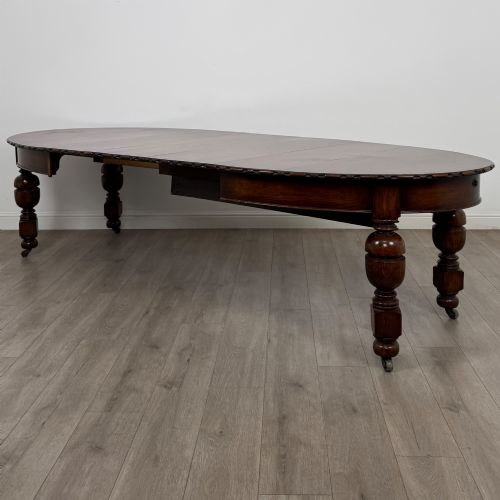
Victorian examples frequently feature heavy turned legs, brass castor wheels, and mechanical wind-out systems operated by a removable handle. These pieces often accommodate multiple extra leaves.
Earlier formats tend to rely on simpler draw leaf or gateleg configurations rather than internal metal screws.