
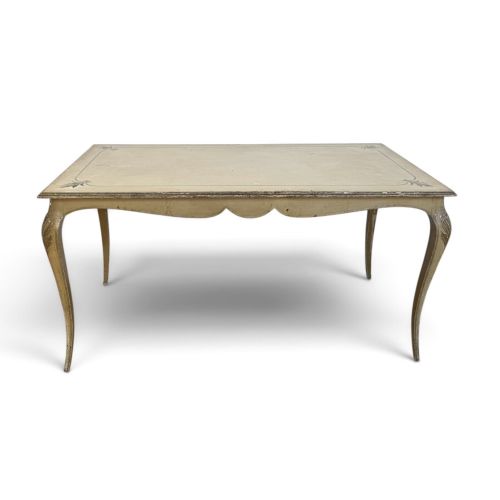
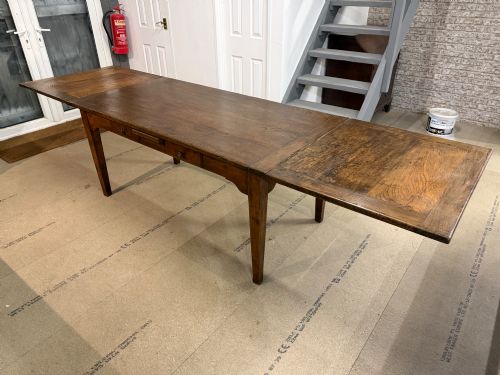
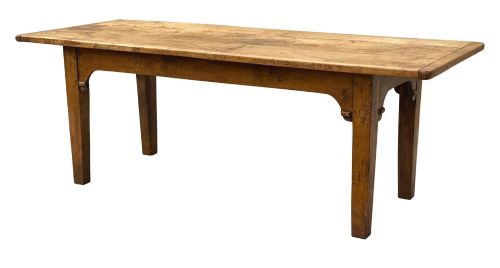
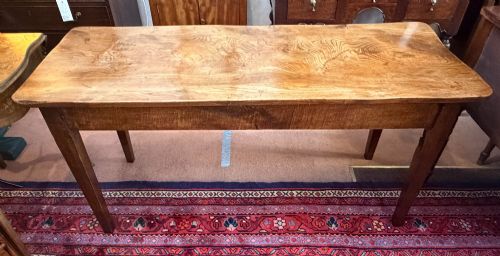

Provincial Dining Table
A provincial dining table brings rustic warmth and solid utility to a room, built for daily gatherings.
Provincial Dining Table
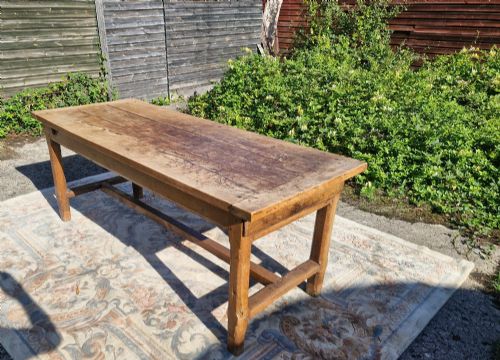
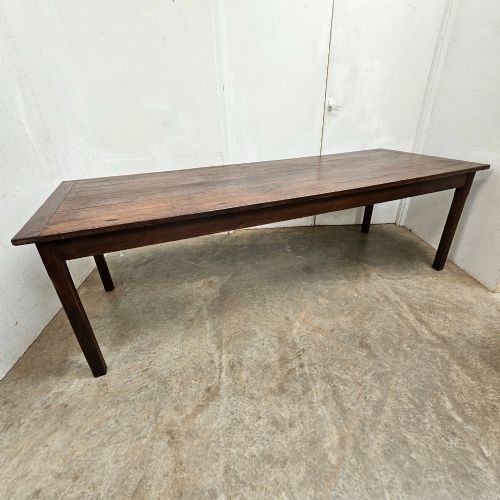
A provincial dining table is a sturdy, regional board designed for everyday domestic use, most commonly found here in French forms spanning the eighteenth, nineteenth, and early twentieth centuries. These tables embody the practical needs of rural homes, offering generous surfaces for dining and preparation.
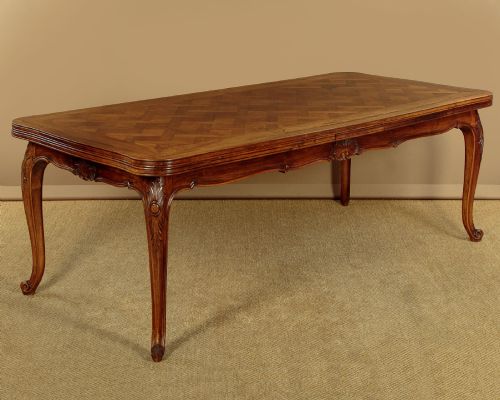
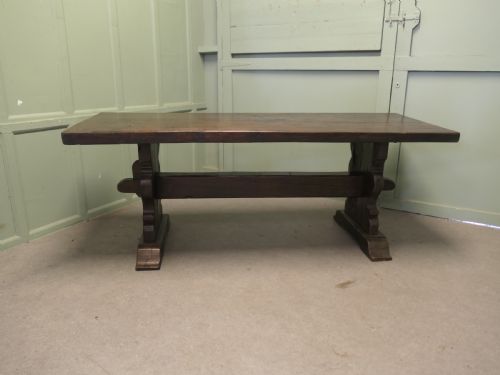
Buyers browsing this page encounter various traditional formats, including refectory tables, kitchen tables, and draw-leaf designs that extend for larger gatherings. The styles lean towards French provincial, rustic farmhouse, and French country aesthetics, reflecting historical provincial workshops.
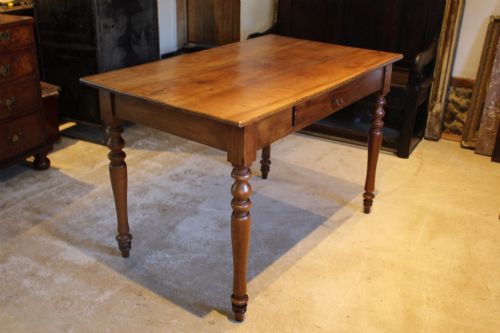
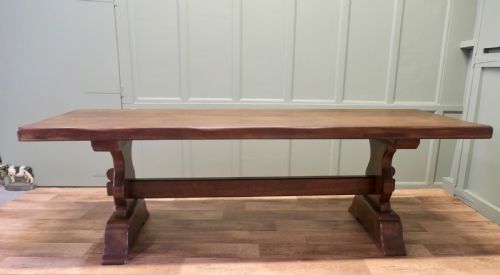
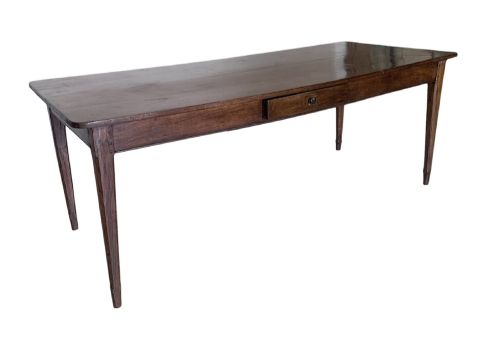
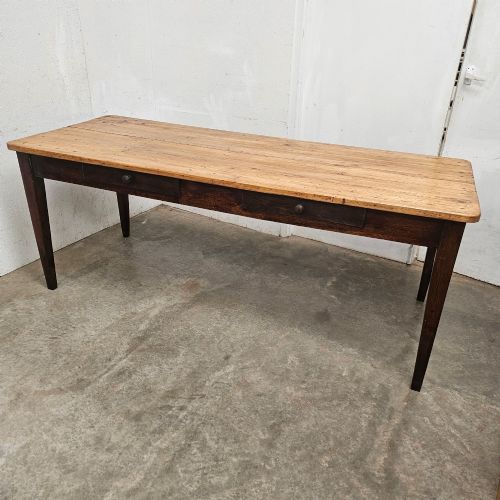
The selection ranges from compact fruitwood pieces to long oak refectory tables capable of seating large groups. Plain timber construction and functional additions like drawers or bread slides define the core character of these regional items.
How they were made
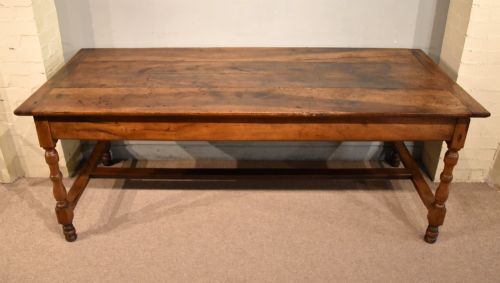
These tables were constructed primarily from native timbers such as oak, cherrywood, fruitwood, walnut, and pine, selected for regional availability and strength. Joinery methods relied on solid planks, pinned tenons, and sturdy stretcher bases to withstand heavy daily use.
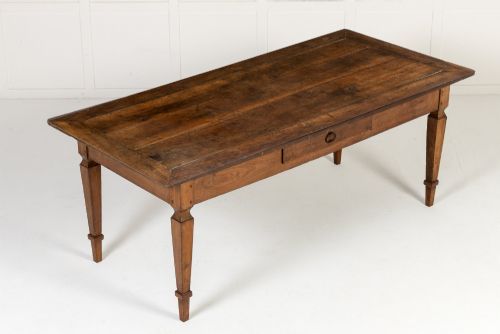
Many examples feature thick plank tops made from single or double boards of elm, oak, or cherry, supported by robust underframes. Clever mechanisms like draw-leaf extensions, folding frames on vendange tables, and built-in drawers show practical craftsmanship geared towards utility.
Listings feature eighteenth and nineteenth-century examples alongside early twentieth-century pieces, constructed from oak, fruitwood, cherry, walnut, and pine.
What varies in quality
Quality in these tables rests on the choice of timber and the integrity of the original construction rather than surface finish alone. Dense hardwoods like old oak, walnut, and mature cherrywood demonstrate superior durability compared to softer secondary woods.
The proportion and balance of the base relative to the top dictate the visual success of the piece. Tables retaining their original plank tops, uncompromised stretcher frames, and working mechanisms represent the higher end of provincial craftsmanship.
The Provincial Dining Table Glossary
- Refectory table
- A long, narrow dining table traditionally used in communal dining halls and adopted in country homes. They typically feature sturdy legs joined by a low stretcher running the length of the base.
- Draw-leaf table
- A table equipped with concealed leaves under the main top that pull out to extend the surface length. This mechanism allows the table to accommodate more diners when needed.
- Vendange table
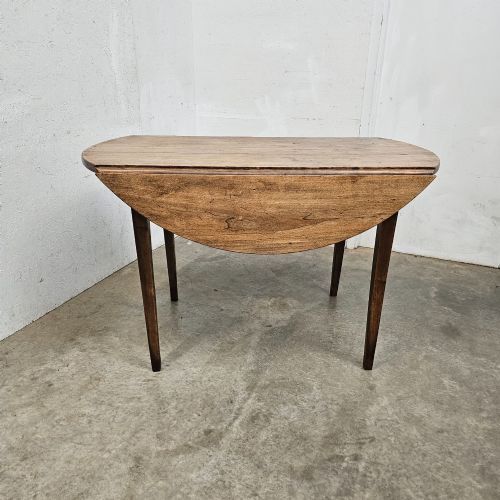
- A round table associated with the grape harvest, often designed with a folding base for easy storage. They provide a versatile surface for smaller spaces.
- Bread slide
- A pull-out wooden board integrated beneath the tabletop, historically used for cooling bread or extending workspace. It is a practical feature found on various regional farmhouse tables.
- Parquetry
- A geometric mosaic of wood pieces used for decorative effect on tabletops. This technique adds visual texture to the surface of the timber.
Provincial Dining Table: Frequently Asked Questions
How do I choose the right size table?
Consider the dimensions of your room and leave enough space around the table for chairs to pull out comfortably. Measure the length and note whether extending mechanisms like draw-leaves are present.
Keep in mind the seating capacity you require for daily meals versus larger gatherings. Refectory and farmhouse tables vary greatly in length, from compact kitchen formats to boards exceeding three metres.
What woods are typical for these tables?
Oak, cherrywood, fruitwood, walnut, and pine are the primary timbers encountered across these regional pieces. Each wood brings a distinct grain pattern and colour tone to the furniture.
Hardwoods like oak and cherry provide exceptional strength for heavy daily use. Softer woods like pine and poplar offer a lighter aesthetic, often found in bleached or painted finishes.
How do I care for a wooden tabletop?
Maintain the timber by cleaning with a damp cloth and avoiding harsh chemical sprays that strip natural oils. Use placemats and coasters to protect the surface from heat and moisture rings.
Applying occasional beeswax helps nourish older wood and preserves its natural sheen. Allow the timber to age gracefully rather than seeking a pristine finish.
Are these tables suitable for modern kitchens?
Their sturdy construction and practical proportions make them well suited to contemporary kitchen and dining spaces. The variety of woods and finishes allows them to complement both rustic and modern interiors.
Functional elements like drawers and extending leaves add everyday convenience. These tables serve as robust social hubs just as they did in their original homes.