
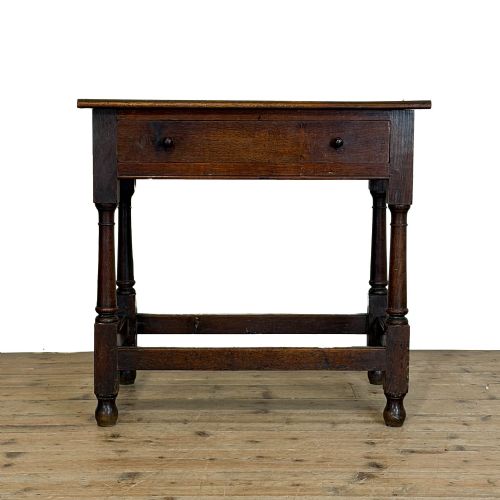
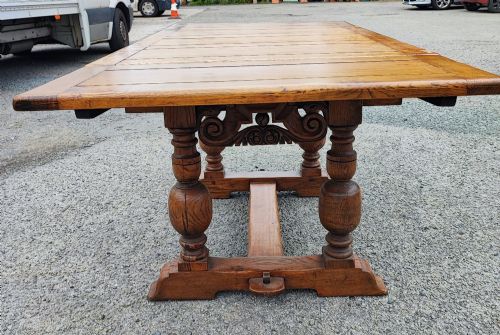
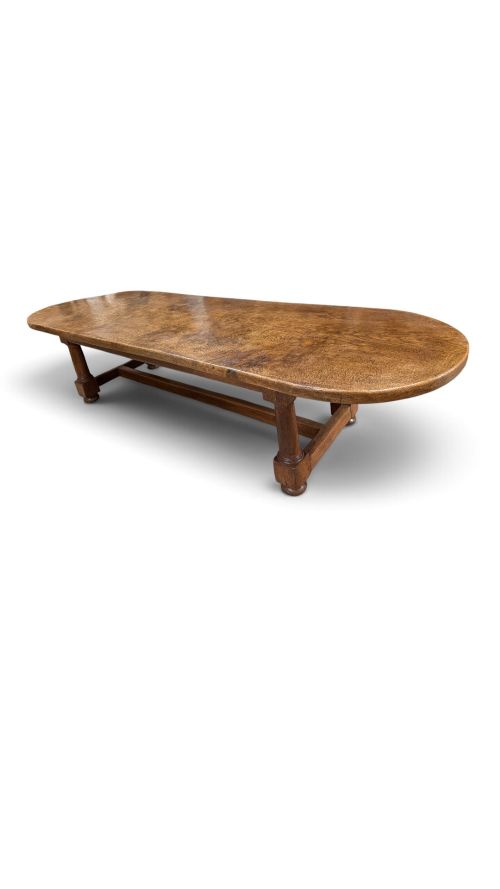
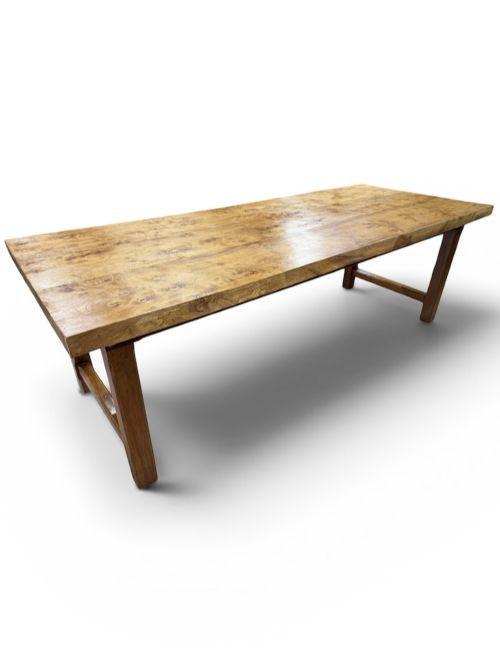
Solid Oak Table
A solid oak table brings honest timber and enduring weight to a room, carrying centuries of domestic life in its grain.
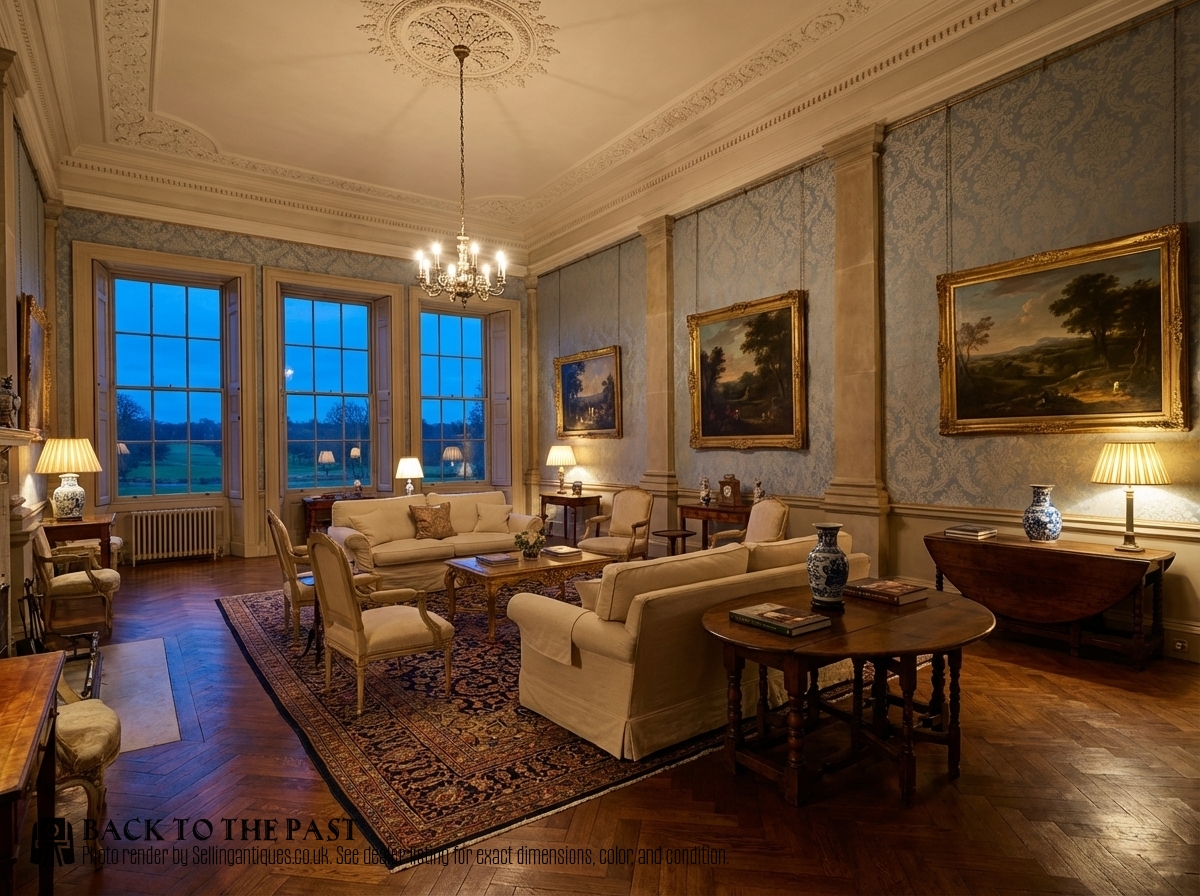
Solid Oak Table
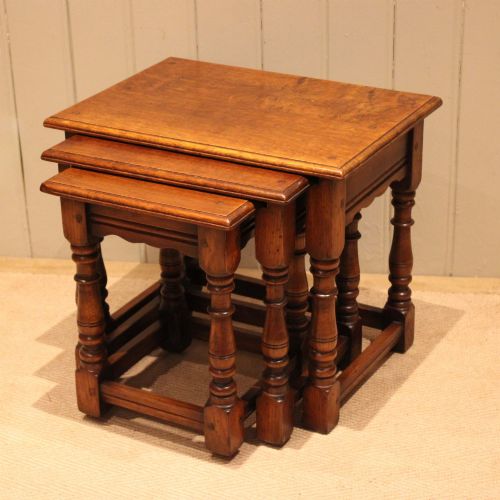
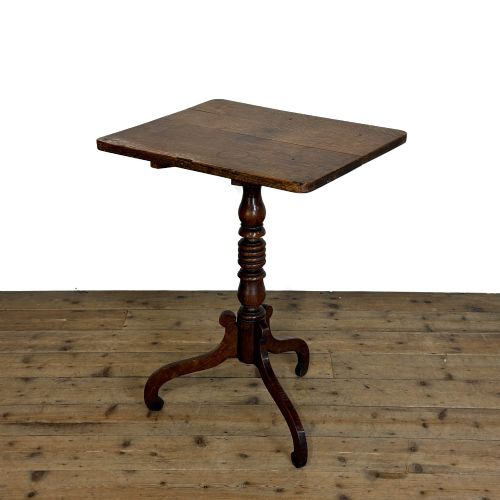
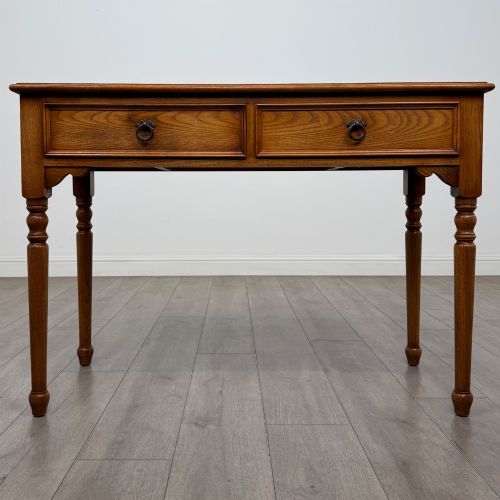
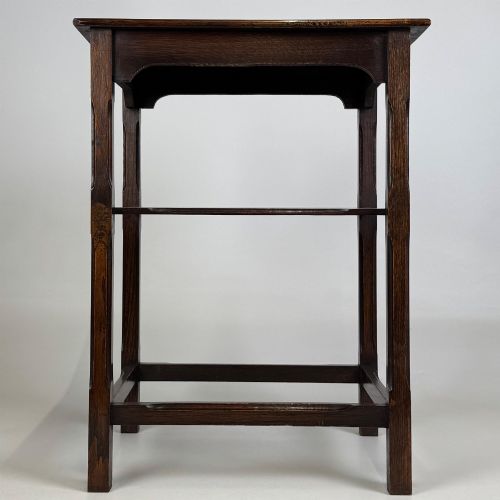
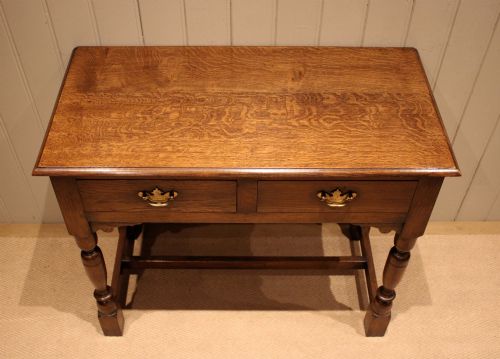
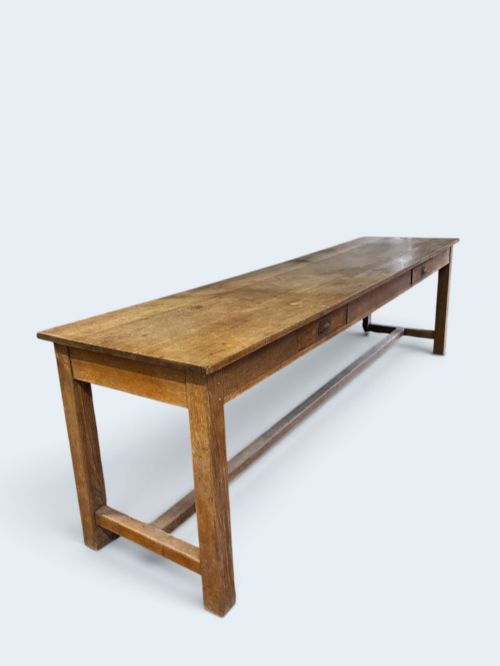
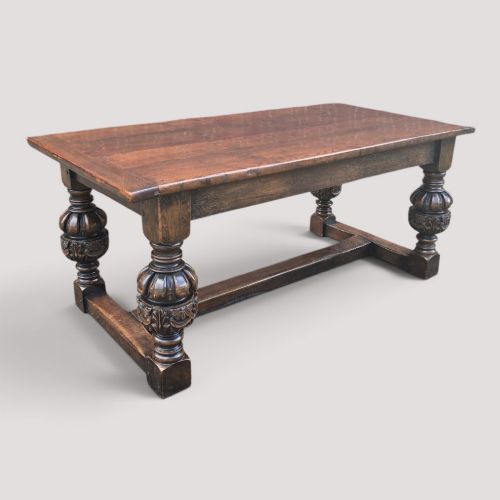
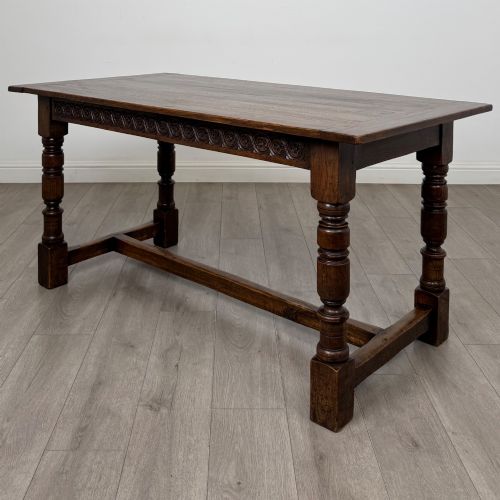
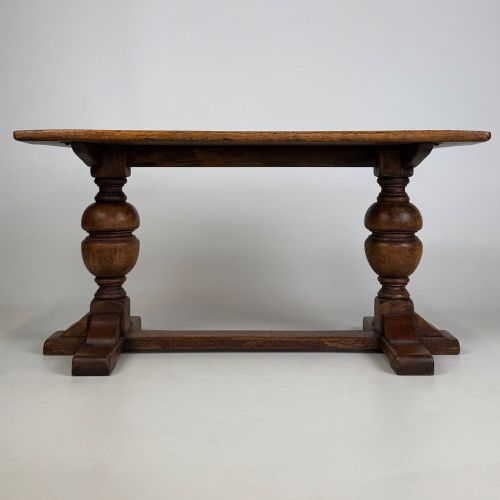
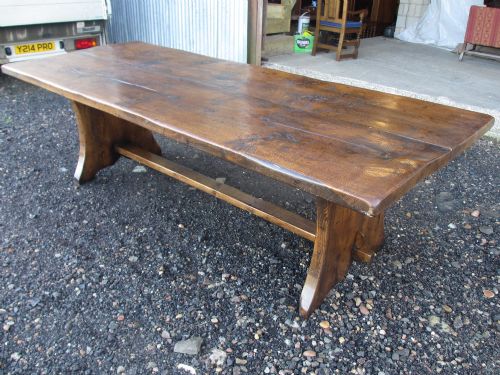
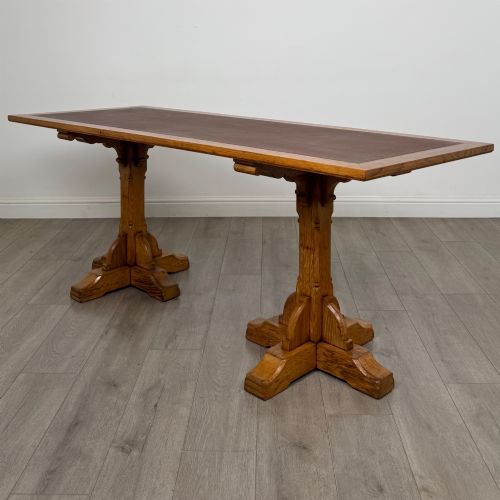
A solid oak table spans a remarkable range of domestic forms, from expansive refectory dining boards designed for large kitchens to compact side tables and writing desks. When searching for a solid oak table, buyers encounter heavy farmhouse refectories alongside lighter Edwardian occasional pieces and Arts and Crafts library designs.
The material dictates the character, showing deep golden tones, pronounced medullary rays, and sturdy plank construction that withstands daily use. Earlier examples often utilise single planks or heavy gateleg frames, while twentieth-century workshops produced draw leaf and coffee variants.
Most pieces date from the eighteenth, nineteenth, and early twentieth centuries, capturing periods influenced by Jacobean revival, rustic farmhouse traditions, and clean Arts and Crafts aesthetics. These tables served rural homesteads, grand libraries, and provincial dining rooms alike, resulting in a diverse survival of domestic forms.
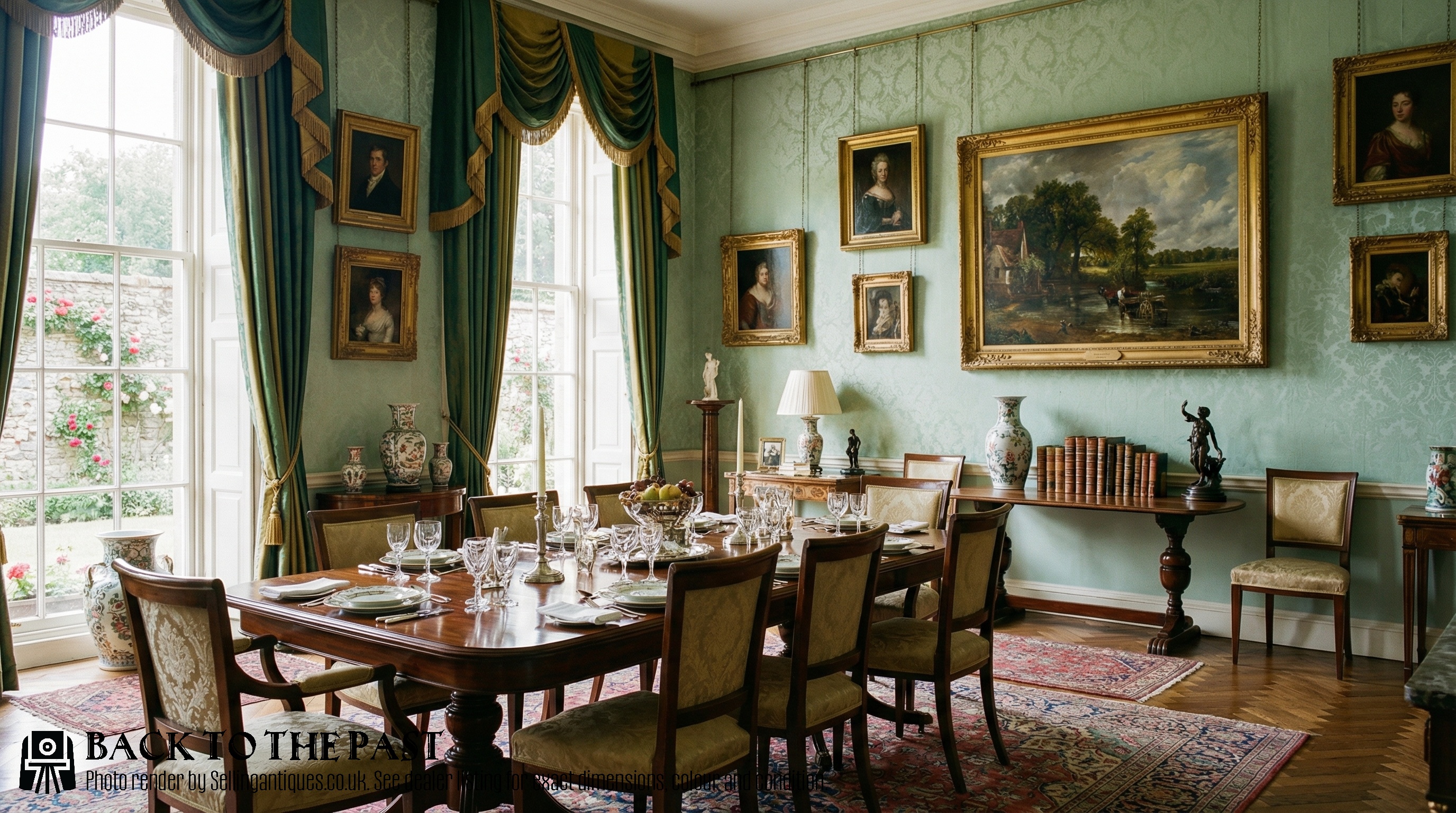
What varies in quality
The integrity of the timber selection dictates the hierarchy, with quarter-sawn boards showing dense ray flecks standing above plain flat-sawn alternatives. Superior examples display thoughtful proportion between the heavy top and the supporting trestles, legs, or gateleg frames.
Construction details distinguish workshop standards, seen in the precision of hand-cut joints, the thickness of the original plank tops, and the retention of authentic patination accumulated through decades of use. Maker attribution and restrained carving also elevate certain Arts and Crafts or revival pieces above standard commercial production.
Solid Oak Table Retail Price Guide 2026
Typical asking prices for solid oak table among the pieces listed under this phrase on Sellingantiques today, from the lower quarter to the upper quarter. They describe what is for sale here now, not the wider market.
Several heavy side tables bear direct provenance from York Minster, having once served ecclesiastical duties before entering domestic service.
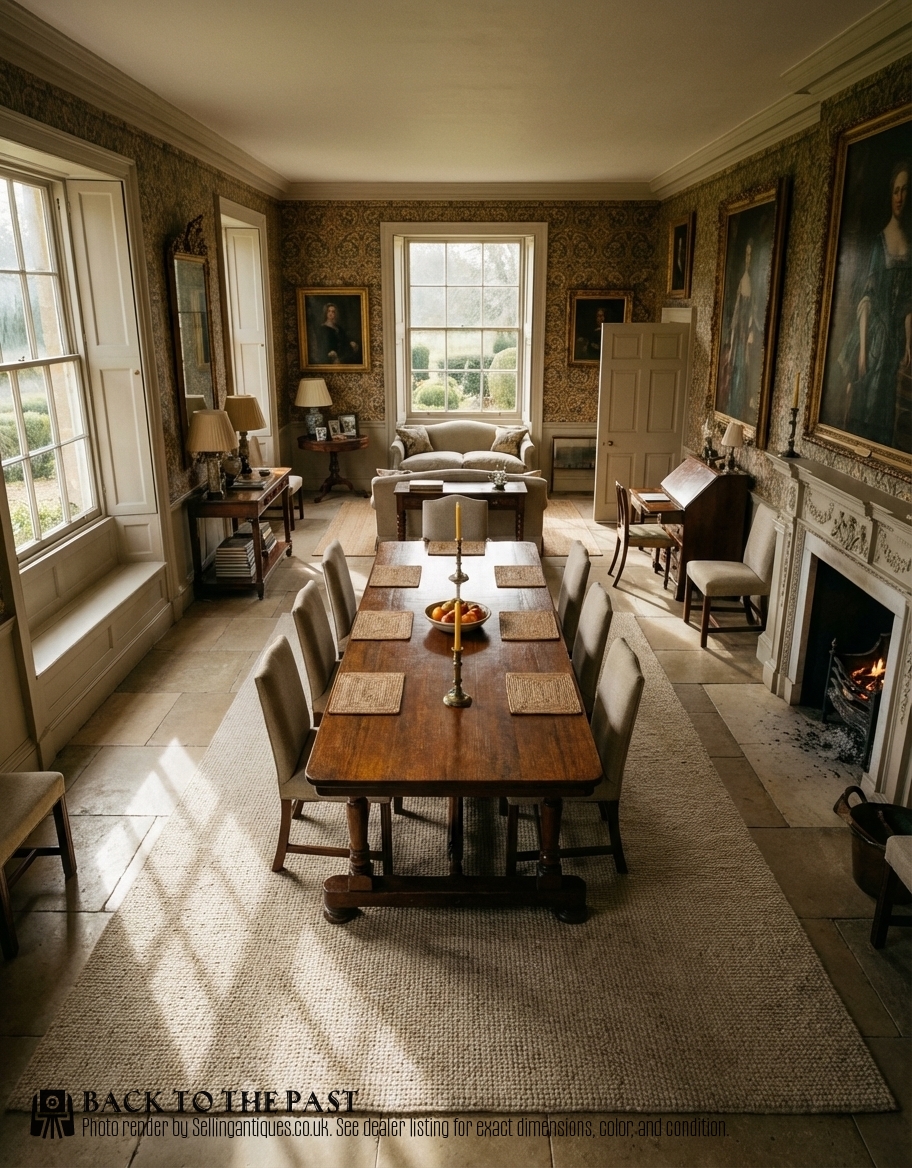
Gordon Russell·Titchmarsh and Goodwin
The Solid Oak Table Glossary
- Refectory table
- A long, narrow dining table traditionally used in monastic refectories and later adopted in domestic country houses. These heavy pieces usually feature trestle ends or stout legs joined by stretchers.
- Draw leaf table
- A dining table equipped with two concealed pull-out leaves beneath the main top, allowing the surface area to expand effortlessly. This ingenious mechanism became popular for adaptable family dining.
- Gateleg table
- A drop-leaf table featuring hinged legs that swing outward on pivots to support the raised flaps. This form maximises floor space when folded down.
- Medullary rays
- Natural ribbon-like cellular structures radiating from the centre of an oak log, visible as bright flecks when timber is quarter-sawn. Connoisseurs prize this figure for its visual depth.
- Linenfold
- A style of wood carving depicting folded parchment or linen, frequently seen on panels of Jacobean revival and Edwardian desks or cupboards. This decorative motif imitates stacked textile folds.
Solid Oak Table: Frequently Asked Questions
How do I care for a solid oak table?
Keep the timber away from direct heat sources and sudden humidity changes to prevent the heavy planks from splitting. Regular treatment with a traditional beeswax polish nourishes the grain and preserves the natural surface.
Avoid placing damp items directly onto the bare wood without protective mats. Gentle dusting with a dry cloth maintains the historic patination accumulated over generations.
Are these tables suitable for everyday dining?
These pieces were originally constructed for heavy daily use in farmhouses, monasteries, and family homes, making them exceptionally robust for modern dining. The dense hardwood resists impacts and takes the minor knocks of daily life gracefully.
Many refectory and draw-leaf formats accommodate modern seating arrangements comfortably. Their enduring structural joinery ensures they remain stable under heavy loads.
How can I tell an 18th-century table from a later revival?
Eighteenth-century examples typically display hand-planed surfaces with irregular tool marks and pegged joints showing natural timber movement and wear. The patination develops a deep, mellow warmth that modern staining struggles to replicate accurately.
Revival pieces from the Edwardian period or the twentieth century often utilise mechanical sawing methods and cleaner, more uniform joinery. Examining the underside and the construction of the stretchers usually reveals the true age of the timber.
What is a gateleg table used for?
A gateleg design provides a compact surface that expands when extra room is required for dining or writing. The hinged flaps fold down neatly against the central frame to save valuable floor space in smaller rooms.
Historically placed against parlour walls, these versatile pieces moved easily to the centre of the room for meals. Their clever pivoting leg mechanism supports the extended leaves securely.