

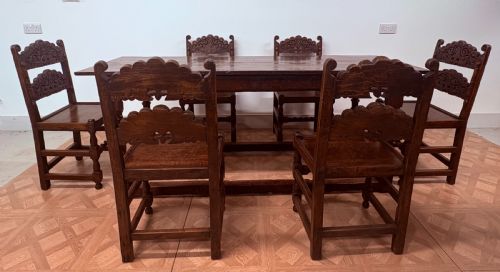
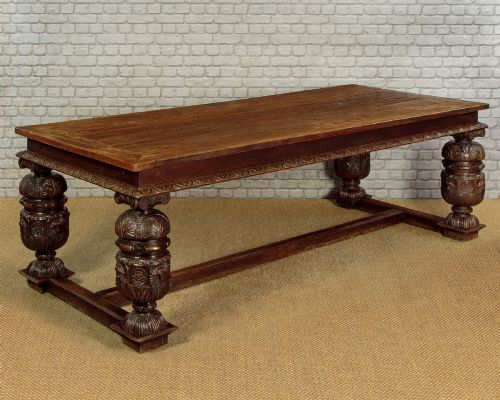


Monastery Style Dining Table
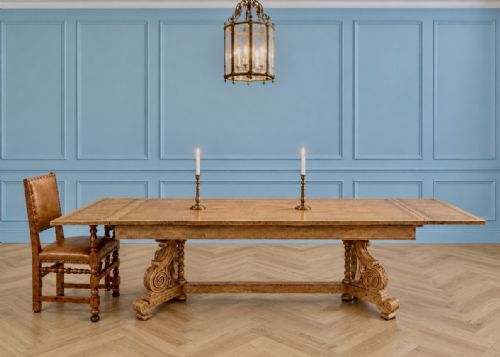
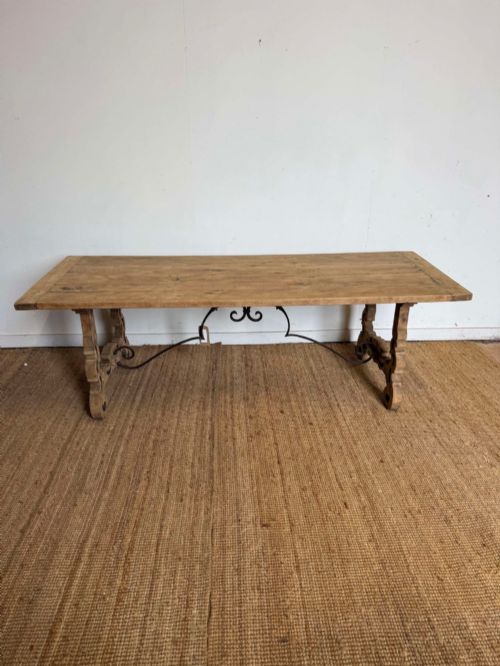
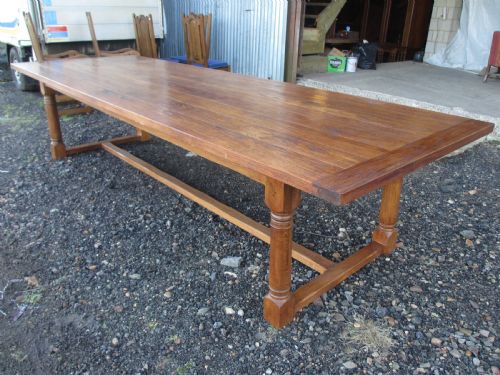
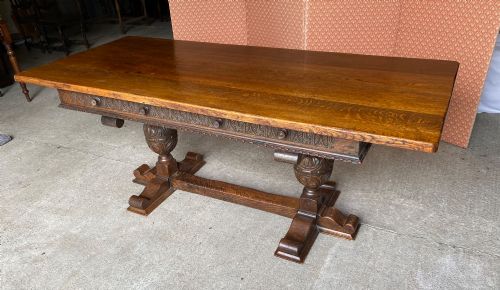
These monastery style dining table examples bring robust refectory character and generous proportions straight to your dining room.
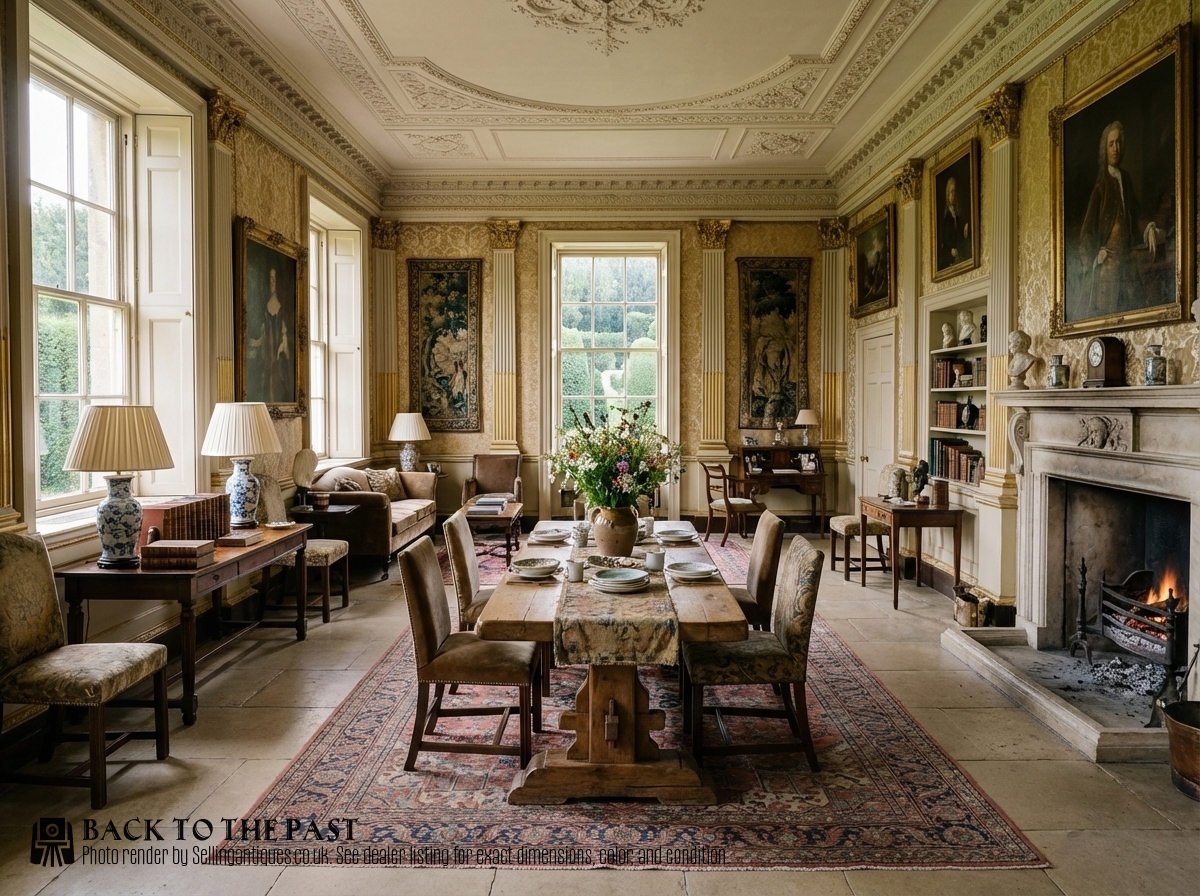
Monastery Style Dining Table
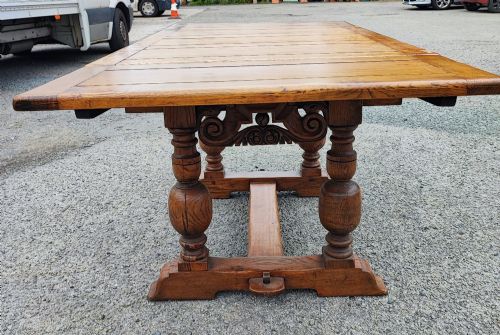
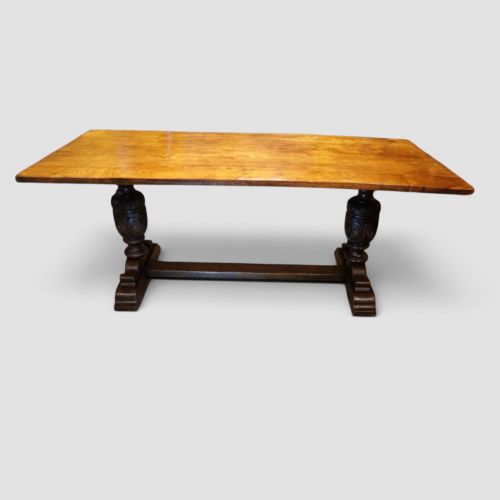
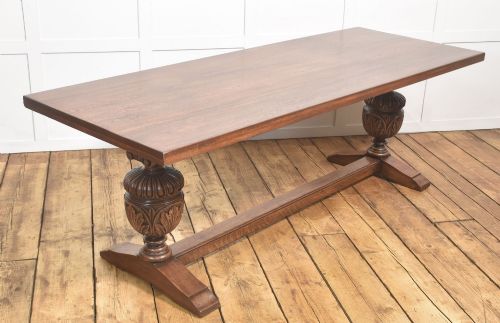
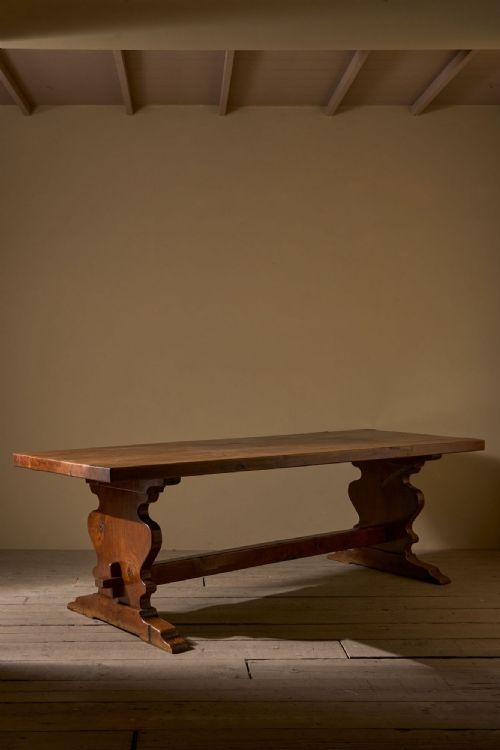
A monastery style dining table typically takes the form of a refectory or trestle base design suited to communal dining. You will encounter pieces spanning from the seventeenth century through to the early twentieth century.
The selection here includes examples rooted in Tudor Revival, Gothic Revival, and French Provincial traditions. Solid oak and mahogany form the primary timbers across these historic formats.
How they were made
Joiners built these tables using heavy solid timbers, primarily oak and mahogany, designed to withstand generations of daily use. Construction methods rely on traditional framing and sturdy trestle supports.
French Provincial examples emphasise farmhouse utility, whilst revival pieces lean into historical architectural motifs. Each period brings its own approach to shaping the heavy top boards and supporting bases.
Monastery Style Dining Table Retail Price Guide 2026
Typical asking prices for monastery style dining table among the pieces listed under this phrase on Sellingantiques today, from the lower quarter to the upper quarter. They describe what is for sale here now, not the wider market.
The listings span from the 17th century to 1930, featuring oak, solid oak, and mahogany across French Provincial, Gothic Revival, and Tudor Revival styles.
What varies in quality
Quality rests in the choice of timber and the integrity of the structural framing rather than surface embellishment. Heavier solid oak boards and well-proportioned trestle bases elevate the piece.
The distinction between standard nineteenth-century interpretations and earlier examples lies in the depth of the patina and the honesty of the construction. Timbers that have aged gracefully command greater appreciation.
The Monastery Style Dining Table Glossary
- Refectory table
- A long dining table traditionally used in monasteries for communal meals. These pieces are characterised by their elongated proportions and sturdy undercarriages.
- Trestle base
- A support structure where the table top rests on two or more upright frames connected by a stretcher. This design maximises legroom along the length of the table.
- Solid oak
- A dense, durable hardwood utilised extensively in traditional furniture making. It provides exceptional strength and develops a deep patina over centuries.
- French Provincial
- A style reflecting regional French domestic furniture from the eighteenth and nineteenth centuries. These pieces combine rustic charm with practical proportions.
Monastery Style Dining Table: Frequently Asked Questions
How do I care for an oak table?
Keep solid oak surfaces away from direct heat sources and sudden temperature changes to prevent the timber from splitting. Regular waxing helps protect the wood and maintain its natural lustre.
Use coasters and placemats to guard against moisture rings. Simple dusting with a soft cloth is usually sufficient for daily maintenance.
Can I seat many people at these?
The extended refectory and farmhouse formats are specifically designed to accommodate large gatherings. Their long proportions provide ample seating down both sides.
Trestle bases further assist by removing corner legs that might otherwise restrict chair placement.
Are these tables from the seventeenth century?
Some examples date back to the seventeenth century, whilst others are later revivals from the nineteenth and early twentieth centuries. Examining the construction details helps reveal the actual age of the timber and joinery.
Revival pieces often borrow heavily from earlier architectural styles while employing the manufacturing techniques of their own era.
Will mahogany fit a rustic interior?
Mahogany brings a smoother grain and deeper reddish-brown tone compared to traditional oak. It works well when you want to soften a rustic setting with a touch of formal elegance.
Consider the surrounding decor and existing wood tones in the room to ensure a balanced visual weight.