



Solid Oak Monastery Table
A solid oak monastery table brings undeniable weight and historical character into a dining room.

Solid Oak Monastery Table
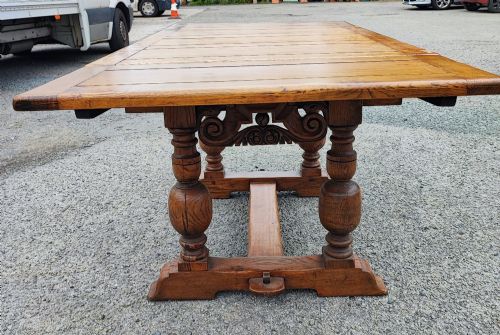
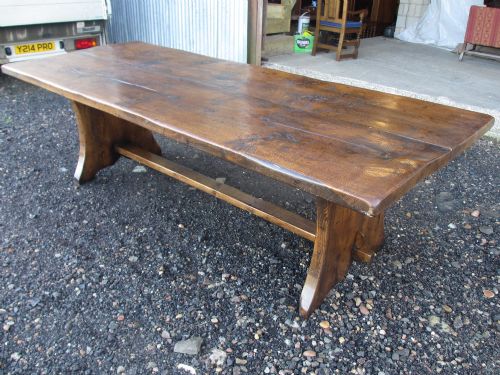
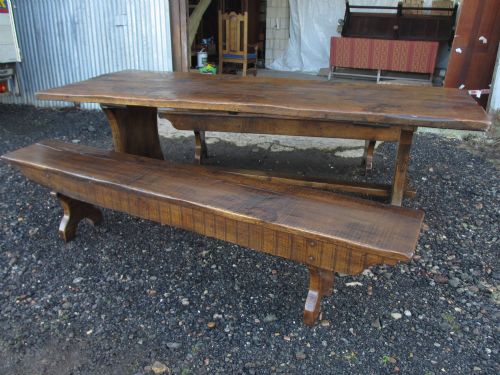
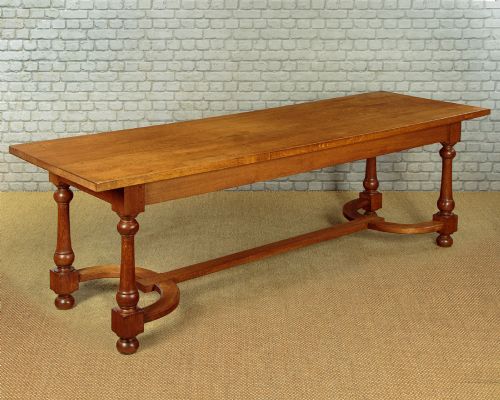
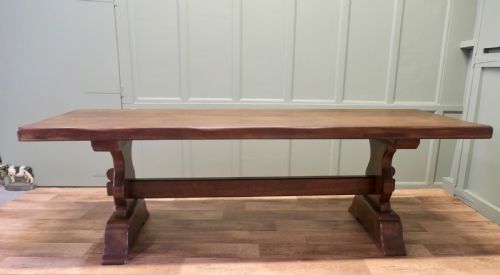
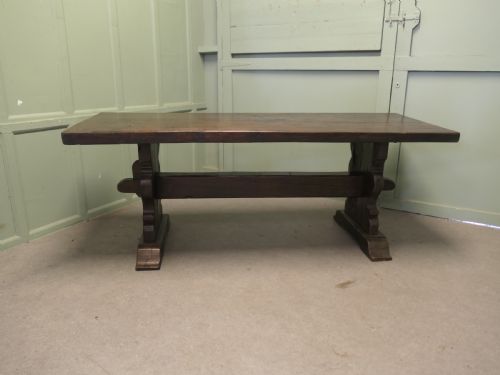
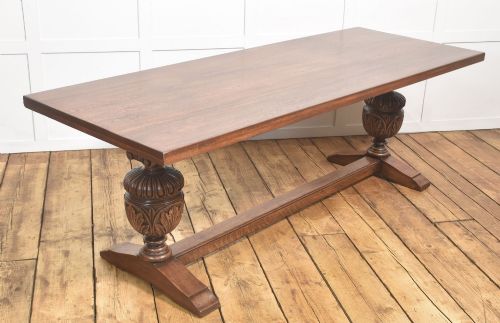
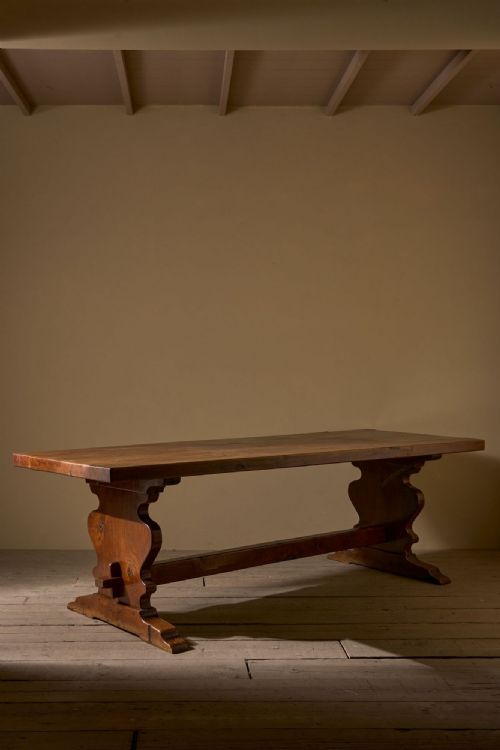
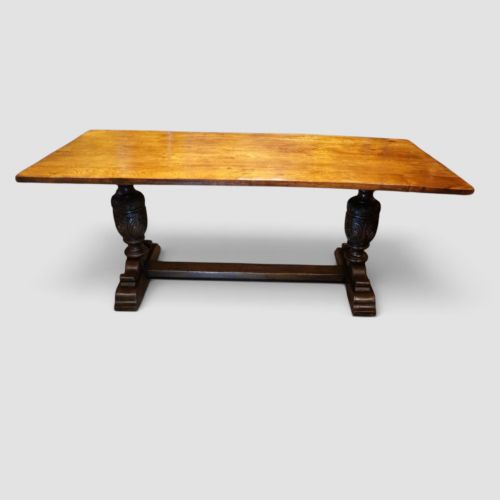
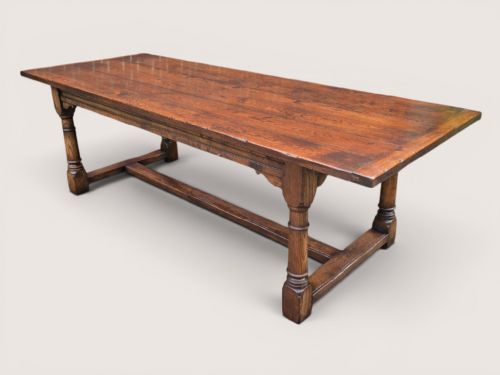
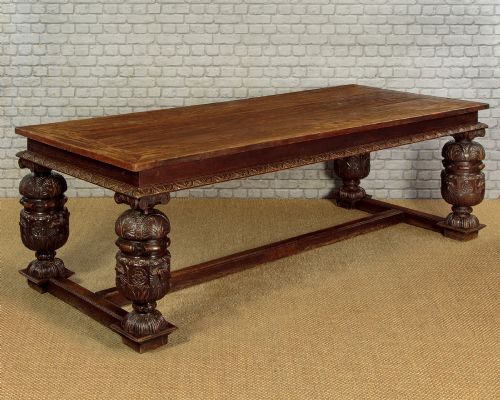
When you search for a solid oak monastery table, you encounter large timber dining tables rooted in centuries-old refectory traditions. The examples appearing here span from genuine seventeenth-century survivals through nineteenth-century revivals and early twentieth-century interpretations, drawing heavily upon Jacobean, Tudor, and French provincial styles.
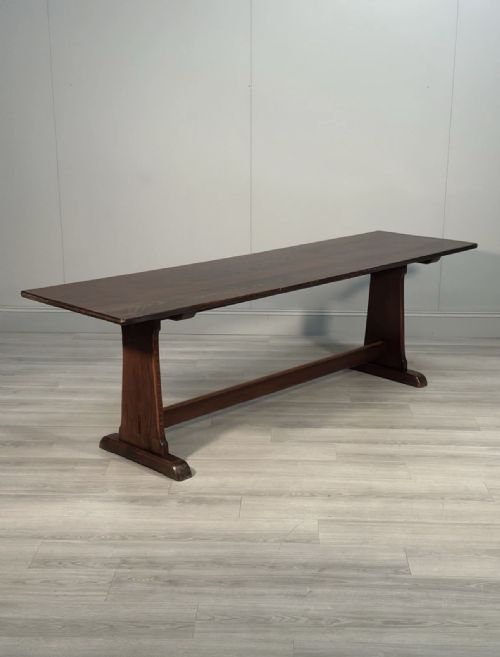
Most pieces you meet on this page rely on sturdy trestle bases, planked wooden tops, and generous proportions designed to seat large gatherings comfortably. Whether shaped by English cabinet makers or French provincial workshops, these items serve as monumental centerpieces for modern and traditional interiors alike.
What separates the best examples
Quality rests significantly on the selection and integrity of the timber, particularly the width and continuity of the planks forming the table top. Single-piece or two-plank boards cut from mature heartwood show superior stability and visual rhythm compared to surfaces pieced together from narrow strips.
The hand of the maker dictates the refinement of the carved trestle ends, the tightness of the joinery, and the balance of the proportions. Tables retaining their original structural framing and authentic surface wear command greater appreciation than heavily altered or overly stripped examples.
Solid Oak Monastery Table Retail Price Guide 2026
Typical asking prices for solid oak monastery table among the pieces listed under this phrase on Sellingantiques today, from the lower quarter to the upper quarter. They describe what is for sale here now, not the wider market.
Several heavy refectory tables include subtle carpenter marks hidden beneath the frame, serving as ancient assembly instructions carved by the original hands.
The Solid Oak Monastery Table Glossary
- Refectory table
- A long dining table traditionally used in monastic dining halls. These forms evolved into domestic centerpieces across English and French architecture.
- Trestle base
- A support structure consisting of two or more vertical uprights connected by a horizontal stretcher. This design maximises legroom along the length of the table.
- Plank top
- A surface constructed from several wide boards laid lengthwise. Seventeenth and eighteenth-century examples frequently utilise two or three substantial boards rather than multiple narrow strips.
- Draw leaf
- An extension mechanism featuring sliding leaves tucked beneath the main surface. Pulling these ends outward extends the table length instantly.
- Jacobean Revival
- A nineteenth-century stylistic movement mimicking seventeenth-century English furniture design. Pieces in this style typically feature dark finishes, heavy turnings, and geometric panel moulding.
Solid Oak Monastery Table: Frequently Asked Questions
How do I seat twelve people?
Look for lengths exceeding two metres paired with trestle bases rather than four corner legs. Trestle supports prevent table legs from interfering with chair placement along the sides.
Ensure the clearance beneath the aprons accommodates standard dining chair heights comfortably.
Are these tables strictly French?
The selection includes both English and French origins alongside distinct revival periods. French provincial examples often feature scrubbed tops and softer fruitwood tones, while English pieces lean toward darker oak finishes.
Craftsmanship details and regional proportions usually indicate the specific country of origin.
How do I care for solid oak?
Apply natural beeswax periodically to nourish the dry timber and maintain a soft sheen. Avoid placing solid wood surfaces near direct heat sources or in extreme humidity fluctuations.
Use coasters and felt pads beneath heavy items to protect the historic patina from sudden moisture rings.
How do I date an older table?
Examine the underside and joints for hand-cut peg markers, tool marks, and timber shrinkage patterns. Seventeenth-century originals display distinct hand-planed board variations that later revival pieces rarely replicate.
Hardware types and timber oxidation levels also provide reliable clues regarding the exact period of manufacture.