
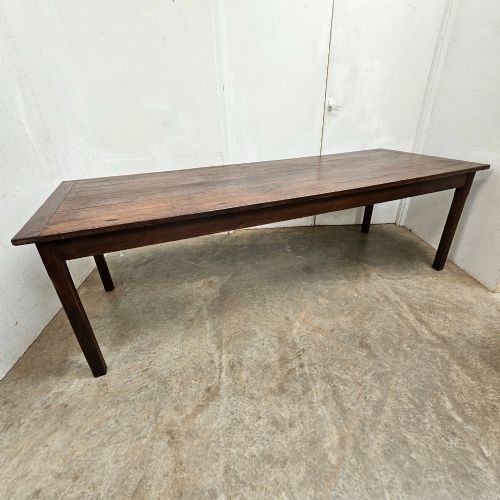
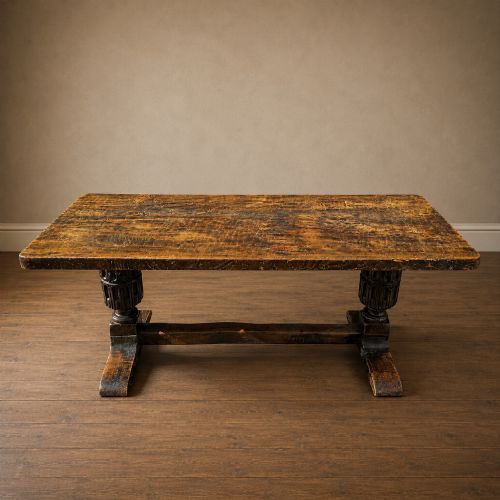


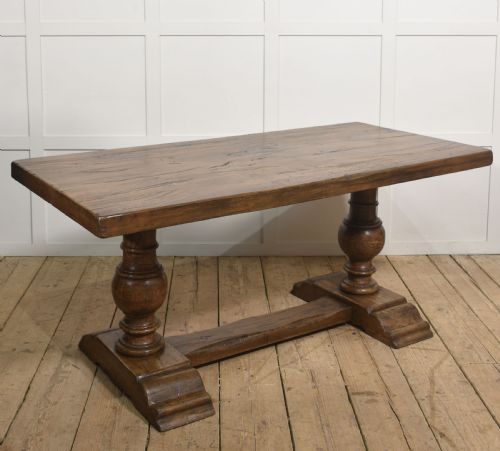


Large Oak Farm Table
A large oak farm table anchors a room with substantial timber and centuries of service.

Large Oak Farm Table
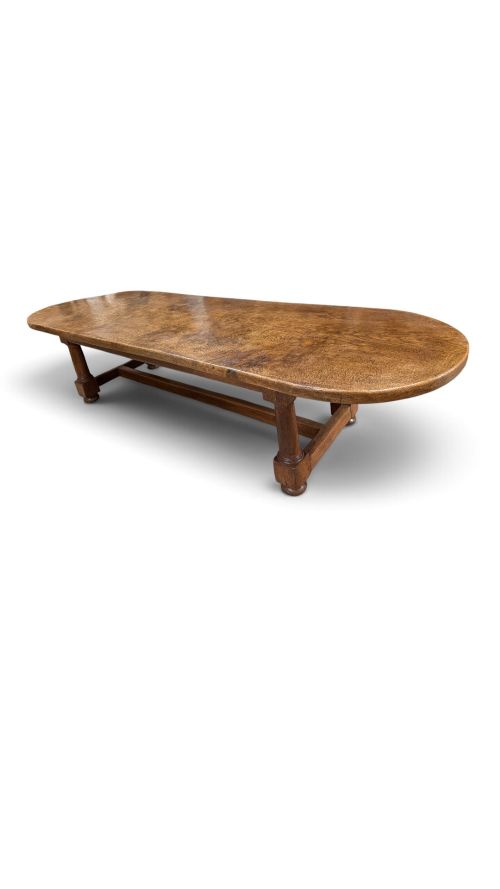
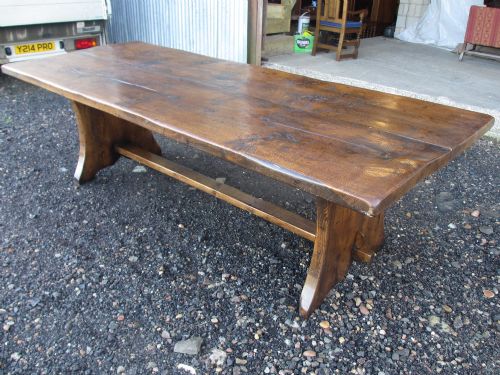
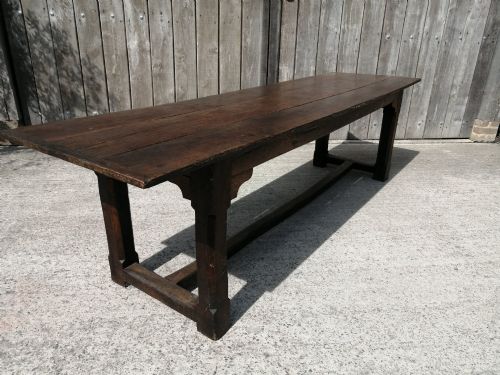
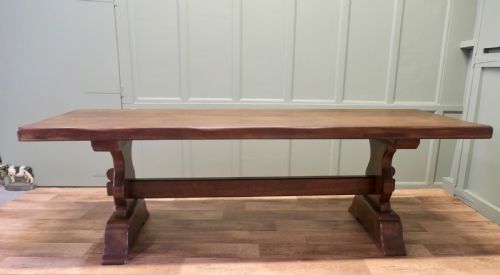
When searching for a large oak farm table, a buyer looks at substantial dining and kitchen surfaces designed for communal gathering. These pieces primarily take the form of refectory and trestle tables originating from French, English, and Scandinavian traditions.
The pieces appearing in this category span from the 17th century through the Edwardian period and into the early 20th century. The most common manifestations combine heavy oak tops with sturdy trestle bases, stretcher frames, or traditional four-leg supports.
Many examples show regional variations, such as French provincial designs or English refectory formats. They often measure several metres in length to seat large parties comfortably.
Materials and Construction
Construction relies heavily on solid oak, frequently paired with secondary timbers like elm and pine for structural elements or drawer linings. Joinery methods involve pegged mortise and tenon joints to secure heavy tops to robust underframes.
Tops are constructed either from single timber planks or multiple joined boards, sometimes showing historic wear and bleached finishes. Additional support often comes from iron or brass hardware used in structural bracing.
Large Oak Farm Table Retail Price Guide 2026
Typical asking prices for large oak farm table among the pieces listed under this phrase on Sellingantiques today, from the lower quarter to the upper quarter. They describe what is for sale here now, not the wider market.
Listings feature oak alongside elm, pine, iron, and brass across periods spanning the 17th century to the Edwardian era.
Distinctions in Quality
The upper tier of these tables is distinguished by the integrity of the timber, particularly single-plank tops and deep, patinated surfaces developed through generations of use. Master carpentry shows in the tightness of pegged joints and the balanced proportions of trestle ends.
Lesser examples display mismatched timber selections or extensive later alterations to the underframe. The presence of original surface treatments, whether aged oak or historic paint, elevates the standing of an individual piece.
The Large Oak Farm Table Glossary
- Refectory table
- A long narrow dining table originally built for monastic dining halls. These forms feature substantial length supported by trestles or four legs linked by low stretchers.
- Trestle table
- A table comprising two or more support frames connected by a horizontal beam or stretcher. This design provides sturdy leg clearance along the length of the top.
- Single plank top
- A dining surface fashioned from one continuous width of timber. Such boards indicate trees of exceptional maturity.
- Patina
- The surface sheen and colour developed through age, light exposure, and regular use. This quality distinguishes period surfaces from modern finishes.
- Stretcher
- A horizontal wooden brace connecting the legs of a table to improve rigidity. These components often show wear patterns near the floor.
Large Oak Farm Table: Frequently Asked Questions
How do I clean a historic oak table?
Maintenance requires only a damp cloth to remove surface dust, avoiding harsh chemical cleaners that strip the finish.
Periodic application of natural wax helps nourish the timber and preserve the historic surface sheen.
Can these tables be disassembled for transport?
Many refectory and trestle designs feature tops that lift off the base or frames held together by wooden pegs.
This construction allows for easier movement of heavy timbers through tight doorways and up stairwells.
How do I date an antique oak table?
Dating relies on examining the tool marks, joinery methods, and the method of timber conversion used on the underside. Hand-sawn boards and pegged joints usually point to earlier centuries of manufacture.
Secondary woods and hardware styles also help narrow down the period of origin.
Are elm and pine commonly found with oak?
Makers frequently utilised elm for tops and pine for internal framing or secondary surfaces due to regional timber availability. These mixed-wood constructions remain authentic to period workshop practices.