



Antique French Monastery Table
These large timber surfaces bring grounded, communal eating spaces into modern homes.
Antique French Monastery Table
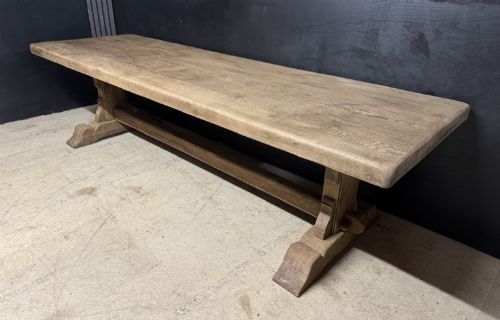
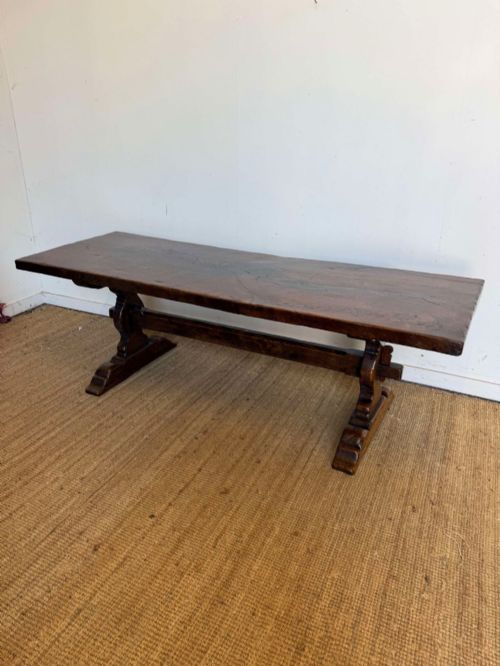
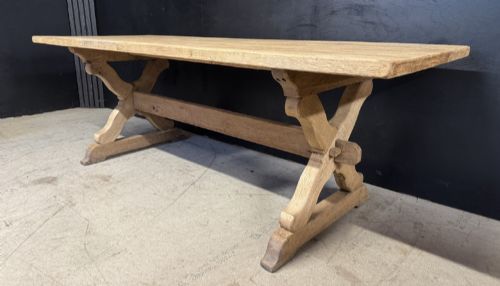
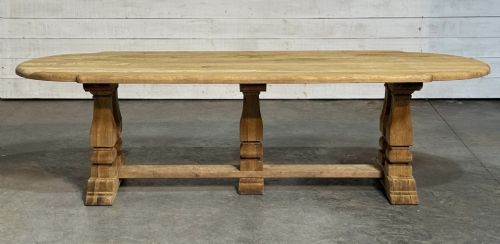
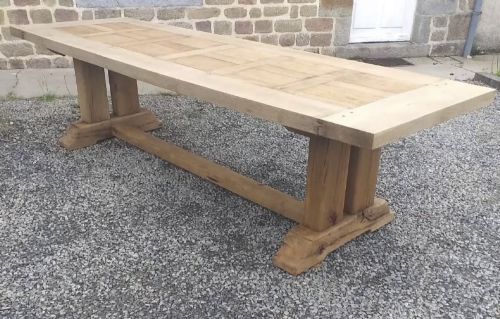
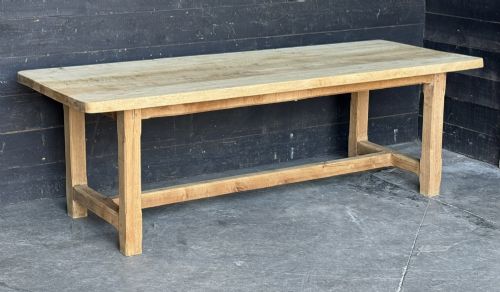
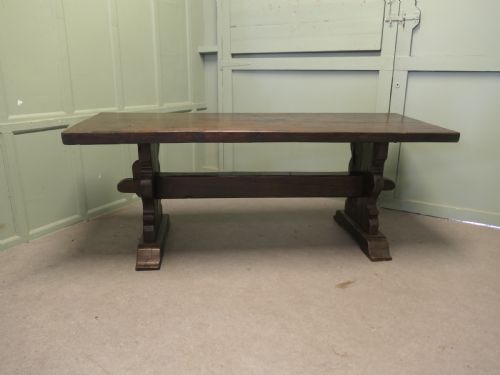
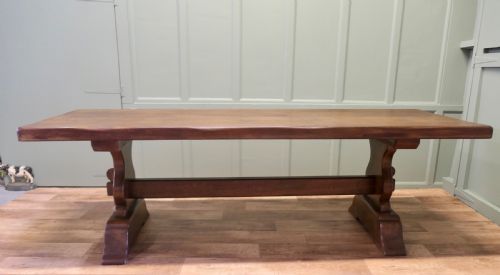
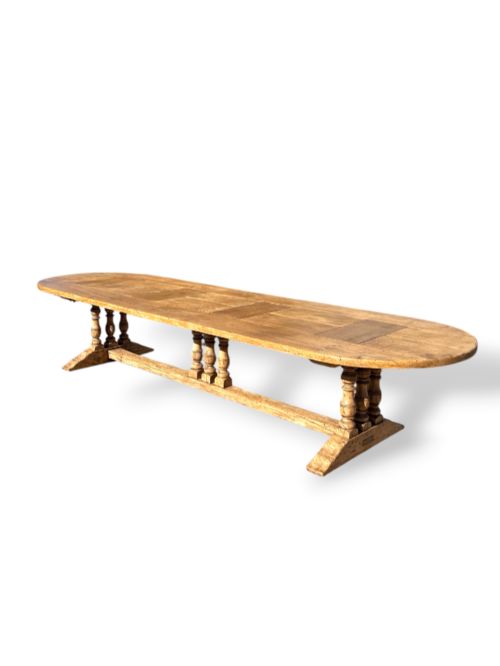
An antique french monastery table provides a grand central surface intended for communal dining and large gatherings, seating multiple diners comfortably along its length. These pieces take the form of substantial dining tables associated with the long eating boards of religious houses or large rural farmhouses.
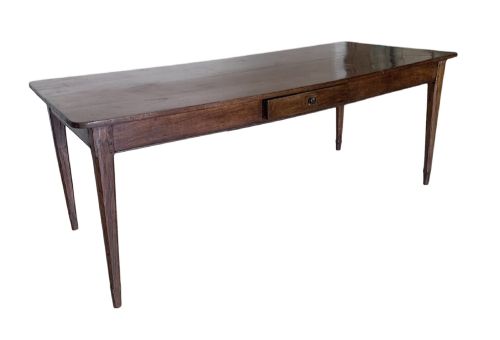
Buyers meeting these pieces on this page encounter examples originating predominantly from the nineteenth century, alongside a small number from the early twentieth century. The forms span seventeenth century styles and French provincial designs, reflecting robust regional vernacular furniture traditions.
The objects listed display substantial proportions designed for practical use, functioning primarily as large refectory or farmhouse dining tables. Oak and walnut form the structural core of these communal boards, shaping heavy timbers built for daily domestic life.
How they were made
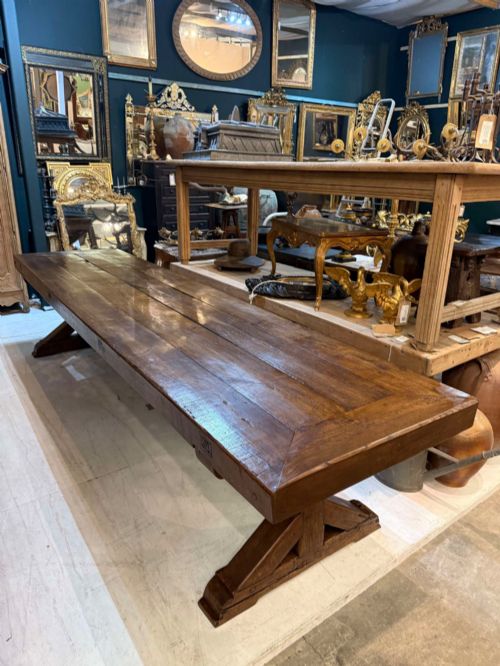
Makers constructed these tables predominantly from solid oak and walnut, utilising dense hardwoods capable of supporting heavy everyday usage. Workshops selected thick timber planks for the top surfaces, often pairing them with robust structural framing underneath.
Iron components appear alongside timber elements to reinforce the construction of these large dining surfaces. Carpenters relied on traditional joinery methods to bind the heavy planks, ensuring long term stability for tables spanning significant lengths.
Antique French Monastery Table Retail Price Guide 2026
Typical asking prices for french monastery table among the pieces listed under this phrase on Sellingantiques today, from the lower quarter to the upper quarter. They describe what is for sale here now, not the wider market.
What varies in quality
Quality diverges in the selection and preparation of the primary timber, where denser oak and walnut planks with strong grain patterns command greater regard. The choice between a heavily patinated dark wood finish and a lighter bleached oak appearance alters the visual weight of the piece.
Proportion and scale dictate the standing of individual examples, with larger dimensions and balanced framing separating utilitarian boards from more imposing dining furniture. The integrity of the plank top and the solidity of the supporting framework determine the overall structural conviction.
The Antique French Monastery Table Glossary
- Plank top
- A surface constructed from several wide boards laid lengthwise alongside one another. This traditional construction method accommodates the natural movement of large timbers over time.
- Refectory table
- A long, narrow dining table originally designed for communal meals in monastic dining halls. These pieces evolved into standard forms for large country houses and farmsteads.
- French provincial
- A style reflecting furniture produced in the regions outside Paris during past centuries. It emphasises practical utility, sturdy construction, and regional woodworking traditions.
- Bleached oak
- Timber treated to lighten the natural dark tone of the wood. This process creates a paler, scrubbed surface finish popular in rustic and country interiors.
Antique French Monastery Table: Frequently Asked Questions
What is an antique french monastery table?
An antique french monastery table is a large, sturdy dining surface built to accommodate many people at once. These boards originate primarily from the nineteenth century and reflect rural French carpentry traditions.
Such pieces function as central gathering points for dining rooms and large kitchens. Their substantial scale and robust timber construction make them enduring fixtures in domestic spaces.
How were these tables used originally?
These tables served as communal eating surfaces in large domestic or institutional settings. They accommodated large groups for everyday meals and household gatherings.
The heavy timber construction withstood constant daily use and the demands of large households. Their generous length provided ample workspace for food preparation alongside dining.
What woods were used to build them?
Carpenters built these tables using heavy hardwoods suited to large furniture forms. Oak and walnut appear consistently across these pieces, selected for their structural strength.
Iron hardware occasionally reinforces the timber framework underneath. These materials ensured the tables could support heavy loads across extended spans.
How do I care for a bleached oak table?
Bleached oak surfaces require gentle cleaning using dry or barely damp cloths to protect the lighter wood finish. Avoid harsh chemical cleaners that might strip or alter the treated timber.
Use protective mats under hot dishes and liquids to prevent staining the porous grain. Regular maintenance keeps the scrubbed wood looking clean and natural.