
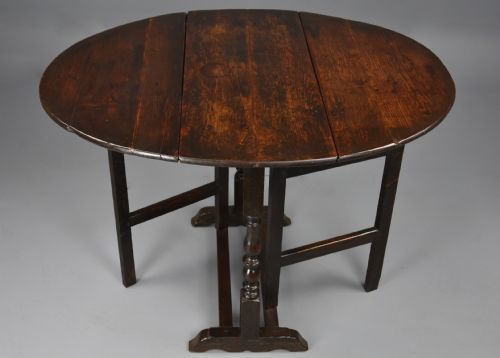
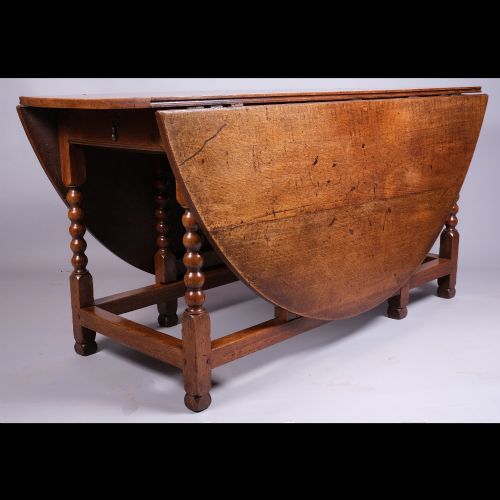
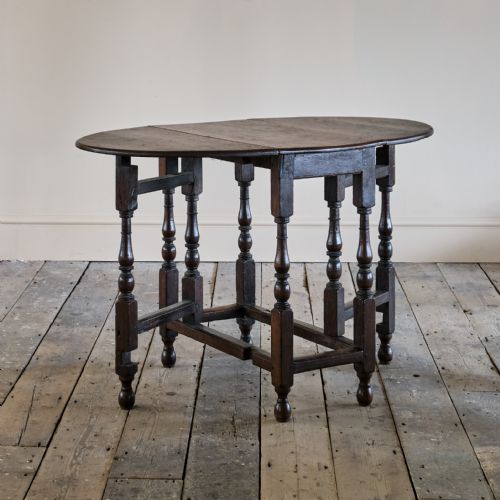
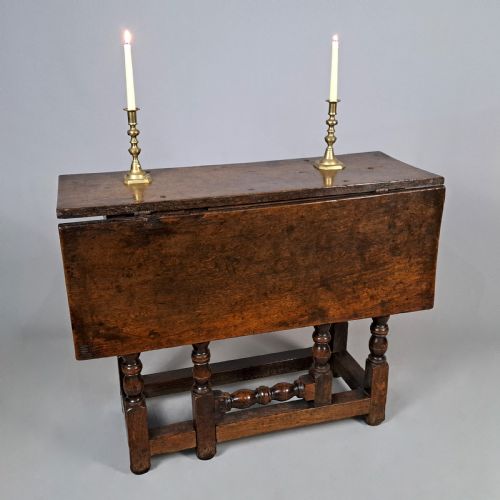


Period Oak Drop Leaf
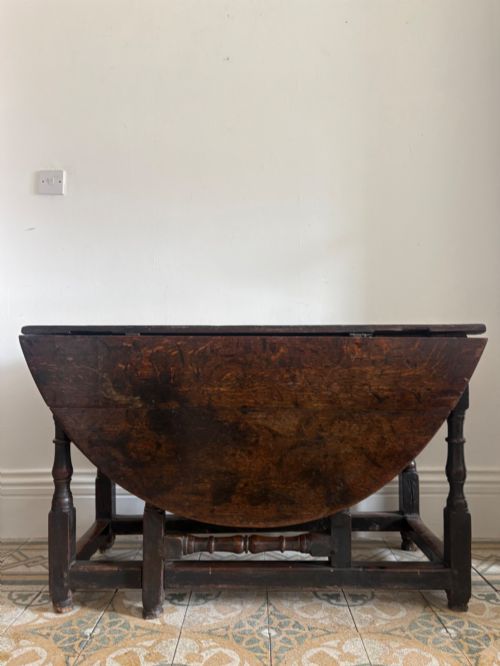
These period oak drop leaf tables bring centuries of English craft and sturdy timber into everyday dining and living spaces.
Period Oak Drop Leaf
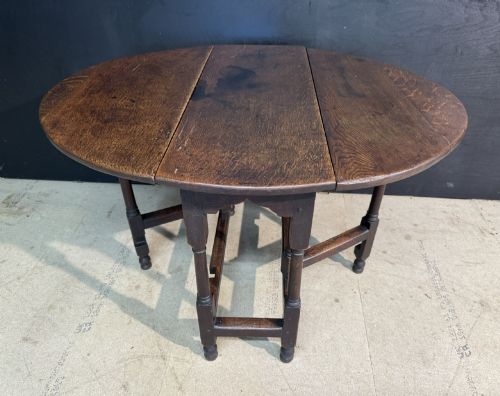
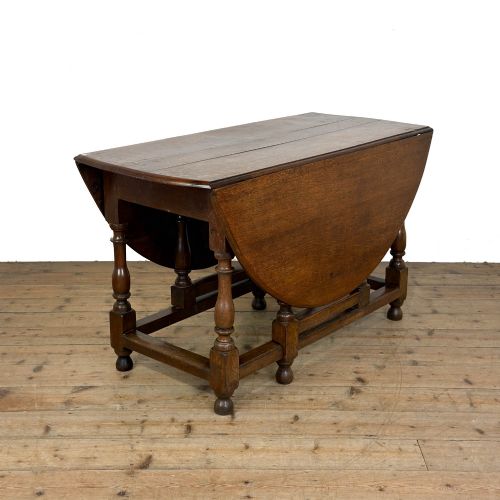
A period oak drop leaf table offers a practical surface that folds down to save space when not in use. These pieces span centuries of English domestic life, crossing the seventeenth, eighteenth, and nineteenth centuries.
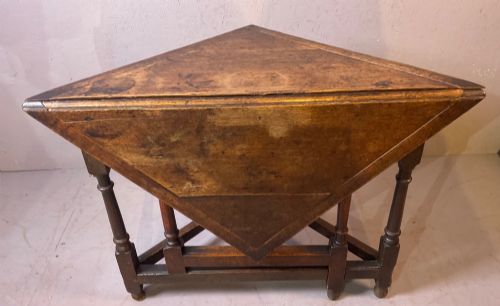
The selections here most commonly take the form of gateleg dining tables, side tables, and occasional tables. They range from small proportions designed for compact rooms to large dining tables intended to seat six or more.
Originating across different periods from Charles II and Queen Anne reigns through to Regency and Georgian eras, the form relies on hinged flaps supported by swing legs.
How they were made
Makers built these tables primarily from solid oak, sometimes combining it with ash for secondary framing or incorporating pollard and burr oak for decorative surfaces. Joinery relied on pegged mortise and tenon joints to withstand the movement of heavy timber.
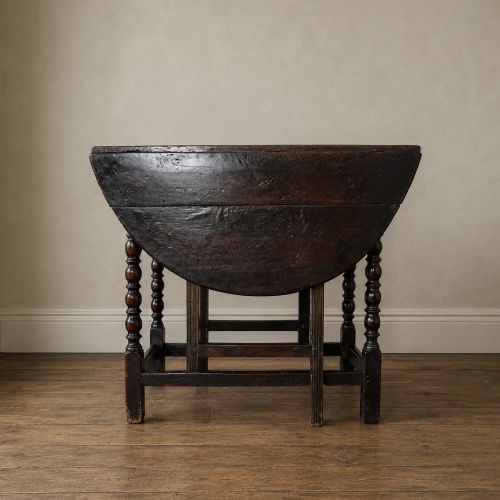
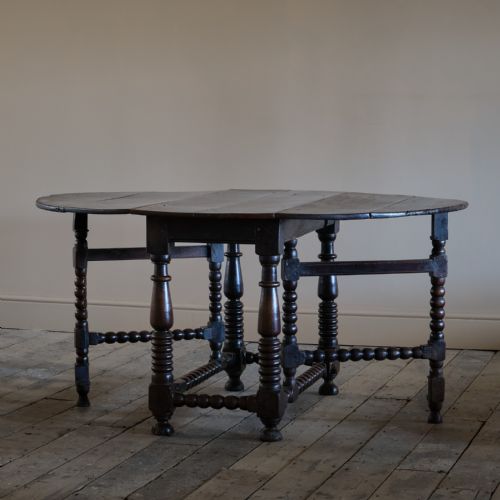
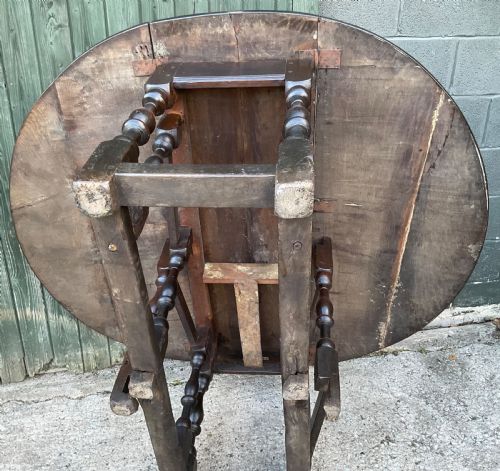
Turned supports define the structure, featuring baluster, bobbin, or plain turned legs connected by stretchers. Hinges and iron or brass fittings secure the drop leaves and folding gate legs to the central frame.
Materials across these listings span solid oak, ash, pollard oak, burr oak, iron, and brass.
What varies in quality
The integrity of the timber and the honesty of the surface finish distinguish standard examples from superior ones. Pieces retaining an untouched original patina and tight joints command greater appreciation from collectors.
Proportion and scale dictate the visual success of the piece, particularly where small proportions or unusual leg configurations like six-leg formats are concerned. The crispness of the turning on the baluster legs also reveals the skill of the original workshop.
The Period Oak Drop Leaf Glossary
- Gateleg table
- A table with hinged leaves supported by legs that swing outward like a gate to hold the flaps aloft. This clever mechanism allows a large dining surface to collapse into a slim profile.
- Baluster leg
- A turned vertical wooden support swelling gently toward the lower section, common in seventeenth-century furniture. It gives structural strength while adding decorative rhythm beneath the tabletop.
- Bobbin turning
- A series of rounded spherical or pill-shaped wooden beads carved sequentially along a lathe-turned leg. This distinctive decorative detail often marks pieces from the seventeenth century.
- Patina
- The deep, lustrous surface sheen developed naturally on wood over centuries of handling, polishing, and exposure to light. It acts as a visual record of age and care.
- Plank top
- A solid wooden top constructed from wide boards joined side by side rather than veneered panels. These boards display the natural grain and growth rings of the tree.
Period Oak Drop Leaf: Frequently Asked Questions
How do I seat six people comfortably?
Look for larger gateleg models or tables specifically noted to accommodate six guests when fully opened. The folding leaves lift up while the swing legs pull outward to support the expanded span.
Ensure you check the clearance beneath the frieze and stretchers so chairs slide in easily without knocking against the turned wooden framework.
What is a gateleg table?
A gateleg table is a form featuring a fixed central section and two hinged drop leaves supported by pivoted legs. When the leaves drop down, the table takes up minimal floor space.
Pulling the swinging legs outward locks the leaves into position, creating a sturdy surface for dining or writing.
How do I tell seventeenth and eighteenth-century oak apart?
Seventeenth-century examples often display bolder turned members like bobbin or heavy baluster legs, alongside pegged frame construction. Oak from this era tends to show deep grain patterns and rich surface patination.
Eighteenth-century versions frequently move toward slender supports, cleaner lines, and styles influenced by Queen Anne or Georgian design preferences.
Where should I place an occasional table?
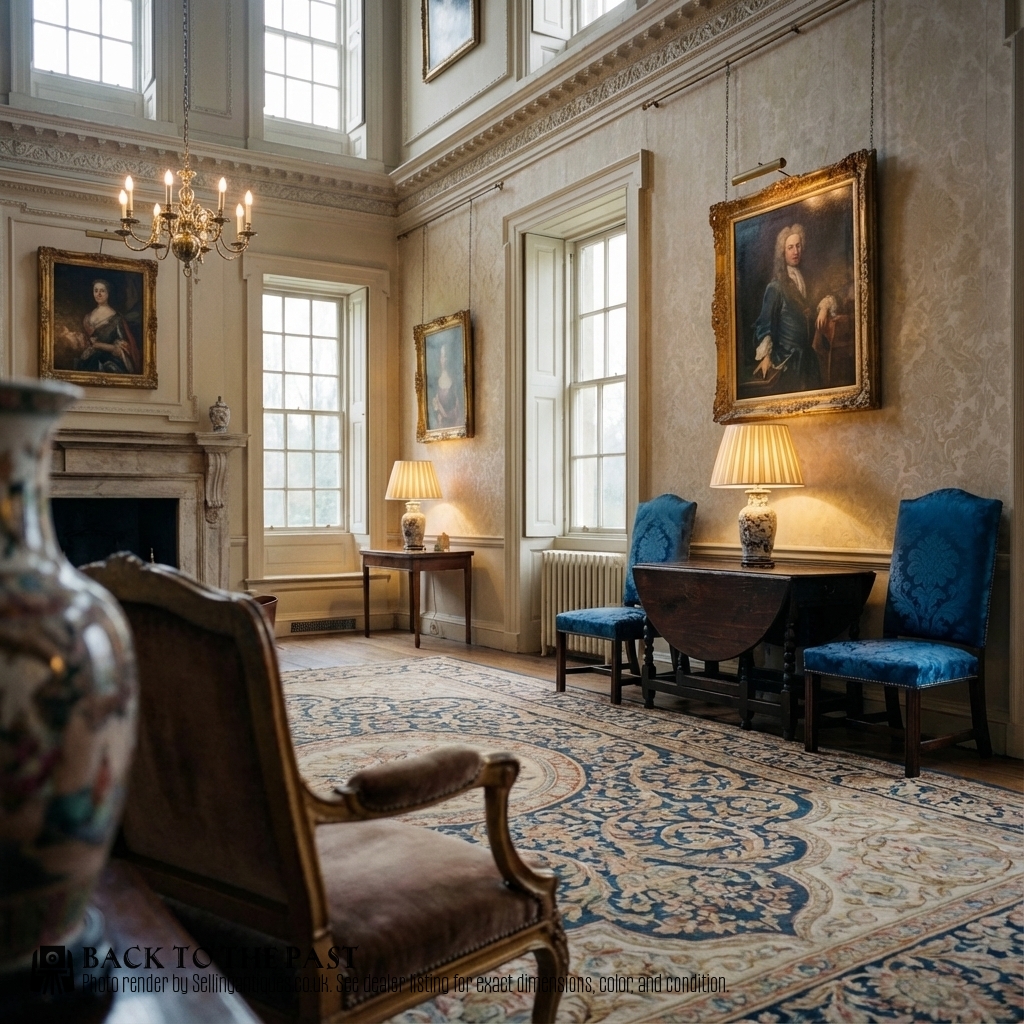
Smaller drop leaf and occasional variants fit well beside armchairs, in hallways, or against living room walls where surface space is needed intermittently. Lower occasional versions work nicely as lamp tables or display stands.
Dropping one leaf allows the piece to sit flush against a wall when floor space is tight.
Are these tables suitable for daily use?
Solid oak construction and pegged joinery make these tables remarkably durable for everyday dining and household tasks. The robust timber resists heavy wear when maintained with appropriate care.
Using coasters and placemats protects the historical surface finish from heat and moisture marks while allowing you to enjoy the piece daily.