



18th Century Cricket Table
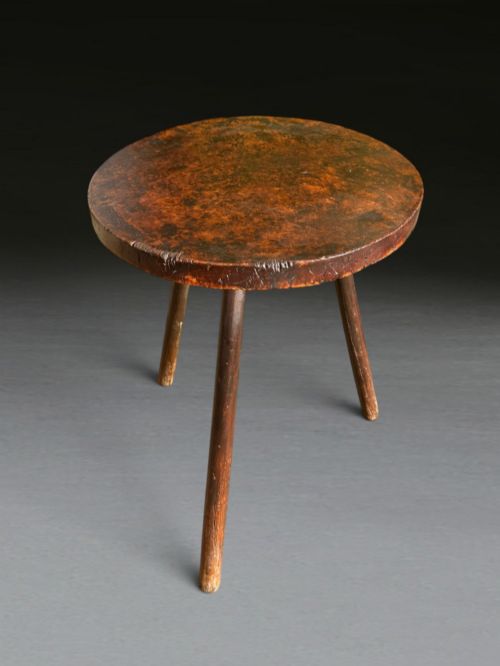
An 18th century cricket table brings genuine vernacular utility into a room through its three-legged design and round top.
18th Century Cricket Table
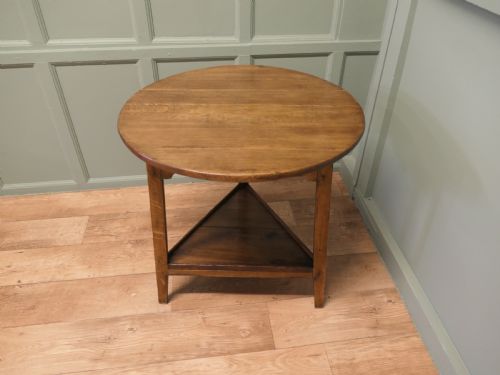
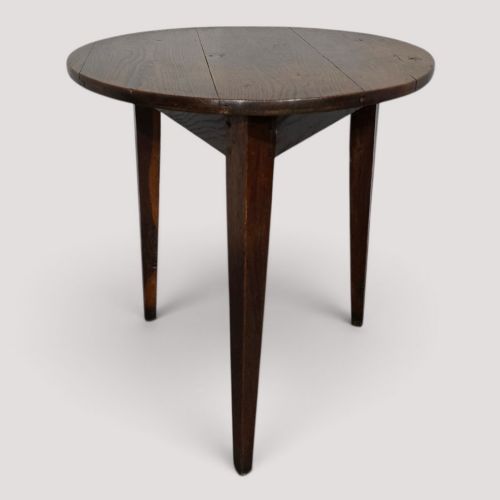
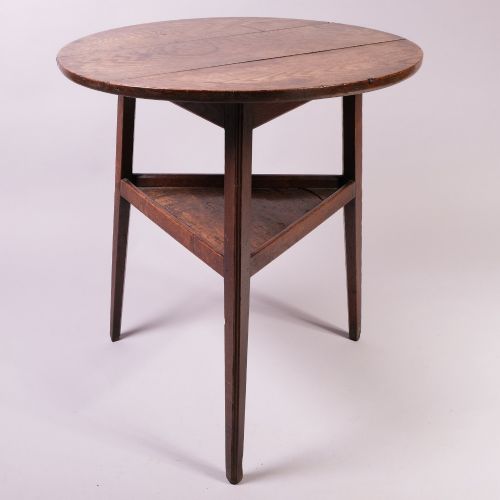
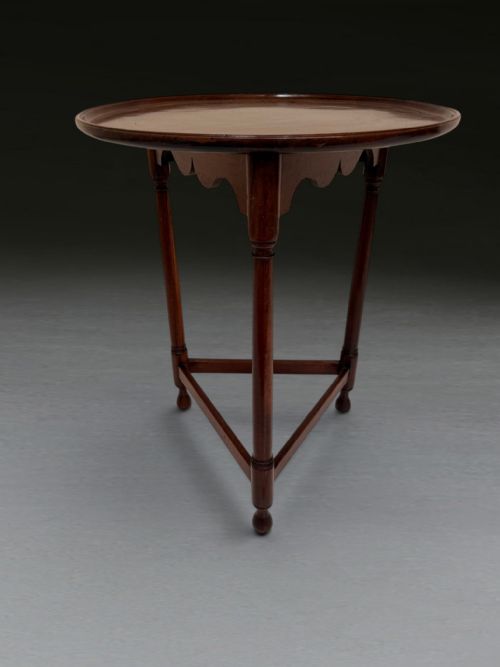
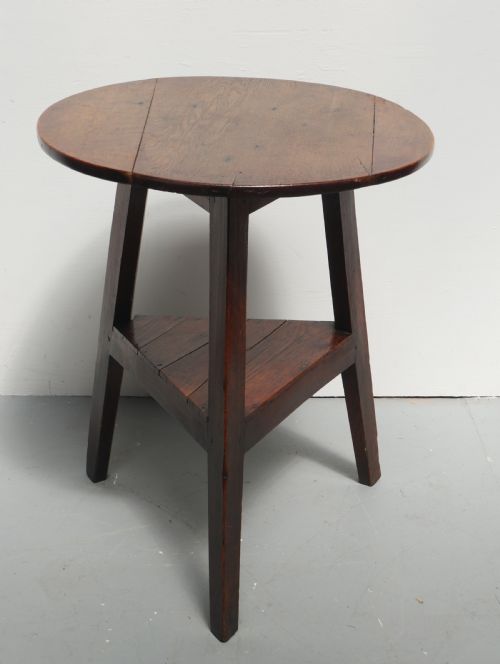
An 18th century cricket table is a compact, three-legged domestic table designed to stand steadily on uneven floors. These pieces appear mostly in oak, elm, pine, and ash, often associated with English country or Welsh vernacular traditions.
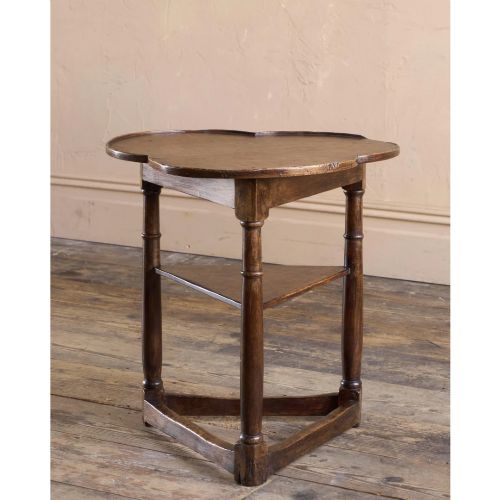
The version most frequently met on this page is the circular or trefoil top side table resting on three splayed legs. Makers often joined these legs with a low, triangular stretcher tier to provide structural rigidity.
Makers constructed these tables for practical use in farmhouses, cottages, and taverns rather than formal parlours. Their simple geometric forms and sturdy timber construction give them an enduring functional appeal.
How these tables were constructed
Joiners relied on native hardwoods and softwoods, frequently combining oak tops with ash or elm legs. Timber selection depended on regional availability, resulting in tables made from solid walnut, fruitwood, and pine.
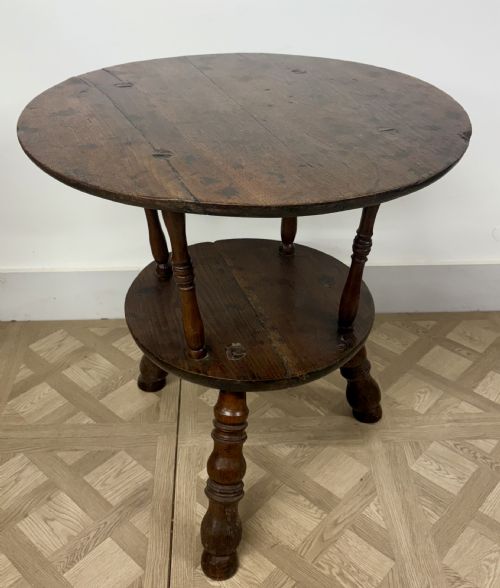
Construction methods employed pegged mortise and tenon joints to secure the legs into the underside of the tabletop. Turnery appeared on the legs of more refined examples, while simpler pieces utilised cleft or shaped timber.
18th Century Cricket Table Retail Price Guide 2026
Typical asking prices for 18th century cricket table among the pieces listed under this phrase on Sellingantiques today, from the lower quarter to the upper quarter. They describe what is for sale here now, not the wider market.
Listings feature oak, elm, pine, and ash as the primary timbers, spanning Georgian and 18th century vernacular styles.
What separates examples
Quality rests in the integrity of the timber and the retention of original surface patination. Tables that show honest wear without excessive restoration hold a distinct visual character.
The balance of proportions between the top and the splayed legs determines the visual success of the piece. Subtle details, such as pad feet or a well-fitted two-tier structure, elevate an ordinary utility table.
The 18th Century Cricket Table Glossary
- Trefoil top
- A tabletop shaped with three lobes, resembling a clover leaf. This specific geometry appears on select 18th century examples.
- Pad foot
- A rounded foot carved at the base of a cabriole or straight leg. It sits flat on the floor and provides a neat termination.
- Vernacular
- Objects made by local craftsmen following regional traditions rather than high-style metropolitan designs. These pieces emphasise function and available materials.
- Stretcher tier
- A low shelf connecting the legs of a table near the floor. It strengthens the frame and doubles as a small surface for storage.
- Splayed legs
- Legs that angle outward from the centre to widen the footprint. This arrangement ensures stability on uneven surfaces.
18th Century Cricket Table: Frequently Asked Questions
Why do these tables have three legs?
Three legs naturally rest firmly on uneven stone or timber floors without wobbling. This practical geometry made them ideal for everyday domestic use in old cottages.
Craftmen utilised this tripod construction to provide inherent stability without requiring complex leveling adjustments.
Where were cricket tables used?
These tables served as versatile side or occasional tables in farmhouses, dairies, and rural taverns. People moved them easily around the room for various domestic tasks.
Their compact size allowed them to fit into corners or beside settles where larger four-legged tables would not go.
How do I distinguish regional styles?
Welsh examples often display specific regional timber choices like native oak or local pine associated with Snowdonia and Monmouthshire workshops. English country pieces similarly reflect the woods most abundant in their specific locale.
Examining the construction methods and the primary timber provides clear clues to the geographic origin of the piece.
Can I use an 18th century table daily?
Solid timber construction makes these tables remarkably robust for contemporary living spaces. Their historic surfaces simply require basic care and protection from excessive moisture.
Placing them in a stable environment away from direct heat sources preserves the wood and the original finish.