
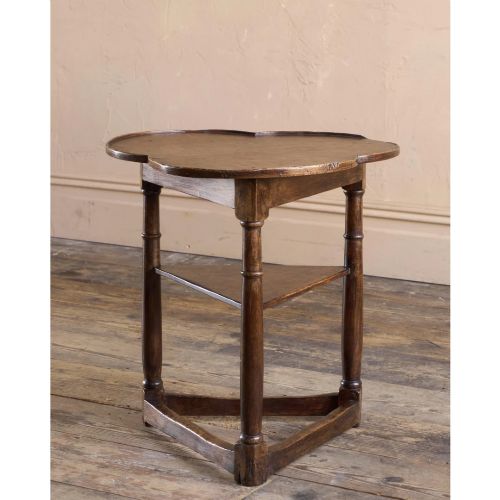
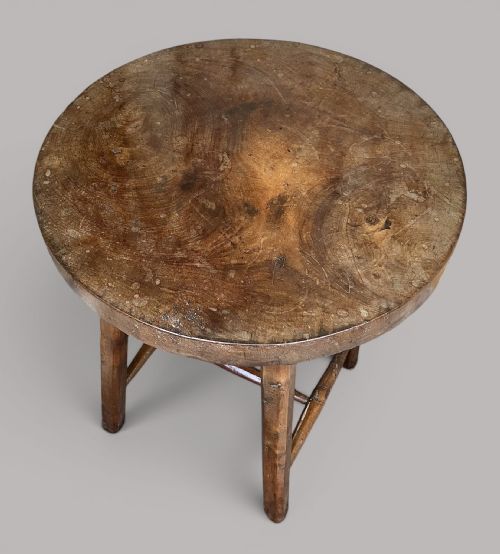
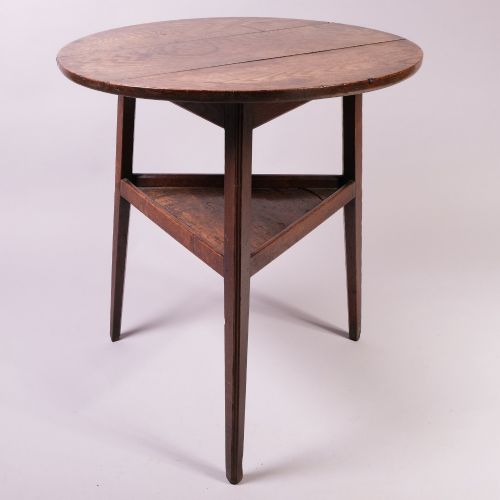
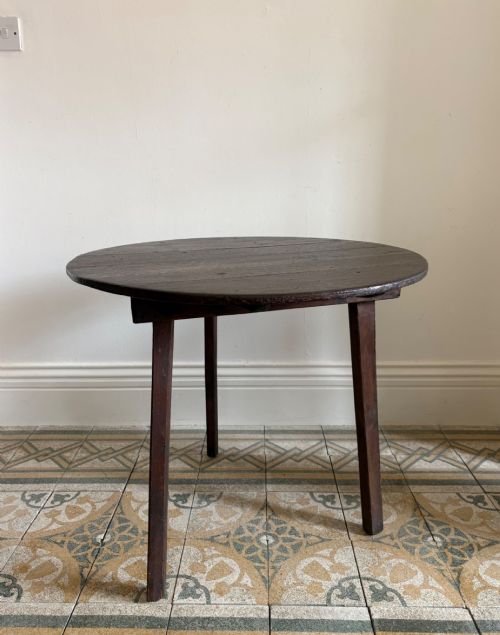
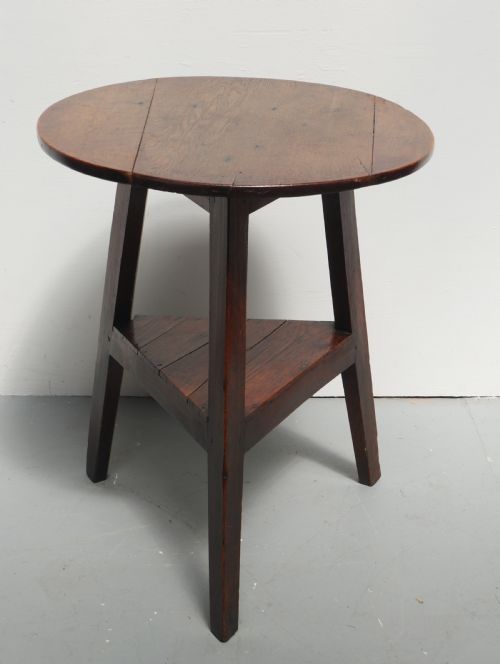


Georgian Oak Cricket Table
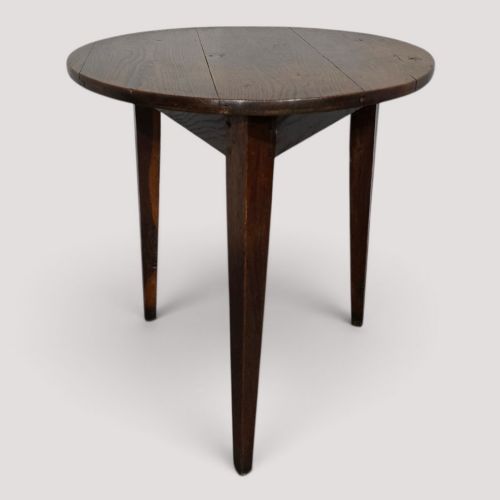
A Georgian oak cricket table provides a sturdy circular top on three splayed legs, offering simple country utility.
Georgian Oak Cricket Table
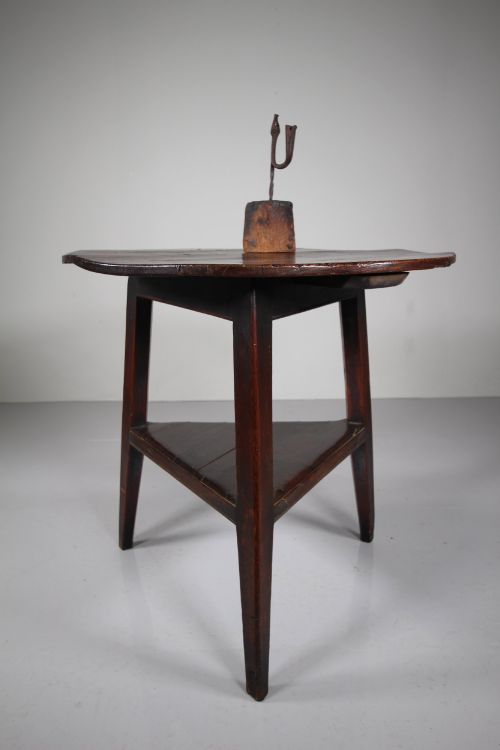
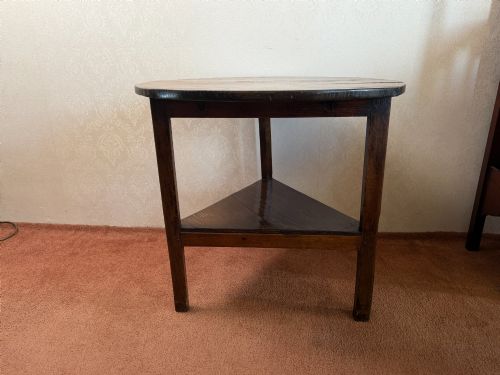
When you search for a georgian oak cricket table, you are looking at a distinct form of small circular occasional table resting on three splayed legs. These pieces belong to the Georgian and 18th century periods, often described through English and Welsh vernacular styles.
The version you are most likely to meet on this page is constructed primarily from oak, sometimes paired with elm, ash, fruitwood, or pine bases. They function effectively as side tables or occasional tables in living spaces.
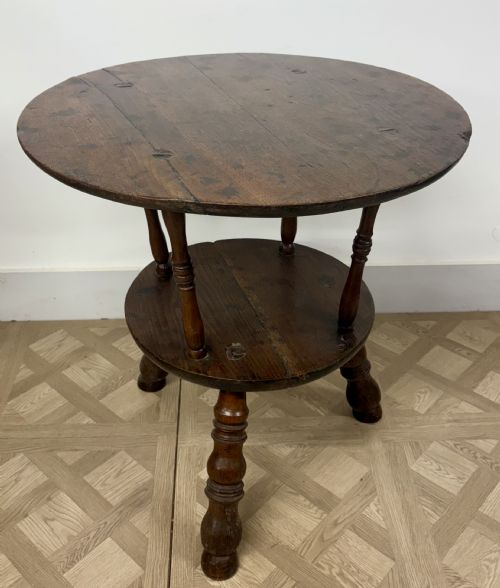
Makers working within country traditions produced these tables with circular tops, occasionally featuring two tiers or a drawer beneath the surface. Regional origins include Welsh localities such as Monmouthshire and Snowdonia.
How they were made
Makers relied on solid timber construction, utilising oak for the primary surfaces alongside elm, ash, fruitwood, and pine. Planks were joined to form the circular tops and supported by three splayed legs fitted directly into the underside.
Construction methods reflect English country vernacular and Georgian vernacular traditions, prioritizing stability on uneven flagstone floors through the tripod leg arrangement. Secondary timbers like pine appear in base structures and internal components.
The archive records forms including two-tier structures, drop leaf mechanisms, and tables equipped with drawers.
What varies in quality
Quality in these tables rests upon the choice of timber and the integrity of the original construction. Pieces exhibiting solid walnut, figured oak, or combinations with fruitwood demonstrate material selection above standard utility grades.
The proportion and survival of the original splayed legs dictate the visual balance of the table. Examples retaining untouched surfaces and regional Welsh characteristics show greater fidelity to their period of origin.
The Georgian Oak Cricket Table Glossary
- Cricket table
- A small circular table supported by three splayed legs. This design provided stability on uneven floors in 18th century country homes.
- Vernacular
- Objects built by local tradesmen using regional traditions rather than urban pattern books. These pieces reflect the local materials available to the maker.
- Splayed legs
- Legs that angle outward from the centre of the table. This configuration prevents wobbling on flagstone or uneven wooden floorboards.
- Two-tier
- A table featuring an additional lower shelf fitted between the legs. This shelf provided extra storage space for household items.
- Fruitwood
- Timber sourced from fruit-bearing trees such as apple or pear. Makers utilised these dense woods for contrasting elements or turned components.
Georgian Oak Cricket Table: Frequently Asked Questions
What is a cricket table?
A cricket table is a small circular table supported by three splayed legs. The three-legged design ensured the table remained stable on uneven floors.
These pieces served as versatile occasional or side tables in country homes during the 18th century and the Georgian period.
Where were they made?
These tables originated in English and Welsh rural workshops. Regional examples often carry designations linking them to specific areas like Monmouthshire or Snowdonia.
Local cabinet makers utilised accessible regional timbers such as oak, ash, elm, and fruitwood to construct them.
How do I use one today?
You can place a cricket table beside a chair or sofa as an occasional table. Their compact circular tops accommodate lamps, books, or decorative objects.
The three splayed legs allow the table to fit neatly into corners or small spaces within a room.
What woods were used?
Oak forms the primary material for the majority of these tables. Makers frequently combined oak with elm, ash, pine, fruitwood, or solid walnut.
Secondary woods like pine appear in the base structures, while top surfaces often display dense plank construction.