


Round Oak Wine Table
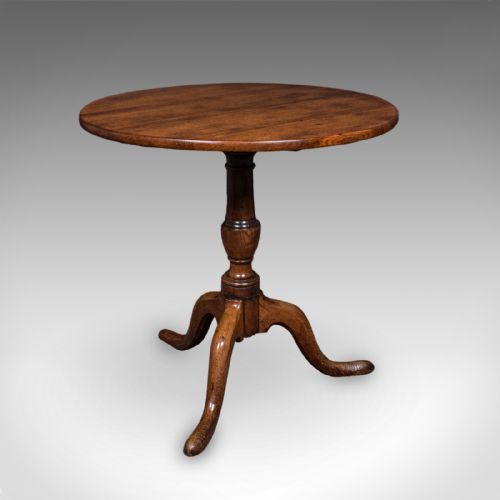
A round oak wine table brings compact utility and traditional timber grain to a corner, offering a stable surface raised on a slender central pillar.
Round Oak Wine Table
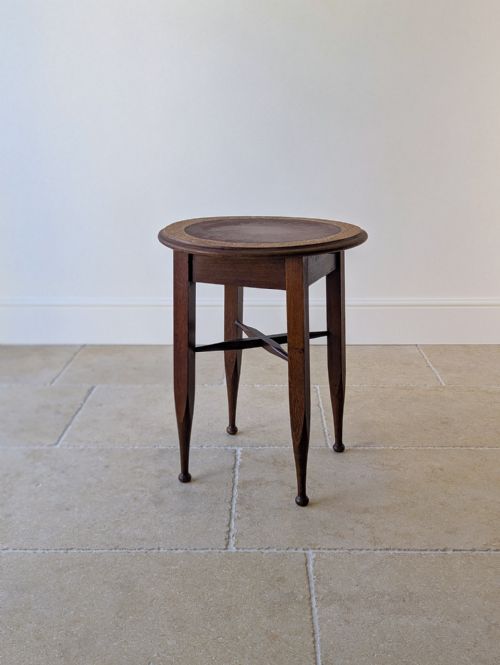
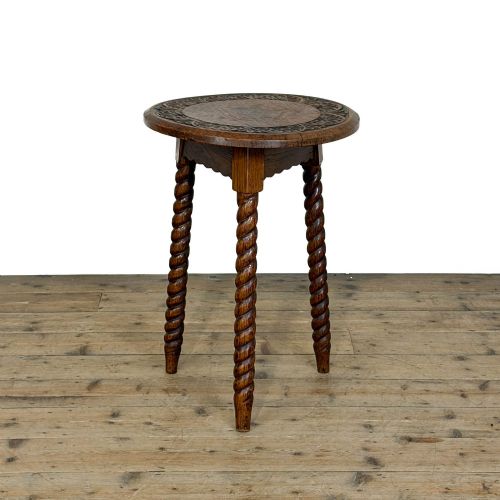
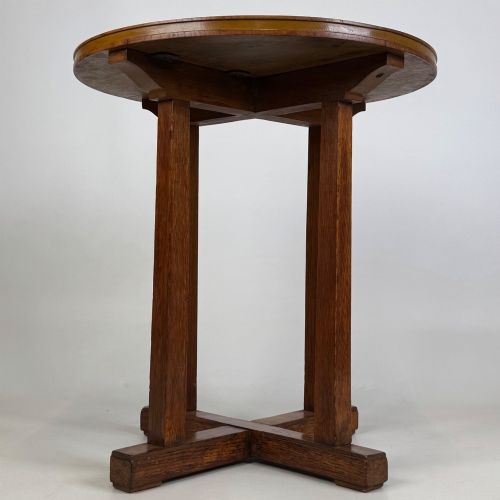
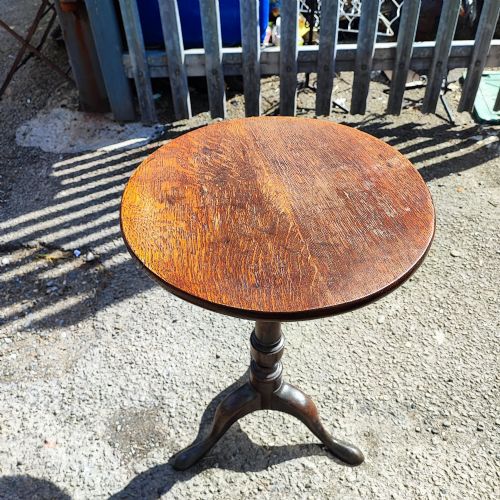
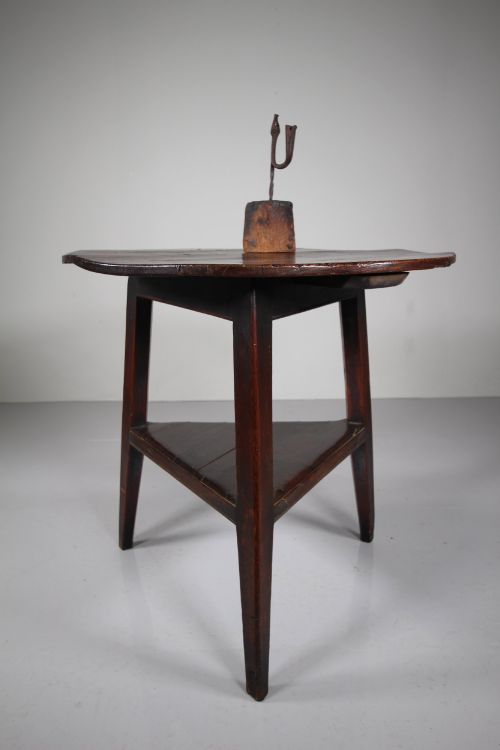
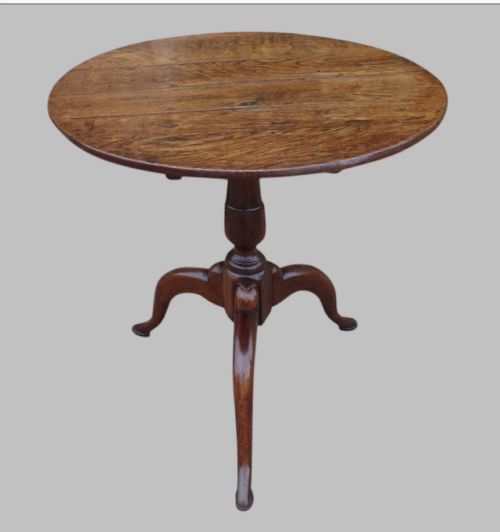
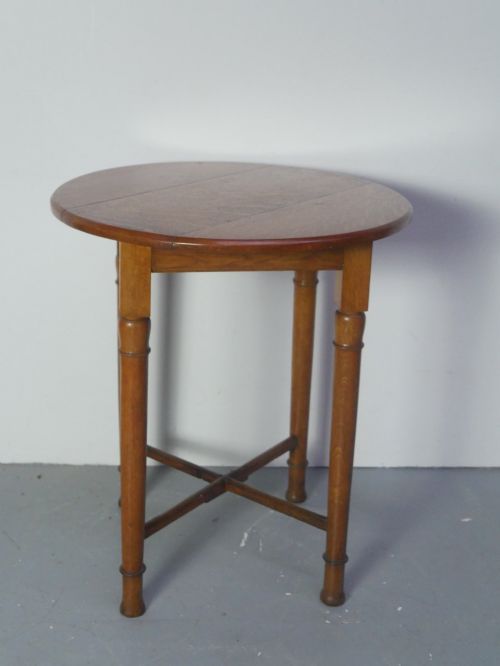
A round oak wine table sits on a tripod base beneath a circular top, designed originally for holding drinks and small lighting. The pieces seen here span from the Georgian period through the nineteenth century and into Edwardian and later decades.
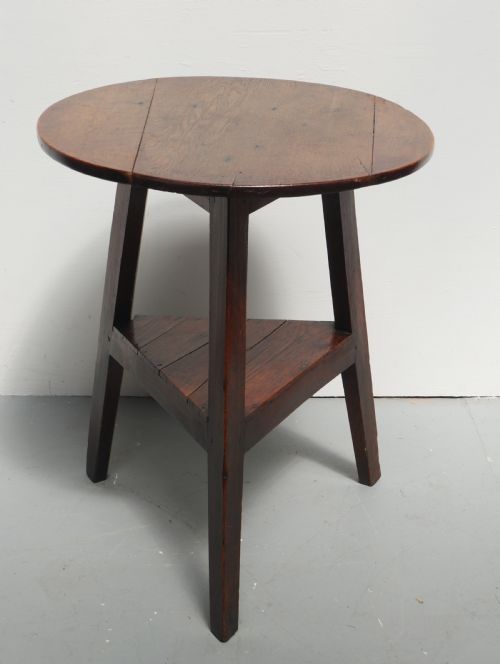
Most examples meet the eye as small occasional or tripod lamp tables, alongside regional cricket tables and French vendange or vineyard forms. They appear in solid timber as well as burr oak, often paired with secondary woods like beech or elm.
Materials and construction
Cabinetmakers constructed these tables primarily using solid oak, burr oak, and associated timbers such as fruitwood, cherry, elm, and beech. Surfaces sometimes feature wood veneer or inlay work.
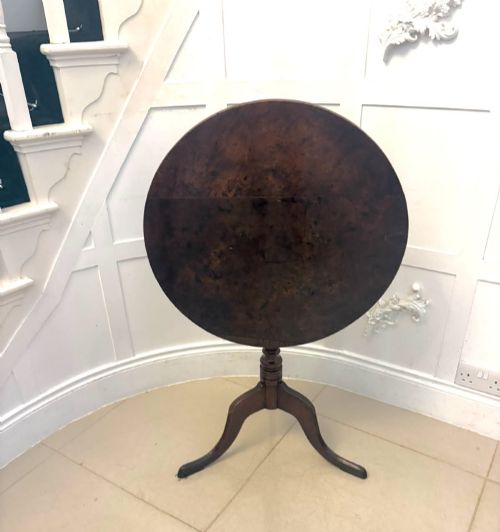
Many examples employ a tilt top mechanism supported by a turned pillar and three splayed legs. Joinery relies on traditional methods, while French and regional vernacular pieces show distinct carving and folding frames.
Some Victorian examples feature zodiac carvings designed specifically for tarot reading in dimly lit parlours.
Distinctions in quality
Quality rests in the selection of timber, particularly where figured burr oak or rich grain patterns appear on the circular top. The crispness of turning on the central column and the stability of the tripod legs dictate the piece's integrity.
Earlier eighteenth and Georgian examples exhibit finer proportions and hand-carved detailing compared to later revival or twentieth-century utilitarian iterations. The harmony between top thickness and leg spread defines the better examples.
The Round Oak Wine Table Glossary
- Tripod table
- A small occasional table supported by three legs radiating from a central pillar. This format provides stability on uneven floors.
- Tilt top
- A table top hinged to tip vertically when not in use. It allows the furniture to stand flat against a wall.
- Cricket table
- A small round wooden table with three splayed legs, often associated with early English vernacular furniture. The design prevents rocking on flagstone floors.
- Vendange table
- A French wine harvest table, sometimes folding, built with a round wooden top. They originated for use in vineyards during gathering seasons.
- Burr oak
- Timber taken from a tree growth showing distorted grain patterns. It produces highly decorative swirling figures on table tops.
Round Oak Wine Table: Frequently Asked Questions
What is a round oak wine table?
It is a small, circular table raised on a central pillar with three feet, designed for holding glasses, bottles, or lamps.
Most surviving examples date from the Georgian era through the nineteenth century and into Edwardian revivals.
How were they used originally?
These tables served beside seating areas to hold wine bottles and drinking vessels during social gatherings.
Over time their role expanded to accommodate small lamps, decorative items, and general parlor use.
Do tilt top mechanisms work?
Many tables retain their original brass or wooden catch mechanisms allowing the top to pivot vertically.
This feature allowed servants to store the furniture flat against walls when rooms required extra floor space.
How do I identify a Georgian piece?
Georgian examples often display hand-turned pillars, pegged tenons, and rich patination developed over centuries of polish.
They frequently feature solid oak or burr oak tops balanced on slender, splayed tripod legs.