
Antique Oak Drop Table
An antique oak drop table offers sturdy timber utility alongside folding flaps that extend surface space when needed.
Antique Oak Drop Table
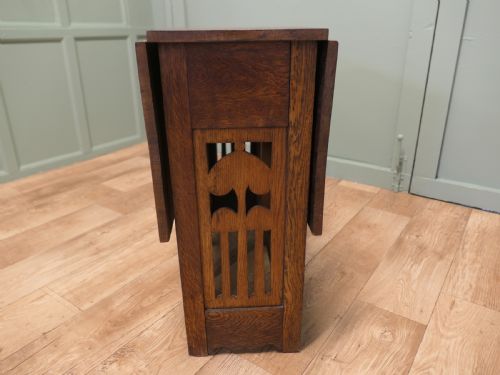
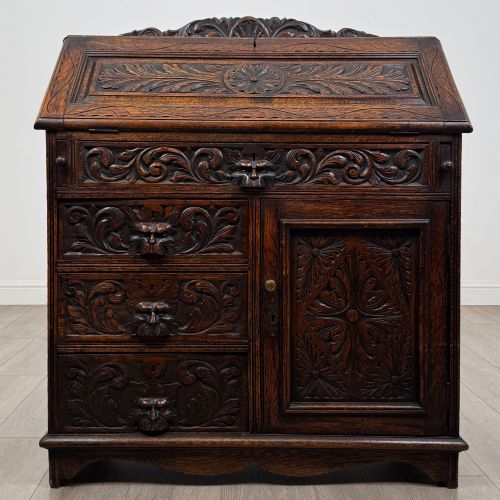
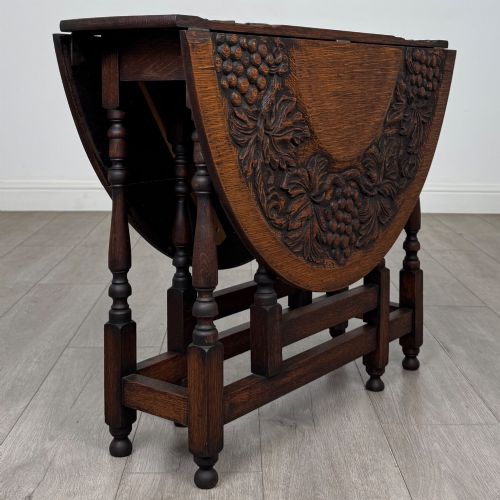
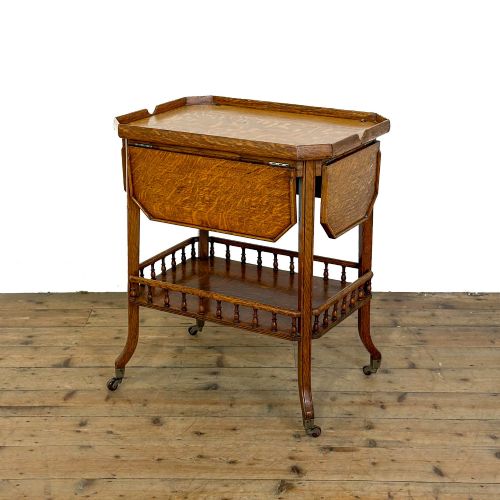
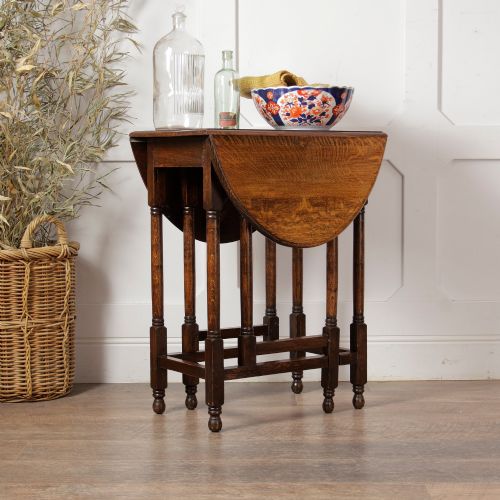
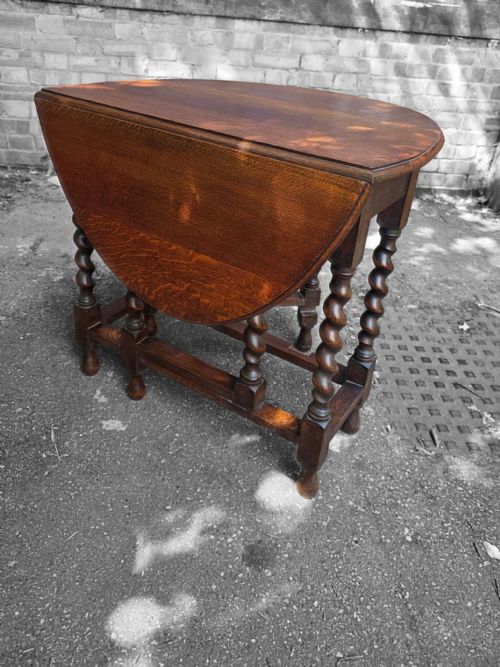
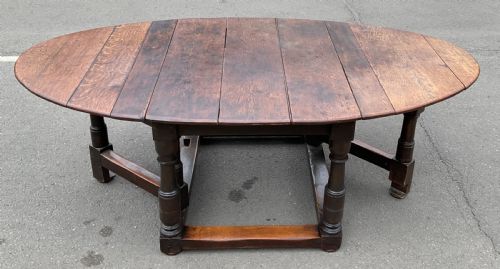
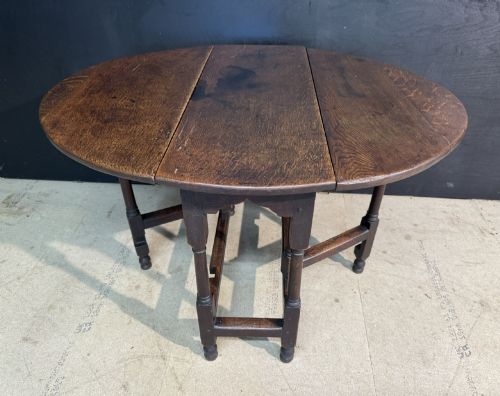
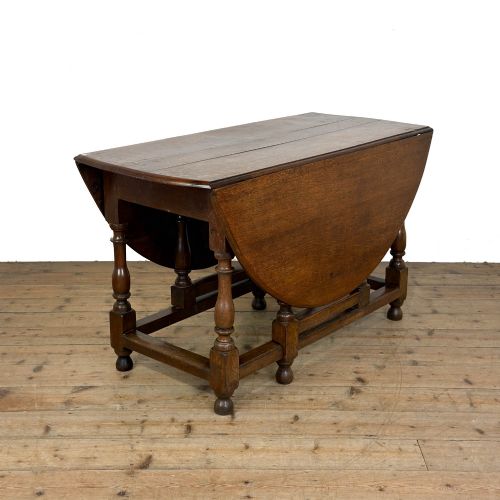
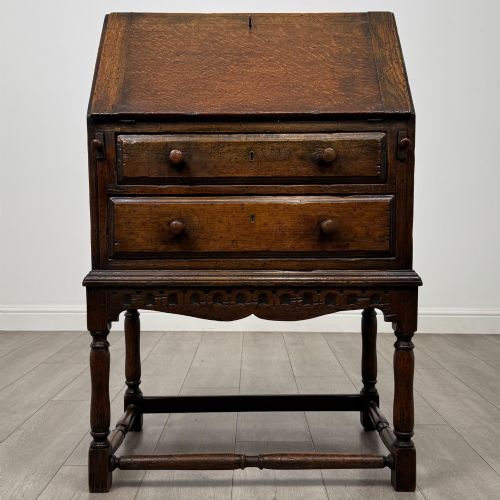
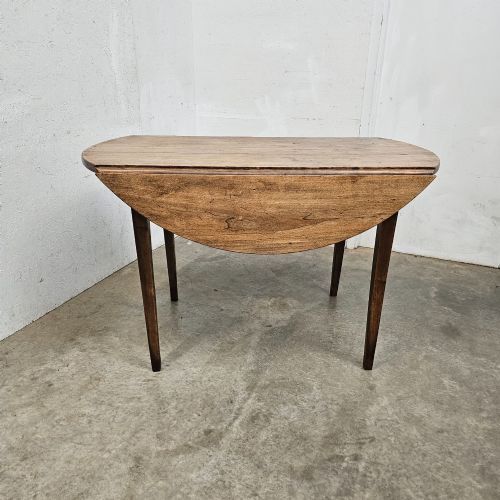
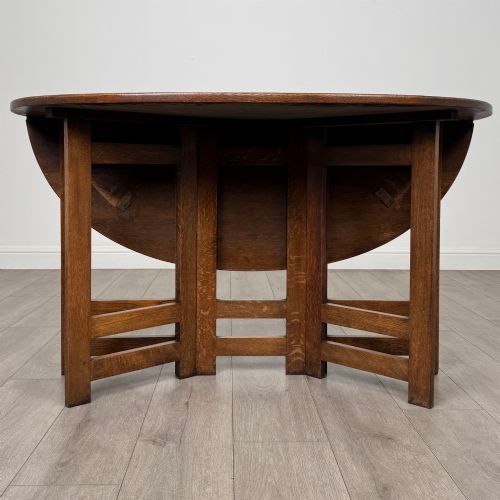
An antique oak drop table bridges centuries of English domestic design, spanning sturdy seventeenth-century gateleg forms to lighter Edwardian tea trolleys and twentieth-century occasional furniture. The search phrase covers dining pieces, small side tables, and kitchen surfaces that employ hinged leaves to alter their footprint. Buyers frequently encounter gateleg configurations where swinging legs support the extended flaps.
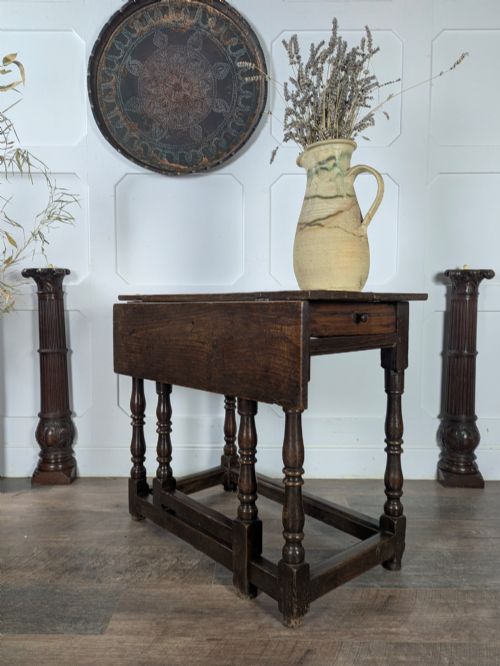
Earlier examples display seventeenth and eighteenth-century craftsmanship with plank tops and baluster or bobbin turned supports. Later Victorian, Edwardian, and twentieth-century revivals adapt the same folding mechanism into smaller coffee tables and compact dining formats. Solid oak dominates the construction, sometimes paired with fruitwood or ash.
Proportions range from grand wake tables seating multiple diners down to diminutive side stands intended for lamps or tea service. The core function remains the preservation of floor space through hinged flaps that drop down when the table is not in use.
Assessing quality in folding oak furniture
Surface appearance separates exceptional pieces from standard items, with original patina, warm colour, and untouched timber condition marking superior examples. The depth of finish develops through centuries of use and wax polishing.
Structural integrity depends on the original hinges and the stability of the gateleg swing mechanism. Tables retaining their early fittings and unwarped plank tops command greater attention from collectors.
Materials extend beyond solid oak to include brass hardware, iron hinges, and occasional ash or fruitwood components.
The Antique Oak Drop Table Glossary
- Gateleg table
- A table with hinged leaves supported by one or more swing-out legs that resemble a swinging gate. This design provides robust support for large drop leaves.
- Patina
- The surface sheen and texture developed on wood over long periods through handling and polishing. Good patina indicates age and minimal harsh restoration.
- Barley twist
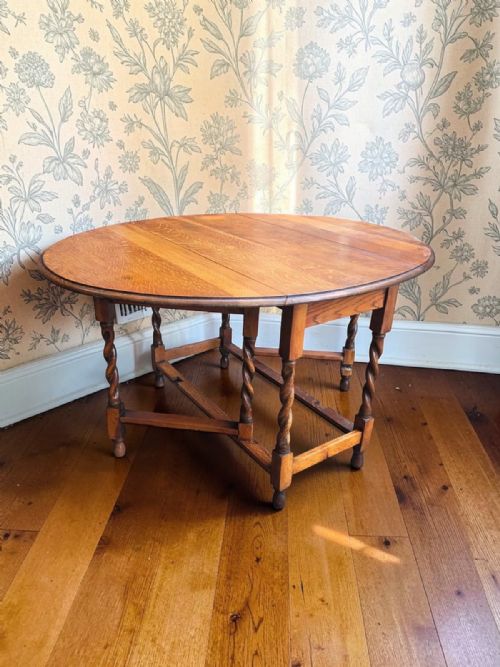
- A carved spiral column resembling a twisted rope, commonly utilised for table legs during the seventeenth century and revived in later periods. This turning technique requires precise lathe work.
- Pembroke table
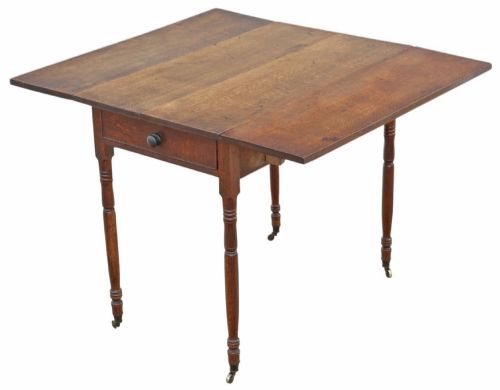
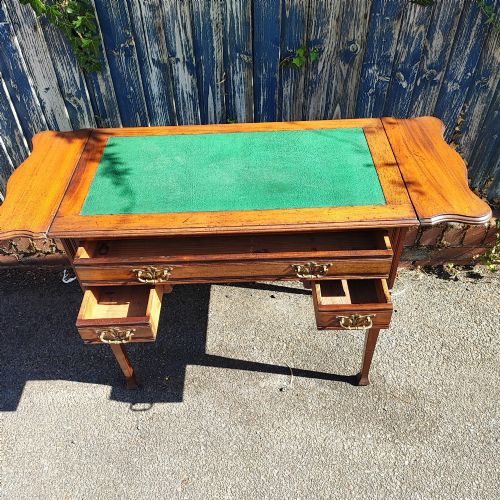
- A small rectangular table with two folding side flaps and typically a single drawer. They function well as occasional or breakfast tables.
- Plank top
- A table top constructed from wide boards of solid timber joined edge to edge. Early examples rely on this method before veneered surfaces became common.
Antique Oak Drop Table: Frequently Asked Questions
How do I identify a seventeenth century table?
Seventeenth-century examples typically feature hand-carved baluster or bobbin turned legs, pegged mortise and tenon joints, and heavy solid oak plank tops.
Closer inspection often reveals tool marks from hand adzes and saws, alongside iron or wooden hinges securing the drop leaves.
What is the difference between a gateleg and a pembroke?
Gateleg tables utilise swing-out legs to support the entirety of each drop leaf, creating a large surface area when fully opened.
Pembroke tables feature smaller hinged flaps supported by pivoting brackets rather than full swinging legs, often including a drawer beneath the top.
How should I care for an oak surface?
Maintenance requires regular dusting with a dry cloth and occasional application of traditional beeswax to nourish the dry timber.
Avoid placing these tables in direct sunlight or near heat sources to prevent the oak planks from splitting or warping.
Did these tables serve as dining furniture?
Larger gateleg and wake tables provided the primary dining surfaces in English homes before dedicated dining rooms became standard.
Smaller variants functioned as tea tables, sideboards, or writing surfaces depending on the room and period.