

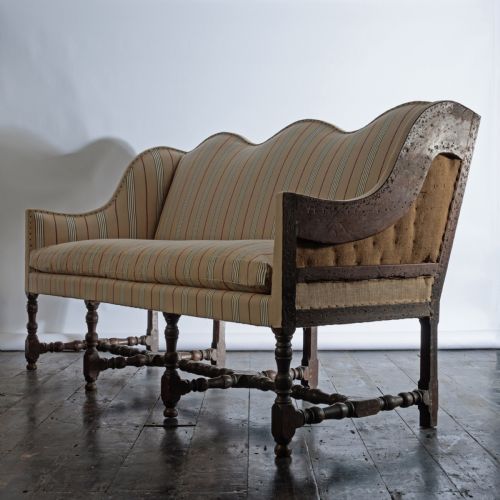
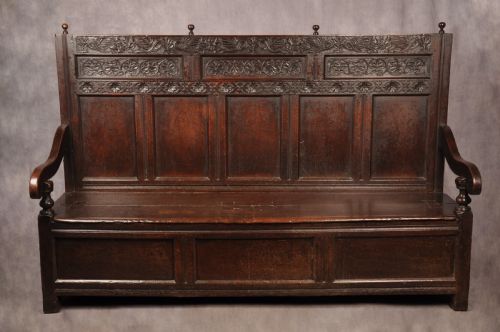


17th Century Oak Settle
A 17th century oak settle is a high-backed wooden seat built to block draughts and anchor a hall.
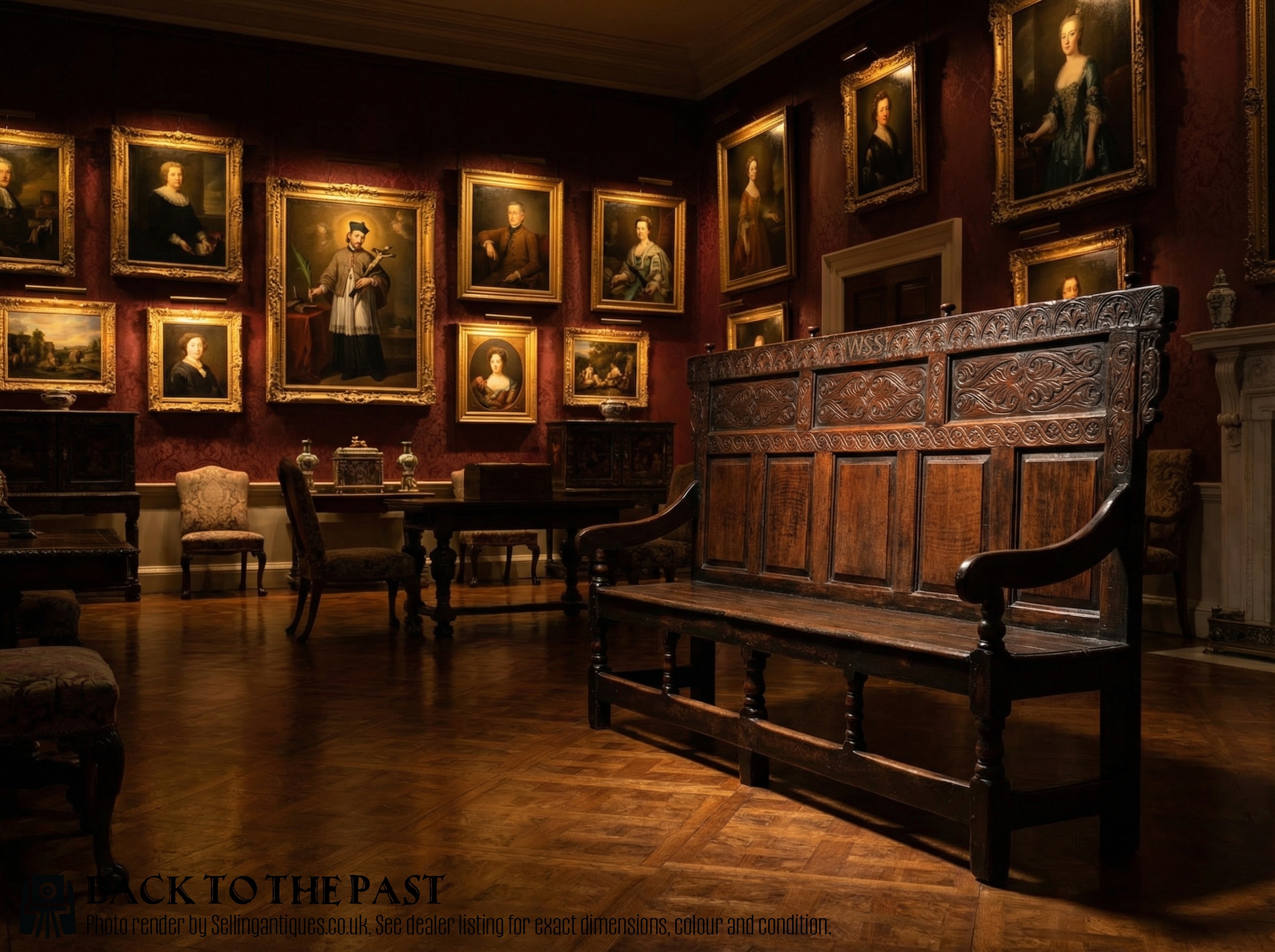
17th Century Oak Settle
A 17th century oak settle provides a sturdy seat designed for domestic halls and kitchens, frequently appearing as a high-backed bench with panelled construction. These pieces range from simple vernacular forms to elaborate carved designs featuring box seats or drawers beneath.
The evidence shows examples originating from English regions such as the North Country and Westmorland, alongside occasional fruitwood variants. High-backed versions dominate the selection, built to shield sitters from cold draughts in large rooms.
Materials and Construction
Makers relied primarily on solid oak, supplemented by fruitwood and walnut, joined using traditional pegged mortise and tenon methods. Iron hardware and hinges secure doors on box variants, while carved decoration, inlay, and barley spiral twist supports appear on select examples.
Structural elements often include panelled backs, enclosed storage boxes beneath the seat, and integrated armrests. Surfaces display the natural grain of timber shaped by hand tools, occasionally softened by cotton or jute webbing on upholstered variants.
17th Century Oak Settle Retail Price Guide 2026
Typical asking prices for 17th century oak settle among the pieces listed under this phrase on Sellingantiques today, from the lower quarter to the upper quarter. They describe what is for sale here now, not the wider market.
Marriage settles record family unions with carved initials and dates built straight into the timber backrest.
Assessing Craftsmanship
Quality rests in the depth and crispness of the carved details along the top rail and back panels, separating plain vernacular carpentry from ambitious regional work. The integrity of the timber and the proportion of the high back relative to the seat also define the piece.
Originality of components, particularly the box seat lids, drawers, and lower framework, marks the distinction between untouched survival and heavily restored examples. Regional flourishes, such as specific Westmorland or North Country construction traits, add depth to the work.
The 17th Century Oak Settle Glossary
- Box settle
- A wooden bench featuring a concealed storage compartment beneath the seat, often accessed by lifting the lid.
- Wainscot
- Panel woodwork used for the backrest, echoing the style of wall panelling common in the period.
- Jacobean
- A design style spanning the early part of the century, characterised by geometric mouldings and stiff, formal carved motifs.
- Vernacular
- Everyday domestic furniture built by local craftsmen using regional traditions rather than court or metropolitan styles.
17th Century Oak Settle: Frequently Asked Questions
How were these settles used?
These benches sat beside hearths or in large halls where their high wooden backs deflected cold air. The enclosed lower boxes doubled as storage for household goods.
Their solid build made them communal seats for family members sharing the warmth of the central fire.
Where should I place a settle?
A hallway or large living space suits the scale and high profile of these benches best. They function effectively as room dividers or against a blank wall.
Keep them away from direct heat sources and dramatic humidity shifts to protect the antique timber.
What woods were used?
Oak forms the primary material for the vast majority of these benches, chosen for its strength and local availability. Fruitwood and walnut appear less frequently in smaller or child-sized variants.
Iron fittings provide structural support and functional hinging on box seats.