

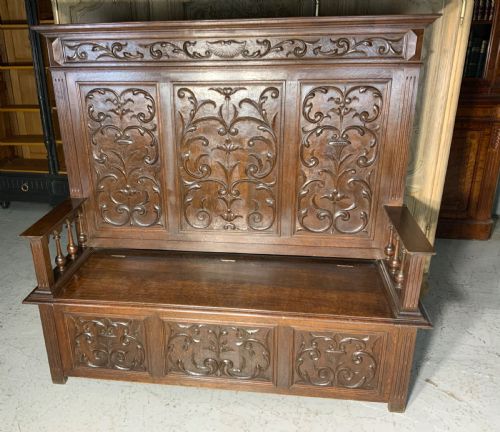



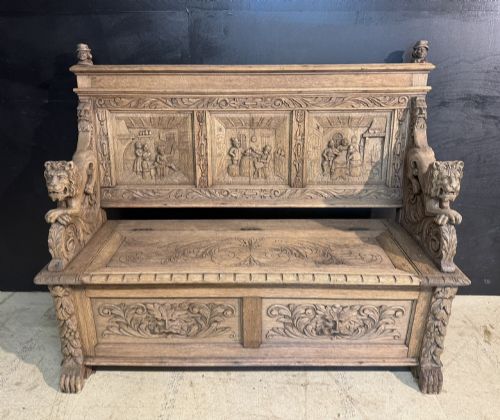


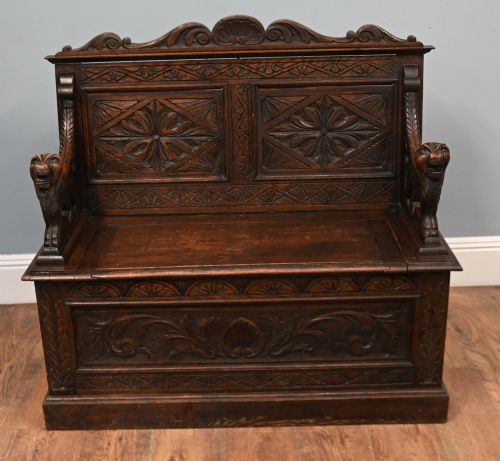


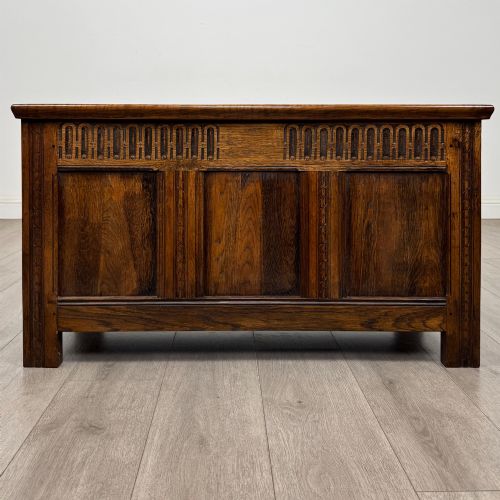

Carved Oak Storage Bench
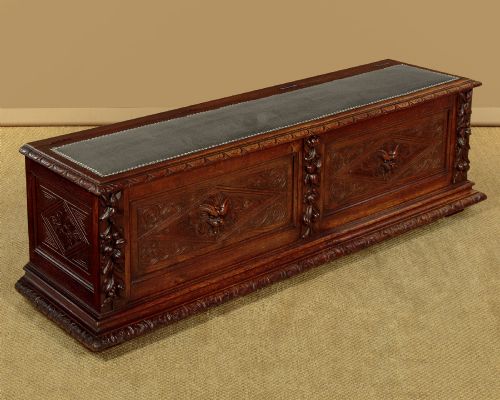
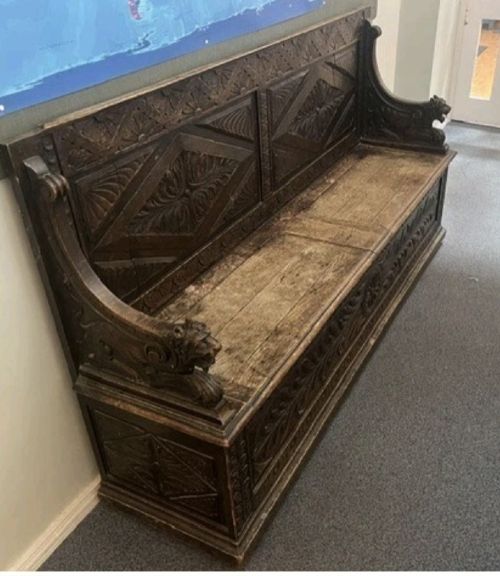
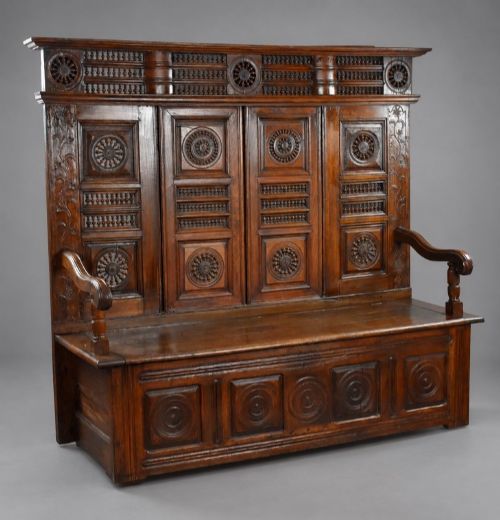
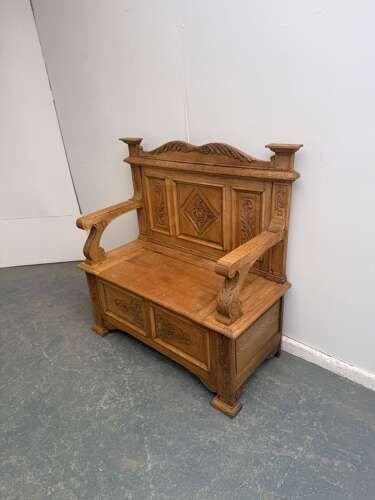
A carved oak storage bench combines practical seating with concealed compartment space, grounding an entrance hall with solid timber and traditional hand-carving.
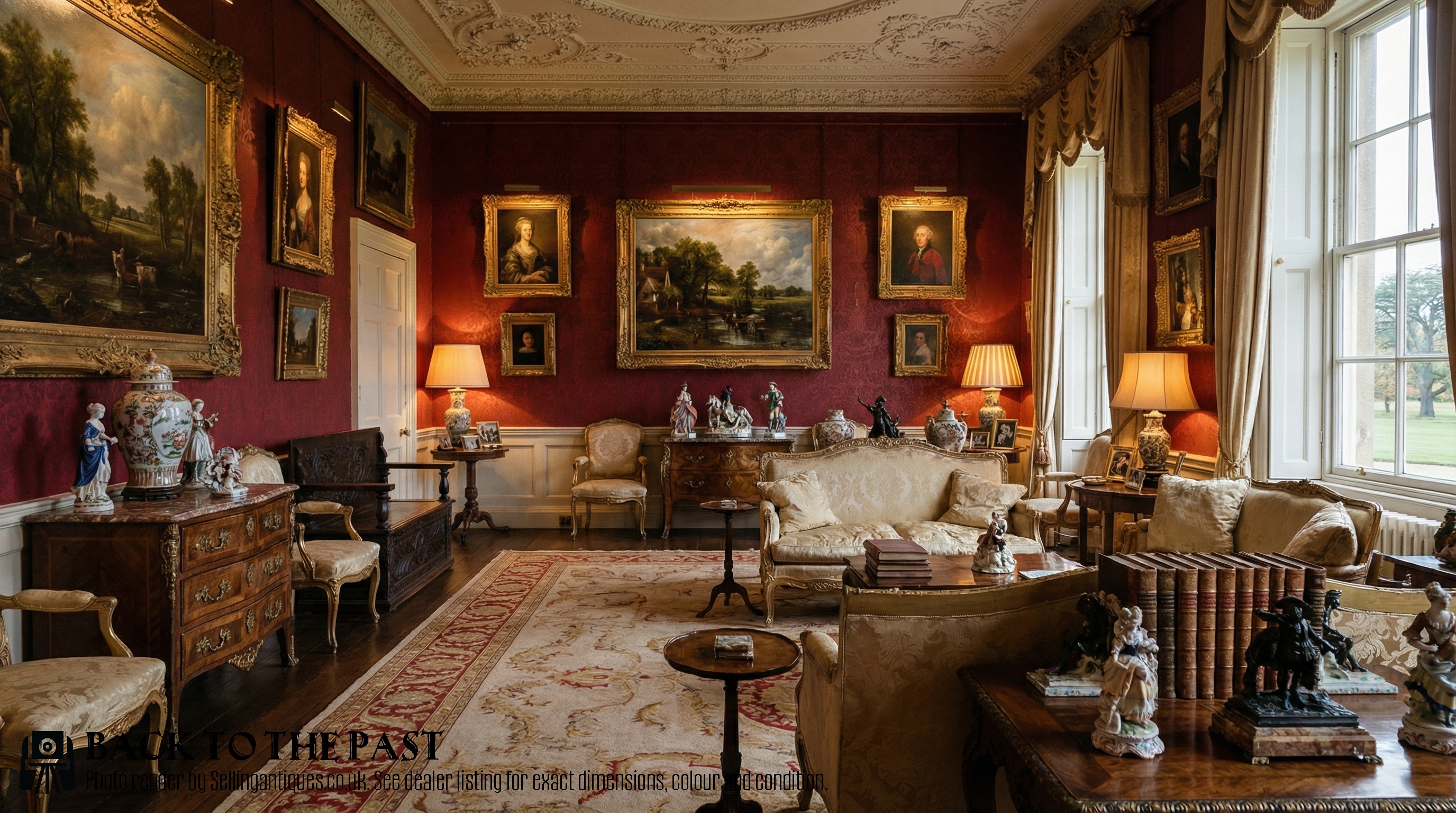
Carved Oak Storage Bench
A carved oak storage bench serves as a dual-purpose piece of furniture designed for entrance halls and reception spaces, offering both a seat and a compartment for household items. Buyers seeking this phrase encounter a variety of traditional forms, including high-back settlers' benches, monks benches with fold-over table tops, and blanket boxes adapted for seating.
The selection spans several centuries of British and European craftsmanship, with nineteenth-century revival styles and twentieth-century interpretations appearing most frequently alongside earlier eighteenth-century prototypes. Regional variations range from simple country house furniture to heavily carved baronial designs featuring panelled backs and hinged storage lids.
Formations include hall seats with lift-up lids, box settles, and multi-functional convertible units that transform from a bench into a table. These pieces originate from domestic settings where durable seating and enclosed storage were daily necessities.
How they were made
Construction relies primarily on solid oak, utilising traditional joinery methods such as mortise and tenon joints to build robust frames capable of enduring heavy daily use. Panels are typically hand-carved with linenfold, geometric, or figurative motifs, reflecting the stylistic preferences of periods ranging from the seventeenth century to the twentieth.
Hardware such as iron and brass hinges, latches, and occasional glass or leather elements support the functional storage aspects, including lift-up lids and fold-over mechanisms. Surfaces are finished with wax or polish to protect the timber while highlighting the natural grain and depth of the carved details.
Carved Oak Storage Bench Retail Price Guide 2026
Typical asking prices for carved oak storage bench among the pieces listed under this phrase on Sellingantiques today, from the lower quarter to the upper quarter. They describe what is for sale here now, not the wider market.
Listings feature solid oak across periods spanning the seventeenth century to the twentieth century, incorporating iron, brass, and leather elements.
What varies in quality
The distinction between standard examples and superior pieces rests on the crispness and depth of the timber carving, the proportion of the proportions, and the integrity of the original construction. Earlier centuries and pieces attributed to specific design movements often display more deliberate proportions and integrated structural joinery.
The condition of the timber, the retention of original hardware, and the presence of patination acquired through age separate honest period examples from heavily altered or later assembled items. The weight and selection of solid oak timber significantly influence the structural presence of each individual bench.
The Carved Oak Storage Bench Glossary
- Settle
- A wooden bench with a high back, solid arms, and a box seat for storage designed to keep draughts away from the sitter. These pieces often anchor large hallway spaces.
- Monks Bench
- A convertible piece of furniture featuring a back that folds down to transform the seat into a table. This dual function suited compact historic interiors.
- Box Seat
- A bench construction where the seat lifts on hinges to reveal a compartment beneath for storing blankets, boots, or textiles. It provides practical containment in domestic hallways.
- Jacobean Revival
- A nineteenth-century style imitating seventeenth-century English furniture, characterised by dark oak, geometric mouldings, and strapwork carving. Makers utilised these motifs to evoke historic domestic architecture.
- Panelling
- Wooden sheets fitted within a frame to form the back or sides of a seat, often decorated with carved relief patterns. This technique prevents the timber from warping while adding architectural detail.
Carved Oak Storage Bench: Frequently Asked Questions
Where should I place a storage bench?
These pieces suit entrance halls, boot rooms, and wide corridors where they provide a firm seat and practical containment for everyday items.
The substantial wooden back and carved panels also make them effective against open-plan living room walls or beneath large windows.
How do I care for solid oak furniture?
Maintain the timber by applying a traditional bees-wax polish periodically to nourish the grain and protect against surface dryness from central heating.
Keep the wood away from direct heat sources and sudden temperature shifts to prevent movement in the solid oak panels.
How can I tell the period of a carved oak bench?
Examine the construction joints, tool marks on the timber, and the style of the carving to identify whether the piece belongs to an earlier historic era or a later revival movement.
Hardware types, timber oxidation, and wear patterns around the seat edges also offer clear indications of the age and working history of the item.