

Dark Wooden Bench
A dark wooden bench brings solid architectural presence to an entrance hall or living space, offering enduring utility through centuries of craftsmanship.
Dark Wooden Bench
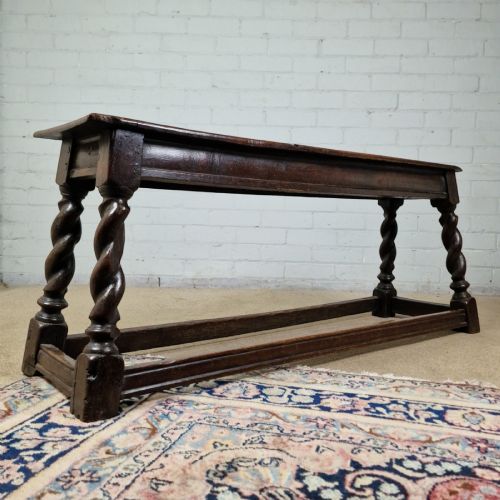
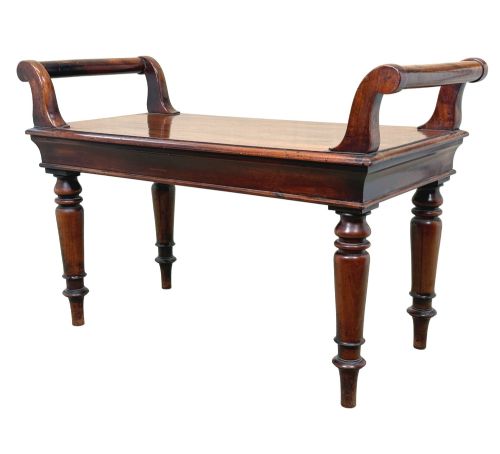
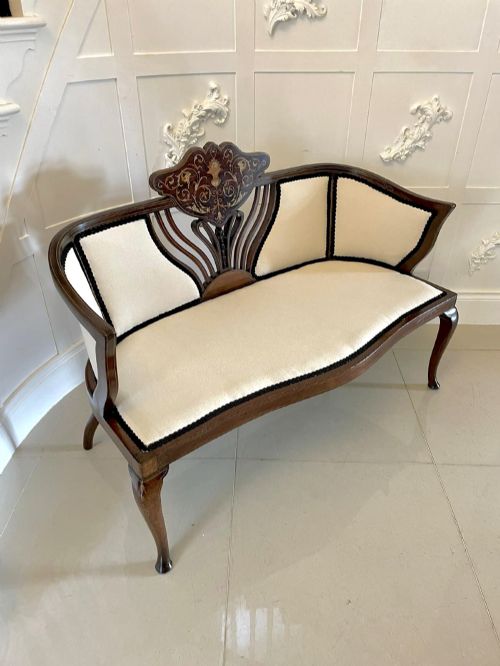
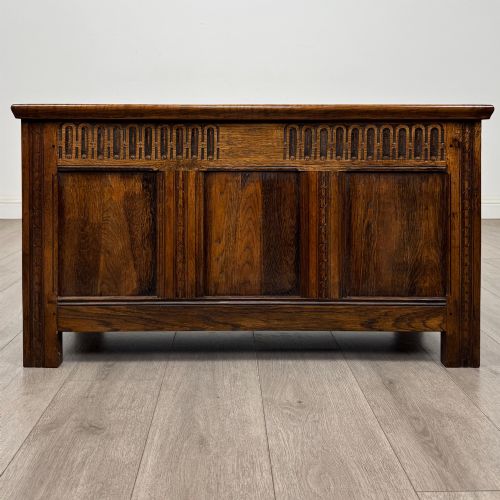
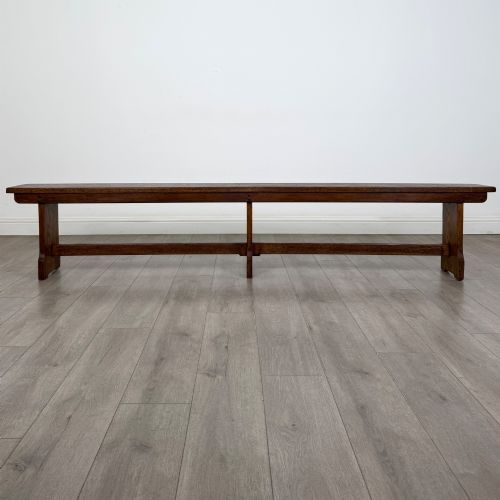
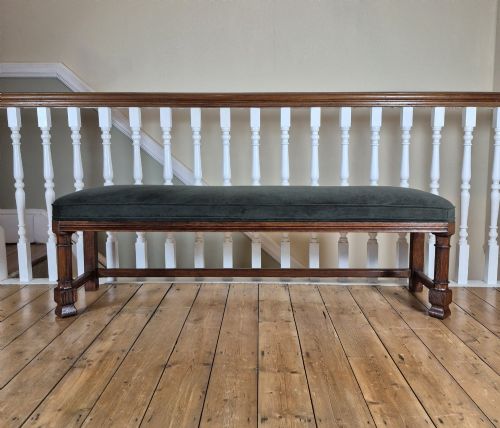
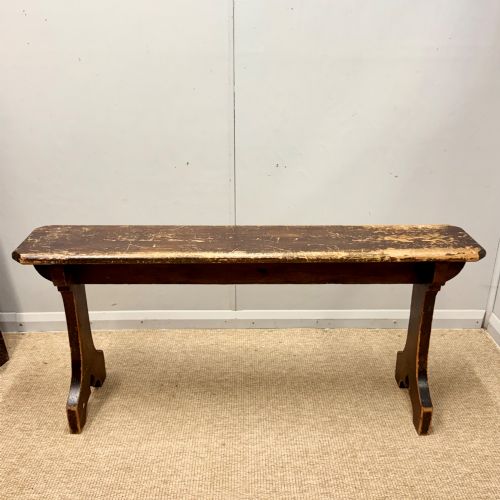
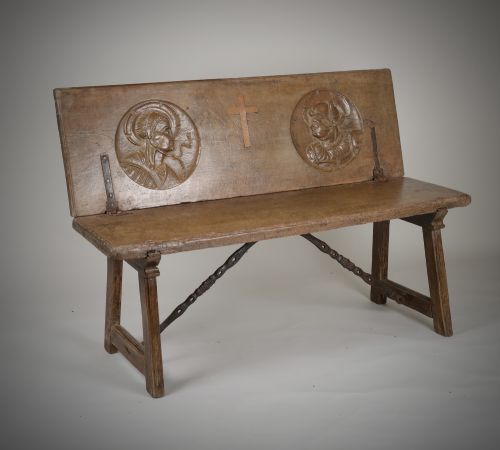
When you search for a dark wooden bench, you encounter a varied selection of antique seating ranging from utilitarian country settles to formal hall seats and luggage stands. These forms originate across the eighteenth, nineteenth, and early twentieth centuries, reflecting diverse periods including the Georgian, Victorian, and Edwardian eras.
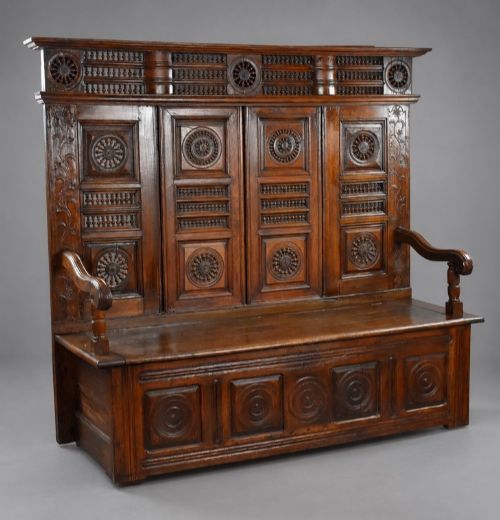
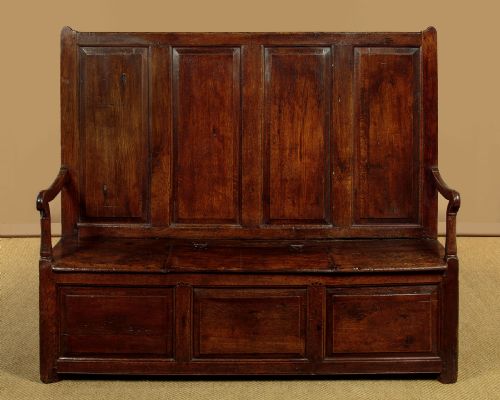
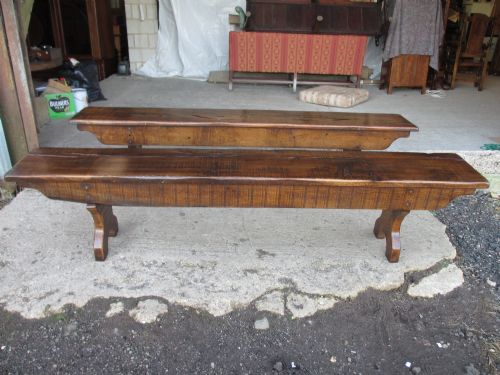
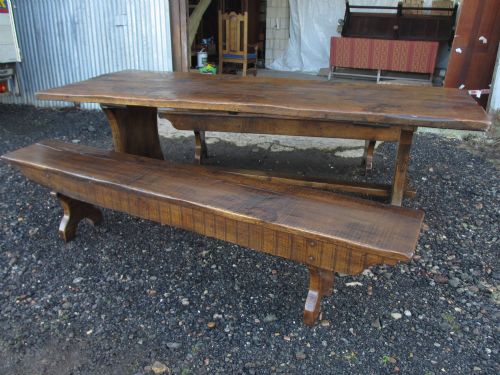
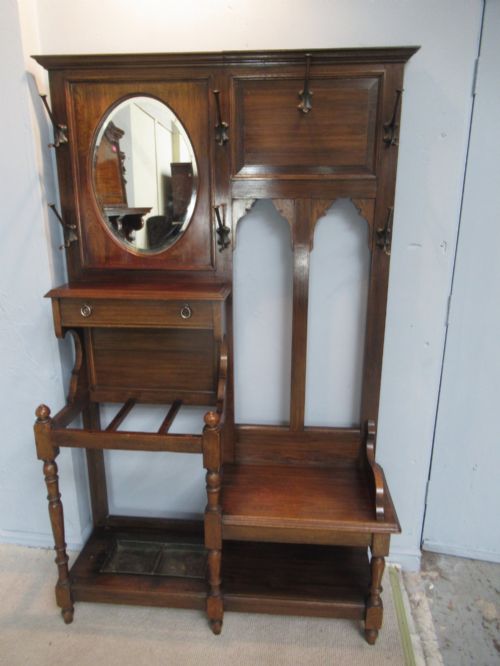
The most common interpretations on this page take the form of sturdy oak box settles with high panelled backs, alongside long tavern benches, elm storage seats, and mahogany window seats. Pieces frequently incorporate practical additions such as hinged lift-up seats, integrated storage compartments, and umbrella or hat stands.
Styles span from plain country vernacular to elaborate Gothic Revival, Jacobean Revival, and Arts & Crafts designs. Originating primarily from English, Welsh, and Scottish traditions, these benches served historical roles in communal halls, domestic entryways, and country houses.
Materials and construction
Makers relied heavily on native hardwoods, choosing solid oak, elm, and ash for their resilience in heavy-use furniture like box settles and joint stools. Mahogany and pine also appear across specific regional pieces and later Edwardian luggage racks, providing alternative weights and surface textures.
Joinery techniques relied on pegged mortise and tenon joints to ensure rigidity in long benches and settles subjected to daily sitting and storage use. Carving, panelled construction, and shaped trestle ends defined the decorative vocabulary of these items, occasionally supplemented by iron hardware or brass fixtures.
The inventory spans the sixteenth century through the Edwardian period, incorporating Gothic Revival and Arts & Crafts styles.
Distinctions in execution
Quality rests in the integrity of the timber selection and the depth of the patination built up over centuries of handling. Thick, solid oak boards and well-proportioned architectural framing distinguish superior settles and hall benches from more utilitarian or later altered examples.
The sophistication of the hand-carving and the tightness of the original joinery separate standard regional furniture from master-work examples bearing distinct stylistic revivals or maker attributions. Subtle details, such as fielded panels, properly integrated storage boxes, and unaltered structural timber, elevate a piece above standard domestic seating.
James Shoolbred & Co.
The Dark Wooden Bench Glossary
- Settle
- A wooden wooden bench featuring a high back, solid arms, and frequently a box base used for storage. This form protected sitters from draughts in historical interiors.
- Joint stool
- A sturdy, mortise-and-tenon framed wooden stool constructed by specialist joiners rather than turners. These items served multi-purpose seating roles in early domestic spaces.
- Luggage stand
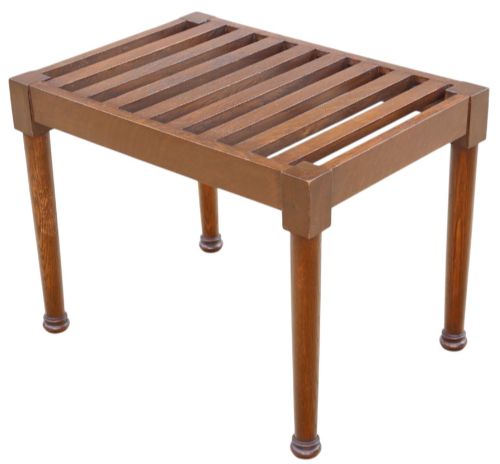
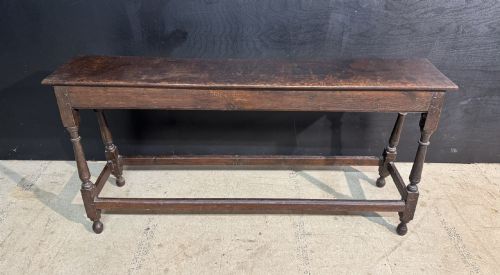
- A low rack designed for holding travel bags, typically constructed from mahogany or oak with slatted tops and supportive stretcher bases. They frequently date to the Edwardian period.
- Box settle
- A heavy seat incorporating a hinged lid beneath the cushion or timber top to create a concealed chest. They are predominantly fashioned from solid oak.
- Patination
- The glossy, deep surface sheen developed by old wood through decades of use, wax application, and atmospheric exposure. It serves as a key indicator of genuine age.
Dark Wooden Bench: Frequently Asked Questions
Where were hall benches used?
Hall benches and settles sat in the primary entranceways of large houses, providing a formal spot for visitors to wait or remove outerwear. Many incorporated coat hooks, umbrella wells, or hat stands.
Their robust construction in oak or mahogany allowed them to withstand heavy daily use in busy household corridors.
How do I identify an 18th-century settle?
Eighteenth-century settles generally display pegged mortise-and-tenon joinery, hand-carved panels, and deep timber patination developed over generations. They rely on heavy oak or ash construction without modern metal fasteners.
Examining the underside and interior boards reveals hand-tool marks and structural wear consistent with early domestic manufacture.
Are luggage stands antique?
Luggage stands seen on this page largely date from the Edwardian era and the early twentieth century. They were built from mahogany or oak to support guest luggage in bedrooms.
These compact stands typically feature folding or fixed slatted tops raised on sturdy trestle or turned supports.