










Jacobean Oak Settle
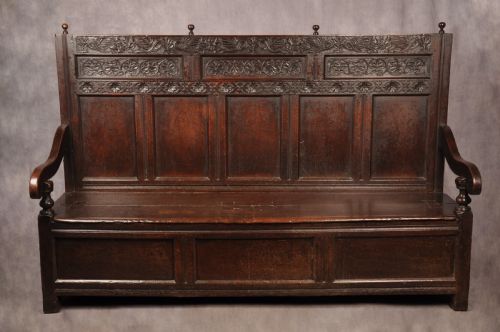
A jacobean oak settle brings heavy timber construction and panelled backrests into a hallway or reception space, offering traditional seating with integrated storage.
Jacobean Oak Settle
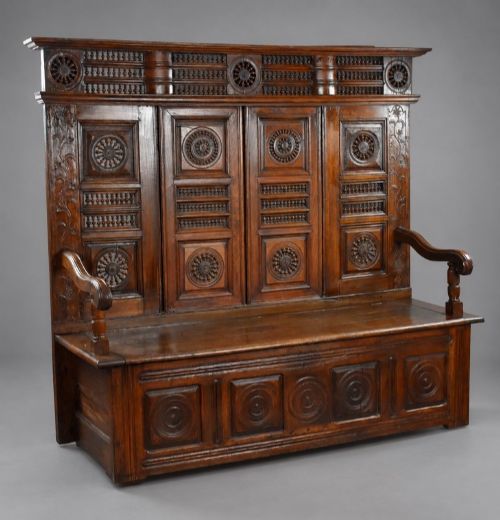
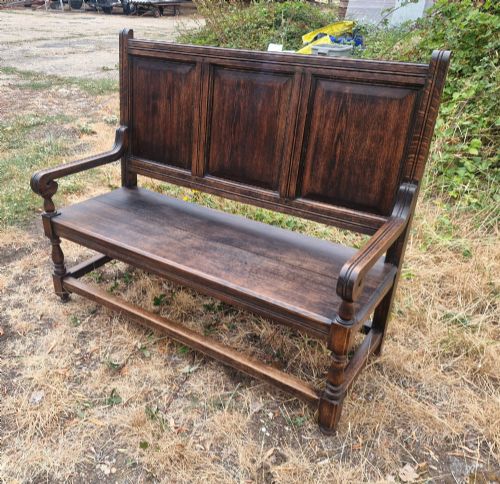
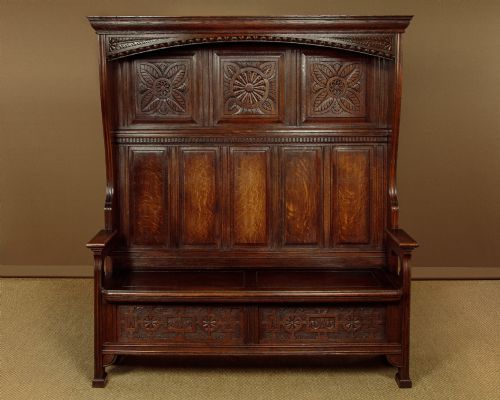
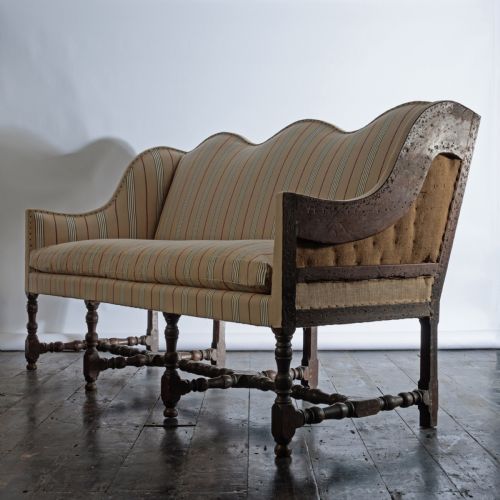
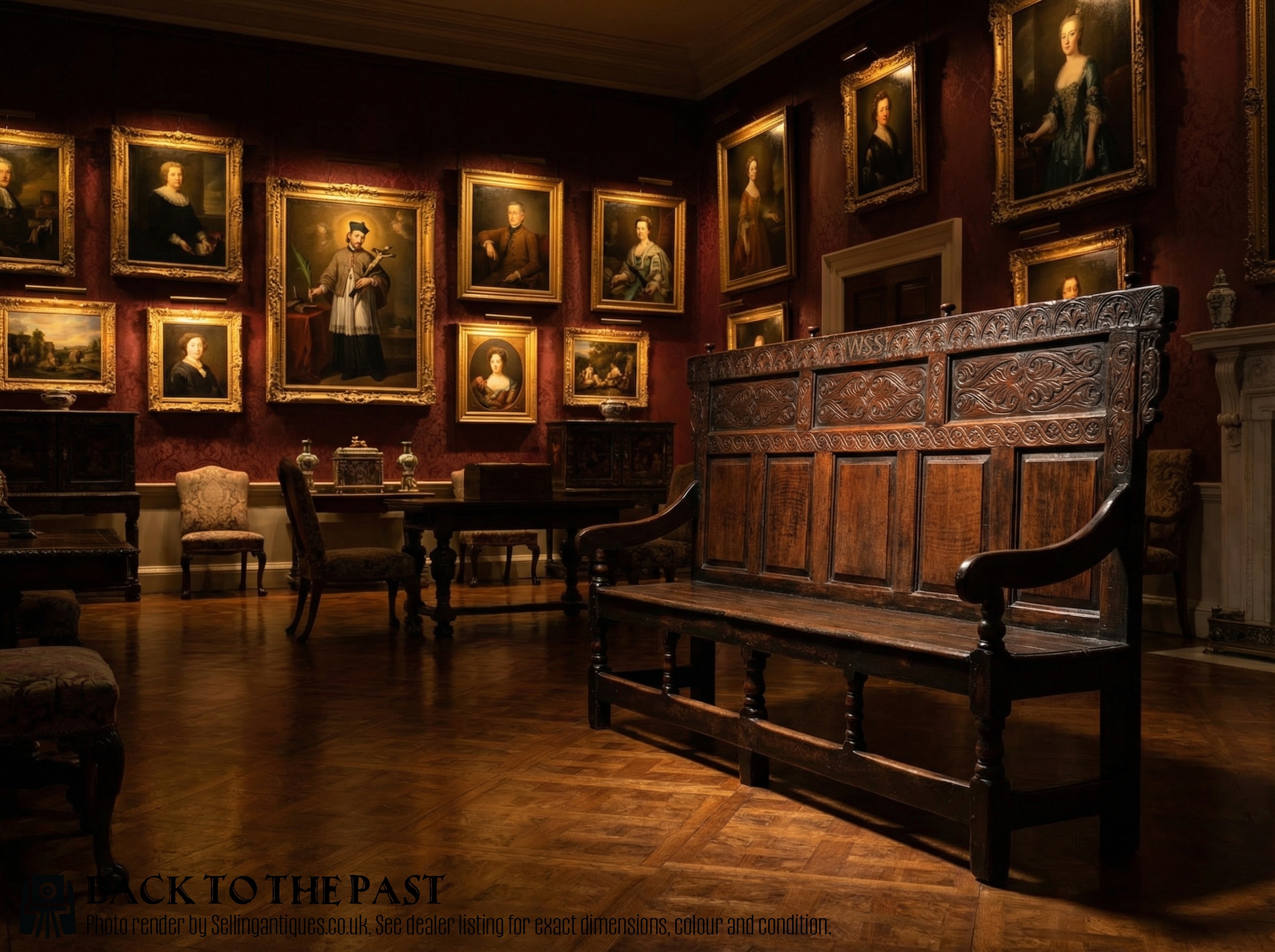
A jacobean oak settle is a solid wooden bench designed with a high panelled back and enclosed sides to block draughts in older rooms. Most examples encountered here date from the seventeenth century or belong to later revival periods spanning the nineteenth and early twentieth centuries.
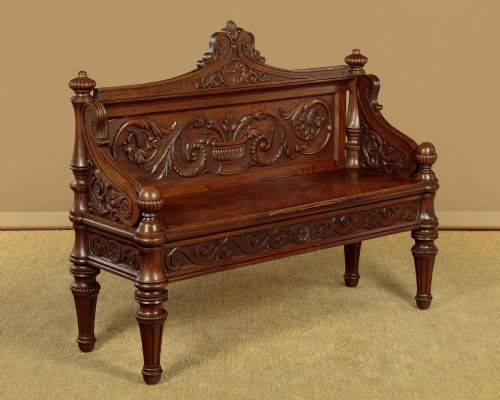
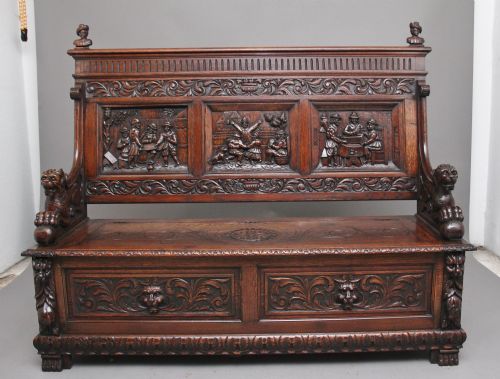
The form often includes a box base with a lift-up lid for storage, though some variations function as monks benches with fold-over tops or appear as compact hall seats. These pieces range from plain joined carpentry to heavily carved panels featuring traditional motifs.
How they were made
Makers relied primarily on solid oak, utilising frame-and-panel construction to accommodate the natural expansion and contraction of the timber. Metal hardware such as iron hinges and fixings support the lift-up lids and storage compartments found on box settles and monks benches.
Surface treatments vary from polished golden tones to stripped finishes, dark wax, and limed oak applications. Carving is executed directly into the timber panels, often displaying geometric patterns, stylistic scrolls, or figural details.
Jacobean Oak Settle Retail Price Guide 2026
Typical asking prices for jacobean oak settle among the pieces listed under this phrase on Sellingantiques today, from the lower quarter to the upper quarter. They describe what is for sale here now, not the wider market.
Several examples hide a secret table inside the backrest, proving that seventeenth-century DIY was just as confused about furniture roles as we are.
What varies in quality
Quality depends heavily on the integrity of the timber and the depth of the period construction, distinguishing genuine seventeenth-century examples from nineteenth and twentieth-century revivals. The sharpness and skill of the hand carving also separate standard workshop output from finer decorative pieces.
The Jacobean Oak Settle Glossary
- Box settle
- A wooden bench featuring a concealed storage compartment beneath the seat accessed via a lift-up lid. This design kept belongings secure and off cold floors.
- Monks bench
- A convertible form of seating with a hinged backrest that folds down flat over the arms to create a table top. It served multiple functions in smaller spaces.
- Wainscot
- A type of wooden panelling utilising framed construction with pegged joints. Settles bearing this description derive their aesthetic from seventeenth-century wall panelling.
- Green man
- A sculptural architectural ornament depicting a human face disgorged from foliage or entirely made of leaves. It frequently appears on carved revival furniture.
- Baronial
- A stylistic term denoting heavy, imposing furniture associated with large halls and substantial proportions. Pieces carrying this label often display pronounced Victorian revival carving.
Jacobean Oak Settle: Frequently Asked Questions
What is a jacobean oak settle used for?
These benches serve as heavy seating for hallways, reception rooms, and large living spaces. Many examples incorporate a box base beneath the seat to store household items out of sight.
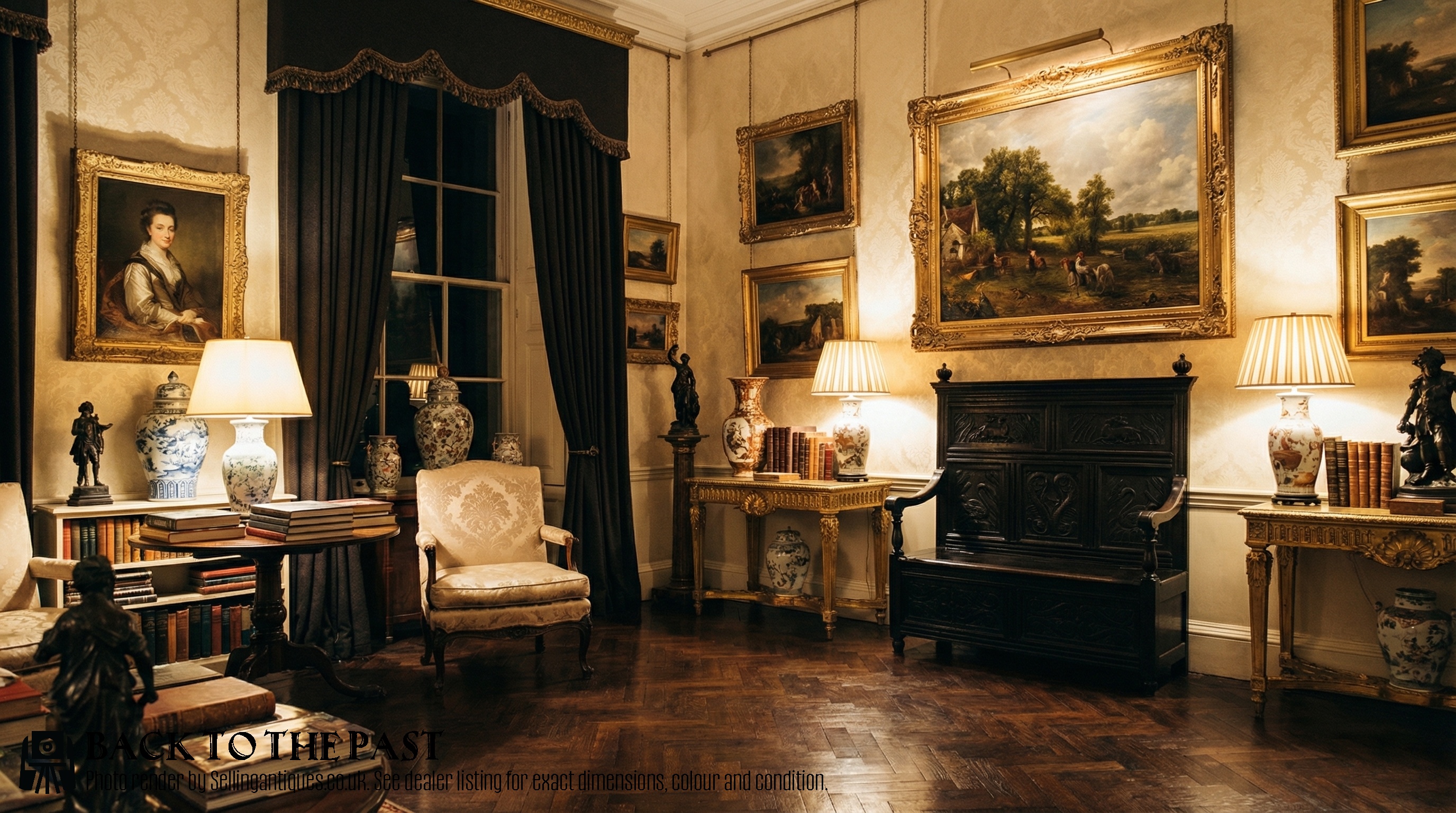
The high panelled back was originally designed to block cold draughts in old stone or timber buildings. Today they function as focal points in traditional or eclectic interiors.
How do I tell a 17th century settle from a revival piece?
Authentic seventeenth-century pieces show deep patination, hand-split timber, and traditional joinery marks like wooden pegs holding joints together. Construction methods, tool marks, and timber shrinkage patterns help separate period examples from nineteenth or twentieth-century revivals.
Revival pieces often display machine-sawn timber or standardised carving styles that mimic earlier eras without the natural wear of centuries of use.
Where should I place a heavy oak settle?
An oak settle requires a solid wall anchor or sufficient floor space in a hallway, boot room, or large reception area where its deep proportions will not obstruct movement. Because solid oak is heavy, positioning it correctly from the start avoids unnecessary lifting.
Keep wooden settles away from direct heat sources like radiators to prevent the dry timber from splitting or warping over time.