

Carved Back Settle
A carved back settle brings immediate architectural presence to a hallway, offering centuries of sturdy seating and hidden storage.
Carved Back Settle
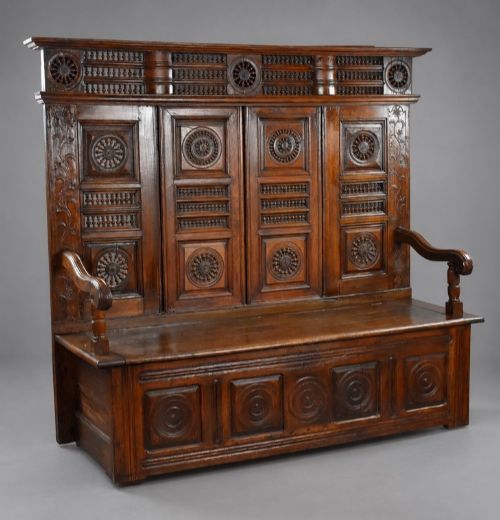
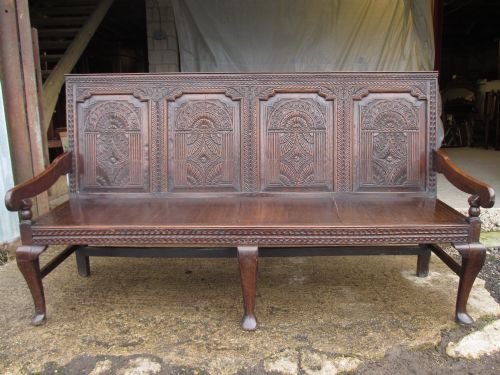
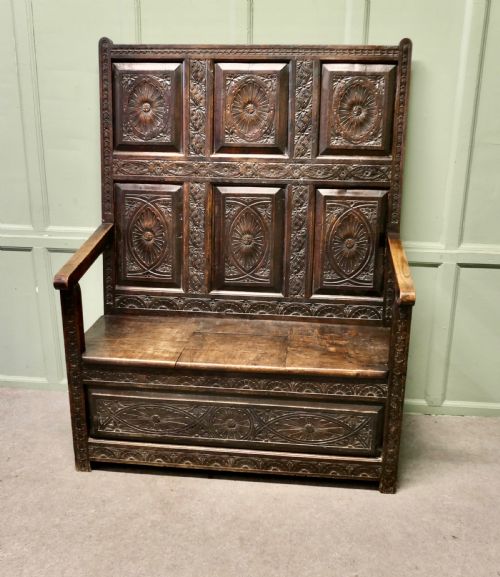
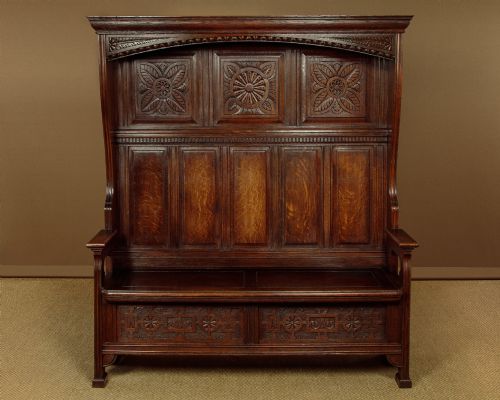
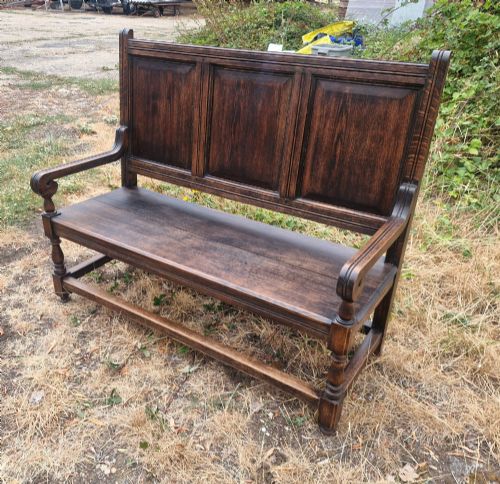
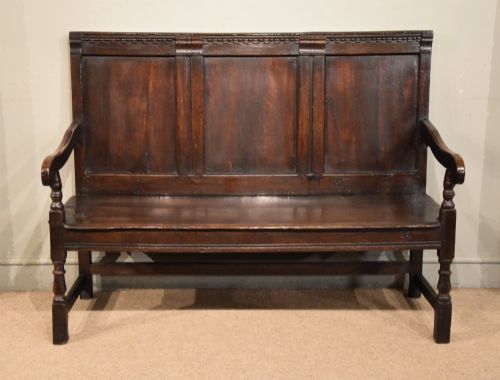
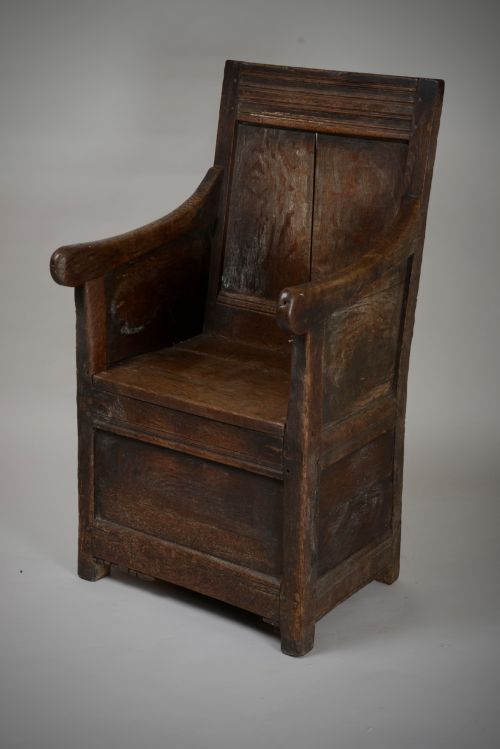
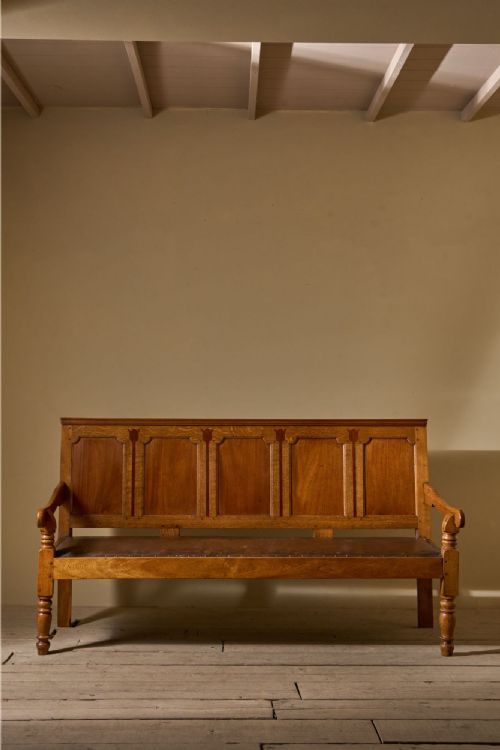
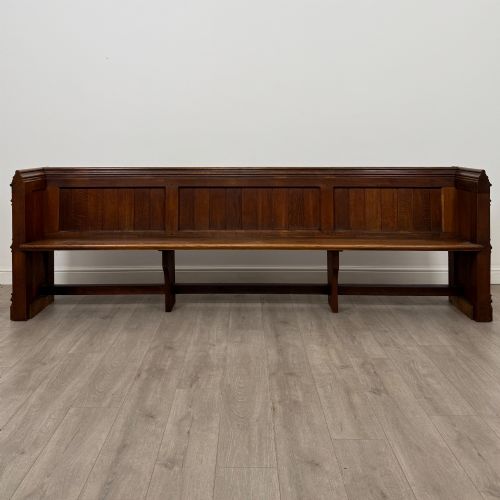
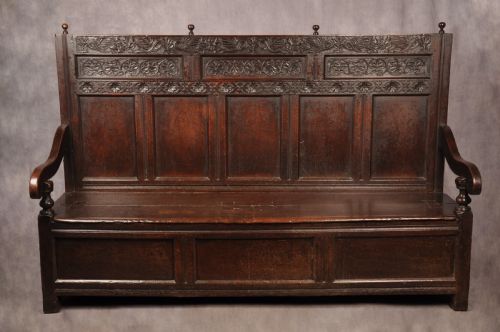
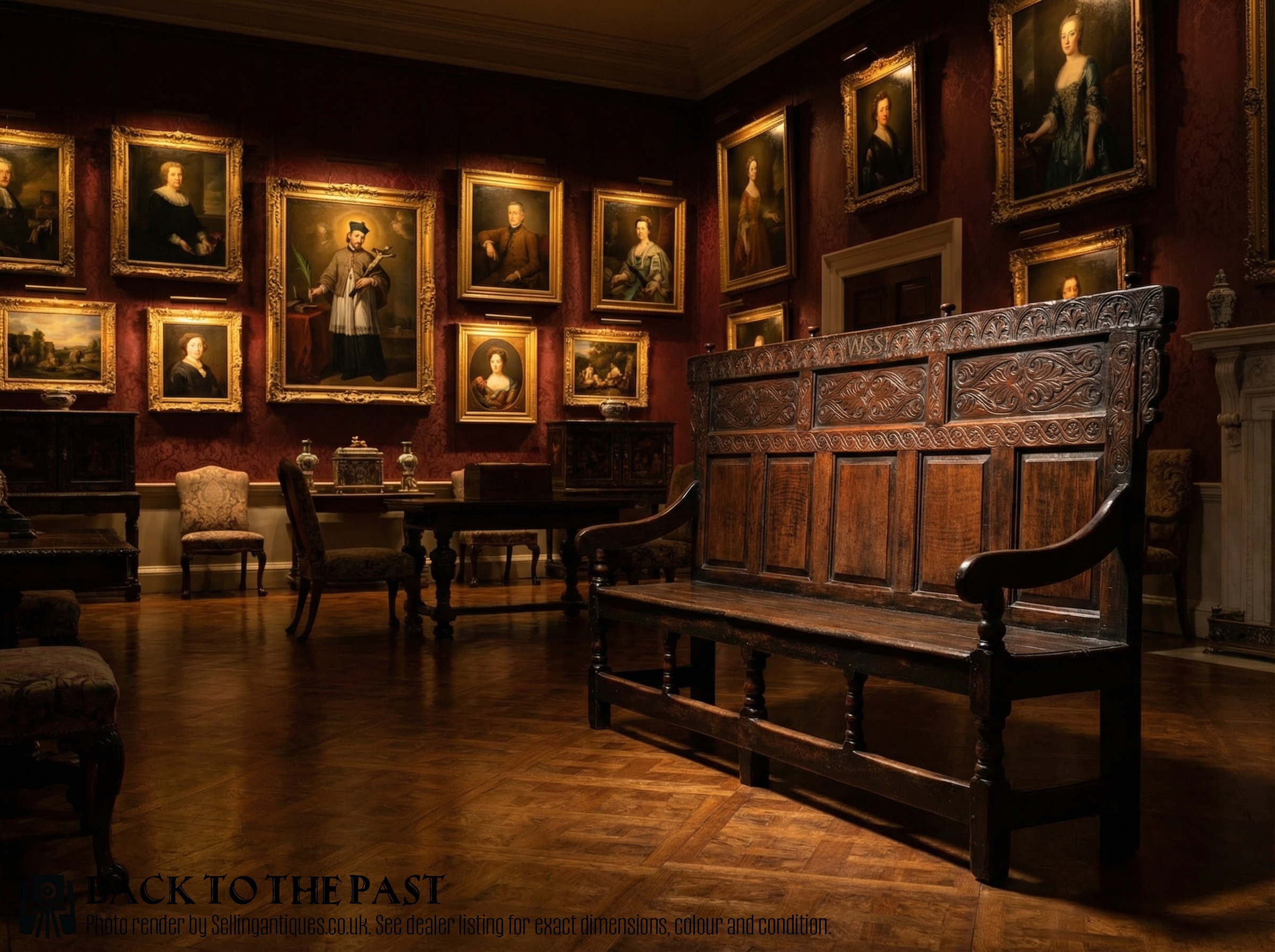
A carved back settle is a heavy wooden bench designed with a high panelled back to block draughts, frequently found in oak across the seventeenth, eighteenth, and nineteenth centuries. These sturdy seats served communal spaces and domestic halls, often incorporating a box base for storing blankets or provisions.
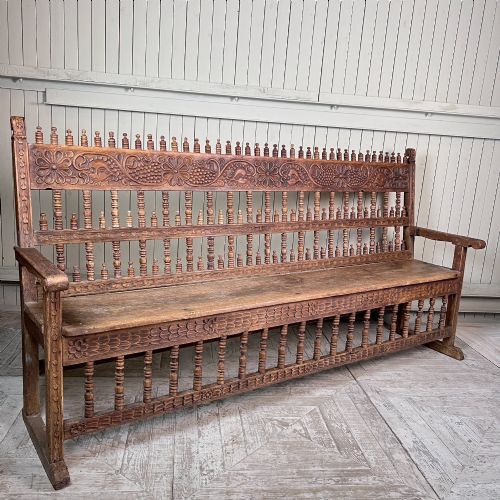
The versions most commonly met on this page span the Victorian revival of earlier styles alongside genuine eighteenth-century country pieces. Regional variations emerge across English, Welsh, and continental workshops, ranging from plain panelled timber to elaborate figurative carving.
Materials and construction methods
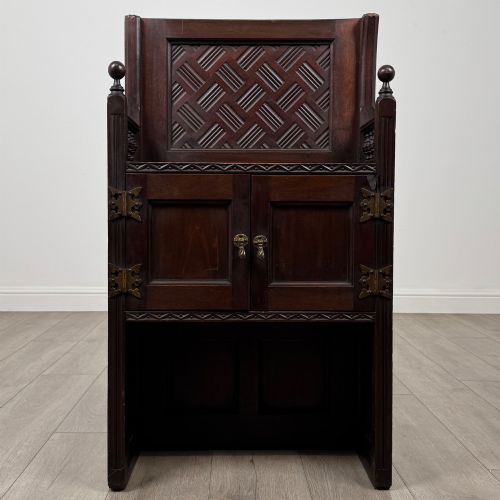
Solid oak provides the primary structural timber for these benches, joined by traditional pegged mortise and tenon framing to support the heavy high backs. Walnut, pine, and hardwood appear in specific regional examples, sometimes complemented by iron hinges or brass fittings on storage compartments.
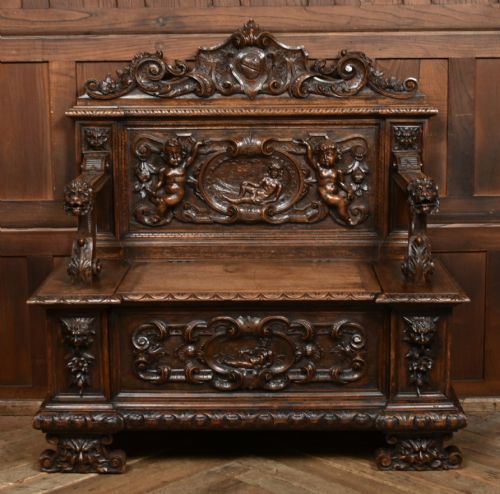
Carving techniques rely heavily on hand-chiselled relief work, showing geometric panels, floral motifs, or figural details like the Green Man. Surface finishes range from natural waxed grain to historic paint or limed treatments applied during later revivals.
Listings feature oak predominantly, alongside walnut, pine, and hardwood across centuries spanning from the seventeen-hundreds through the Victorian era.
Distinctions in quality
The integrity of the timber framework and the depth of the hand-carved decoration define the upper tier of these benches. Original boards to the seat and back, free from excessive timber replacement, command greater respect from collectors.
Proportion and stance separate standard utility pieces from exceptional examples. A well-balanced high back paired with clean joinery and intact box storage demonstrates superior cabinet-making.
The Carved Back Settle Glossary
- Box settle
- A wooden bench featuring a lidded seat box underneath for domestic storage. This design kept users elevated above cold stone floors while doubling as a linen chest.
- High back
- An tall timber backrest constructed to deflect cold draughts in large medieval and early modern rooms. These panels provide the primary canvas for elaborate carved ornamentation.
- Panelling
- Framework composed of vertical stiles and horizontal rails enclosing thin wooden panels. This method accommodated natural wood shrinkage without splitting the structure.
- Revival
- A nineteenth-century architectural and decorative movement that recreated earlier sixteenth and seventeenth-century styles. Pieces from this era often feature heavy, dramatic carving mimicking antique work.
- Lambing chair
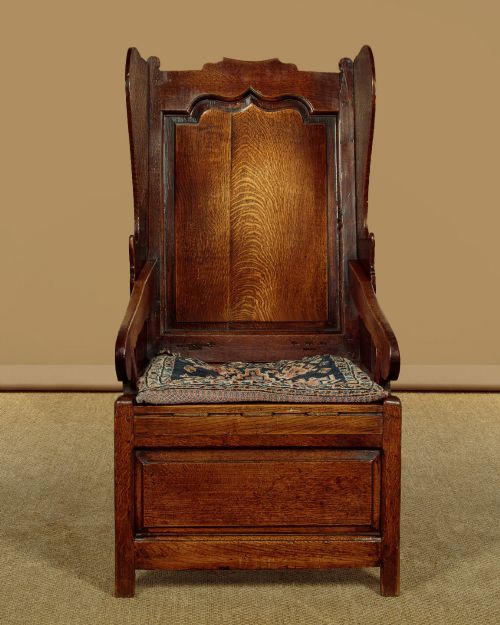
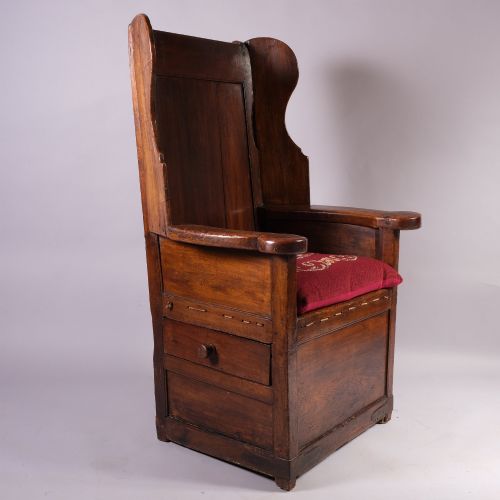
- A specialised high-sided wooden armchair featuring solid wings to shield the occupant from drafts near the hearth. Some examples include small drawer compartments built into the framework.
Carved Back Settle: Frequently Asked Questions
What is a carved back settle used for?
These benches were originally placed in draughty hallways, farmhouses, and inns to provide sheltered seating near the fire. The high panelled back kept cold air away from the occupant.
Many examples include a hinged seat opening to a deep storage box below. This compartment traditionally held blankets, winter wear, or household stores.
How do I tell an 18th-century settle from a Victorian one?
Eighteenth-century examples typically display hand-planed surfaces, pegged joinery showing natural wear, and simpler country construction. The timber develops a deep, mellow patina through generations of use.
Victorian pieces often utilise heavier, more dramatic relief carving in revival styles like Jacobean. The interior construction and tool marks generally point to nineteenth-century workshop practices.
Where should I place a settle in my home?
A hallway or large landing provides a traditional setting where the high panelled back creates an immediate architectural statement. The internal box offers practical storage for shoes or linens.
They also function well along a dining table or anchoring a large living space. Ensure adequate wall clearance for the high backrest before positioning.
What maintenance do old oak settles need?
Routine care requires only a light application of traditional beeswax to nourish the dry hardwood and maintain its sheen. Avoid modern silicone sprays or polishes that build up on the surface.
Keep the timber away from direct heat sources and drastic humidity changes to prevent the panels from splitting. Allowing the wood to breathe preserves its historic character.