



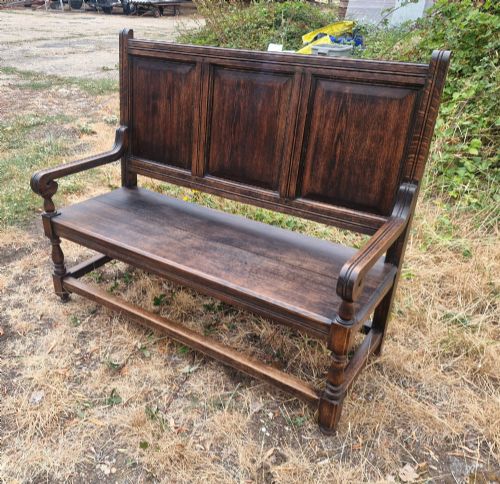
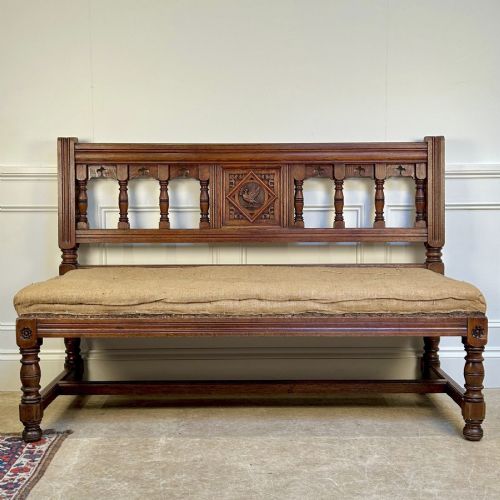
Carved Oak Hallway Bench
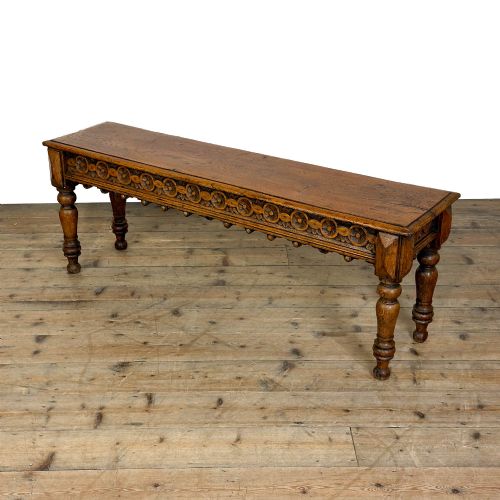
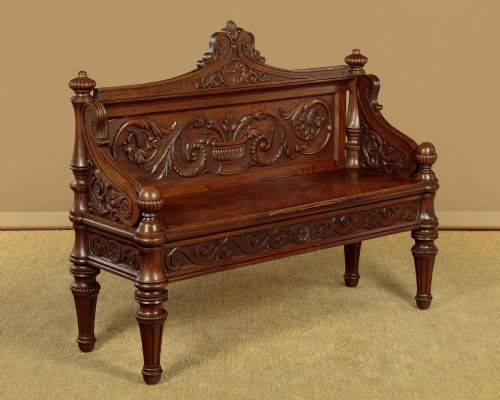
A carved oak hallway bench brings substantial timber warmth and historic character straight into an entrance space.
Carved Oak Hallway Bench
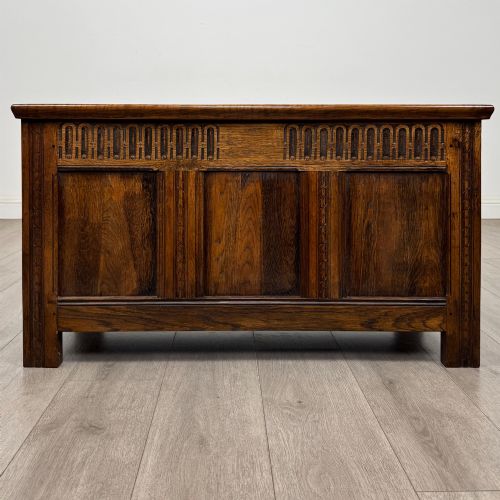
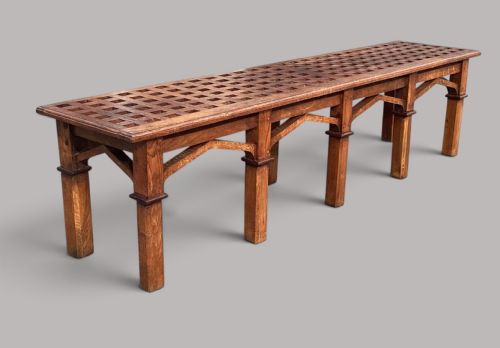
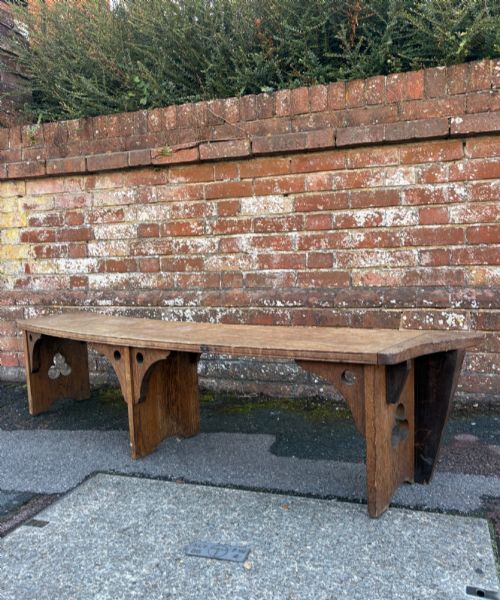
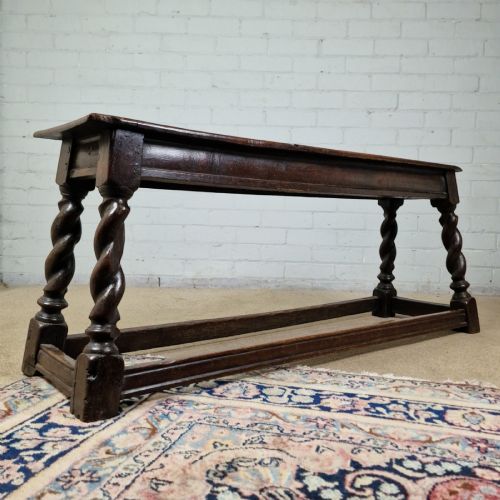
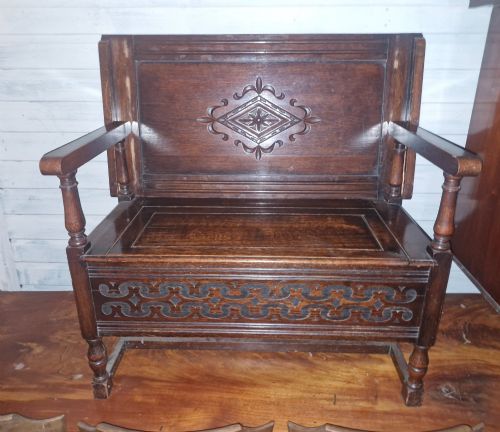
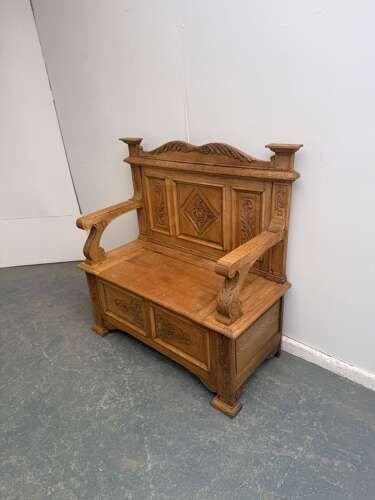
When you search for a carved oak hallway bench, you encounter solid timber entrance seating spanning from the seventeenth century through the Edwardian period. The selections here range from simple settles and lift-top box seats to elaborate Victorian Gothic revivals and Arts and Crafts creations.
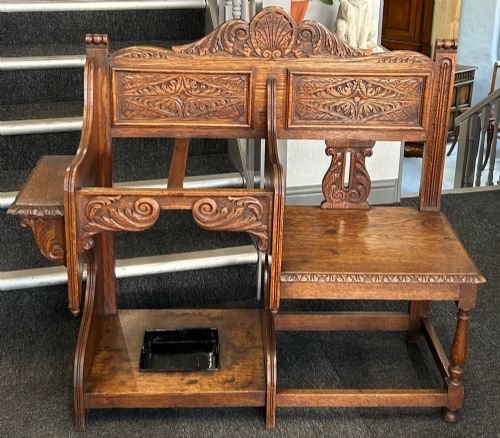
You are most likely to meet nineteenth-century and early twentieth-century examples, including Edwardian hall seats, monks benches, and high-back settles. These pieces frequently combine practical storage compartments, stick stands, or coat hooks within a compact footprint suited for corridors and lobbies.
Makers and regional workshops utilised durable native timber to produce forms influenced by Jacobean, Renaissance, and English Country traditions. Each item reflects the domestic architecture and furnishing needs of past eras, providing both a seat for pulling on boots and a focal point for a vestibule.
How they were made
Cabinet makers constructed these items primarily from solid oak, sometimes utilising brass fittings, iron hardware, or leather inserts for functional details. Timber was selected for durability and grain pattern, then shaped using traditional joinery such as mortise and tenon framing.
Carving techniques varied from deep relief panels displaying floral and figurative motifs to linear linenfold and geometric patterns. Surfaces were frequently finished with wax or polish to protect the wood while highlighting its natural figuring and deep colour over decades of use.
Carved Oak Hallway Bench Retail Price Guide 2026
Typical asking prices for carved oak hallway bench among the pieces listed under this phrase on Sellingantiques today, from the lower quarter to the upper quarter. They describe what is for sale here now, not the wider market.
Some hall benches secretly double as umbrella retainers and boot lockers, proving our ancestors took muddy weather very seriously indeed.
What varies in quality
The standard of a carved oak hallway bench depends on the depth and crispness of the hand-carved ornamentation versus mechanical or later surface embellishment. Superior examples display integration between the structural joinery and the decorative program, ensuring that panels and arm supports remain rigid without excessive modern reinforcement.
Proportion and timber selection further distinguish finer pieces, particularly where secondary woods are absent and the oak displays consistent figuring. Well-executed storage compartments, original brass or iron hardware, and balanced proportions separate bespoke workshop production from simpler utility furniture.
Gillows·James Shoolbred and Co·Shapland and Petter·Liberty·Wylie Lockhead Manufacturers
The Carved Oak Hallway Bench Glossary
- Settle
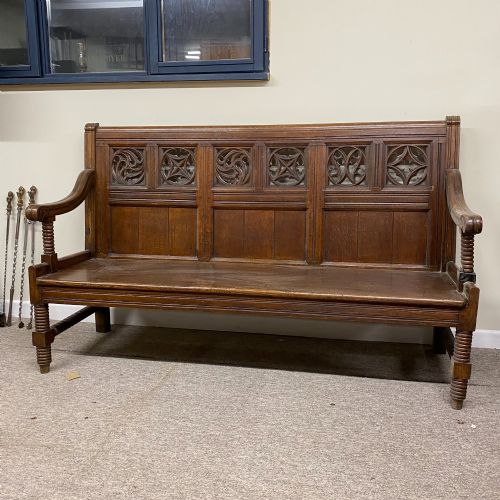
- A wooden bench with high back, solid arms, and often a box compartment beneath the seat. This form kept drafts away from inhabitants in entrance halls.
- Monks Bench
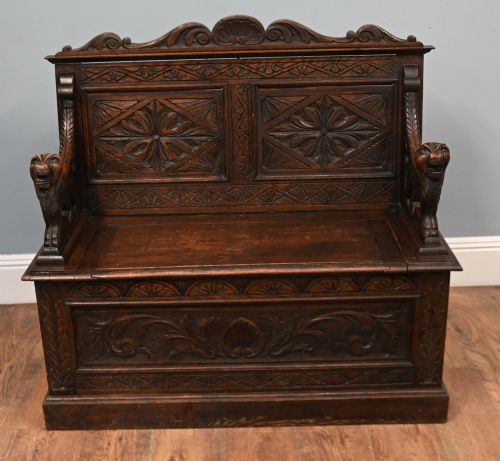
- A multifunctional furniture item featuring a hinged top that converts the seat back into a table. It served practical space-saving roles in compact hallways.
- Hall Stand
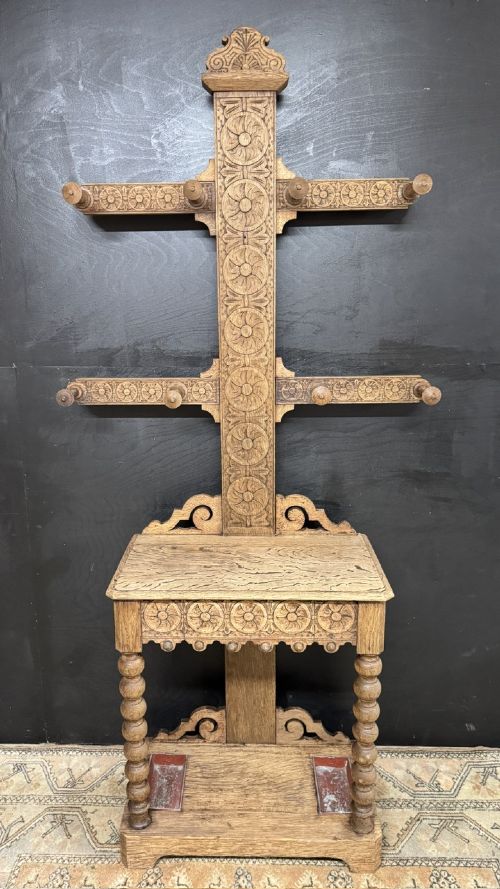
- An entrance piece combining a bench or box seat with a vertical panel holding coat hooks, a hat shelf, and umbrella trays. Brass and iron pins feature prominently.
- linenfold
- A style of wood carving that imitates folded linen cloth, popular on panels during revival periods. It adds linear texture to flat wooden surfaces.
- Green Man
- A sculptural motif representing a human face sprouting from or surrounded by foliage. It appears frequently on nineteenth-century revival and Arts and Crafts carvings.
Carved Oak Hallway Bench: Frequently Asked Questions
What is a monks bench used for?
A monks bench serves as dual-purpose entrance furniture, offering a place to sit while putting on shoes and a hidden compartment for gloves or scarves.
The hinged back folds forward to create a flat table surface, reflecting historical space-saving design in smaller hallways.
How do I care for antique oak furniture?
Maintain the timber by applying a quality beeswax periodically to nourish the grain and protect the surface from dry indoor atmospheres.
Keep the bench away from direct heat sources and strong sunlight to prevent timber shrinkage and fading.
Are these benches suitable for daily use?
Solid oak construction provides exceptional durability, making these pieces robust enough for everyday seating in busy family entrances.
Their sturdy joinery withstands daily weight while providing practical storage solutions for modern footwear and accessories.
How can I tell the period of a bench?
Examine the construction methods, tool marks, and carving styles, noting whether hardware components match historical periods like the Victorian or Edwardian eras.
Revival styles often incorporate earlier motifs while retaining the joinery techniques and proportions of their actual manufacturing decade.