




Upholstered Bedroom Stool
An upholstered bedroom stool brings character and practical comfort to a dressing area, drawing on periods from Victorian to Art Deco.
Upholstered Bedroom Stool
An upholstered bedroom stool serves as a functional dressing table seat or window perch, appearing in forms such as dressing stools, window seats, and duet benches. These pieces span Victorian, Edwardian, and Art Deco periods, alongside Regency and Louis XVI styles.
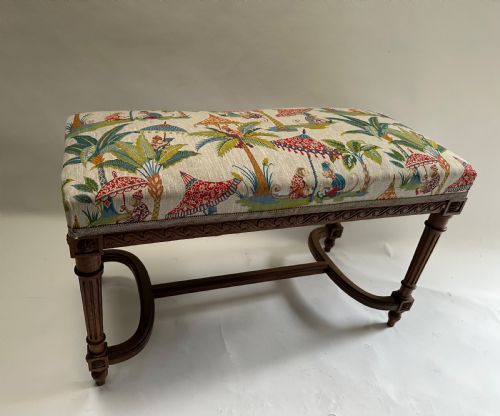
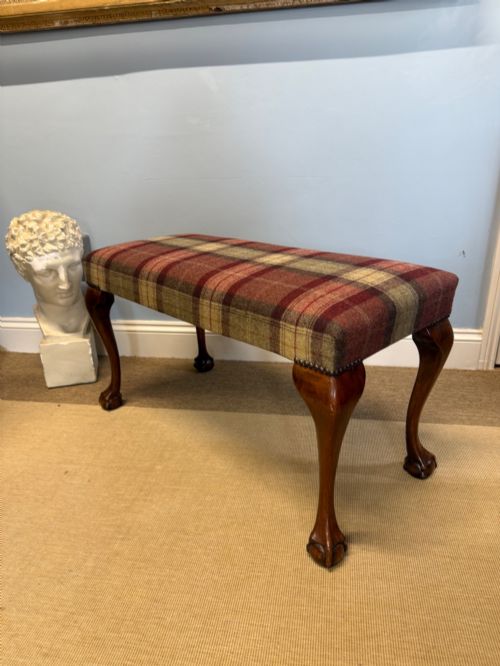
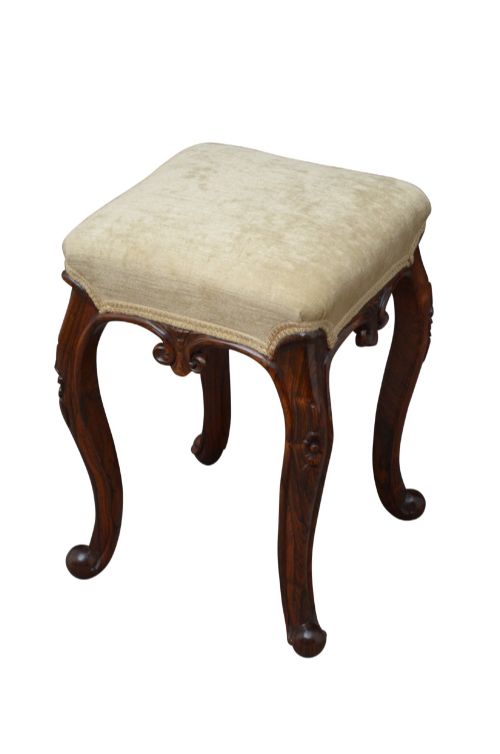
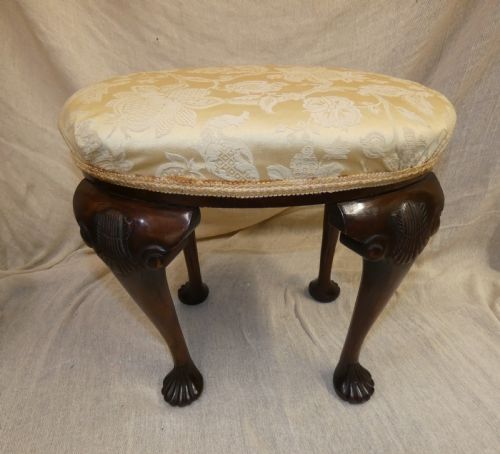
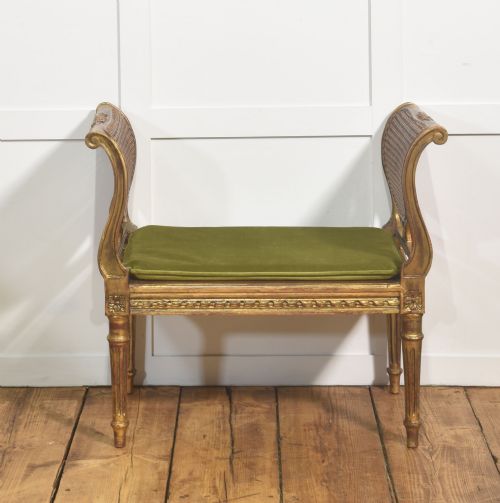
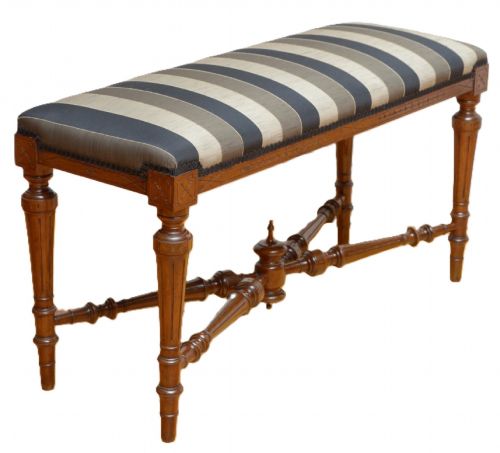
The most common examples on this page are Victorian and early twentieth-century dressing stools in walnut or mahogany, often featuring cabriole legs or cross stretchers. Pieces range from simple bedroom seats to elaborate French gilt window benches and drum-shaped oak storage stools.
Makers and workshops of the nineteenth and early twentieth centuries produced these seats in diverse woods, pairing traditional frames with contemporary textile covers and needlepoint tops.
Materials and construction
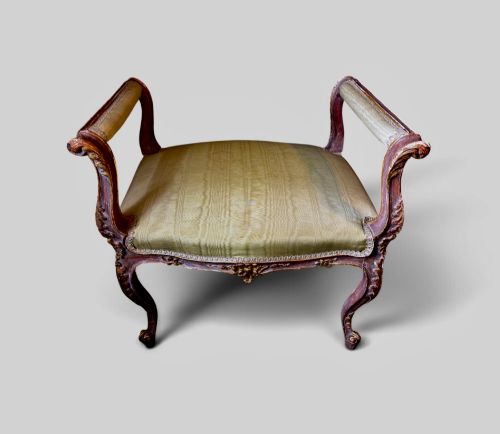
Craftsmen built these frames using dense hardwoods such as mahogany, walnut, rosewood, and satin birch, frequently shaping the timber into cabriole or twisted rope legs. Giltwood and ebonised finishes appear on French and English window seats.
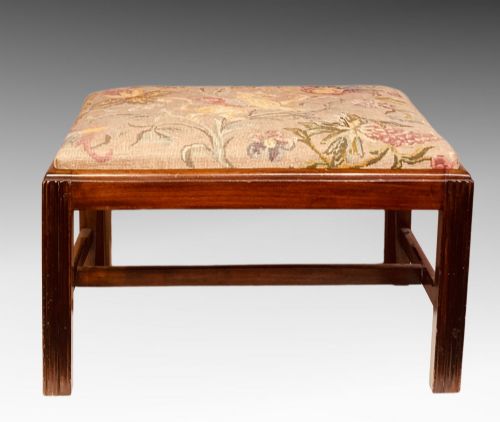
Upholstery techniques rely on traditional fabrics, velvet, silk, linen, and decorative needle point. Caning is also utilised on specific frames like Louis XVI style window stools.
Upholstered Bedroom Stool Retail Price Guide 2026
Typical asking prices for upholstered bedroom stool among the pieces listed under this phrase on Sellingantiques today, from the lower quarter to the upper quarter. They describe what is for sale here now, not the wider market.
A drum-shaped oak stool hides storage inside, proving that even a quiet dressing seat appreciates a secret compartment.
Evaluating craftsmanship and condition
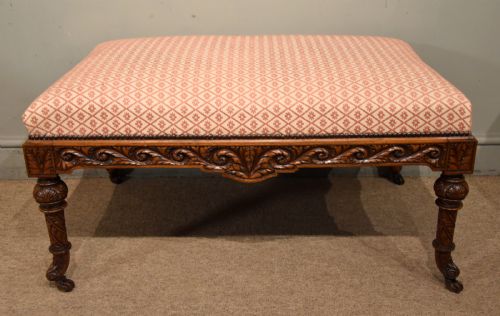
The distinction between standard and superior pieces rests on the carving detail of the timber frame, such as hand-carved rosewood or walnut, and the integrity of the joinery. Solid mahogany or figured walnut structures command greater regard than simpler builds.
Upholstery standard influences overall appeal, with professional recovers using quality textiles like linen or printed cotton maintaining the decorative harmony of the period frame.
Harry And Lou Epstein·Robert Kime
The Upholstered Bedroom Stool Glossary
- Cabriole leg
- A furniture leg that bends outward and tapers downward to a small foot, common on Victorian and Regency seats.
- Window seat
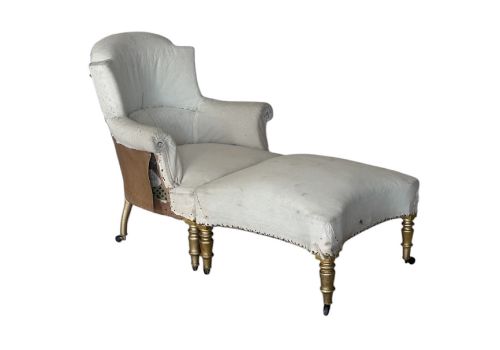
- An elongated stool or bench designed to fit a window recess, often featuring upholstered ends or arms.
- Duet stool
- A wider seat designed for two people, frequently used at a piano or dressing table.
- Giltwood
- Timber that has been coated with gold leaf or a gold-coloured finish, typical of Louis XVI style frames.
- Needle point
- A type of counted thread embroidery used historically to cover the tops of dressing stools and footstools.
Upholstered Bedroom Stool: Frequently Asked Questions
What is an upholstered bedroom stool used for?
These pieces function primarily as seating at a dressing table or vanity desk. They also serve as low benches or window seats in bedrooms and dressing rooms.
Larger duet versions provide extra seating capacity, while specific designs incorporate internal storage for bedroom accessories.
How do I identify a Victorian bedroom stool?
Victorian examples typically feature dark hardwoods like walnut or rosewood, often paired with cabriole legs or decorative cross stretchers. Upholstery frequently includes needle point or heavy fabric covers.
Construction methods from this era involve solid timber frames built for daily domestic use.
What is the difference between a window seat and a dressing stool?
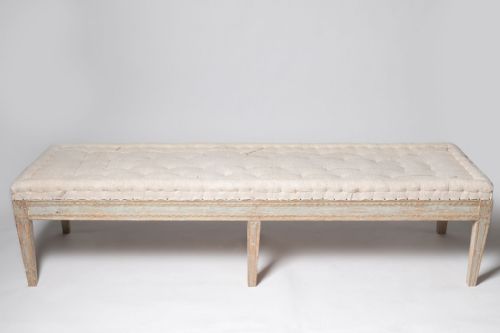
A window seat is generally wider and lower, designed to sit beneath a window ledge, sometimes featuring scrolled ends or arms. It often accommodates more than one person.
A dressing stool is compact, built specifically to slide underneath a dressing table or vanity.
Are Art Deco bedroom stools different from older styles?
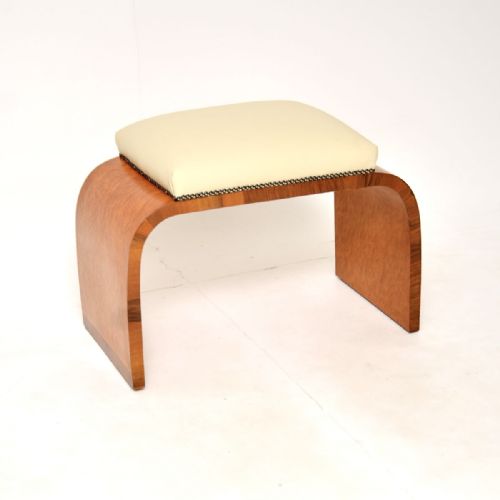
Art Deco pieces from the 1920s and 1930s utilise sleek geometric lines, figured walnut, oak, or sycamore timbers. They depart from the ornate carvings of Victorian and Edwardian furniture.
Makers of this period favoured streamlined forms, occasionally incorporating drum shapes and built-in storage compartments.
How do I care for antique upholstery and wood?
Protect wooden frames by keeping them away from direct heat sources and applying appropriate furniture wax periodically. Fabric covers benefit from regular gentle vacuuming using a soft brush attachment.
Professional cleaning is recommended for antique textiles and delicate needle point tops to preserve the fibres.