


Walnut Dressing Table Stool
A walnut dressing table stool brings warmth and compact proportion to a bedroom, offering a supportive seat designed to tuck beneath a matching vanity.
Walnut Dressing Table Stool
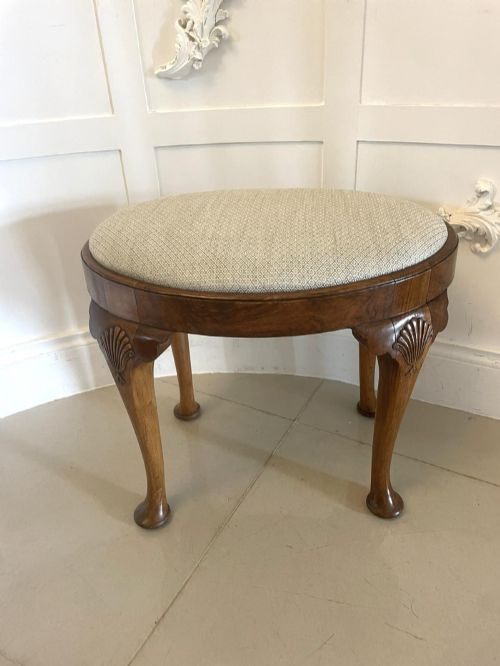
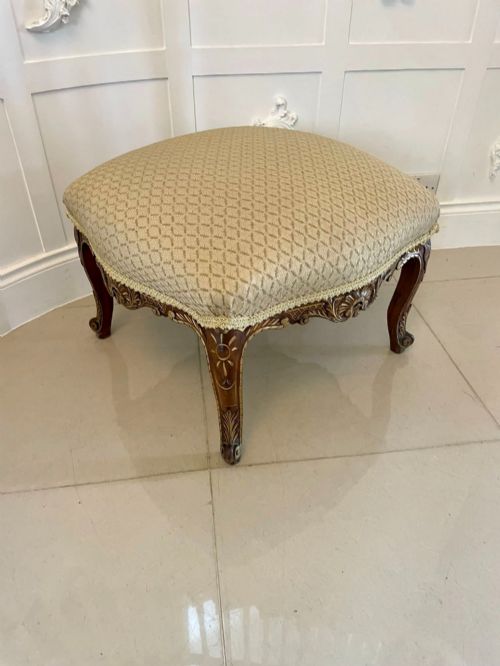
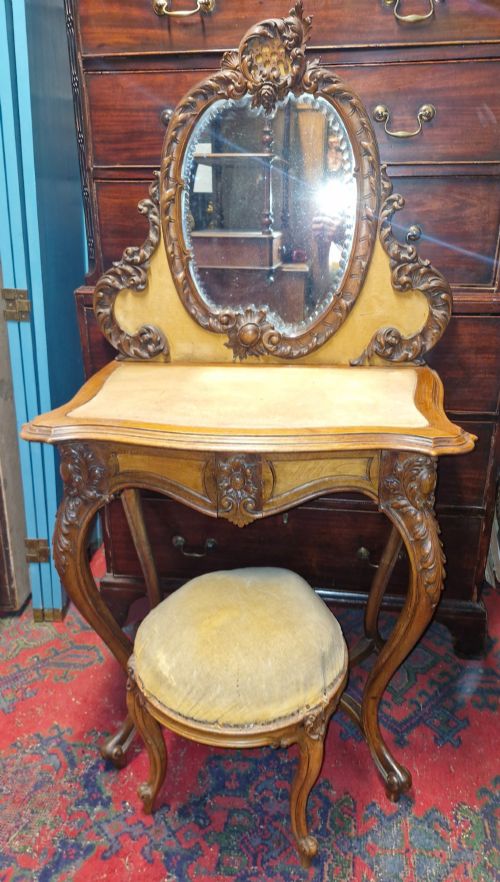
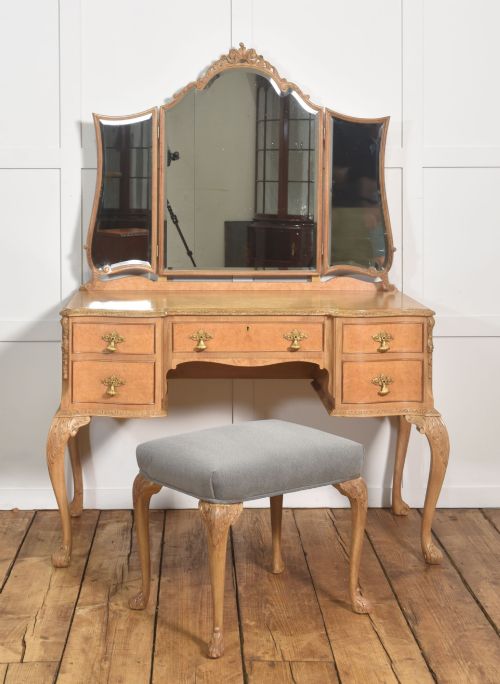
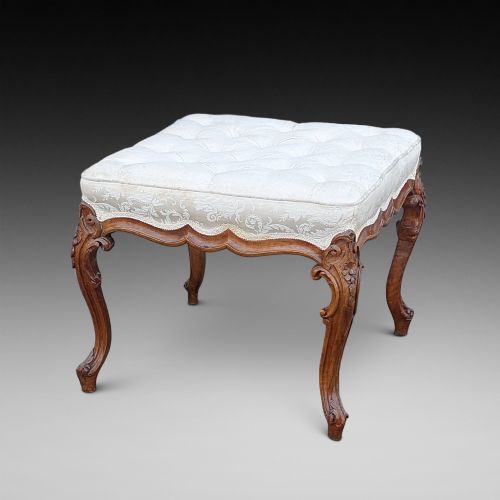
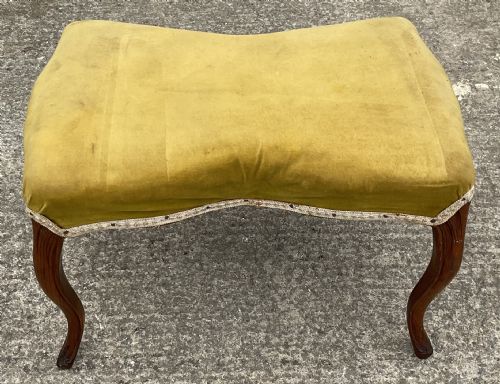
A walnut dressing table stool is a compact occasional seat created to sit beneath a bedroom vanity, matching the broader furniture suites of the nineteenth and twentieth centuries. The pieces on this page span from Victorian interpretations through to streamlined Art Deco designs, encompassing both standalone seats and those originally sold alongside dressing chests and kidney-shaped tables.
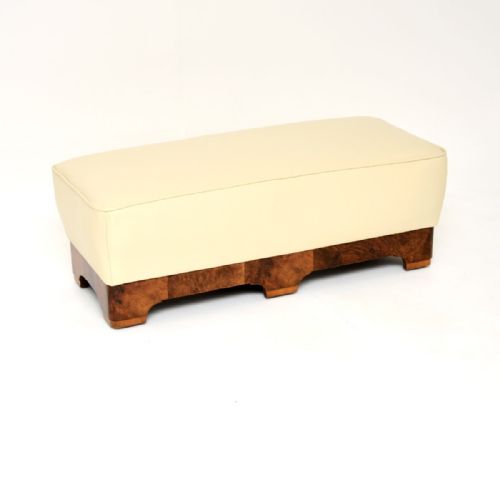
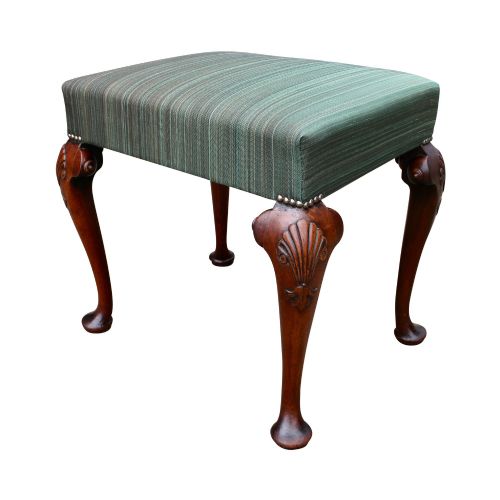
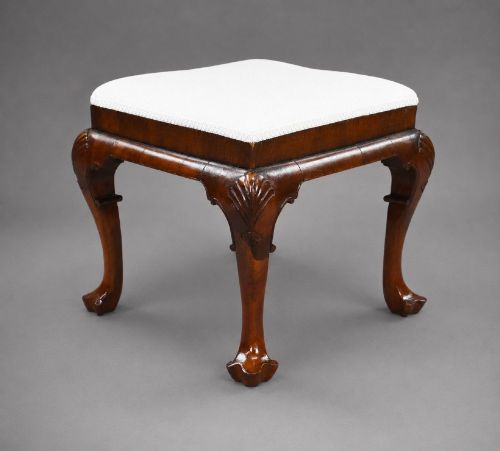
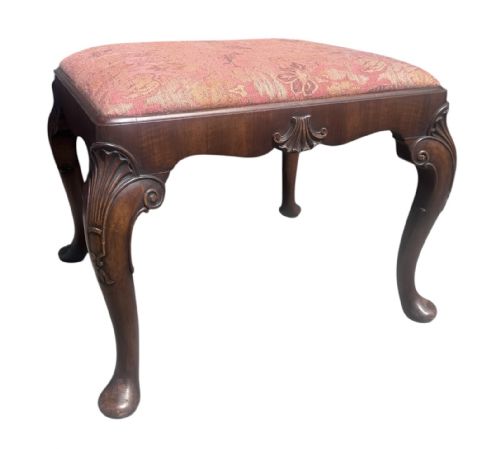
The physical forms vary considerably according to their period of manufacture. Early examples often display Queen Anne revival influences with cabriole legs, while later twentieth-century iterations favour the figured grains of burr walnut and clean geometric lines.
Many survivors share their lineage with piano stools and piano benches, occasionally incorporating adjustable mechanisms, revolving tops, or hidden storage compartments beneath the cushion.
How they were made
Cabinetmakers constructed the frames using solid walnut or applied decorative burr walnut and bird's-eye maple veneers over secondary timbers, often shaping the wood with hand-carved details or smooth curved aprons. Turning lathes produced twisted rope legs and sturdy stretchers, while joinery relied on traditional mortise and tenon techniques to withstand daily shifting.
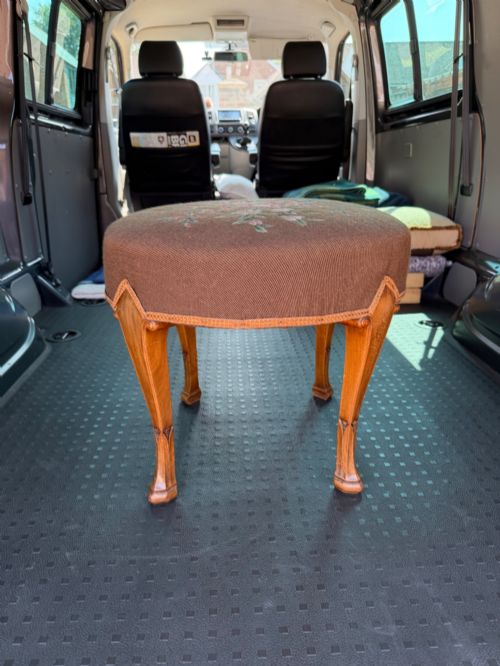
Upholstery methods evolved across the decades, supporting seats with textile coverings, tapestries, needlepoint, buttoned velvet, or supple leather secured with brass tacking. Specialised variants included revolving brass mechanisms for height adjustment and rise-and-fall systems borrowed from music stools.
Some versatile nineteenth-century examples doubled as music seats, hiding revolving screw mechanisms beneath the cushion so players could spin in place.
What varies in quality
Quality in a walnut dressing table stool rests primarily in the selection of the timber grain, the crispness of any carved ornamentation, and the structural integrity of the frame. Superior examples display highly figured burr walnut veneers matched symmetrically across the seat rail, alongside robust joinery that remains firm without excessive wobble.
The refinement of the legs and feet, whether manifesting as carved cabriole shapes, claw and ball terminals, or clean Art Deco curves, distinguishes workshop pieces from mass-produced output. Furthermore, the fidelity of the upholstery materials, from period-appropriate needlepoint to quality leather finishes, contributes significantly to the overall presence of the piece.
Harry and Lou Epstein·Maple and Co.·Trollope and Sons
The Walnut Dressing Table Stool Glossary
- Cabriole leg
- A furniture leg that curves outward at the knee and tapers inward toward the foot, mimicking animal limbs. This form is particularly common on Queen Anne style revival pieces.
- Claw and ball
- A foot motif carved to resemble an animal's talon grasping a spherical ball, often found on the corners of more substantial revival seating.
- Rise and fall
- An adjustable mechanical mechanism allowing the seat height to be altered by turning the top or using a screw thread. This function bridges the utility of dressing stools and piano music seats.
Walnut Dressing Table Stool: Frequently Asked Questions
Are these stools comfortable to use daily?
Most walnut dressing table stools provide a firm, upright seat well-suited for brief daily grooming tasks rather than long periods of lounging. Many feature padded upholstery covered in leather, velvet, or needlepoint to ensure adequate comfort.
Because they were designed to slide completely underneath a vanity table when not in use, their compact footprint prioritises space-saving utility alongside supportive seating.
How do I date a walnut dressing table stool?
Dating relies heavily on stylistic cues, timber treatment, and construction methods. Victorian pieces typically exhibit carved walnut frames, cabriole legs, or heavy buttoned upholstery, reflecting ornate revival tastes.
Conversely, examples from the 1930s showcase streamlined Art Deco silhouettes, smooth figured burr walnut surfaces, and minimalist leather upholstery without excessive ornamentation.
Can I use a dressing stool as a piano stool?
Historically, many small bedroom seats served a dual purpose as piano or music stools, sharing identical dimensions and mechanical adjustments. Certain nineteenth-century variants even include revolving tops or internal storage compartments specifically built for sheet music.
When checking a piece listed for both roles, verify that the height and stability suit your keyboard setup just as comfortably as a dressing table.
How do I match a stool to an antique vanity?
Matching a stool to an existing dressing table involves comparing the primary wood tone, such as straight-grained walnut versus figured burr walnut, and aligning the overarching design period. A Queen Anne revival vanity pairs naturally with cabriole-legged seating, while an Art Deco kneehole table demands geometric simplicity.
Minor variations in hue are normal among aged timbers, but consistent decorative motifs help tie the bedroom suite together cohesively.