
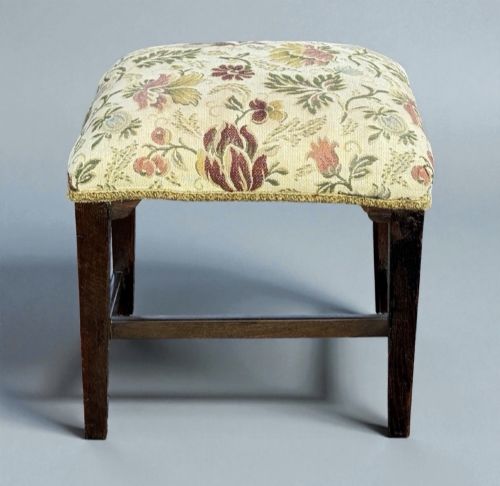

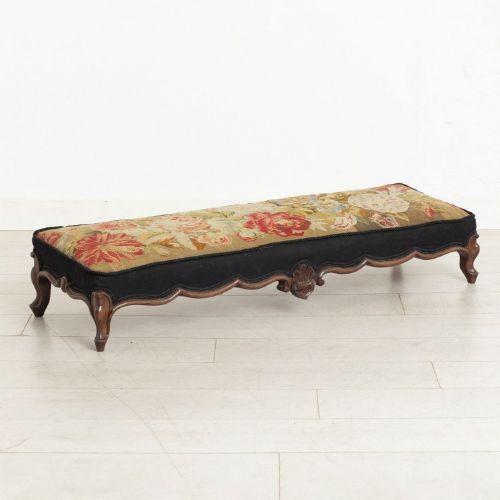


Floral Padded Stool
A floral padded stool brings tactile warmth and period character to a room, offering a practical seat or footrest upholstered in patterned textile.
Floral Padded Stool
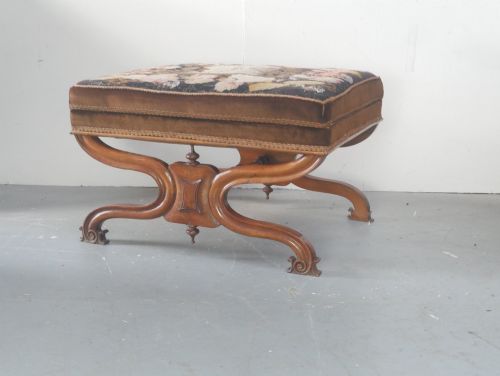
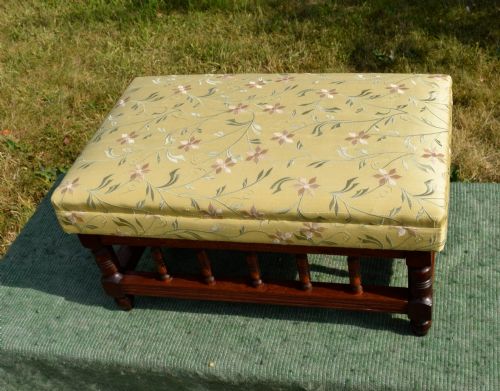
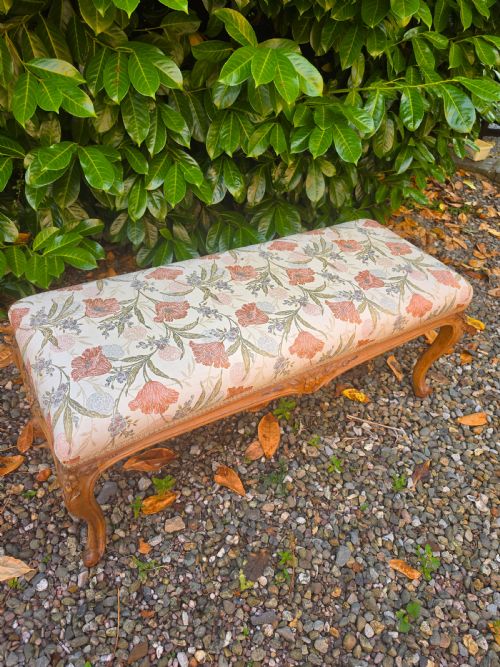
When you search for a floral padded stool, you encounter low footstools, dressing table seats, ottomans, and window benches dating from the eighteenth century to the early twentieth century. The selection spans distinct eras including Georgian, Victorian, Edwardian, and Regency periods, alongside revival designs reflecting Queen Anne and Scottish Baronial tastes.
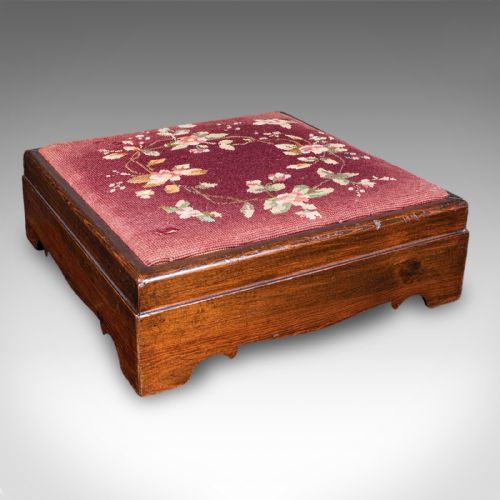
Most pieces you meet on this page are constructed with wooden frames in walnut, mahogany, rosewood, or pitch pine, paired with textile upholstery. Forms range from small fireside footstools to large ottomans with storage or work boxes, often featuring carved cabriole legs, twisted rope supports, or simple polished wooden frames.
Materials and Construction
Makers shaped these frames from solid hardwoods like walnut, mahogany, and rosewood, occasionally utilising pitch pine or ebonised timber. Joinery methods relied on traditional techniques to secure legs and frames supporting the padded top.
Upholstery involves textile coverings such as tapestry, needlework, wool, velvet, and Liberty fabric stretched over padding. Decorative details include carved woodwork, brass accents, and painted finishes.
Some nineteenth-century ottomans doubled as work boxes, hiding sewing supplies beneath the floral padding for discreet mid-task concealment.
Craftsmanship and Proportion
The distinction between ordinary and superior pieces rests on the crispness of the woodwork carving, the selection of timber grain, and the harmony of the proportions. Finer examples display carefully shaped cabriole legs, robust frame construction, and well-executed joinery that remains rigid over time.
Upholstery quality elevates a piece when the textile work uses enduring materials like needlepoint or tapestry, fitted neatly to the contours of the frame. The integrity of the underlying structure dictates how successfully a stool bears weight and retains its intended shape.
Howard and Sons·Whytock and Reid
The Floral Padded Stool Glossary
- Cabriole leg
- A furniture leg that curves outward at the knee and tapers inward toward the foot, often ending in a pad or scroll. This form draws inspiration from animal limbs and appears frequently on Victorian and Queen Anne style walnut stools.
- Ottoman
- A low, upholstered seat or footstool without a back or arms, sometimes containing internal storage or a work box. These larger forms functioned as window seats or central footrests in nineteenth-century interiors.
- Needlepoint
- A type of canvas work embroidery executed with wool yarn, commonly found covering the padded seats of period stools. It provides a durable, textured surface suited to daily use.
- Prie-dieu
- A low devotional chair or stool designed for kneeling or sitting during prayer, usually featuring an upholstered top and substantial wooden frame.
- Pitch pine
- A resinous softwood utilised in the construction of furniture frames, valued for its strength and distinct grain pattern during the Edwardian era.
Floral Padded Stool: Frequently Asked Questions
How do I date a wooden stool?
Dating relies on identifying the prevailing timber, stylistic cues, and construction methods characteristic of specific periods like the Georgian or Victorian eras. Examining the joinery and secondary woods beneath the upholstery provides further chronological clues.
Changes in furniture fashion, from the cabriole legs of mid-nineteenth-century walnut pieces to the simpler mahogany frames of the early twentieth century, help establish the time of manufacture.
What is an ottoman used for?
Historically, ottomans served as comfortable footrests, long window seats, or multifunctional storage boxes in reception rooms and bedrooms. Their generous proportions accommodated multiple feet or provided a convenient perch for resting.
In modern interiors, they continue to function as flexible seating options or coffee table alternatives when paired with a rigid tray.
How do I maintain a wooden stool?
Maintenance involves keeping the wooden frame nourished with appropriate furniture wax and protecting the surface from direct sunlight and excessive moisture fluctuations. Regular dusting with a soft cloth preserves the polish on walnut and mahogany surfaces.
For the upholstered padded top, gentle vacuuming with a brush attachment removes surface dust without stressing the textile fibres or underlying padding.