



Antique Style Ottoman
An antique style ottoman brings low, upholstered seating with period character into a room.
Antique Style Ottoman
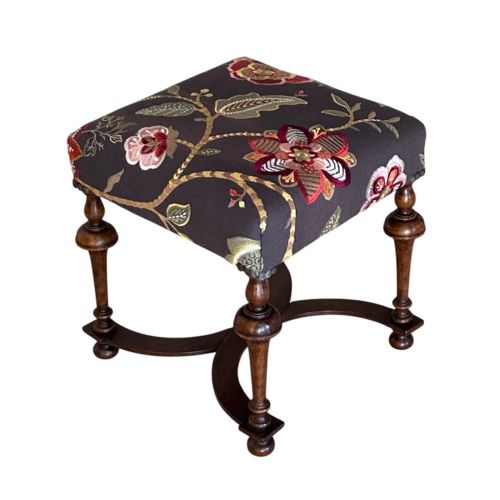
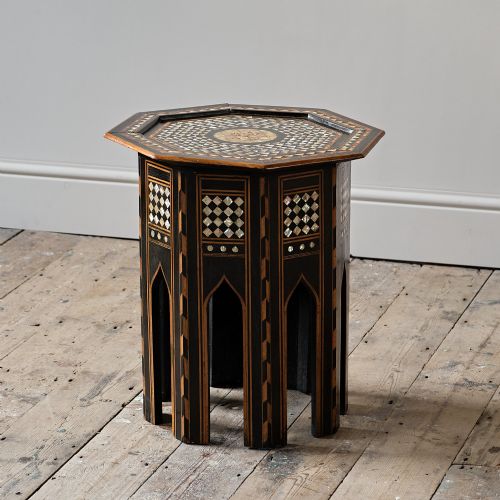
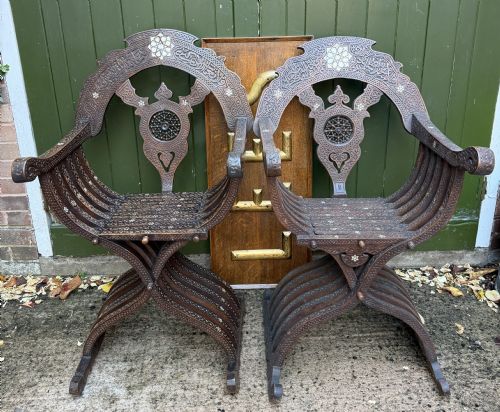
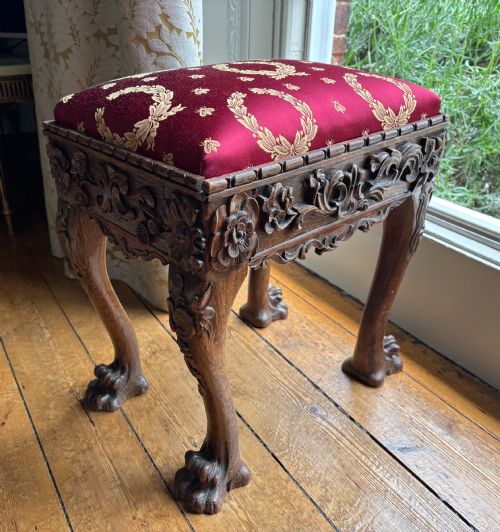
When you search for an antique style ottoman, you are looking at low upholstered seats, long stools, and footstools produced across the nineteenth and early twentieth centuries. These pieces draw on historical design revivals ranging from Queen Anne and Chippendale to Regency and Victorian Rococo. Alongside these English and continental interpretations, the selections include Moorish and Syrian pieces incorporating bone, brass, and mother-of-pearl inlay.
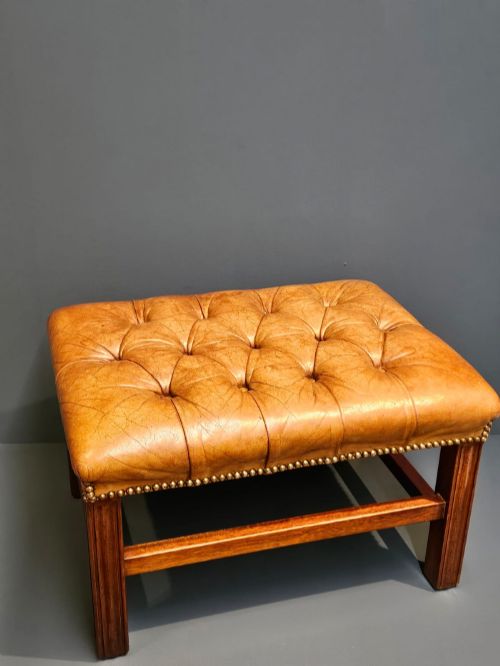
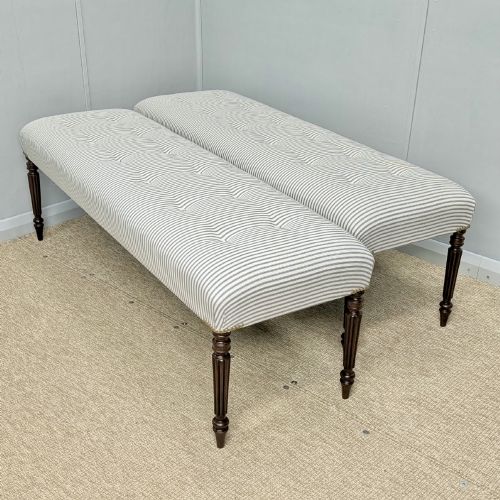
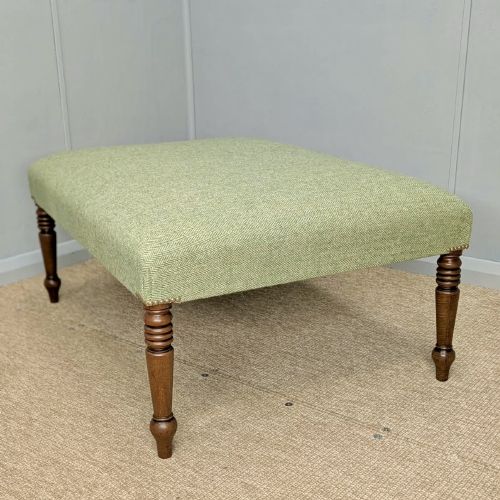
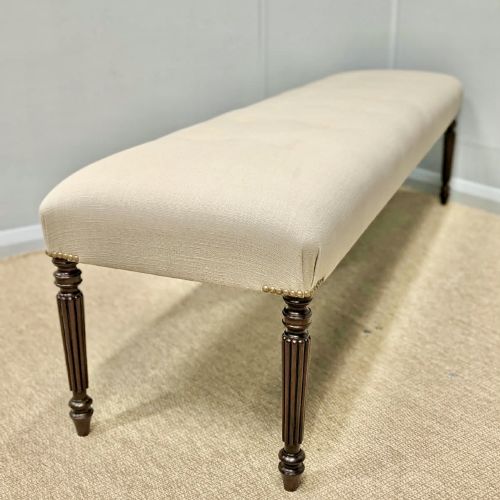
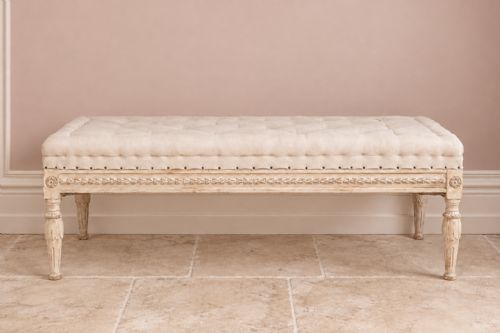
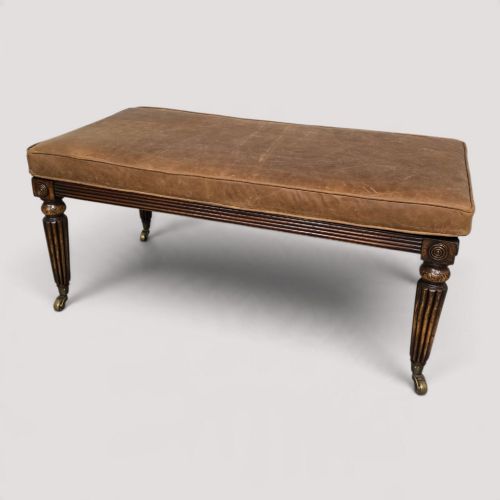
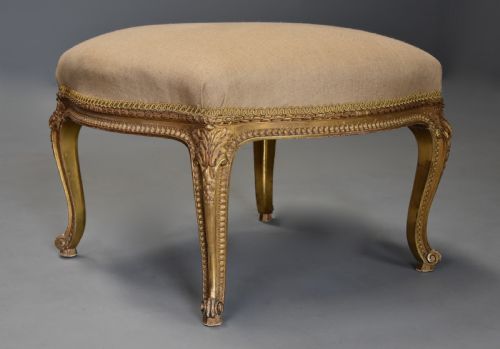
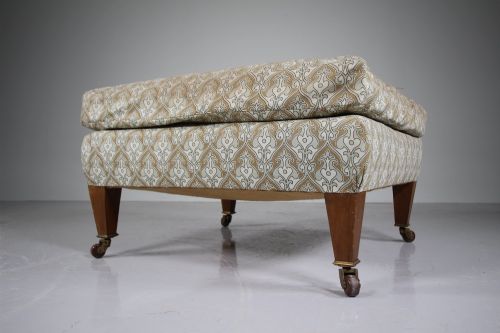
The version you are most likely to meet on this page is a walnut or mahogany framed stool standing on cabriole or straight legs, often upholstered in buttoned leather, velvet, or linen. Many pieces span the Victorian and Edwardian decades, while others adopt earlier seventeenth and eighteenth-century vocabularies through revivalist craft. Formats range from compact footstools to large duet seats designed for dressing tables and music rooms.
Materials and Construction
Makers built the structural frames of these ottomans in solid hardwoods like walnut, mahogany, beech, and oak, applying decorative veneers such as burr maple and oyster walnut where appropriate. Giltwood surfaces appear on continental revival pieces, while Middle Eastern examples utilise hardwood bodies densely decorated with inlaid mother-of-pearl, bone, and pierced brass.
Upholstery methods relied on traditional webbing, stuffing, and hand-tacking, frequently finished with deep buttoning in leather, hide, velvet, or woven fabric. Brass castors often support the feet of larger nineteenth-century English stools, allowing heavy timber frames to move across carpets.
Antique Style Ottoman Retail Price Guide 2026
Typical asking prices for style ottoman among the pieces listed under this phrase on Sellingantiques today, from the lower quarter to the upper quarter. They describe what is for sale here now, not the wider market.
Leather animal footstools produced for Liberty bring whimsical leather beasts into the traditional seating category.
Judging Quality
The distinction between ordinary and exceptional pieces rests upon the crispness of the timber carving and the integrity of the joinery. Superior frames utilise dense, richly figured timbers with hand-carved details that remain sharp rather than softened by excessive sanding or later restoration.
Materials like hand-dyed leather, silk velvet, and quality mother-of-pearl inlay elevate the presence of a piece. Furthermore, branded maker provenance and balanced proportions across revival styles separate standard workshop output from exceptional commissions.
Miles & Edwards·Howard & sons·Omersa For Liberty
The Antique Style Ottoman Glossary
- Cabriole leg
- A furniture leg that curves outward at the knee and tapers inward to an ankle, common in Queen Anne and eighteenth-century revival designs. This profile mimics animal limbs and gives a sense of springy movement to heavy wooden frames.
- Buttoning
- An upholstery technique where deep tufts are pulled tight and secured with fabric-covered buttons in a geometric grid. This method creates a padded, textured surface that holds its shape over decades of use.
- Cross stretcher
- Wooden rails connecting the legs near the floor in an X or H shape to provide structural rigidity. These supports often feature a central finial or ornate turning.
- Giltwood
- Timber coated with a thin layer of gold leaf or gesso preparation. It produces a reflective, metallic surface seen on decorative continental revival seating.
- Mashrabiya
- An architectural element of turned wooden lattice-work used in Middle Eastern furniture and screens to filter light and air. In smaller items, it forms intricate geometric panels.
- Curule
- An ancient chair shape featuring two opposing curved legs that cross in an X-form. This classical Roman profile was revived during the Regency and nineteenth-century periods.
Antique Style Ottoman: Frequently Asked Questions
What is an antique style ottoman?
An antique style ottoman is a low upholstered seat or footstool produced during the nineteenth or early twentieth centuries, or an earlier piece built within a historical revival aesthetic. These items function as flexible seating, foot rests, or low coffee tables.
They draw on design languages from the Georgian, Victorian, and Regency eras, as well as Middle Eastern decorative traditions. Each piece relies on traditional timber framing and textile upholstery.
How were these stools used historically?
Historically, these low seats served multiple domestic purposes in drawing rooms, bedrooms, and music salons. Smaller versions supported tired feet beside a fireplace, while long duet stools accommodated musicians at a piano.
Larger upholstered benches also provided extra seating around dressing tables or served as movable footrests in formal entertaining spaces.
How do I date an antique ottoman?
Dating relies on examining the underlying timber, joinery techniques, and styling cues rather than surface upholstery alone. Characteristics like hand-cut screws, secondary woods, and the specific profile of cabriole or turned legs point to particular decades.
Revival pieces often blend earlier silhouettes with Victorian or Edwardian construction methods, making secondary details like castors and stretcher joints helpful chronological markers.
How do I care for leather and wood?
Leather upholstery benefits from periodic feeding with appropriate wax or conditioner to keep the hide supple and prevent cracking. Buttoned leather surfaces should be dusted regularly with a soft cloth.
Solid wood frames require standard furniture wax applied sparingly to nourish the grain. Keep these pieces away from direct heat sources and strong sunlight to protect both timber and fabric.