
Upholstered Vanity Seat
An upholstered vanity seat brings low seating and soft textile tops to the dressing room, combining functional form with period timber frames.
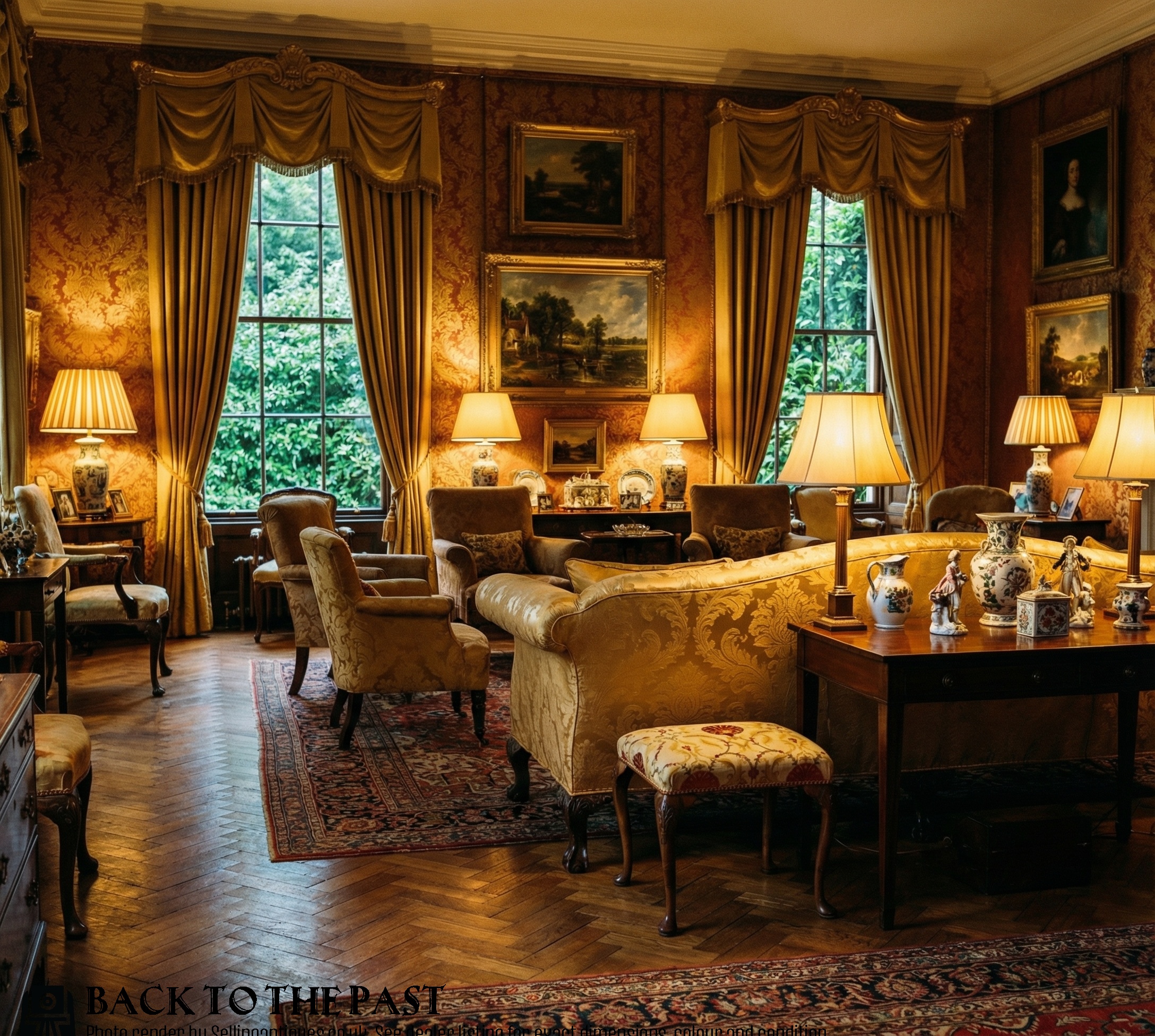
Upholstered Vanity Seat
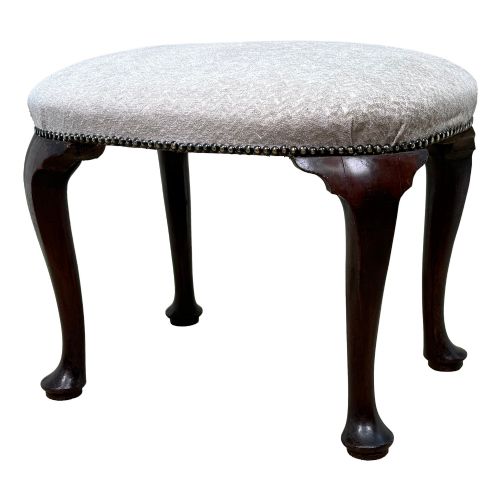
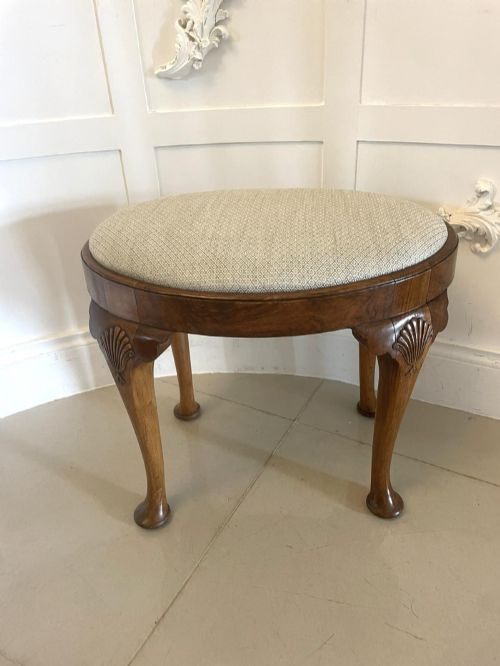
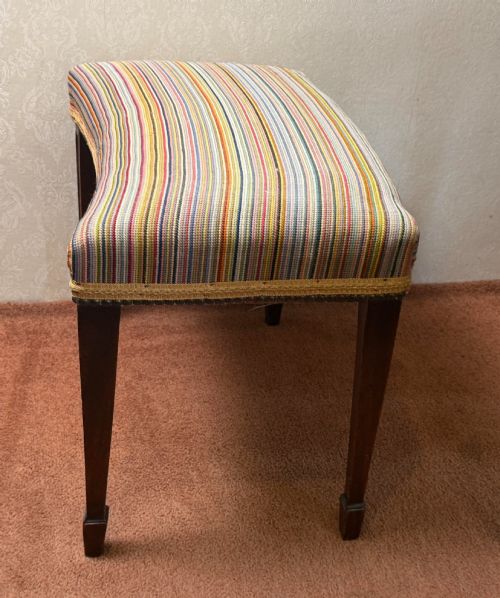
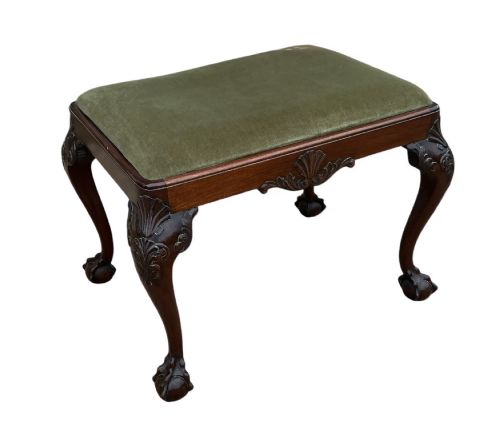
An upholstered vanity seat takes the form of a low stool or dressing table stool designed to sit neatly beneath a mirror or dressing chest. These pieces appear across multiple eras, ranging from late eighteenth century mahogany examples to Victorian walnut frames and twentieth century art deco designs.
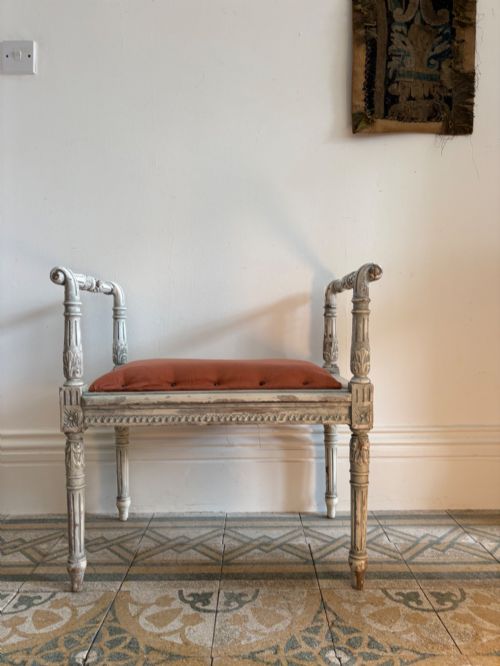
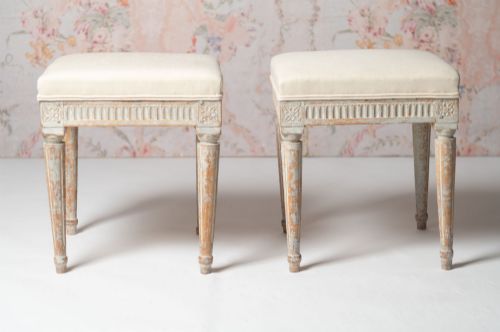
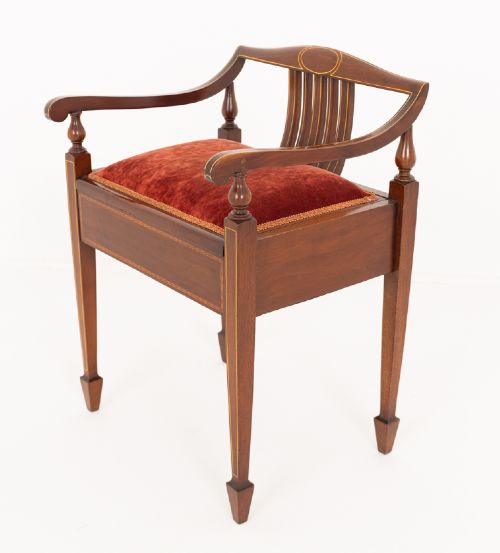
The selection includes specific object types such as dressing table stools, piano stools, and small benches with fabric, velvet, leather, or silk tops. Buyers encounter styles spanning Queen Anne revival, Chippendale influence, Edwardian ebonisation, and Swedish Gustavian painting.
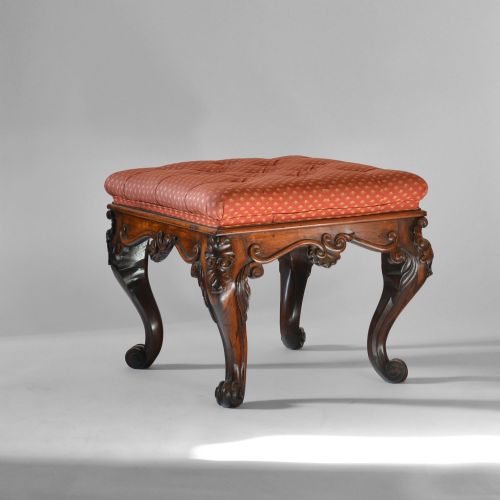
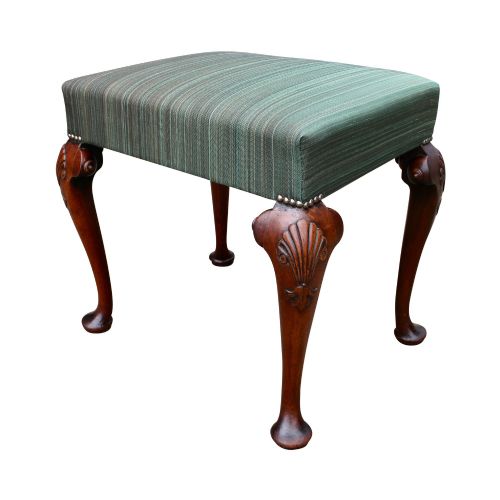
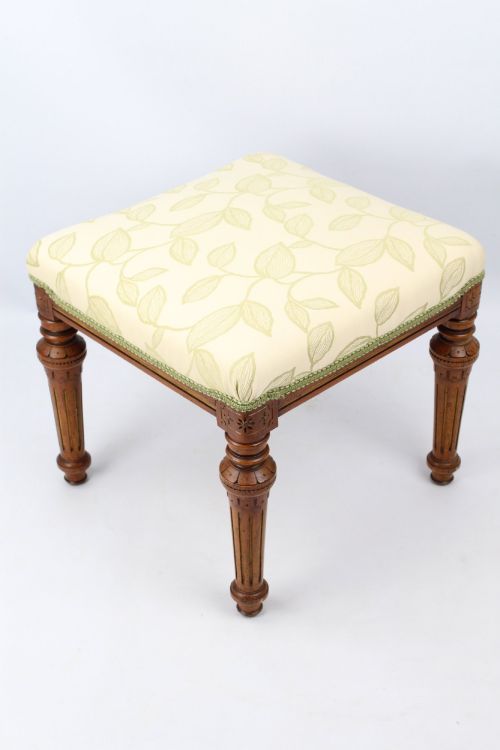
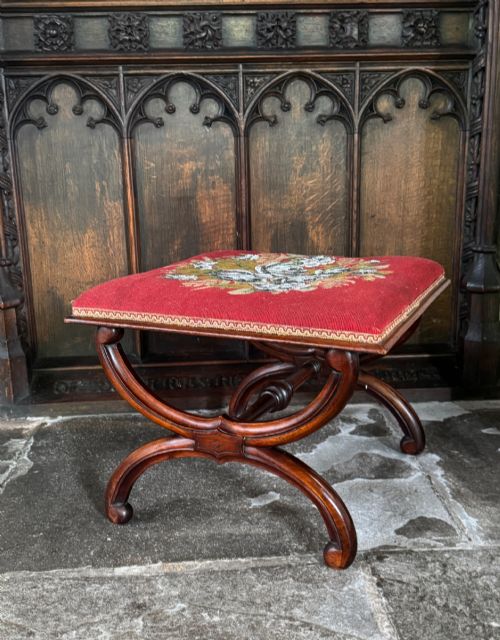
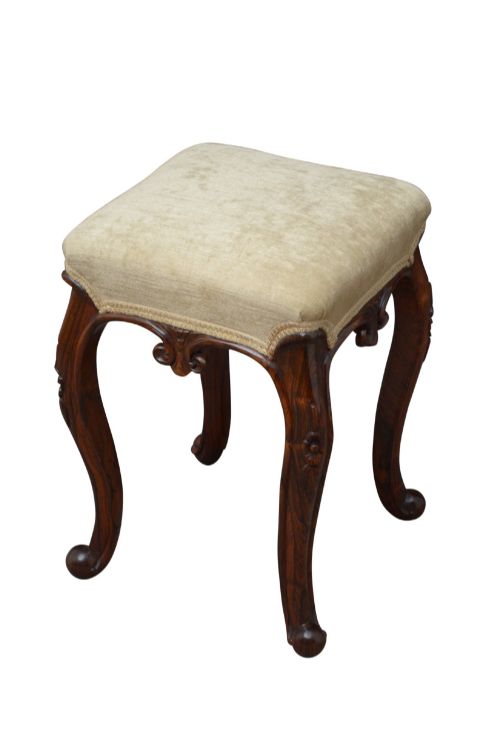
Origins stretch from English workshops to continental European centres, featuring carved cabriole legs, X frames, and square tapering supports. Each version offers a compact seating solution tailored for the dressing room or boudoir.
Materials and construction methods
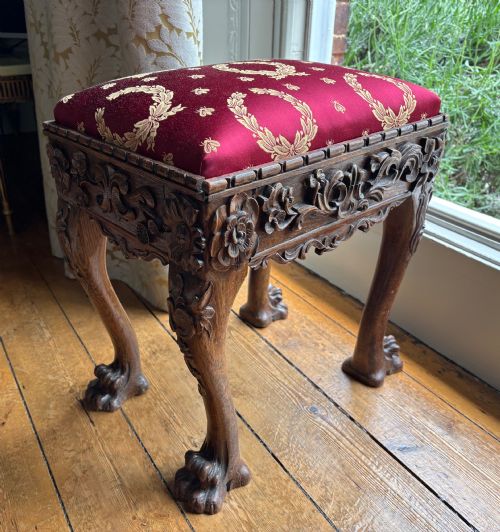
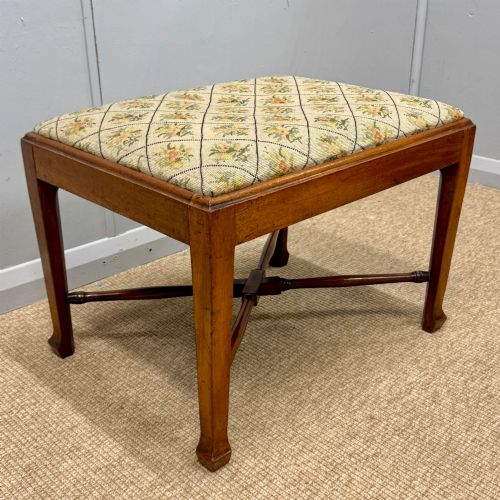
Timbers form the structural foundation, with mahogany, walnut, rosewood, oak, and sycamore shaped into turned legs, cabriole supports, and cross stretchers. Carved detail appears on specific revival pieces, whilst painted or gilded surfaces define continental and Swedish pieces.
Upholstery relies on traditional textile coverings including silk, velvet, brocade, and leather secured over padded seats. Brass fittings and beadwork occasionally augment the primary woodwork, adding decorative contrast to the frame.
One cheerful Edwardian ebonised stool proudly advertises itself as so versatile and functional.
Distinguishing quality in period seating
Quality rests in the crispness of timber carving, the integrity of frame joints, and the selection of primary hardwoods such as solid walnut or figured mahogany. Finer examples display well-proportioned cabriole legs or precise turned details rather than heavy, slack execution.
The standard of upholstery work and the choice of textile cover also influence the piece, with traditional stuffing and appropriate period fabrics elevating the finished stool. Original or sympathetic restoration preserves the character of the woodwork without masking its age.
Bath Cabinet Makers
The Upholstered Vanity Seat Glossary
- Cabriole leg
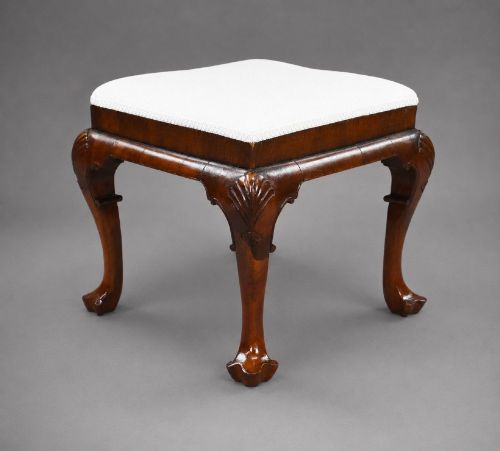
- A furniture leg that curves outward at the knee and tapers inward toward the ankle, ending in a pad or foot. This form draws inspiration from animal legs and defines many eighteenth century and revival designs.
- X frame
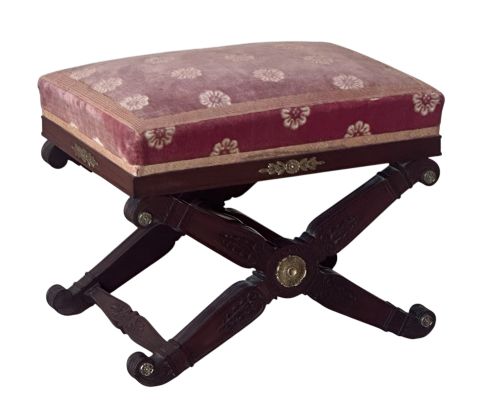
- A structural support formed by two intersecting diagonal members shaped like the letter X. This configuration provides sturdy load bearing strength while creating an architectural silhouette.
- Cross stretcher
- Horizontal wooden rods connecting the legs of a stool near the base to increase stability. They often feature central turning or decorative intersections.
- Ebonised
- Wood treated with a dark finish to imitate ebony. This technique appears frequently on nineteenth and early twentieth century frames.
- Gustavian
- The Swedish neoclassical style spanning the late eighteenth century, characterised by pale painted finishes and restrained classical carving.
Upholstered Vanity Seat: Frequently Asked Questions
How do I choose the right height for a vanity seat?
Most dressing table stools measure lower than standard dining chairs to fit comfortably underneath a vanity or dressing chest.
Check the clearance height of your table before selecting a stool with fixed or revolving mechanisms.
Are these seats suitable for daily use?
Period frames built from solid hardwoods like mahogany and walnut offer robust daily utility when joints remain sound.
Modern replacement upholstery on vintage frames ensures the padding meets contemporary comfort standards.
How do I identify a Queen Anne style stool?
Queen Anne style pieces typically feature prominent cabriole legs and pad feet without heavy ornamentation.
Walnut remains the preferred timber for this aesthetic, which emphasises graceful curves over straight lines.
What is the difference between an ottoman and a vanity stool?
Vanity stools are specifically proportioned for dressing tables and feature open legs rather than enclosed storage boxes.
Their compact footprints allow them to slide entirely out of sight when not in use.