


Claw Foot Stool
These claw foot stool pieces bring centuries of timber craftsmanship and carved support to your floor, pairing sturdy frames with tactile upholstery.
Claw Foot Stool
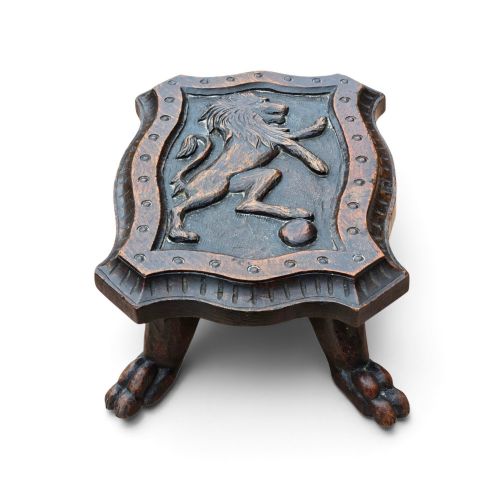
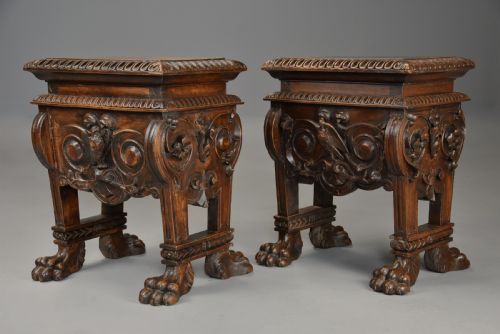
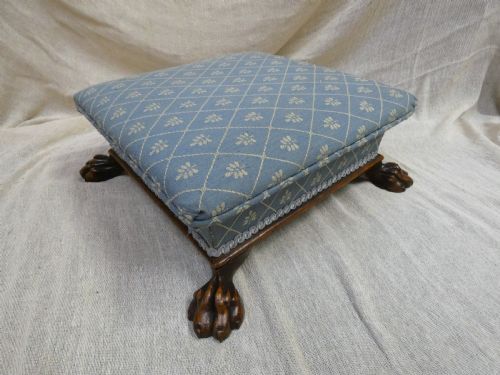
A claw foot stool is a low seating piece or foot support raised on carved animal paws or talons gripping spheres, appearing across Georgian, Victorian, and later periods. You will regularly encounter mahogany, walnut, and rosewood examples shaped in revivalist styles like Chippendale or Queen Anne, alongside simpler Victorian iterations.
Forms range from piano stools and dressing stools to ottomans and small occasional footstools. These pieces serve practical functions in the home while displaying period ornamentation such as heraldic motifs, cabriole legs, and swivel tops.
The aesthetic bridges formal period reception rooms and domestic studies, utilising diverse textiles including velvet, damask, and fabric upholstery. Dating spans from the eighteenth century through the nineteenth century and into early twentieth-century interpretations.
How they were made
Cabinetmakers shaped these frames primarily from dense hardwoods like mahogany, walnut, and rosewood, occasionally incorporating iron or brass accents for swivel mechanisms and footman details. Carved elements such as lions' paws and ball-and-claw feet demanded skilled hand-chisel work directly into the solid timber or applied mounts.
Upholstery techniques combined internal webbing or stuffing with top layers of textile, velvet, fabric, or damask secured by tacks. Frames frequently utilised traditional joinery methods, matching turned or cabriole legs securely to the seat rails.
Some Victorian footstools hide internal mechanisms that let pianists spin in circles while pretending to concentrate deeply on Chopin.
What varies in quality
Quality rests upon the crispness of the carving on the feet and legs, where deep undercut talons and well-defined knuckles distinguish master work from softer, mechanical shaping. The choice of timber grain and the integrity of the joinery at the corners dictate the long-term stability of the frame.
Upholstery execution also separates pieces, with hand-stitched details and sympathetic textile choices holding more integrity than later re-coverings. Proportion and balance in the cabriole curve further determine the visual success of the piece.
The Claw Foot Stool Glossary
- Cabriole leg
- A furniture leg that bends outward in a convex curve and tapers inward in a concave curve, ending in a carved foot. This profile mimics animal limbs and appears frequently on period seating.
- Ball-and-claw foot
- A carved foot depicting a bird's talon or animal paw grasping a spherical ball. It draws from Chinese motifs and became a defining feature of eighteenth-century and revival furniture.
- Piano stool
- An adjustable or revolving seat designed for keyboard players, often featuring a swivel mechanism. These allow the musician to alter height during performance.
- Damask
- A reversible figured fabric woven on a loom, commonly utilised for upholstering antique seats. It displays patterns created by contrasting warp and weft satin weaves.
- Ottoman
- A low upholstered seat or footstool without a back or arms, sometimes built with internal storage. Regency and Victorian examples often incorporate substantial timber frames.
Claw Foot Stool: Frequently Asked Questions
What is a claw foot stool used for?
These pieces function primarily as footrests, piano seats, or occasional dressing stools in living spaces and bedrooms. Their sturdy frames and padded surfaces offer both decorative presence and practical utility.
Historically, specific forms like piano stools provided adjustable heights for musicians, while lower footstools supported relaxation by keeping feet off cold floors.
How do I date a claw foot stool?
Dating relies on examining the timber species, joinery methods, and the style of the carved feet. Eighteenth-century pieces typically feature solid mahogany or walnut with hand-carved ball-and-claw details, whereas nineteenth-century versions often adopt revivalist or industrial characteristics.
Hardware such as brass swivel mechanisms or iron fixings also helps establish the period of manufacture when records are absent.
Where should I place a foot stool?
A foot stool suits placement before an armchair, beside a piano, or beneath a dressing table. Their compact footprint allows them to tuck neatly into corners or sit centrally as decorative accents.
Consider the pile of your carpet and the surrounding furniture height to ensure the piece integrates comfortably into your room layout.
How do I care for antique upholstery?
Preserving historic textiles requires gentle surface cleaning and protection from direct sunlight to prevent fading. Regular light vacuuming with a soft brush attachment removes dust without abrading the fibres.
For wooden frames, applying appropriate wax feeds the grain and maintains the finish without building up heavy residues.