
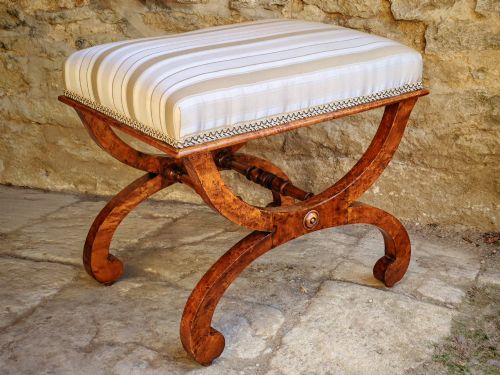


Georgian Piano Bench
A georgian piano bench brings understated seating to a room, offering compact proportions and sturdy timber construction.
Georgian Piano Bench
A georgian piano bench provides low seating, often found in forms that span from compact single stools to longer duet variations. The pieces available show a mix of original periods and later revivals, reflecting enduring design choices.
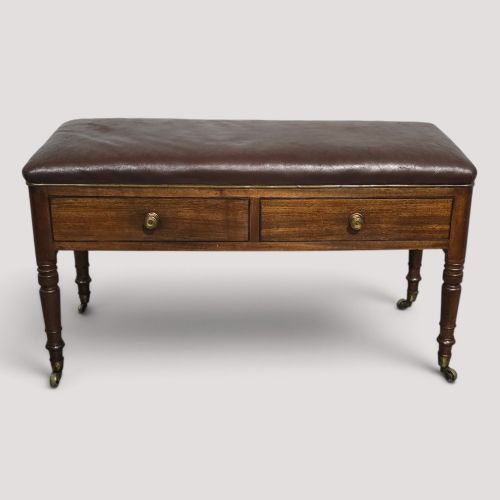
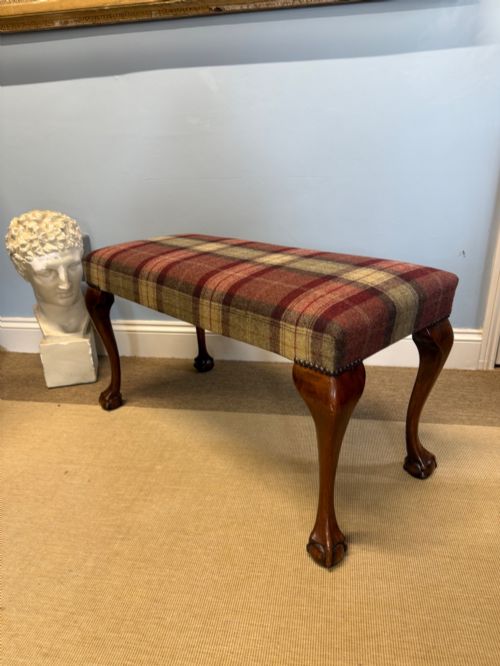
Makers adapted these forms into various seating types, including dressing table stools and window seats. Mahogany and walnut dominate the construction, accompanied by upholstered seats in velvet, wool, tapestry, and leather.
The aesthetic draws on historical styles such as Regency, Chippendale, and Queen Anne. Proportions remain modest, designed to sit neatly beneath a window or beside a keyboard.
Materials and construction
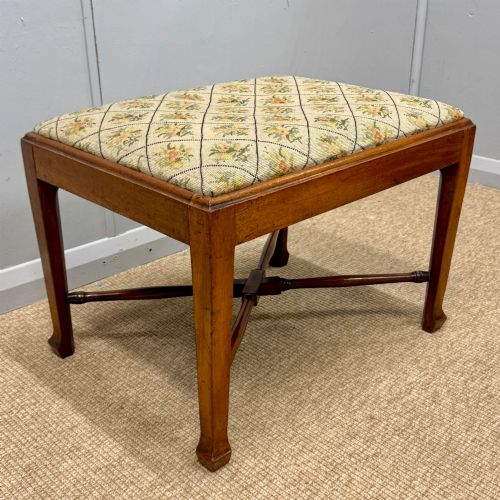
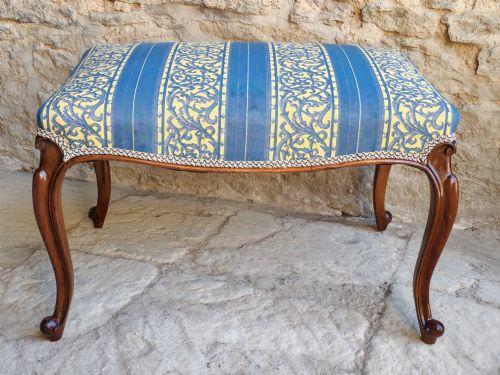
Workshops relied primarily on solid mahogany and walnut for the frames, occasionally utilising burr maple for distinct figuring. Timber components were shaped with turned or cabriole legs, sometimes featuring cross stretchers for added stability.
Seating surfaces involved traditional upholstery over wooden frames, employing materials like velvet, leather, wool, and tapestry. Brass details occasionally appeared as hardware accents or sabots.
Cross stretchers were originally added to keep wobbly legs honest, but today they just give your feet somewhere quiet to rest.
Judging quality in construction
The standard of a piece rests on the crispness of the timber carving and the integrity of the frame joinery. Finer examples display balanced proportions, such as well-executed cabriole legs or precise cross stretchers.
Upholstery finish and the selection of cabinet timbers distinguish standard workshop output from higher grade commissions. Grain selection in walnut or mahogany surfaces indicates the original maker's investment of time and material.
The Georgian Piano Bench Glossary
- Cabriole leg
- A furniture leg that curves outward at the knee and tapers inward toward the foot, inspired by animal limbs. This form appears frequently on walnut and mahogany seating from the eighteenth century onward.
- Cross stretcher
- Wooden bars connecting the legs near the base to provide structural rigidity. They often intersect at the centre and can feature turned details.
- Duet stool
- An extended seat designed to accommodate two people simultaneously. These longer forms frequently serve at pianos or dressing tables.
- Burr maple
- A wood harvested from maple tree growths that produces intricate, swirling grain patterns. It provides a highly decorative surface on polished furniture.
Georgian Piano Bench: Frequently Asked Questions
What is a georgian piano bench?
A low seat designed for musicians, featuring a timber frame and an upholstered top. These pieces often double as dressing table stools or window seats due to their compact dimensions.
Such seating accommodates various interior settings, offering practical placement in living rooms, bedrooms, or music spaces.
How do I identify the wood type?
Inspect the grain and colour under natural light to distinguish between mahogany, walnut, and maple. Mahogany tends to show a reddish-brown tone, while walnut often displays richer, darker figuring.
Comparing the weight and surface texture further clarifies the material used in the frame construction.
Are these benches comfortable?
The seating relies on traditional padding and upholstery materials like wool, velvet, or leather. Comfort levels depend on the original stuffing and the current condition of the internal webbing.
Many examples provide firm support suited to upright posture at a keyboard or dressing table.
What styles are common?
The selection encompasses authentic periods alongside later revivals like Georgian Revival, Chippendale Style, and Grand Regency. Each style dictates specific leg forms, from straight tapered supports to elaborate cabriole shapes.
Matching the style to existing interior decor helps maintain a cohesive room aesthetic.