
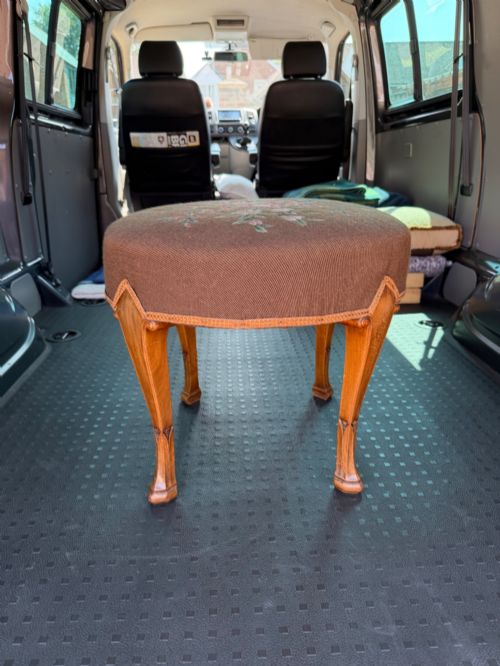
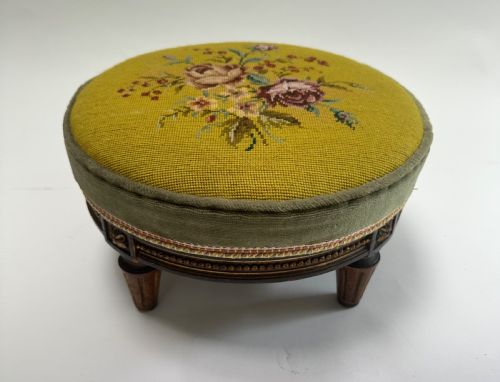
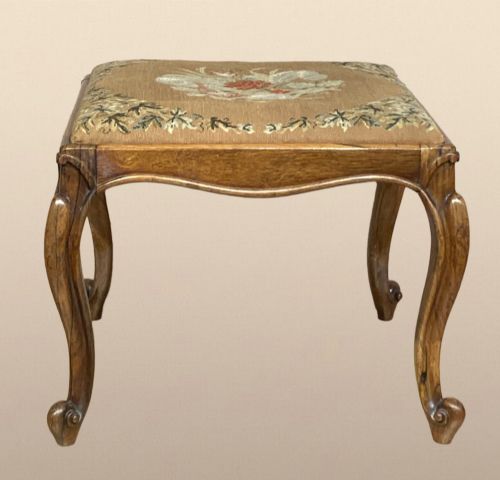
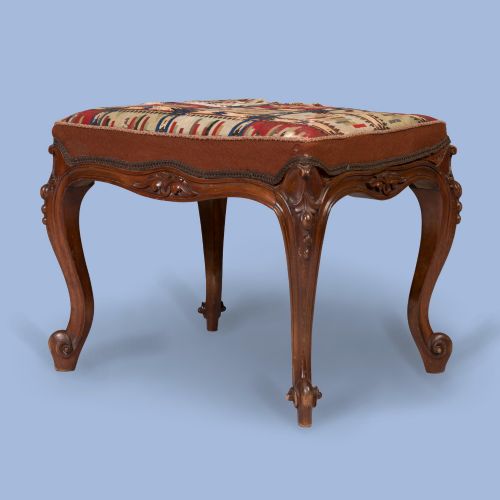
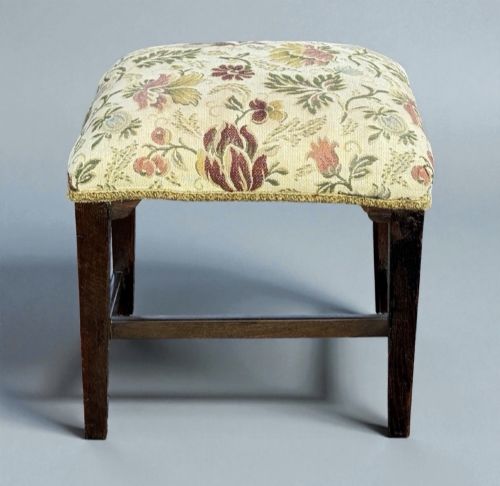


Vintage Tapestry Footstool
These vintage tapestry footstool examples bring textile artistry and sturdy timber frames together, offering practical comfort for any room.
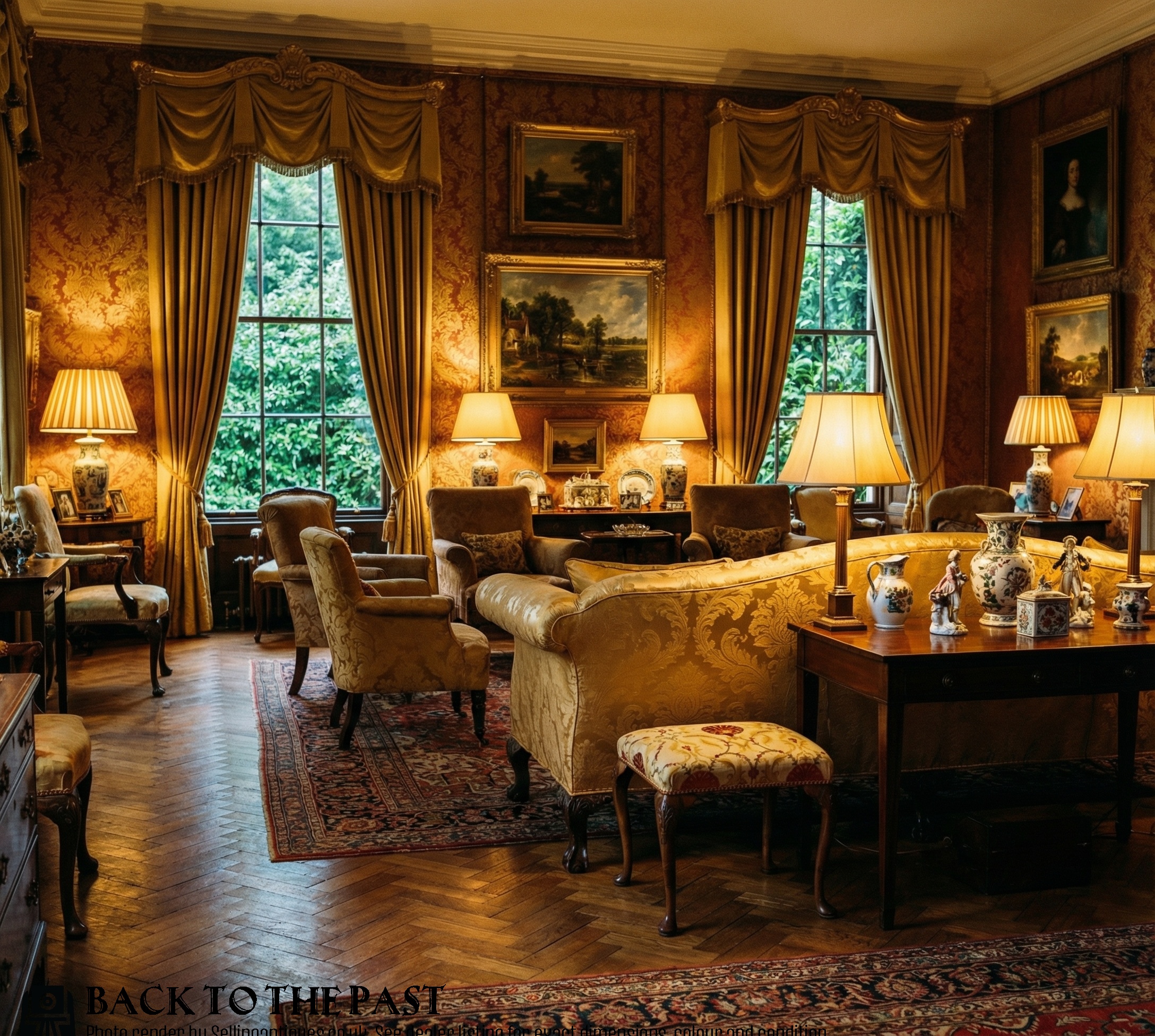
Vintage Tapestry Footstool
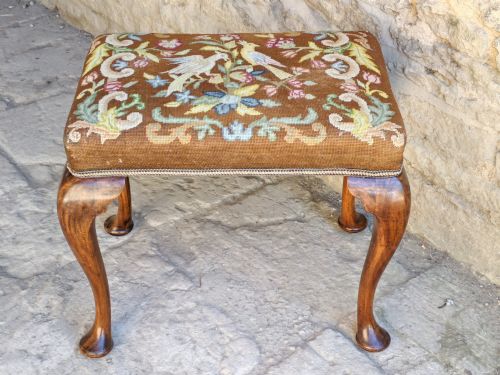
A vintage tapestry footstool combines textile needlework with a supportive timber base to create a practical household seat. Buyers seeking a vintage tapestry footstool will find pieces originating from the nineteenth century onward, encompassing periods from Victorian through to the 1930s.
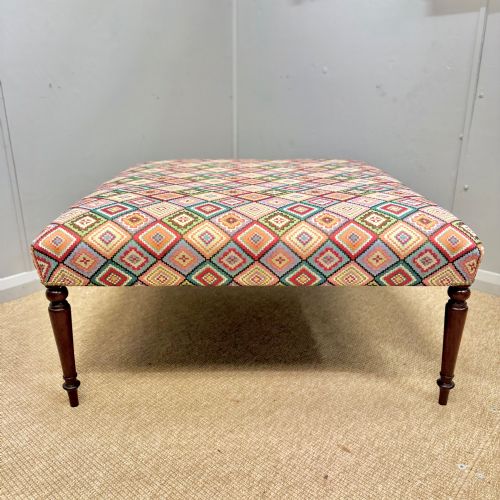
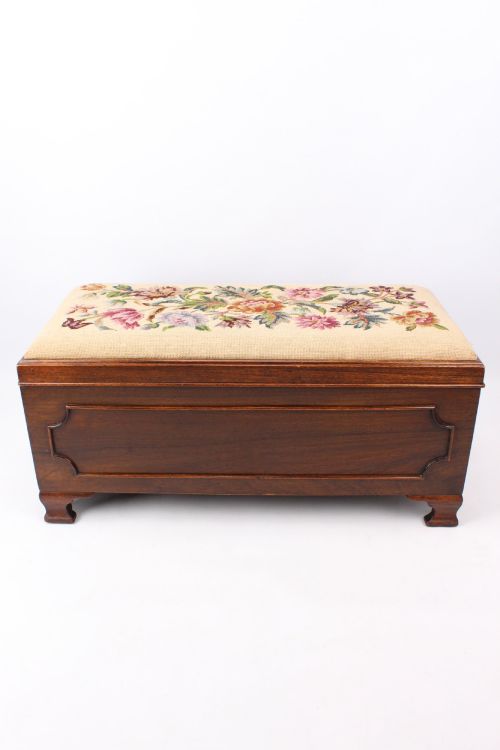
The assortment includes dressing stools, fireside seats, and larger ottomans, often taking rectangular, oval, or square forms. Walnut and mahogany predominate as the primary timbers, supporting textile surfaces worked in wool, needlepoint, and kilim.
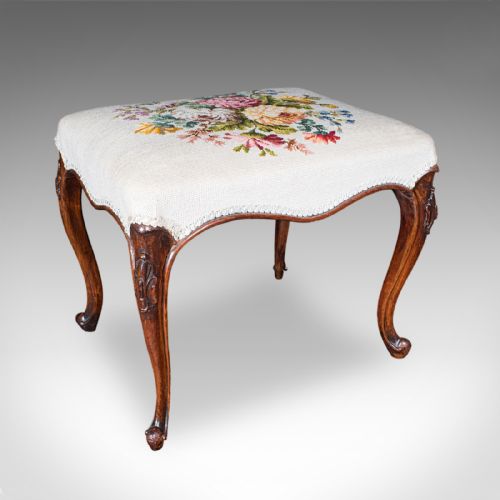
Revival aesthetics strongly influence these designs, with Chippendale, Queen Anne, and Louis XV styles appearing frequently alongside simpler nineteenth century forms. Many pieces serve specific functions, such as dressing table seating or fireside rests.
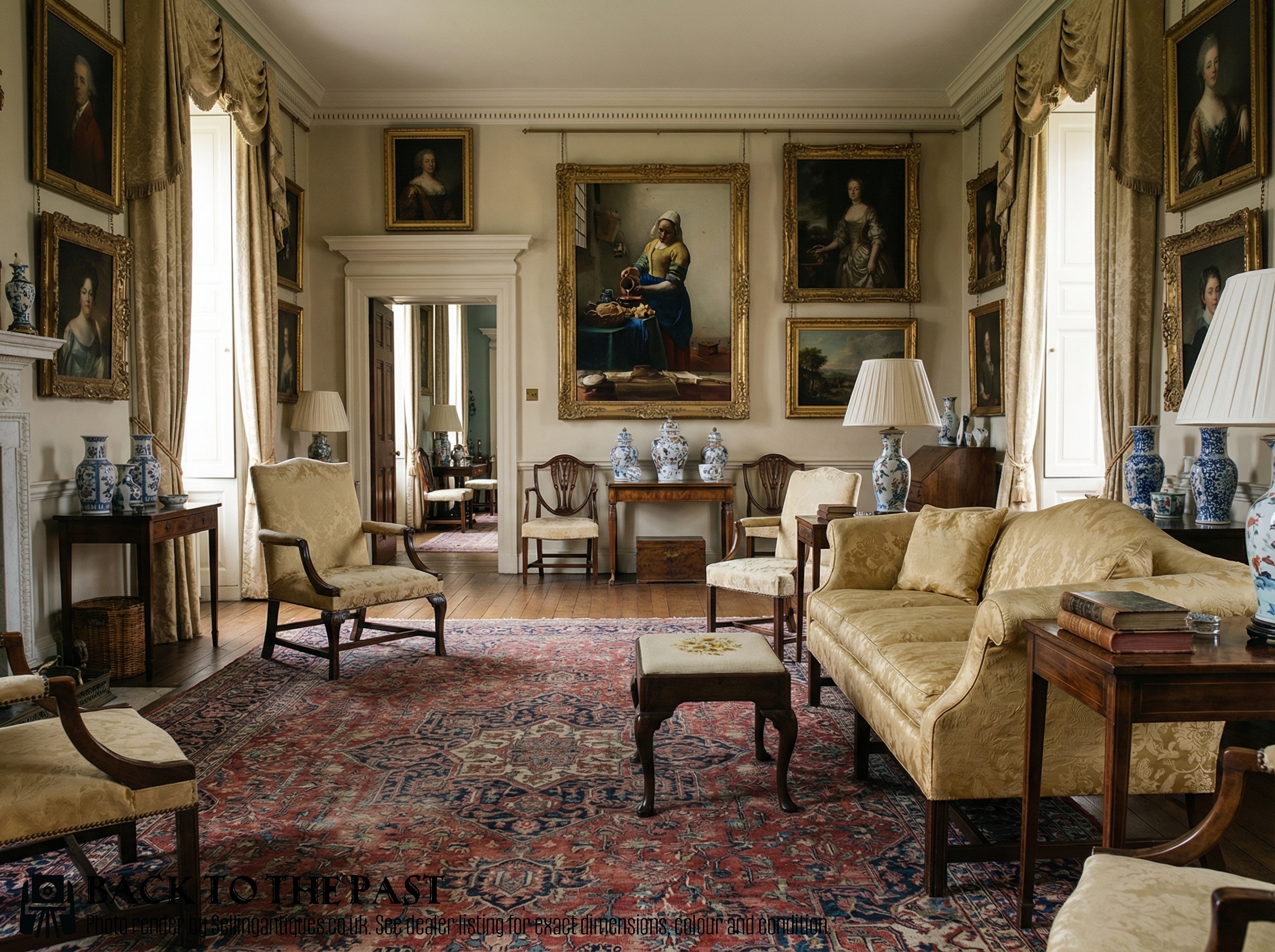
How they were made
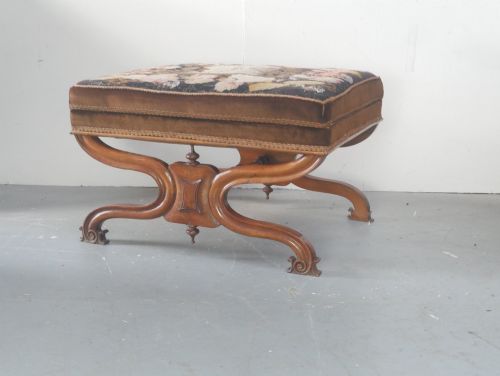
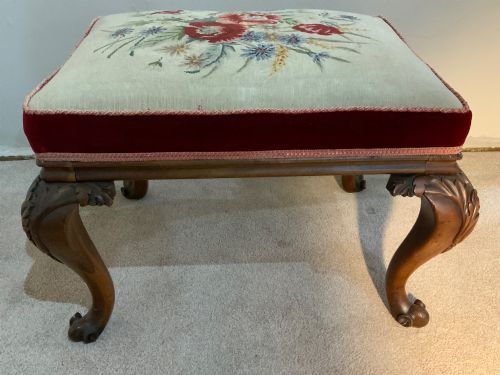
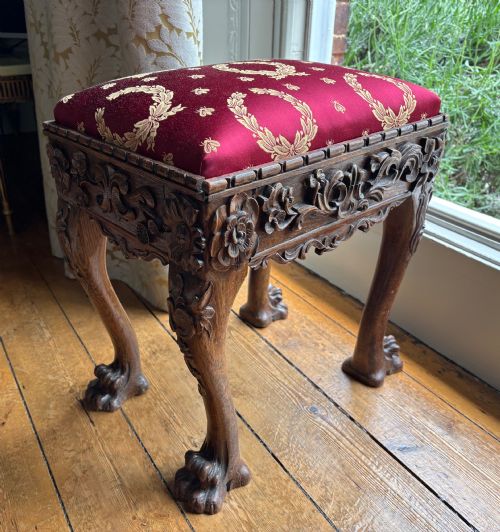
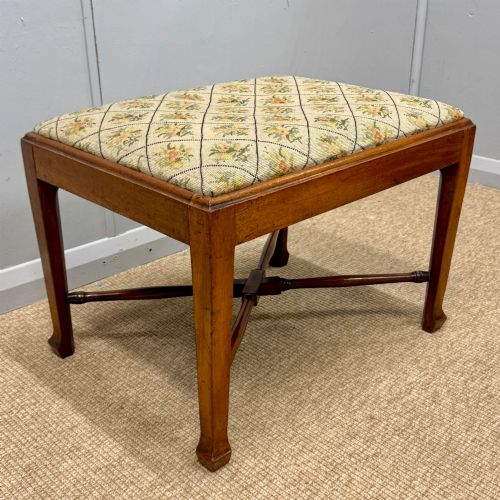
Cabinetmakers constructed the underlying frames predominantly from walnut or mahogany, frequently employing carved cabriole legs, cross stretchers, or X-frames. Joinery techniques relied on traditional mortise and tenon joints to ensure stability under daily weight.
Upholstery work involved stretching woven wool, tapestry, or needlepoint over padded foundations, secured with brass tacks or hidden fixings. Needlework panels required meticulous hand-stitching with coloured wool yarns before mounting onto the wooden frames.
Certain footstools managed to outlive several generations of parlour carpets while keeping their needlework cheerful.
What varies in quality
The standard of timber carving and the complexity of the frame dictate the baseline quality, with hand-carved walnut and mahogany pieces sitting above plain turned supports. Robust joinery without movement in the legs separates a durable stool from a compromised one.
Textile preservation defines the upper tier, where original needlepoint or tapestry retains its tight weave and rich colour without thinning or moth damage. The intricacy of the geometric or floral needlework patterns also reflects the time invested by the original maker.
Hallett & Sons·Jas Shoolbred
The Vintage Tapestry Footstool Glossary
- Cabriole leg
- A furniture leg that curves outward at the knee and tapers inward to an ankle, popular in revival styles. This profile derives from animal limbs and appears on many walnut and mahogany stools.
- Needlepoint
- A type of canvas work embroidery executed with wool yarn, frequently seen on stool tops. This textile technique creates dense, durable geometric or pictorial patterns.
- Cross stretcher
- Wooden rails connecting the legs near the base to provide additional structural rigidity. These horizontal braces often feature central turnings or carved details.
- Kilim
- A flatwoven textile originating from the Near East and used to cover upholstery surfaces. Such covers introduce vibrant multi-coloured geometric motifs to nineteenth century frames.
- Ottoman
- A low, upholstered seat or stool lacking arms and a back, designed for resting feet or sitting. Larger examples function as central room furniture or storage pieces.
Vintage Tapestry Footstool: Frequently Asked Questions
What periods do these footstools date from?
The available selection spans primarily from the nineteenth century into the early twentieth century, including distinct Victorian and 1930s examples.
Craftsmen during these eras utilised walnut and mahogany frames alongside traditional textile upholstery techniques.
How were these stools used historically?
These pieces served multiple domestic functions, including fireside rests, dressing table seating, and general parlour accommodation.
Larger versions also operated as ottomans or window seats within formal rooms.
Are the tapestry tops original?
Many listings retain their original needlepoint, wool, or kilim textile covers, showcasing period hand-stitching.
Subsequent re-upholstery occasionally occurs to maintain structural integrity while preserving aesthetic styles.
How do I care for the wooden frame?
Maintain the walnut or mahogany surfaces using appropriate furniture wax applied sparingly with a soft cloth.
Avoid placing timber pieces in direct sunlight or near heat sources to prevent wood splitting.
How do I clean the tapestry upholstery?
Gentle surface dusting or light vacuuming with a low-suction attachment helps remove embedded dirt from the wool fibres.
Professional textile cleaning is recommended for deeper stains to protect the delicate needlework.