


English Walnut Stool
When you search for an english walnut stool, you discover seating spanning low fireside footrests to grand upholstered centre pieces.
English Walnut Stool
The search for an english walnut stool brings up a varied collection of domestic seating, spanning from low fireside footstools and gout stools to piano seats and dressing table benches.
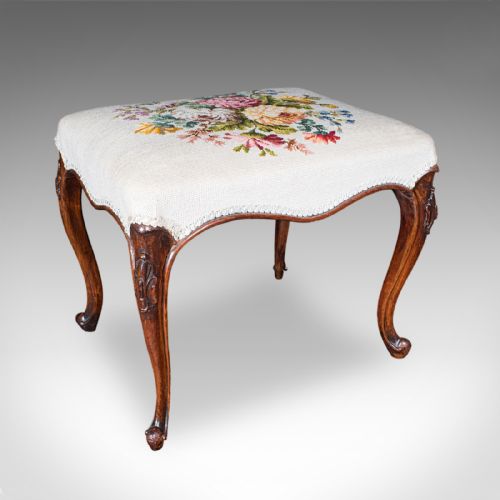
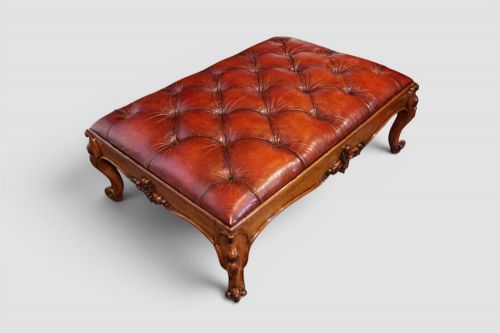
Victorian examples dominate the listings, offering buttoned leather tops, needlepoint tapestry covers, and revolving mechanisms for music rooms.
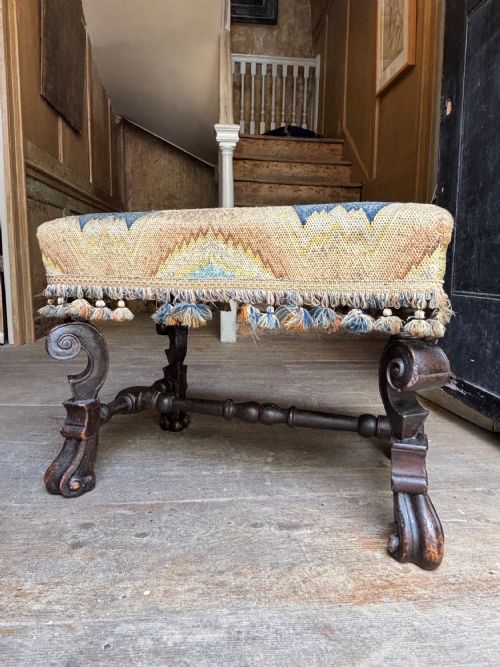
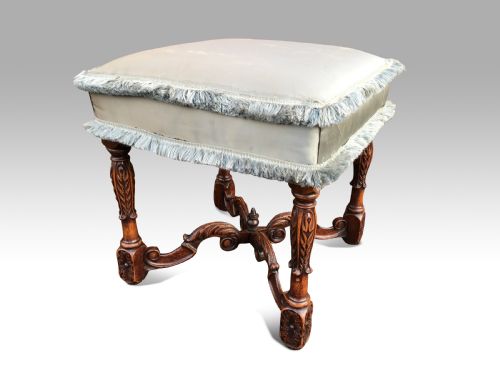
Earlier pieces from the seventeenth and eighteenth centuries appear in baroque and Queen Anne styles, while Art Deco dressing stools represent the twentieth-century production in figured walnut.
Materials and Construction
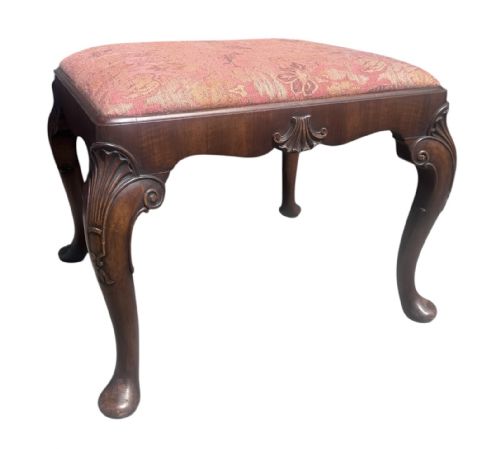
Makers utilised solid walnut and figured veneers for the frames, often incorporating carved cabriole legs, X-frames, or barley-twist supports depending on the period.
Upholstery forms a major component of the construction, relying on traditional textiles such as wool, velvet, leather, crewel work, and hand-stitched needlepoint tapestry over webbing and stuffing.
Gout stools feature adjustable inclined cushions designed specifically to soothe weary feet by the fire.
Assessing Quality and Craftsmanship
Quality rests upon the crispness of the timber carving, the depth of the walnut grain, and the integrity of the underlying frame construction rather than mere decorative flourish.
Original upholstery methods and period-appropriate textile choices elevate an example, as do functional elements like smooth mechanical height adjustments on music stools.
Harry and Lou Epstein·Brooks·Charles Wadman
The English Walnut Stool Glossary
- Carolean
- Pertaining to the reign of Charles II, associated with exuberant baroque carving and rich walnut frames. This style marks seventeenth-century pieces.
- Gout stool
- A low footrest featuring an adjustable inclined top designed to elevate the feet for comfort. These often appear in mid-nineteenth-century inventories.
- Needlepoint
- A form of canvas work embroidery utilising wool yarn to create intricate floral or geometric patterns. It frequently covers Victorian footstool tops.
- X-frame
- A structural furniture base formed by intersecting diagonal stretchers resembling the letter X. This design appears across Regency and earlier periods.
English Walnut Stool: Frequently Asked Questions
What is an english walnut stool used for?
These pieces served multiple domestic functions, operating as low fireside footrests, carriage stools, music seats, and bedroom dressing benches.
Victorian homes utilised smaller footstools for comfort near the hearth, while larger piano stools and window seats provided practical seating in reception rooms.
How do I date an english walnut stool?
Dating relies upon identifying stylistic markers, timber treatments, and construction techniques characteristic of specific eras like the Victorian or Queen Anne periods.
Twentieth-century Art Deco pieces display distinct figured veneers and geometric forms, whereas seventeenth-century examples show heavy baroque carving and turned supports.
What is a piano stool with storage?
Certain nineteenth and twentieth-century music seats incorporate a hidden compartment beneath the hinged upholstered top or seat locker.
This compartment allowed musicians to store sheet music and tuning keys directly inside the stool frame while maintaining a neat appearance in the parlour.
Are all antique stools upholstered in needlepoint?
Needlepoint tapestry is common on nineteenth-century examples, but upholstery materials vary considerably across the selection.
Listings feature smooth buttoned leather, velvet, plain wool fabrics, and crewel work embroidery depending on the original commission and intended room.