


Victorian Fireside Stool
These Victorian fireside stools are practical nineteenth-century seating accessories designed to keep feet warm above draughty floors.
Victorian Fireside Stool
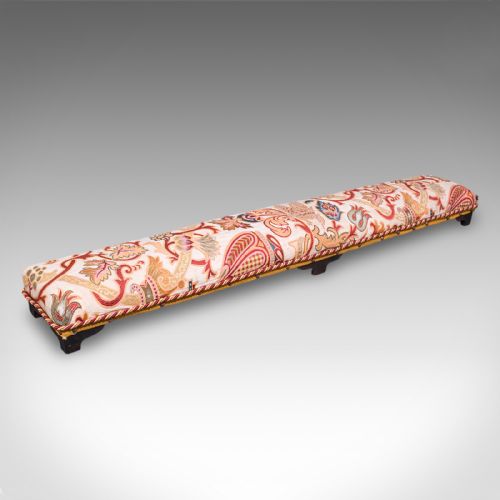
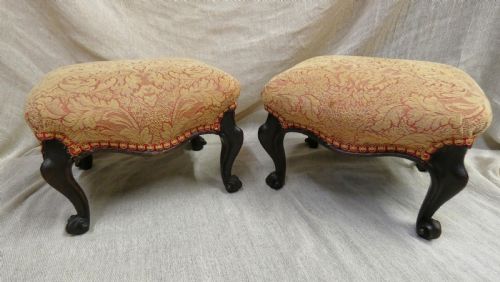
A Victorian fireside stool serves as a low seat or footrest placed near a hearth, appearing across nineteenth-century domestic interiors in various formats. Buyers encounter single pieces, pairs, and long variations designed for resting feet or kneeling.
The pieces on this page span the Victorian period and the nineteenth century, encompassing early Victorian and Queen Anne Revival styles. Footstools, low rests, gout stools, and matching armchair sets represent the primary forms seen here.
How They Were Made
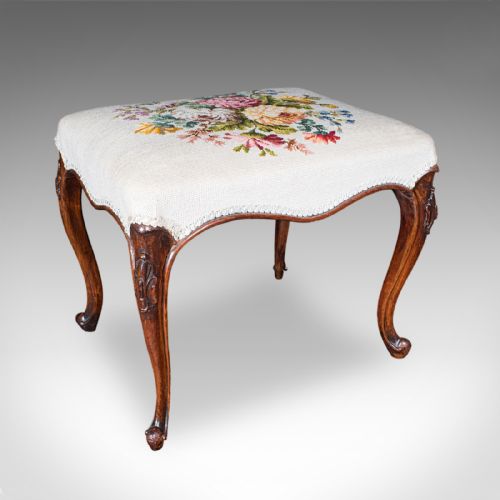
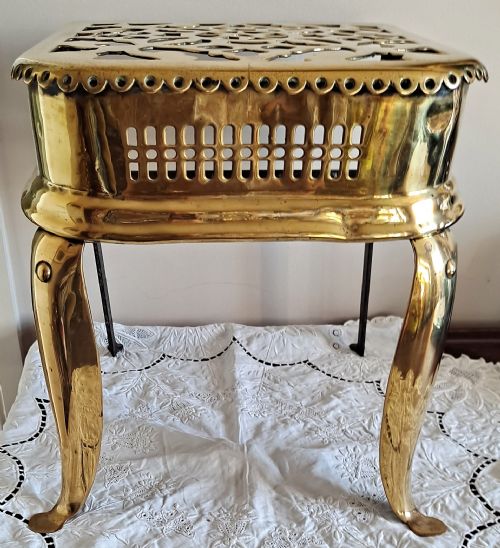
Carpenters shaped the timber frames primarily from walnut and mahogany, occasionally utilising oak, while brass and steel appear on accessory items. Turned and carved supports define the wooden structures beneath the upholstery.
Textiles complete the upper sections, featuring wool, needlepoint, embroidered floral designs, and damask fabric finished with fabric trim. Buttoned upholstery and traditional stuffing secure the soft upper surfaces to the wooden bases.
Needlepoint and embroidered floral textiles serve as the primary upholstery fabrics found on nineteenth-century footstools.
What Varies in Quality
The refinement of the timber carving and the complexity of the turned frame separate standard examples from finer items. Walnut and mahogany frames with carved details demonstrate greater artisan investment than plain wooden structures.
The intricacy and preservation of the textile work dictate the visual distinction of each piece. Hand-worked needlepoint and detailed floral embroidery display higher levels of domestic and professional craftsmanship.
The Victorian Fireside Stool Glossary
- Needlepoint
- A type of canvas work embroidery used for upholstery on nineteenth-century footstools and fireside seats. It provides a durable and decorative surface for daily use.
- Gout stool
- A specialised low fireside footrest designed to elevate the legs and ease physical discomfort. These items often feature adjustable angles or padded kneeling boards.
- Carved frame
- A wooden structure ornamented with hand-chiselled decorative motifs rather than plain turned legs. This detail elevates the status of the furniture piece.
- Damask fabric
- A reversible figured textile woven on a jacquard loom, frequently utilised for covering Victorian upholstery. It adds texture and pattern to domestic seating.
Victorian Fireside Stool: Frequently Asked Questions
What is a fireside stool used for?
These low stools supported feet near the hearth to protect legs from cold draughts sweeping across nineteenth-century wooden floors.
Victorian occupants also utilised smaller kneeling variants for tending fires or reading close to the warmth of the fireplace.
How do I date a Victorian footstool?
Timbers such as walnut and mahogany, combined with specific revival styles like Queen Anne, point directly to the nineteenth century.
Needlepoint upholstery and hand-carved wooden frames further anchor these pieces within the broader Victorian manufacturing period.
Are these stools comfortable for daily use?
Traditional upholstery methods provide firm support rather than deep modern cushioning, suiting their original purpose as footrests.
Their compact proportions make them suitable as extra low seats or decorative accents in contemporary living spaces.
What styles of stools are available?
The selection includes single footstools, matching pairs, long carriage rests, and specialised gout stools for elevation.
Armchairs with matching companion stools also appear alongside functional fireside accessories like coal bin stools.