


Long Upholstered Footstool
A long upholstered footstool offers practical comfort and period character, bringing traditional seating to firesides and windows.
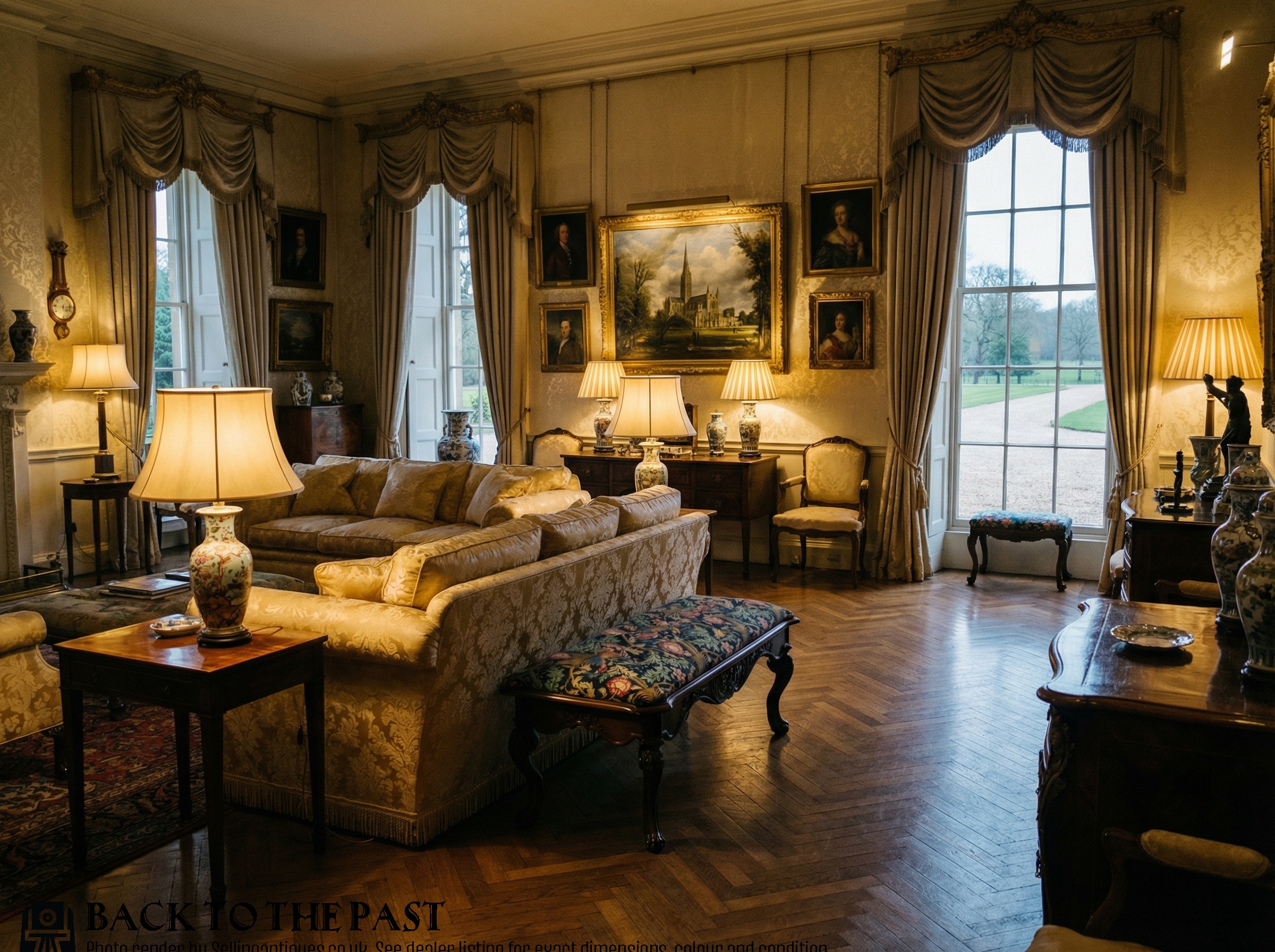
What a long upholstered footstool is
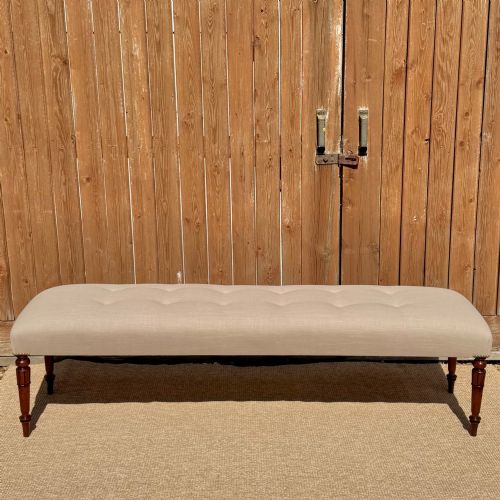
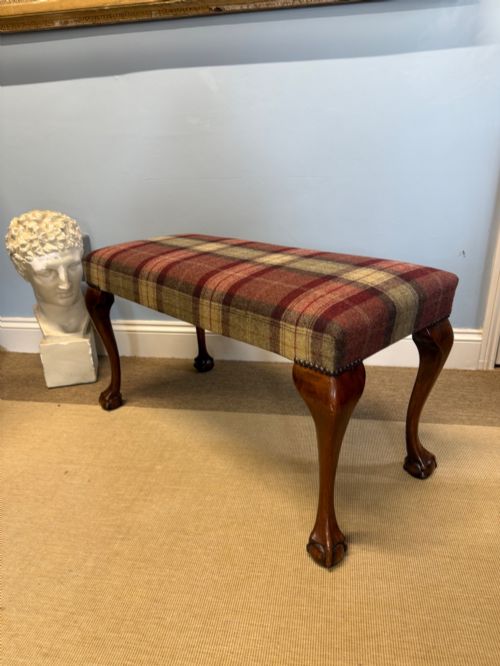
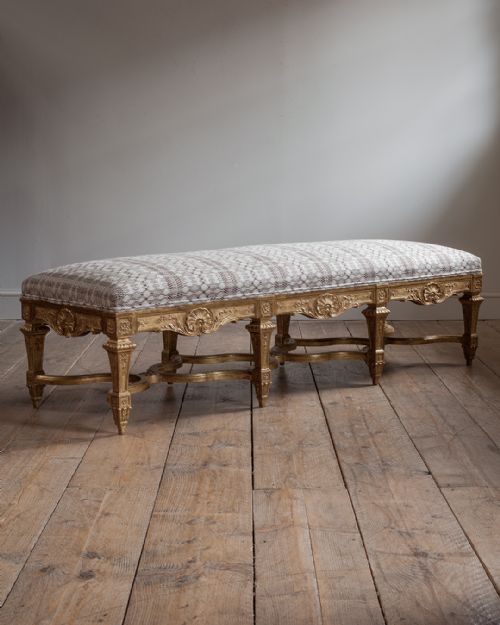
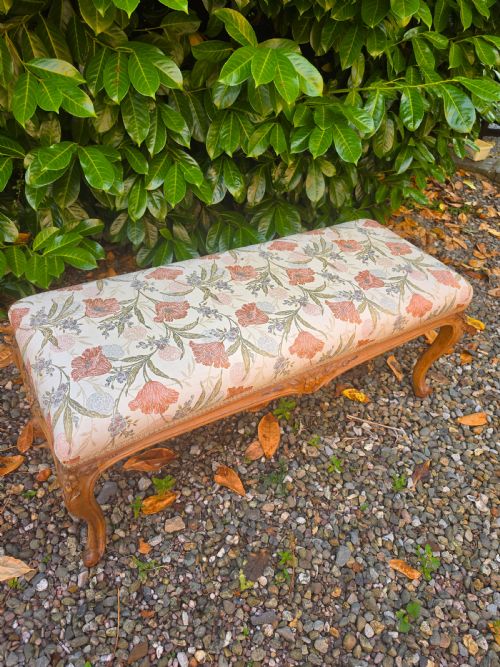
When searching for a long upholstered footstool, you are looking at low seating forms designed for resting feet or sitting by the fire. The listings show pieces stretching back through the 19th century and the Edwardian era, taking the form of benches, window stools, and fender stools.
You are most likely to meet mahogany or walnut frames supporting textile, wool, cotton, or velvet upholstery. Styles span William IV, Victorian, Arts & Crafts, and Queen Anne style, alongside simpler framed examples.
These long stools function equally well at the foot of a bed or beneath a window. Their extended proportions separate them from standard square footstools, providing generous surface area.
How they were made
Makers shaped the timber frames from dense hardwoods like mahogany and walnut, occasionally incorporating marquetry inlay for decorative effect. These structures provide the rigid foundation necessary to support frequent sitting and resting.
Upholstery techniques applied textiles directly to the frames, utilising wool, cotton, and velvet. Specialist fabric houses such as Morris and Co. supplied patterned textiles, while kilim flatweaves also feature.
Retail Price Guide 2026
Typical UK retail prices for long upholstered footstool, calculated from the Sellingantiques database of over a million retail prices indexed since 2003. This retail price guide relies exclusively on Sellingantiques data; no external sources or auction records are used, so the figures do not describe the wider market.
One persistent Victorian variant is specifically known as a gout stool, built for resting tired feet.
What varies in quality
The sophistication of the timber frame determines the upper tier of quality. Finer examples display figured walnut or carved mahogany details, such as claw and ball feet, rather than plain turned legs.
The choice of covering fabric separates standard production from distinguished pieces. Original or period-correct textiles by notable design houses elevate a piece far above utilitarian alternatives.
Morris and Co.
The Long Upholstered Footstool Glossary
- Fender stool
- A long, low stool designed to sit in front of a fireplace fender. These pieces kept feet warm away from cold stone hearths.
- Window stool
- An elongated seating form placed beneath a window. They provide low perches without obstructing the view.
- Kilim
- A flatwoven textile originating from the Middle East and Central Asia. These durable fabrics often cover nineteenth-century footstool frames.
- Marquetry inlay
- Decorative wood veneers fitted into the solid timber surface. This technique adds geometric or floral patterns to table and stool frames.
Frequently Asked Questions
What is a fender stool?
A fender stool is a long, low seat specifically proportioned to fit along the hearth in front of a fireplace.
These pieces kept feet elevated from cold stone floors during colder months.
Where should I place a window stool?
A window stool fits neatly beneath low window sills without blocking natural light.
They provide a convenient perch for reading or enjoying the view.
How do I identify a Victorian footstool?
Victorian footstools often feature walnut or mahogany frames with robust upholstery.
Details such as carved claw and ball feet frequently point to this period.
What fabrics were used originally?
Original coverings included wool, cotton, velvet, and kilim flatweaves.
Maker-specific textiles from houses like Morris and Co. also appear on Edwardian examples.