
Victorian Cabriole Leg Stool
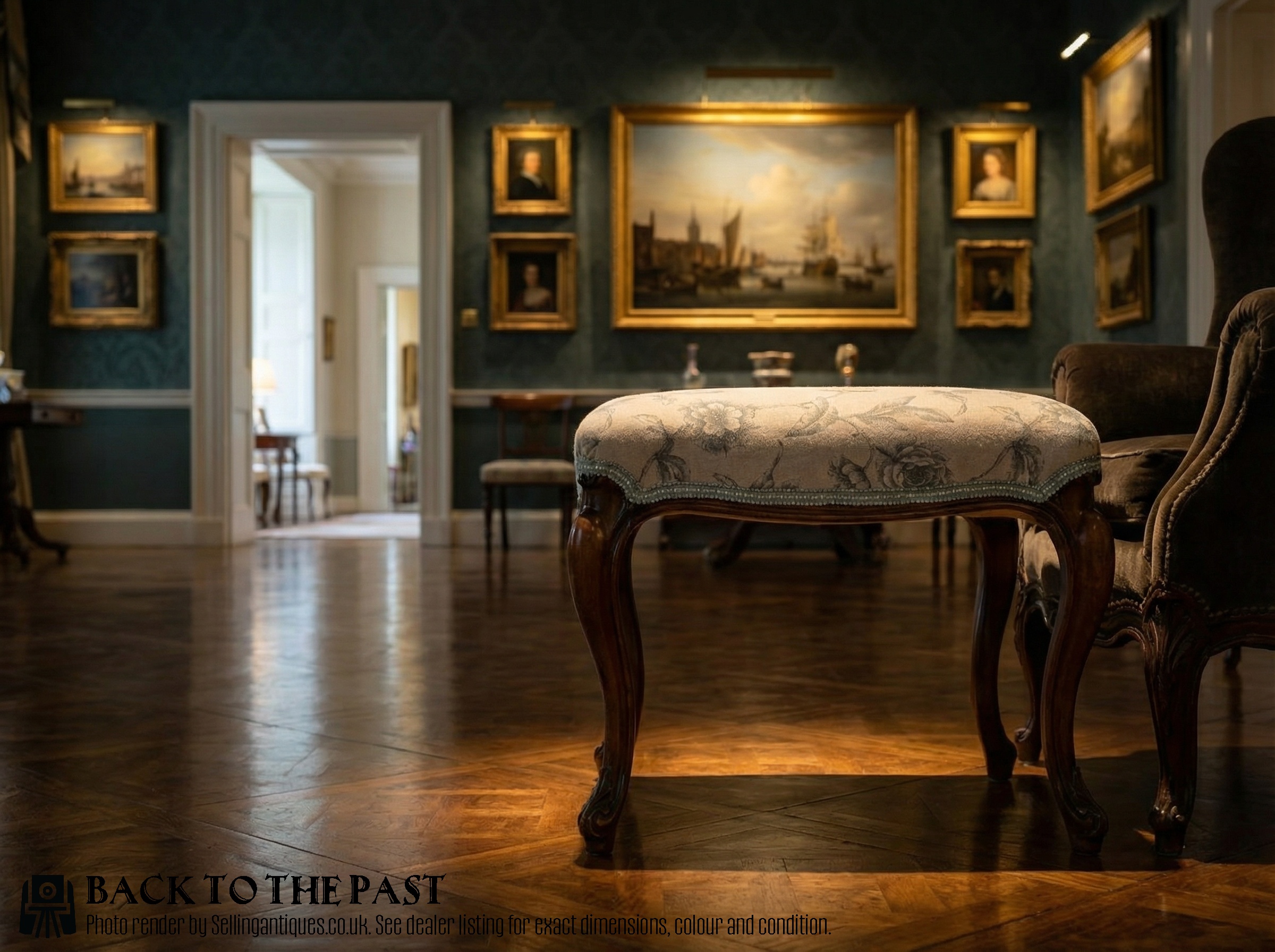
A victorian cabriole leg stool brings nineteenth-century seating, from low footstools to dressing benches, into a room with curved timber supports.
Victorian Cabriole Leg Stool
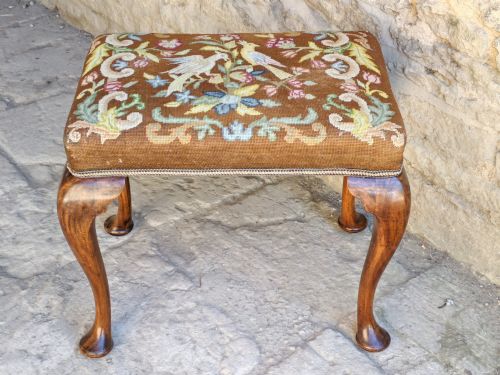
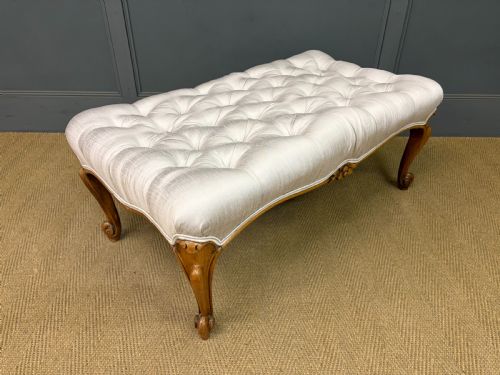
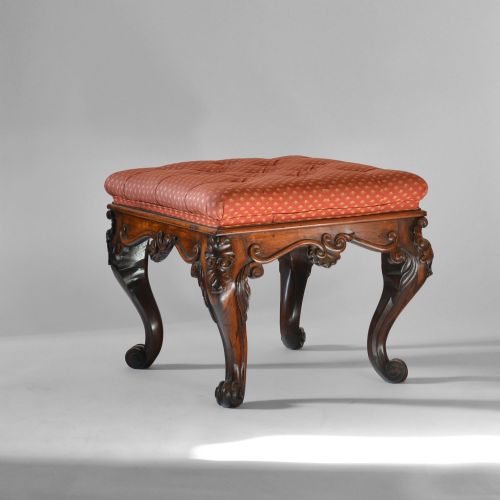
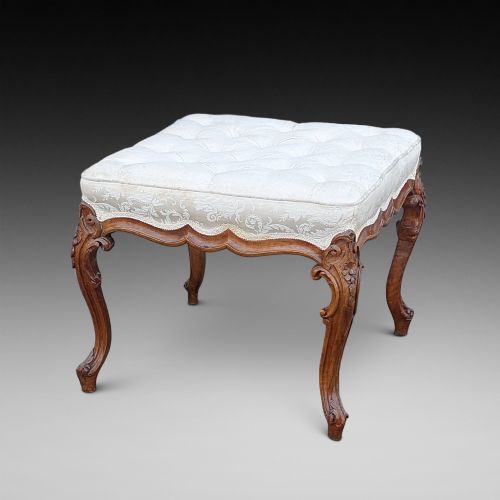
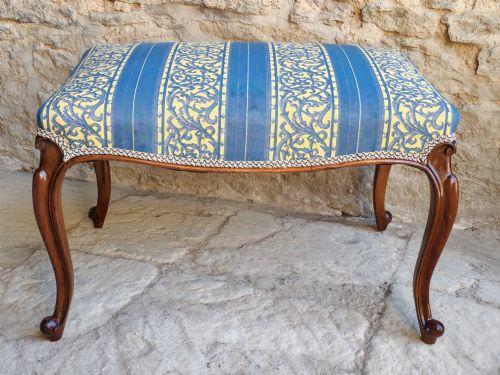
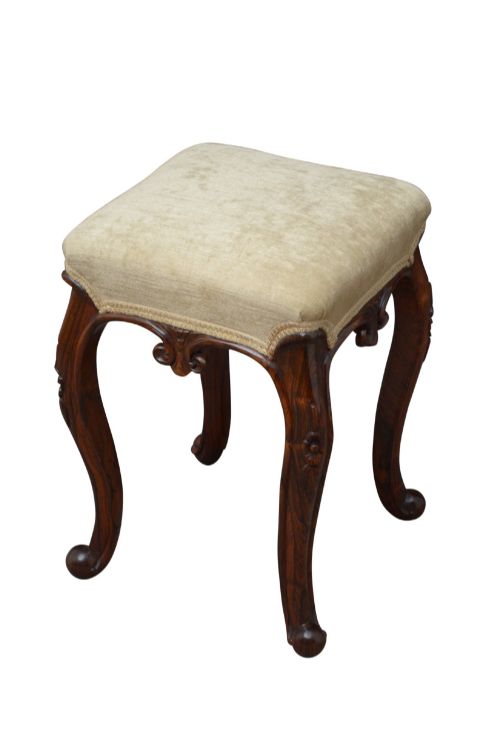
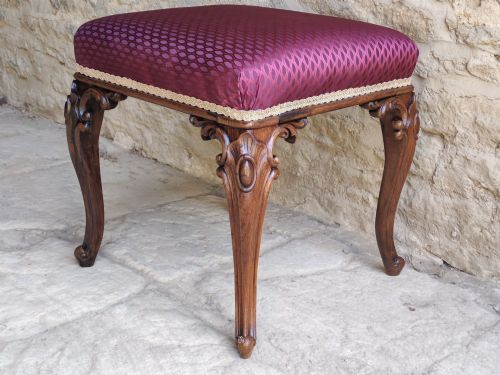
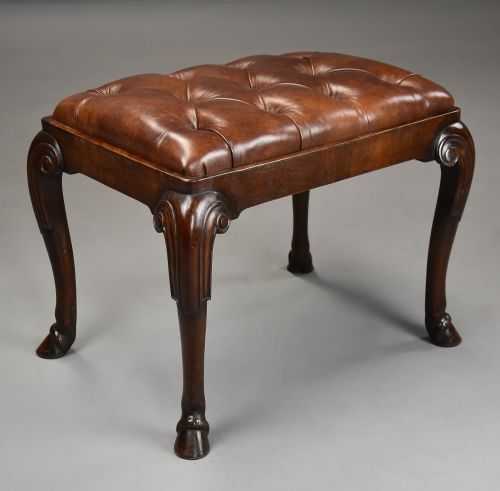
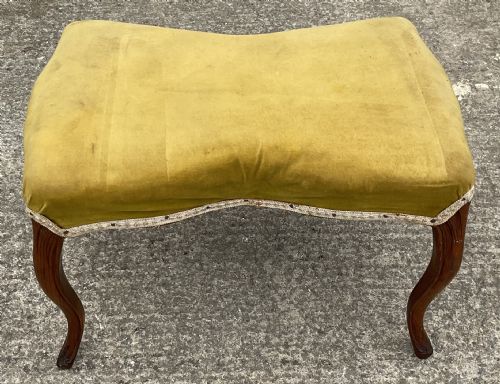
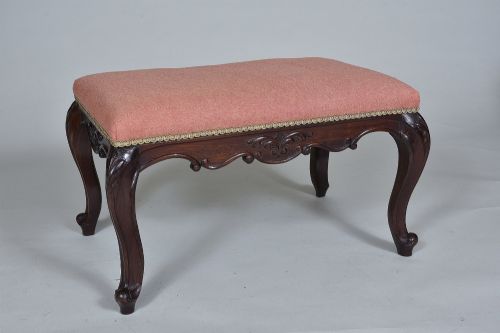
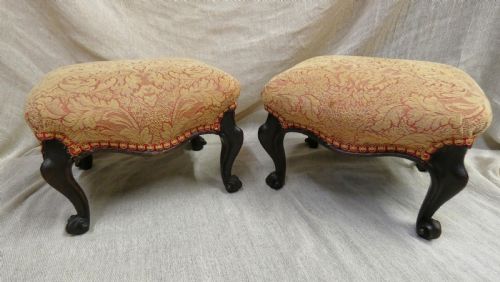
A buyer searching for a victorian cabriole leg stool encounters low footstools, dressing table seats, window benches, and larger centre stools resting on distinctive double-curved supports. The materials span walnut, mahogany, and rosewood, often carrying carved ornamentation or revival details.
Most examples date from the nineteenth century, ranging from early decades through to late Victorian productions. They appear as standalone seating, dressing room accompaniments, or matching pieces for larger parlour furniture.
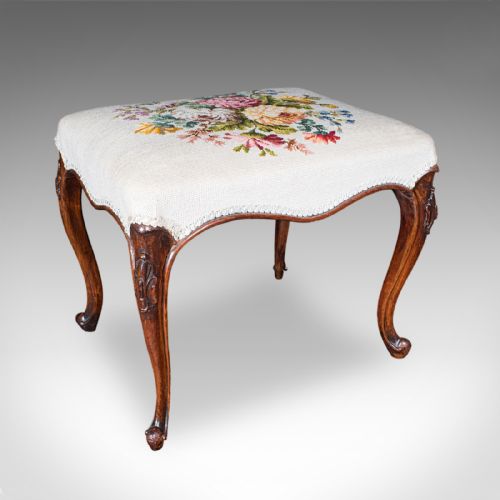
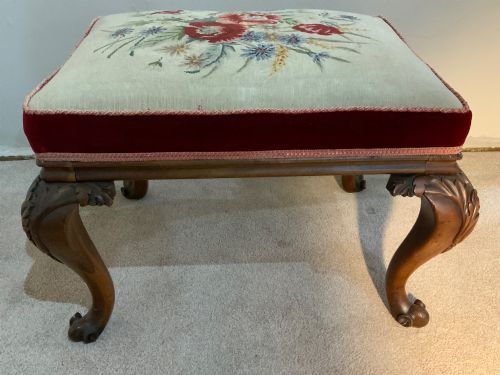
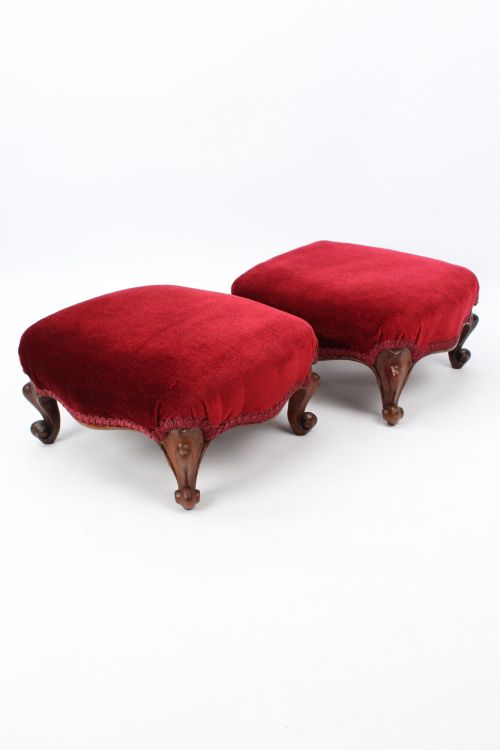
Forms vary from compact square footstools to long rectangular window seats and oval salon pieces. Upholstery ranges from original needlepoint and tapestry to modern fabric replacements.
Materials and construction
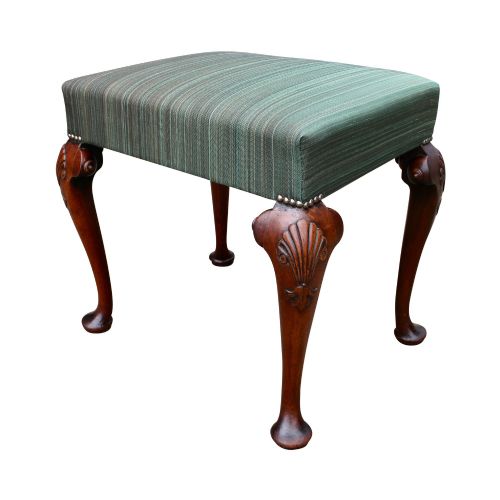
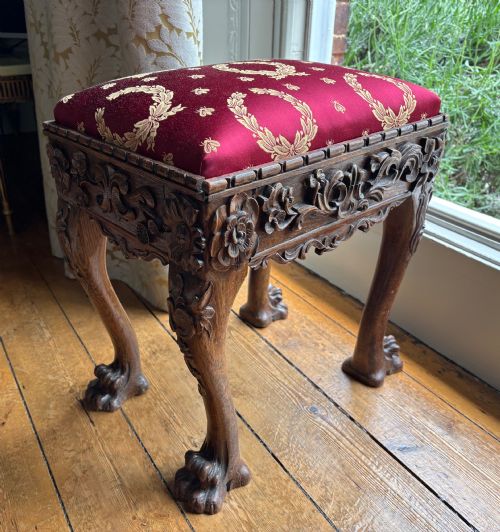
Carinthian and English workshops shaped dense hardwoods such as walnut, mahogany, and rosewood into flowing curved silhouettes. Timber frames were jointed and carved by hand, frequently featuring scroll or leaf motifs on the knees of the legs.
Upholstered surfaces relied on traditional webbing, stuffing, and stitching before being covered in textiles, velvet, leather, or needlework tapestry. Brass accents and decorative nailheads occasionally finished the edges of the padded sections.
Victorian Cabriole Leg Stool Retail Price Guide 2026
Typical asking prices for victorian cabriole leg stool among the pieces listed under this phrase on Sellingantiques today, from the lower quarter to the upper quarter. They describe what is for sale here now, not the wider market.
Some stools doubled as fire companions, hiding brass footmen and plate warmers right beneath your boots.
Judging the work
The distinction between standard utility items and finer parlour pieces lies in the crispness of the wood carving and the weight of the timber frame. Substantial rosewood or walnut structures with deeply carved cabriole supports indicate higher workshop ambition.
Proportion and execution of the curves dictate visual success, where well-balanced legs integrate smoothly into the seat rail. Retaining original show-wood finishes or period needlework enhances the integrity of the surviving piece.
The Victorian Cabriole Leg Stool Glossary
- Cabriole leg
- A furniture support that curves out at the knee and tapers inward to an ankle or foot, inspired by animal forms.
- Needlepoint
- Canvas work embroidery utilised for historic upholstery and decorative stool tops.
- Centre stool
- A larger freestanding seating form designed to sit in the middle of a room rather than against a wall.
- Giltwood
- Timber treated with gold leaf or metallic size to create a brilliant decorative surface.
- Serpentine
- A furniture edge or outline curved in a wave shape, convex at the centre and concave at the sides.
Victorian Cabriole Leg Stool: Frequently Asked Questions
Where were these stools used?
Nineteenth-century stools served various domestic functions across the home, from low hearth positions to dressing rooms and grand reception spaces.
Larger versions often functioned as window seats or centre ottomans, while compact footstools sat directly beside armchairs and firesides.
How do I spot a revival style?
Revival pieces emulate earlier historical eras, drawing on Queen Anne, Chippendale, or Rococo vocabulary during the nineteenth century.
Maker interpretations blend these historic outlines with Victorian timber treatments and heavier proportions.
Are original covers common?
Finding intact period textiles remains uncommon due to centuries of wear, friction, and shifting interior fashions.
Many examples arrive upholstered in later fabrics or require fresh material to suit modern domestic settings.
How do I date a piece?
Dating relies on timber choice, carving style, and structural joinery methods recorded across the mid to late nineteenth century.
Rosewood and early mahogany often point towards earlier decades, while later walnut examples align with Queen Anne revivals.