



English Country Footstool
An english country footstool brings low, practical seating to a room, offering tactile woods and traditional textiles gathered over centuries.
English Country Footstool
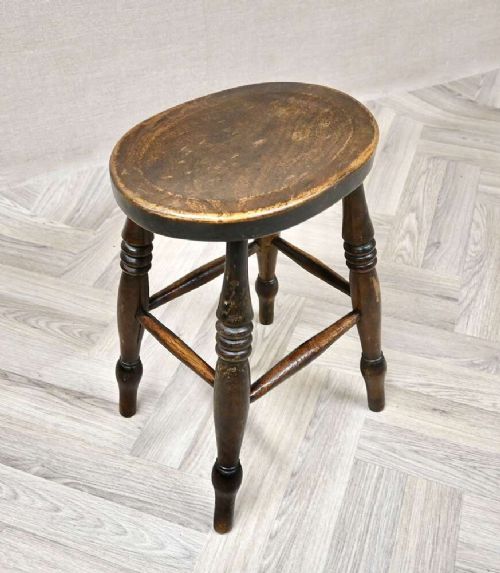
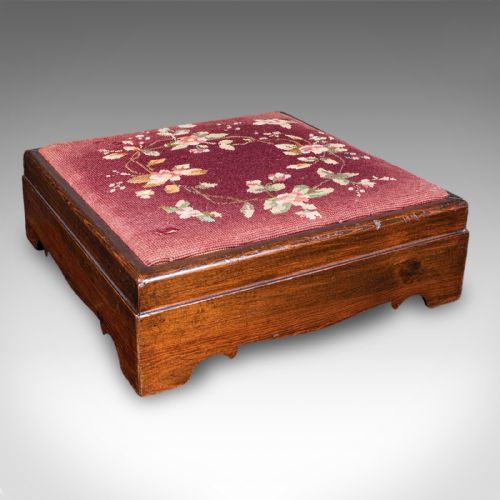
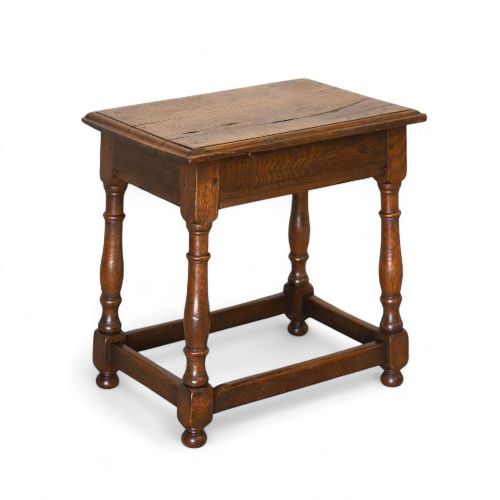
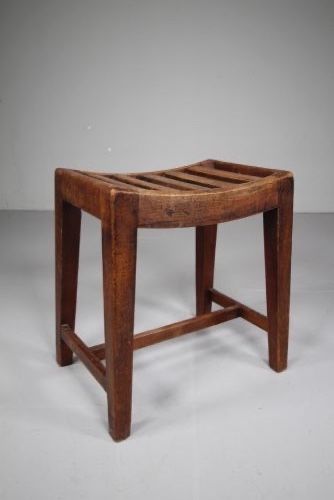
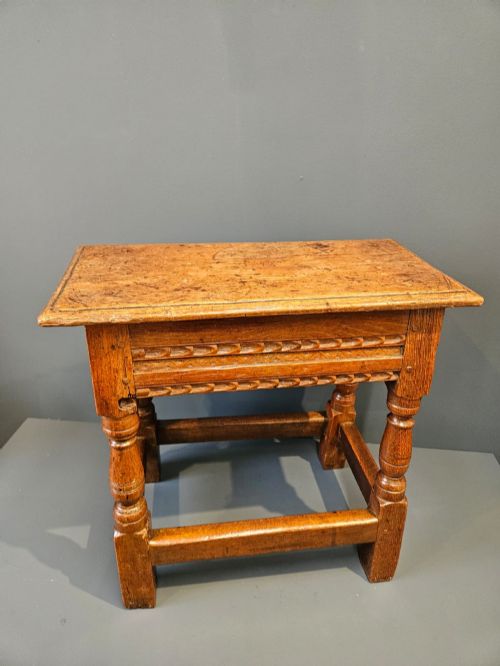
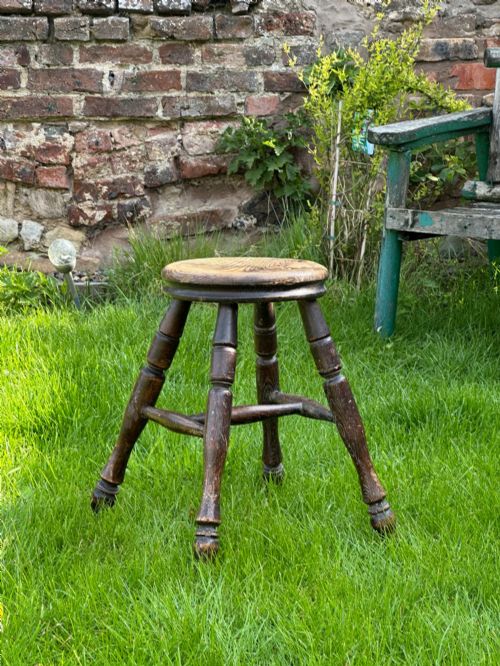
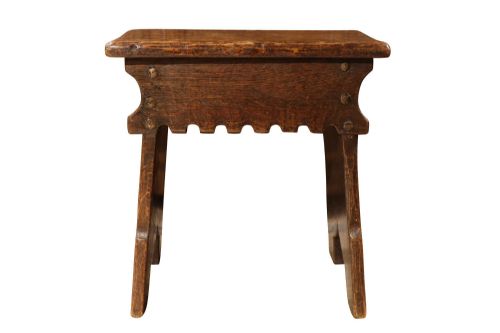
An english country footstool encompasses low seating forms including joint stools, provincial joint stools, five-plank construction types, and simple round or square topped pieces. These items emerge from periods spanning the eighteenth, nineteenth, and early twentieth centuries, reflecting both vernacular traditions and formal stylistic revivals.
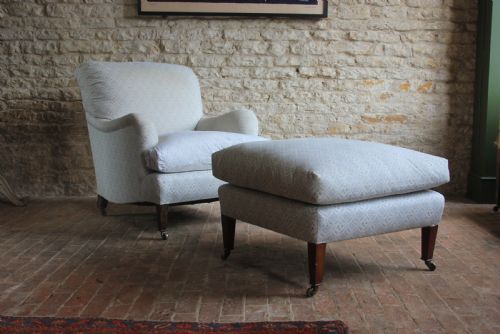
The pieces on this page lean heavily into regional domestic craftsmanship, featuring vernacular woods and utilitarian forms. Buyers encounter sturdy low benches alongside upholstered fireside stools and turned leg designs designed for everyday use by the hearth.
Origins stretch from vernacular Georgian provincial workshops to Victorian country houses and Edwardian parlours. Elm, oak, and mahogany form the structural backbone of these survivors, often paired with leather, tapestry, or simple wooden tops.
How they were made
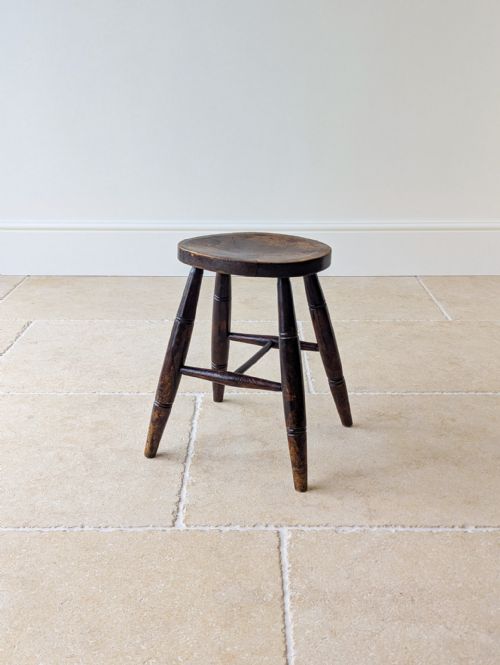
Maker construction relies on traditional timber framing, seen in pegged joints on oak plank pieces and solid turned legs on elm or yew wood seats. Joiners utilised hardwood and softwood combinations, selecting durable timbers like oak and ash for load-bearing frames.
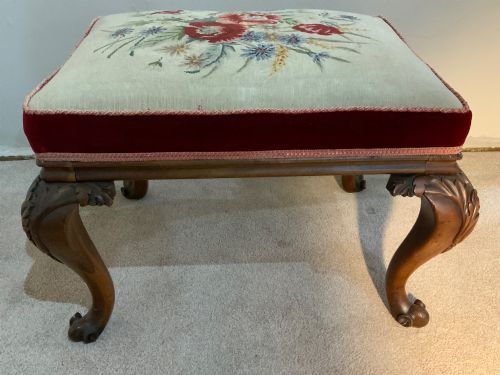
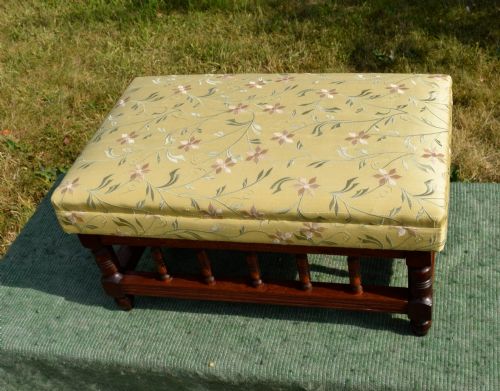
Upholstery methods range from simple drop-in fabric pads to buttoned leather and woven cane surfaces. Secondary materials such as brass accents and pitch pine provide structural reinforcement or decorative contrast on specific provincial examples.
English Country Footstool Retail Price Guide 2026
Typical asking prices for english country footstool among the pieces listed under this phrase on Sellingantiques today, from the lower quarter to the upper quarter. They describe what is for sale here now, not the wider market.
Some diminutive stands double as tiny tables, proving that historical domestic furniture took every possible shape to save floor space.
What varies in quality
Quality rests in the integrity of the timber framing, the depth of the wood's natural colour, and the preservation of original pegged construction. Superior examples retain their initial structural rigidity without excessive timber replacement.
Upholstered variants differ in the quality of the internal webbing and the authenticity of the covering materials, whether period leather, tapestry, or cane. Finer pieces demonstrate careful turning on legs and harmonious proportions between seat and support.
Howard and Sons
The English Country Footstool Glossary
- Joint stool
- A sturdy wooden stool constructed with mortise and tenon joints, pegged together securely. These items date primarily from the seventeenth and eighteenth centuries.
- Vernacular
- Everyday objects made by local craftsmen using regional materials rather than following high-style academic designs. This term applies to traditional country furniture.
- Pegged construction
- A method of securing timber joints using wooden dowels or pins instead of metal fasteners. This technique provides durable frame stability in older seating.
- Treen
- Small handmade wooden household objects and utility items. This category includes diminutive stands and small wooden stools often turned on a lathe.
English Country Footstool: Frequently Asked Questions
What is an english country footstool used for?
These low wooden and upholstered items served as fireside seats, footrests, or small domestic stands in period homes.
Today they function flexibly in living spaces as moveable seating or decorative low tables.
How do I date an antique footstool?
Dating relies on identifying timber types, joinery methods such as pegged framing, and stylistic cues linked to Georgian or Victorian periods.
Secondary indicators include the wear patterns on wooden legs and the type of upholstery materials used.
Are these stools comfortable to sit on?
Upholstered variants featuring buttoned leather or padded fabric offer soft seating suitable for fireside use.
Plain wooden topped examples provide firm, upright seating intended for brief utility rather than lounging.
How do I care for wooden stool frames?
Keep wooden surfaces away from direct heat sources and excessive moisture to prevent timber shrinkage or cracking.
Apply suitable beeswax periodically to nourish the grain and maintain the natural lustre of oak, elm, or mahogany.