
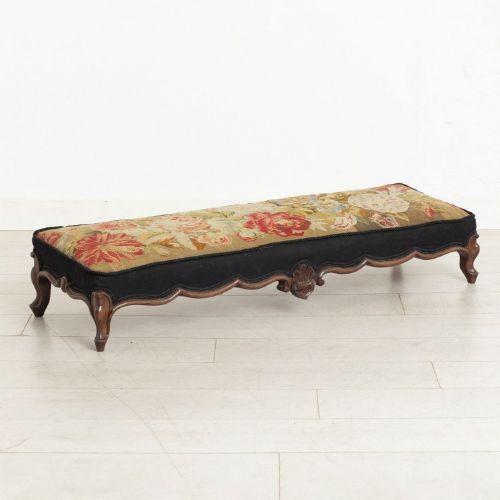


Needlepoint Footstool
These needlepoint footstool pieces combine domestic comfort with period textiles, offering a practical piece of history for any fireside.
Understanding needlepoint footstool pieces
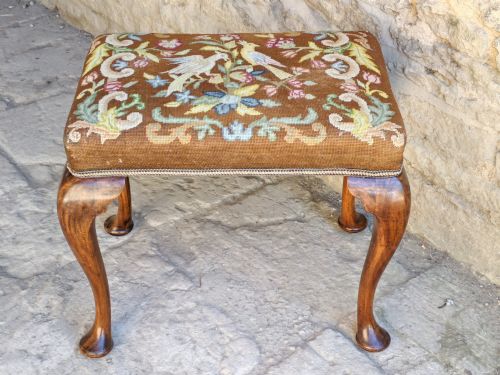
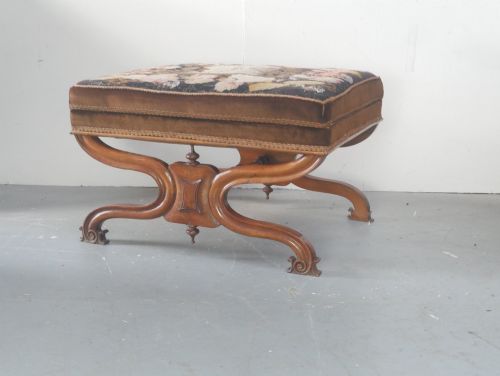
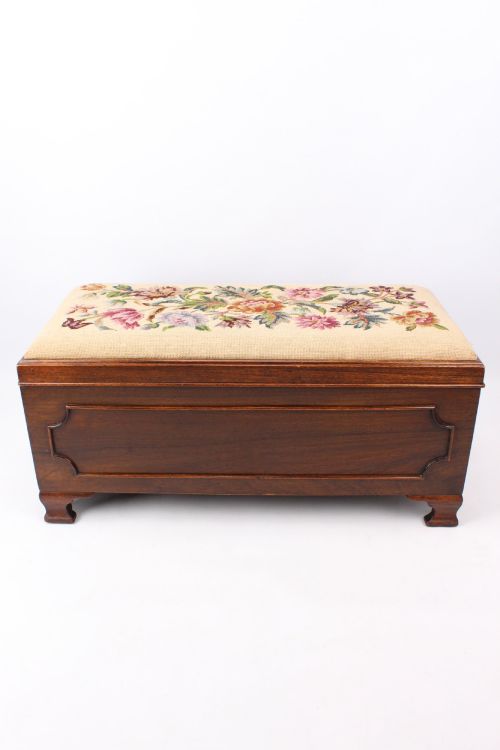
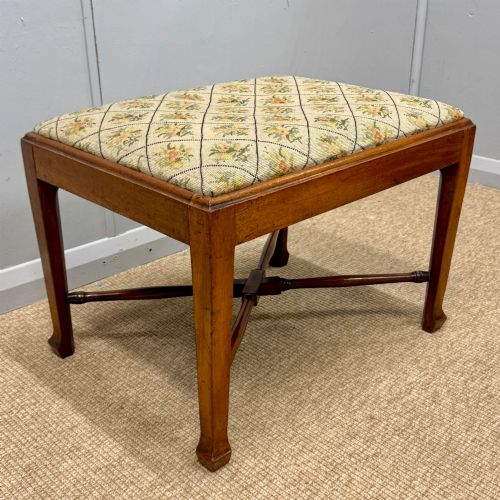
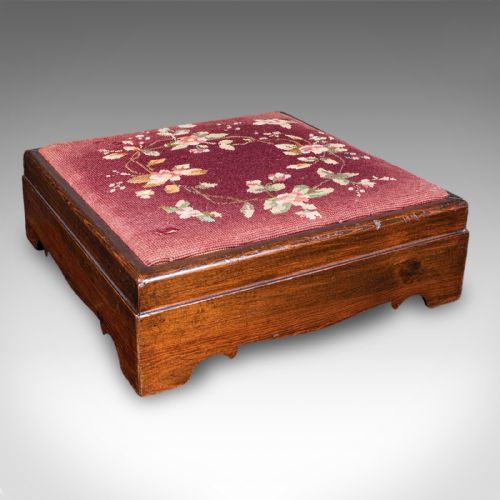
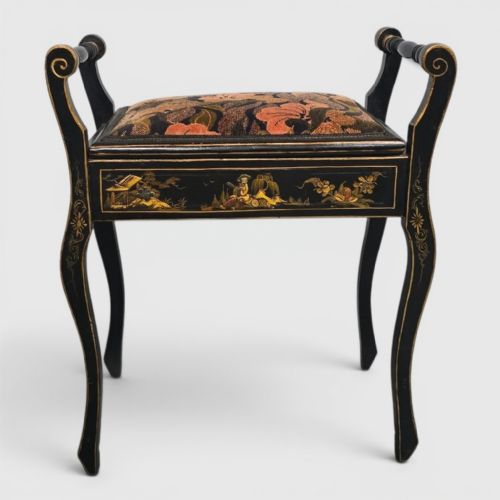
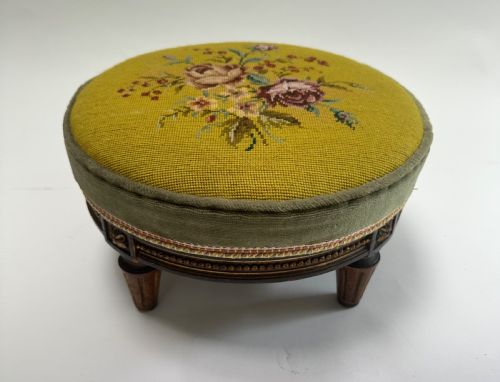
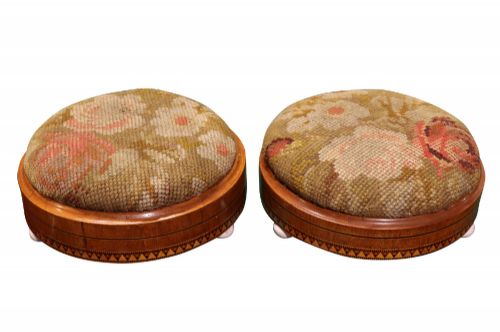
A needlepoint footstool is a low seating piece designed for resting the feet, frequently encountered from the Victorian and Edwardian periods in various compact forms. These items serve both functional and decorative purposes in period interiors, appearing as small footstools, gout stools, and piano stools.
The evidence shows a prevalence of English origin, with walnut, mahogany, and pitch pine providing the structural foundation for the textile tops. Most examples date from the nineteenth century, ranging from early Victorian models to later Edwardian variations.
Assessing quality and craftsmanship
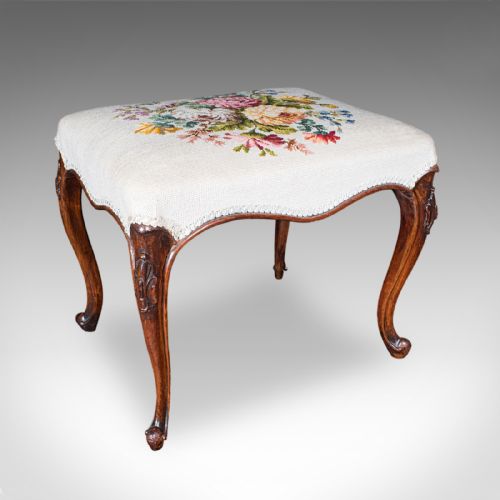
Quality rests heavily upon the tightness and complexity of the needlepoint tapestry work, where finer wool stitches and intricate floral designs distinguish superior examples. The density of the needlework directly affects the visual depth and tactile richness of the seat top.
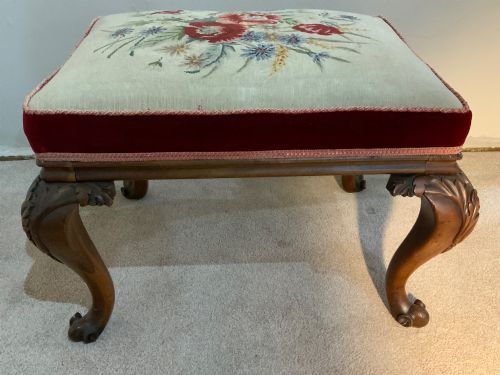
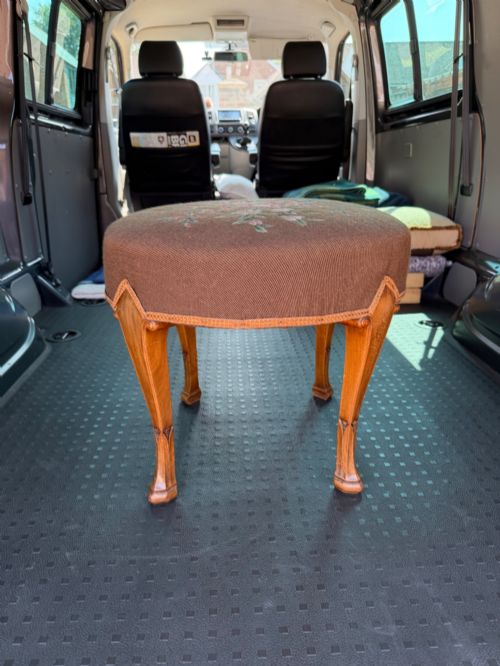
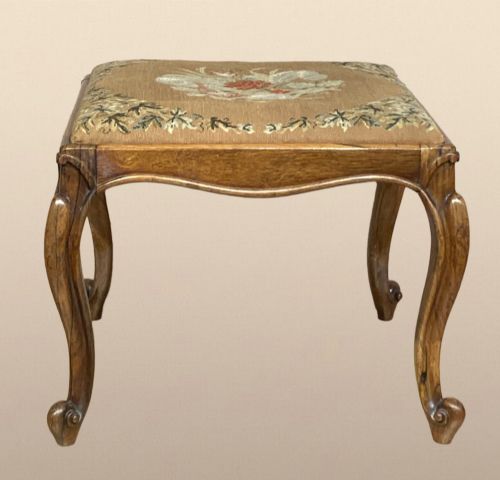
Structural refinement in the wooden frame separates standard pieces from exceptional ones, particularly visible in the carving of cabriole legs and the soundness of the joinery. Original fabric retention and well-turned timber elevate the standing of an individual stool.
Retail Price Guide 2026
Typical UK retail prices for needlepoint footstool, calculated from the Sellingantiques database of over a million retail prices indexed since 2003. This retail price guide relies exclusively on Sellingantiques data; no external sources or auction records are used, so the figures do not describe the wider market.
Victorian makers designed clever pivoting piano stools so musicians could spin gracefully while searching for sheet music.
The Needlepoint Footstool Glossary
- Needlepoint
- A type of counted thread embroidery stitched onto an open-weave canvas foundation. It forms the durable pictorial and floral tops seen on these footstools.
- Cabriole leg
- A furniture leg featuring a double curve, typically arching outward and then tapering inward to a foot. This style is frequently carved from walnut on Victorian pieces.
- Gout stool
- A specialised low footrest designed with an adjustable incline to support feet affected by joint pain. They often utilise needlepoint tapestry upholstery.
- Pitch pine
- A resinous softwood utilised in certain English framing construction. It provides a robust, visible grain beneath period finishes.
Frequently Asked Questions
What is a needlepoint footstool used for?
These pieces primarily served as low foot rests beside firesides or in dressing rooms during the Victorian era. They provided comfort and warmth when paired with period seating.
Certain variations, such as piano stools, incorporated revolving mechanisms for musicians. Others functioned as gout stools with adjustable inclines.
How do I date a footstool?
Dating relies on timber choice, leg style, and construction methods recorded across the nineteenth century. Walnut and mahogany frame designs often align with specific Victorian or Edwardian stylistic shifts.
Needlepoint patterns and secondary woods like pitch pine also offer clues to the decade of manufacture. Early examples often display simpler X-frame or low turned supports.
Are the tapestry tops original?
Many pieces retain period needlepoint wool work applied during the Victorian or Edwardian eras. Close inspection of the canvas wear and stitch uniformity helps determine age.
Replacement tapestry tops do occur due to the fragile nature of nineteenth-century textiles. Original fabric adds significant contextual integrity to the piece.
How do I care for needlepoint upholstery?
Protect the wool tapestry from direct sunlight to prevent fading of the historic dyed threads. Gentle surface cleaning avoids disturbing the delicate stitched canvas.
Keep the wooden frames conditioned with appropriate furniture wax. Avoid excessive moisture near the textile edges and structural joins.