
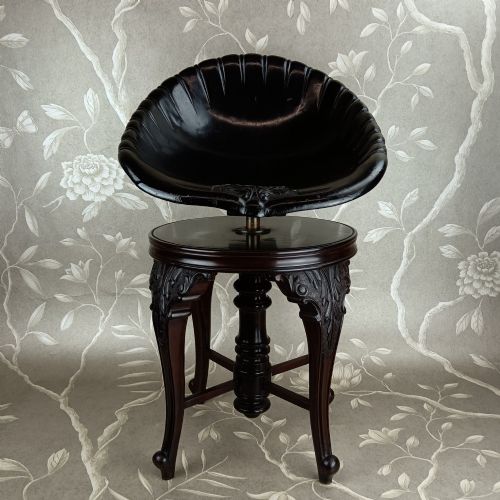
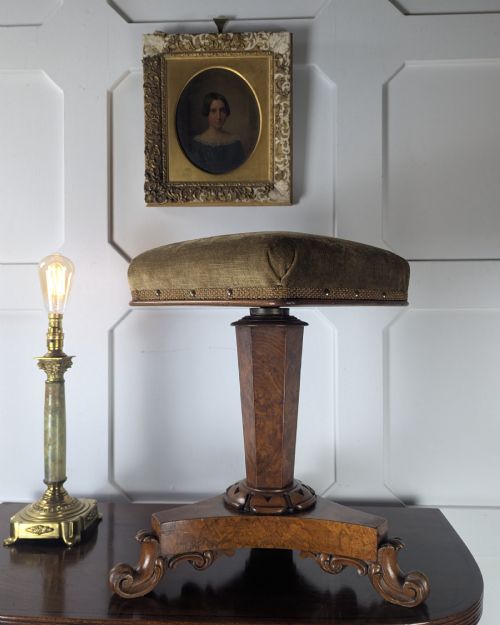
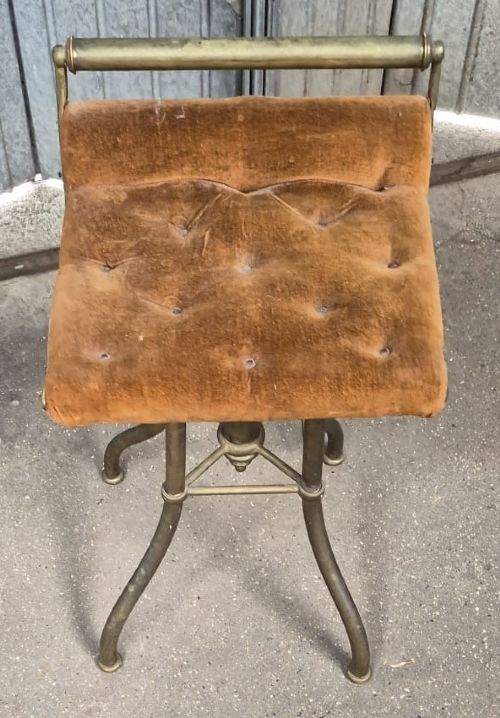
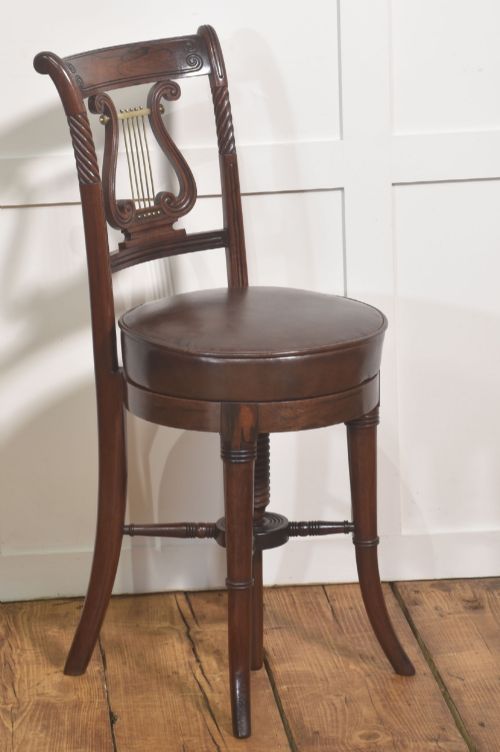

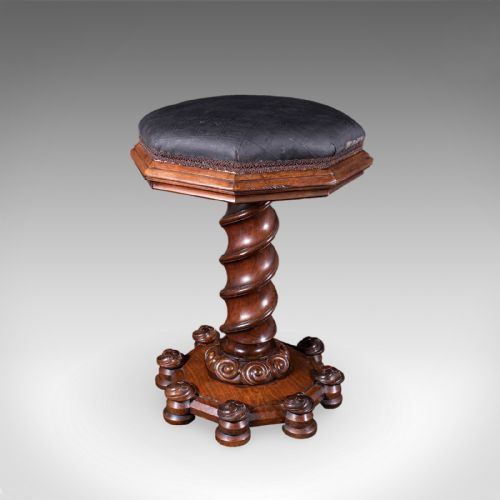


Victorian Adjustable Stool
The Victorian adjustable stool combined mechanical ingenuity with domestic comfort, offering a practical seat for the piano or dressing table.
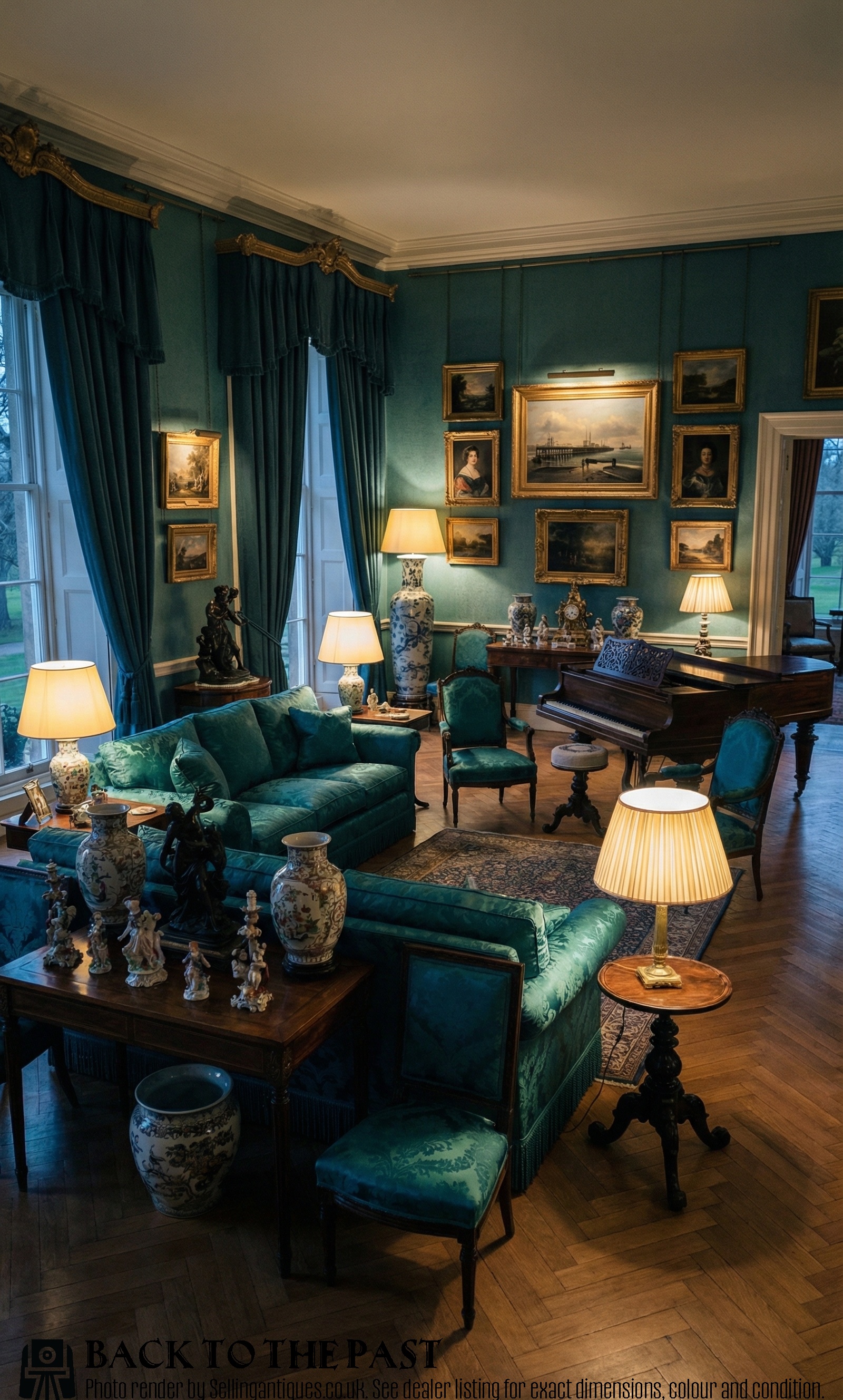
Victorian Adjustable Stool
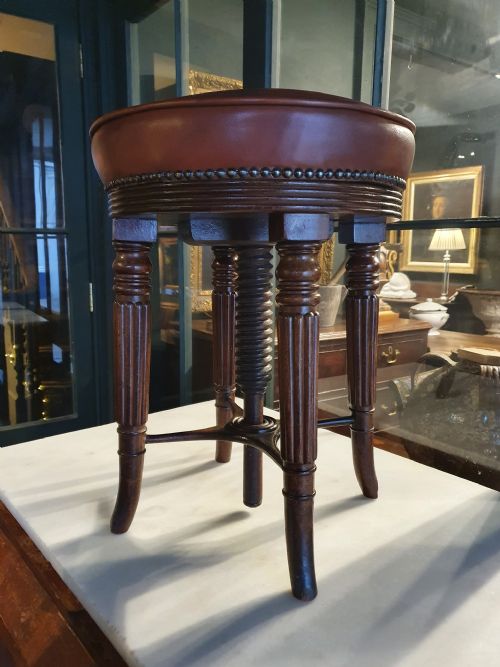
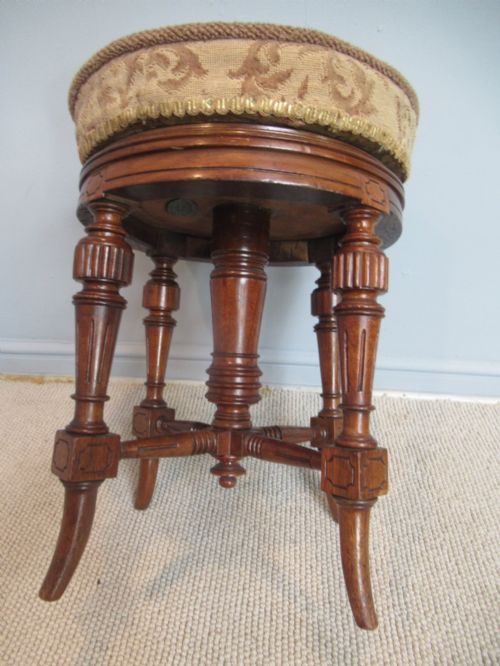
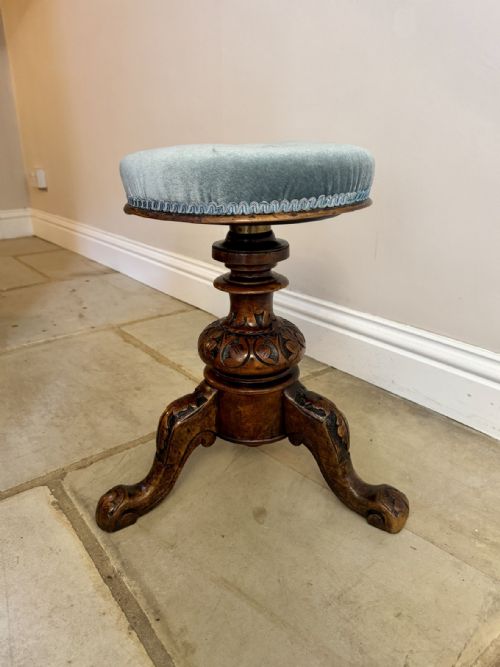
A victorian adjustable stool serves primarily as seating for musicians and performers, frequently appearing in forms such as piano stools, music stools, and harpist chairs. These pieces bridge domestic utility and mechanical design, engineered to alter in height through a central screw mechanism or rise-and-fall action.
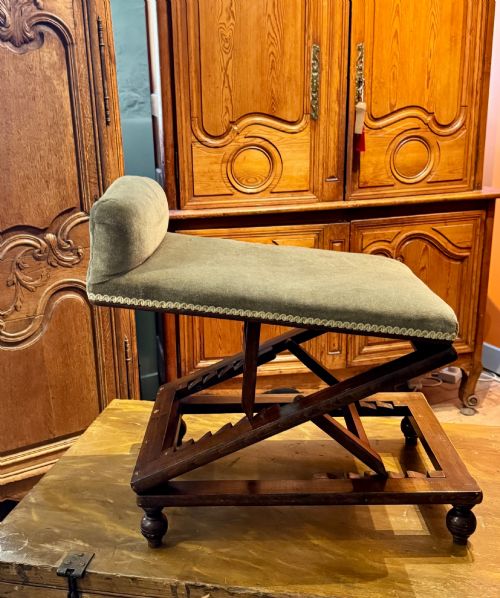
The selections available range widely in form, spanning revolving piano seats, square top models, and specialised variations like metamorphic gout stools and dressing table chairs. Walnut and mahogany predominate, while styles stretch from William IV and Regency precedents through to Aesthetic Movement and Arts and Crafts iterations.

How they were made
Cabinet makers utilised dense hardwoods such as walnut, mahogany, and rosewood, often shaping the timber through turning and intricate carving on the legs and central column. Brass components frequently form the internal screw mechanisms or protective castors, ensuring smooth height adjustment during use.
Upholstery completed the seat, employing materials like velvet, leather, tapestry, and various woven fabrics stretched over padded frames. Ebonised finishes and papier-mâché details also appeared on specific models, reflecting changing interior tastes across the nineteenth century.
Victorian Adjustable Stool Retail Price Guide 2026
Typical asking prices for victorian adjustable stool among the pieces listed under this phrase on Sellingantiques today, from the lower quarter to the upper quarter. They describe what is for sale here now, not the wider market.
Some music stools doubled as secret storage boxes for sheet music hidden beneath the rotating seat.
What varies in quality
The standard of timber selection and the execution of carved details set individual pieces apart, distinguishing workshop-produced furniture from standard commercial output. Figured walnut and dense mahogany exhibit superior grain patterns that elevate the visual presence of the frame.
The precision of the mechanical adjustment mechanism dictates the functionality of the seat. Robust metal screws and well-fitted wooden threads operate smoothly without excessive play, reflecting the original maker's technical capability.

Jennens and Bettridge·Gillows·James Shoolbred·Brooks
The Victorian Adjustable Stool Glossary
- Revolving
- A top mechanism that turns on a central axis to alter height or allow the sitter to pivot. This design is commonly found on music and piano seats.
- Rise and fall
- An alternative description for an adjustable height mechanism operating via a threaded screw column. It permits incremental elevation of the seating platform.
- Metamorphic
- A descriptor for furniture that transforms from one functional form into another, such as a gout stool converting into an inclined footrest. These pieces highlight nineteenth-century mechanical ingenuity.
- Ebonised
- Timber treated with a dark finish to imitate expensive ebony wood. This treatment was particularly favoured during the Aesthetic Movement.
- Gout stool
- An adjustable footrest designed to support the legs of individuals suffering from joint ailments. They often feature pivoting mechanisms to alter the angle of support.
Victorian Adjustable Stool: Frequently Asked Questions
How do you adjust the height?
Most models feature a central wooden or metal screw mechanism hidden beneath the seat. Turning the upper cushion clockwise or anti-clockwise raises or lowers the platform.
Some variations utilise a rise-and-fall ratchet or lever system to achieve the desired seating position.
Were these only used for pianos?
While the majority served musicians at the piano or harp, many pieces functioned as dressing table chairs or general parlour seating. Specialised variants like gout stools were designed specifically for resting legs and feet.
The interchangeable nature of domestic furniture meant seats moved easily between music rooms and drawing rooms.
How do you identify a Victorian piece?
Dating relies on timber choices, construction methods, and stylistic markers recorded across the nineteenth century. Walnut and rosewood dominate earlier decades, while ebonised finishes often point towards later aesthetic periods.
Turned legs, carved walnut frames, and specific mechanical patents help narrow down the period of manufacture.
Can you use them daily?
These pieces were built for robust domestic service and continue to function effectively in modern interiors. Regular use requires checking the stability of the central screw thread and supporting frame.
Careful placement protects antique upholstery fabrics from excessive wear while maintaining original mechanical components.