



Victorian Swivel Stool
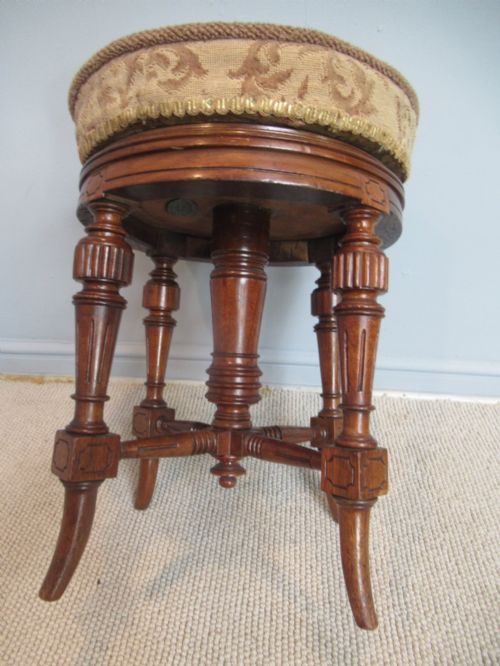
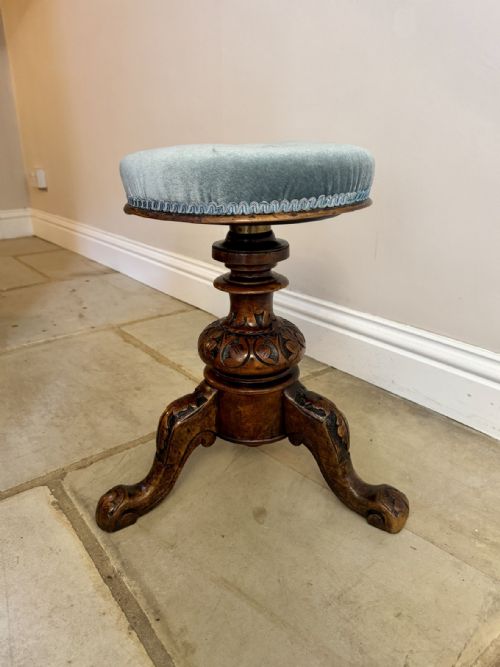
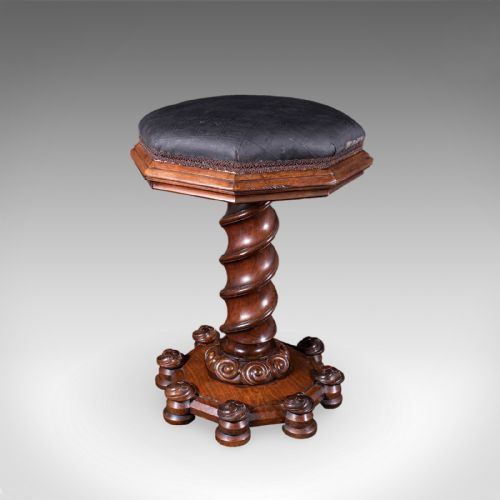
These Victorian swivel stool examples are robust, adjustable seats designed for musicians, combining timber frames with revolving tops.

Victorian swivel stool overview
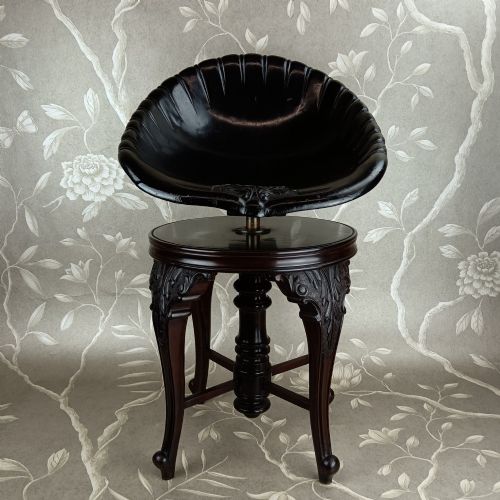
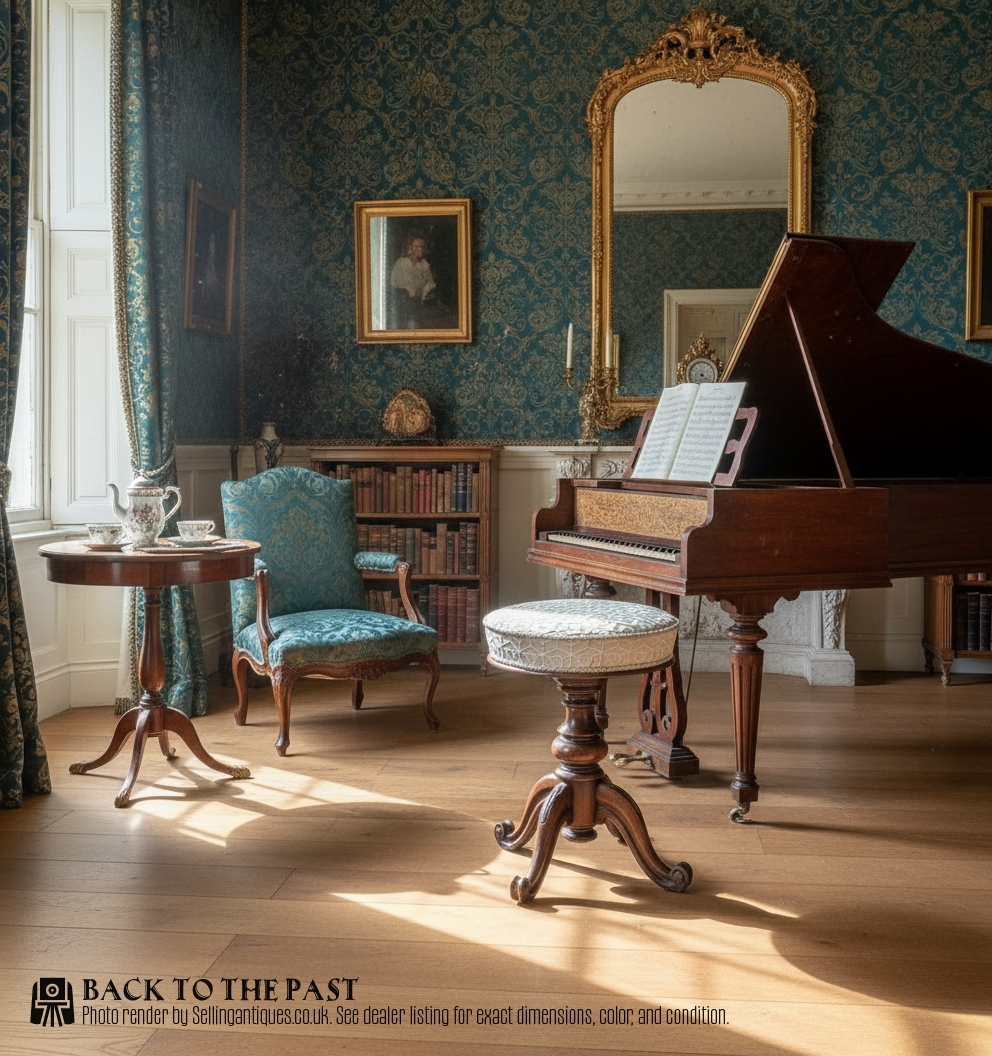
When you search for a Victorian swivel stool, you are looking at nineteenth century seating designed primarily for musicians at the piano or dressing table. These pieces feature a revolving top that allows the sitter to adjust their height or pivot while playing.
The versions you are most likely to meet on this page date from the mid-nineteenth century, typically associated with the Victorian period and the year eighteen sixty. Walnut, rosewood and mahogany form the primary timber bodies.
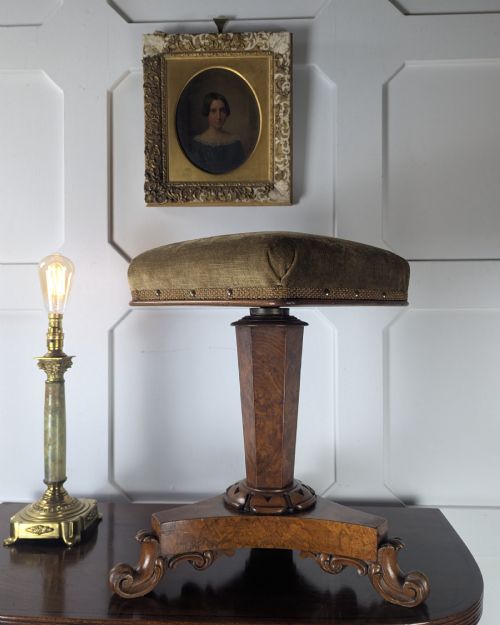
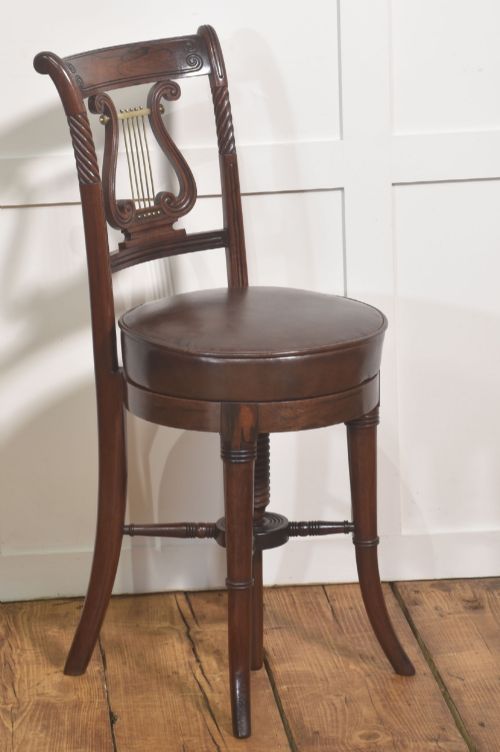
Piano stools dominate the evidence, appearing alongside dressing table variants and music stool forms. They range from simple revolving designs to carved circular seats with mechanical adjustment.
Materials and construction
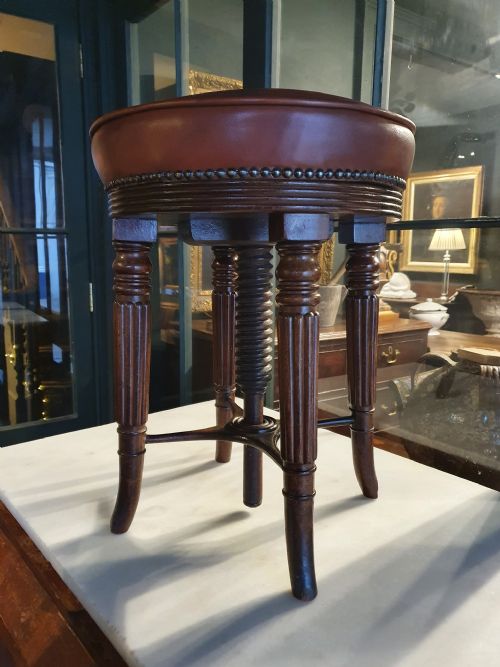
Cabinet makers utilised dense hardwoods such as walnut, rosewood, mahogany and oak to construct the supportive frames and central pillars. Brass and metal components frequently facilitate the internal swivel and height adjustment mechanisms.
Upholstery involves fabric and leather pads fitted to the circular revolving tops, often supported by carved wooden frames. Bentwood techniques also appear among the recorded manufacturing methods.
Retail Price Guide 2026
Typical UK retail prices for victorian swivel stool, calculated from the Sellingantiques database of over a million retail prices indexed since 2003. This retail price guide relies exclusively on Sellingantiques data; no external sources or auction records are used, so the figures do not describe the wider market.
Recorded materials span walnut, rosewood, mahogany, oak, fabric, leather, brass and metal across nineteenth century pieces.
Assessing quality
The distinction between standard examples and superior pieces rests upon the precision of the woodwork and the complexity of the carving. Finely carved walnut or rosewood frames demonstrate greater craftsmanship than plain turned structures.
The engineering of the revolving mechanism dictates the mechanical grade of the stool. Robust brass fittings and smooth screw or swivel action separate refined pieces from simpler variants.
H Brooks and Co·Thonet·Howe
The Victorian Swivel Stool Glossary
- Revolving
- Turning around a central axis or pivot. This action allows the sitter to rotate freely during use.
- Adjustable height
- A mechanism that raises or lowers the seat level. It usually operates through a central threaded screw column.
- Bentwood
- Wood steamed and bent into curved shapes. This technique creates rounded structural elements without joints.
- Upholstery
- Padded textile or leather covering fixed to a seat. It provides cushioning for the person sitting.
Frequently Asked Questions
What is a Victorian swivel stool used for?
These pieces served musicians seated at the piano or individuals using a dressing table. The revolving top allowed easy movement and adjustment.
Their design accommodated the practical needs of nineteenth century parlours and music rooms.
How do I adjust the height?
Many examples utilise a central screw mechanism hidden beneath the seat. Turning the top clockwise or anti-clockwise raises or lowers the sitting surface.
Other variants rely on a simple swivel pivot without height adjustment.
What woods were used?
Cabinet makers predominantly selected walnut, rosewood and mahogany for these seats. Oak and bentwood also appear in specific stylistic examples.
These dense timbers provided the necessary strength for the central pillar and legs.
How do I date these stools?
Dating relies on timber selection, carving styles and recorded period markers such as eighteen fifty or eighteen sixty. Walnut and rosewood frequently point towards mid-nineteenth century production.
Maker marks and construction techniques offer further chronological clues.