



Dark Wood Music Stool
A dark wood music stool brings refined timber and mechanical ingenuity to the piano or harp, offering adjustable comfort for the musician.
Dark Wood Music Stool
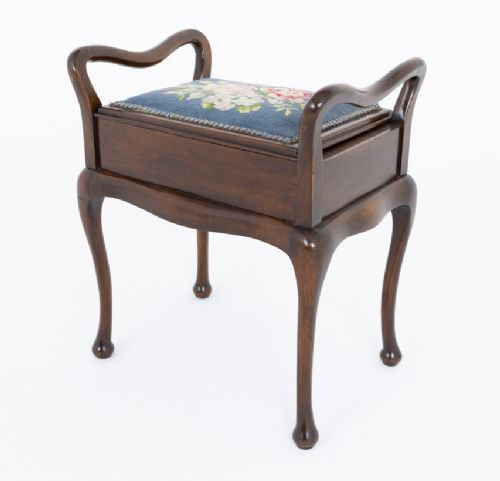
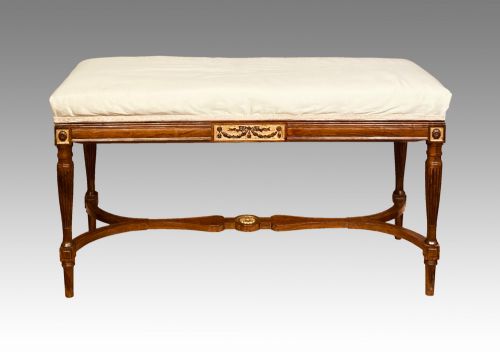
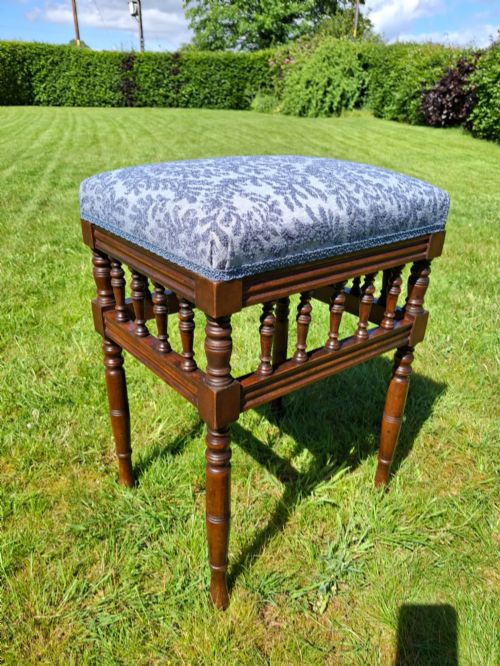
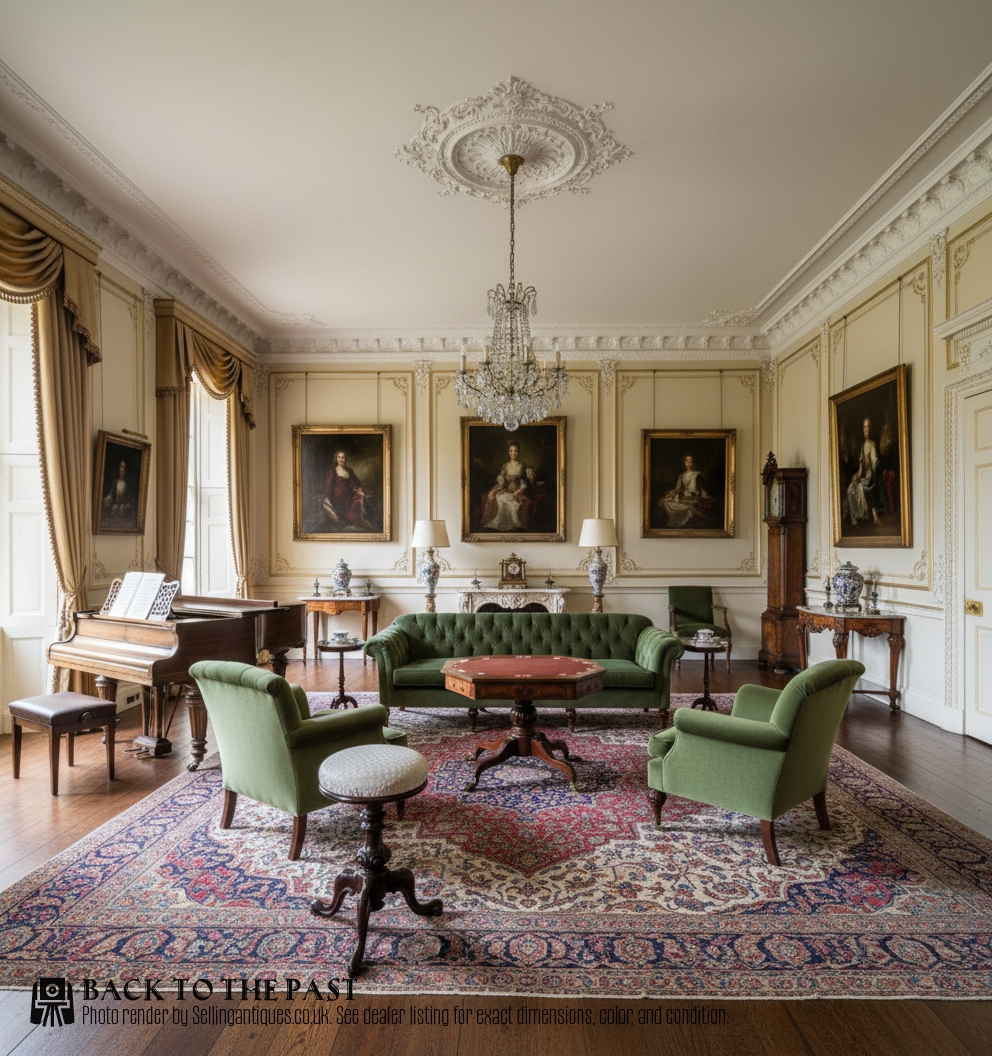
A dark wood music stool is a specialised seat designed for musicians at the piano, harp or cello, spanning periods from the Georgian era through the Victorian period and into the twentieth century. These pieces appear in forms such as revolving piano stools, adjustable music chairs, duet benches and hinged seat boxes.
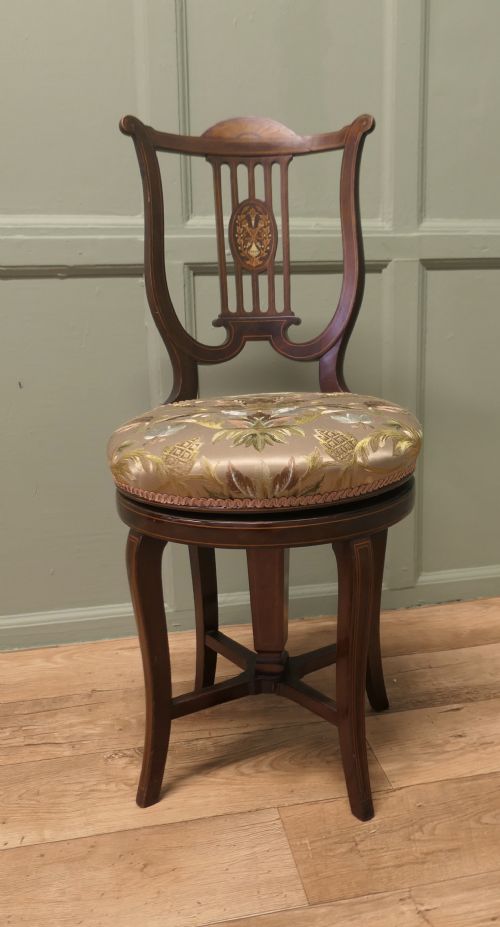
Victorian examples dominate the selection, often rendered in rich timbers with swivelling mechanisms or rise and fall adjustments. Buyers encounter single round stools, duet piano benches and chairs featuring lyre backs or supportive arms tailored for harpists.
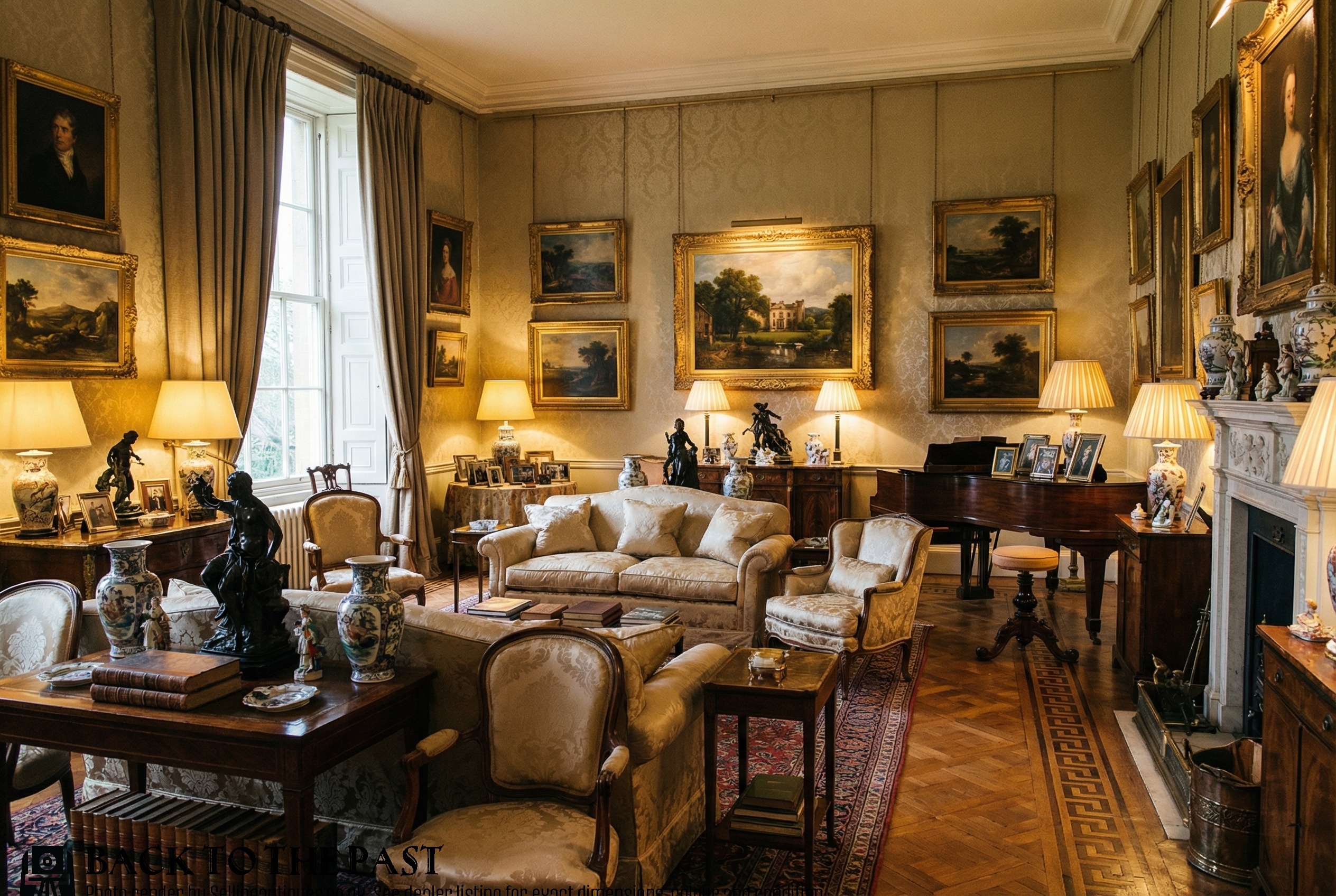
How they were made
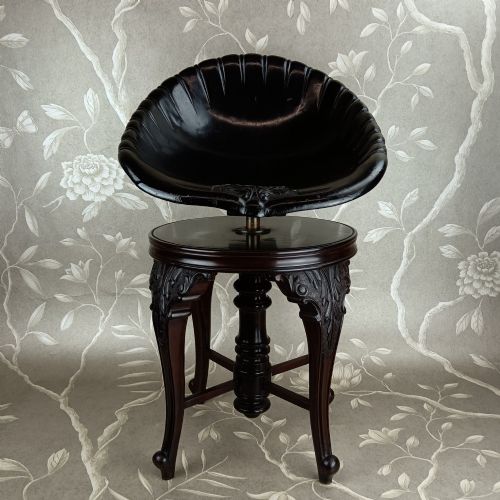
Cabinet makers utilised dense hardwoods including mahogany, rosewood and walnut, frequently shaping timber through turning and carving. Brass components facilitated the mechanical height adjustment screws and swivel tops.
Upholstery completed the seats, employing fabric, velvet, metal springs and tapestry work. Papier-mâché also appeared in combination with timber for specific decorative finishes.
Dark Wood Music Stool Retail Price Guide 2026
Typical asking prices for dark wood music stool among the pieces listed under this phrase on Sellingantiques today, from the lower quarter to the upper quarter. They describe what is for sale here now, not the wider market.
Musicians once relied on a sturdy spin to find their pitch.
What varies in quality
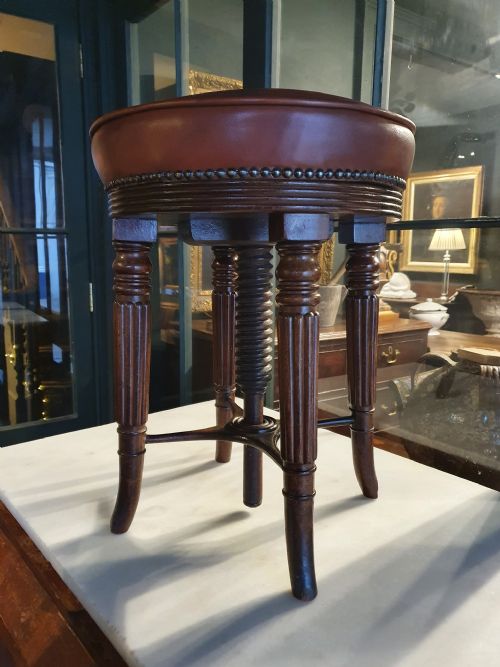
The sophistication of the mechanical adjustment mechanism dictates the upper tier of these pieces. Smoothly operating screw threads and robust swivel joints reflect superior workshop execution.
Carving depth and timber selection separate standard production from exceptional pieces. Richly grained rosewood and walnut combined with intricate woodwork denote higher status.
Jennens and Bettridge·Charles Nosotti·Gillows·Jas Shoolbred·H Brooks and Co
The Dark Wood Music Stool Glossary
- Revolving piano stool
- A seat featuring a mechanism that allows the top to spin entirely around. This allows the player to turn easily towards sheet music cabinets or other instruments.
- Rise and fall piano stool
- A seat equipped with a screw mechanism to alter the vertical height. This ensures the player maintains correct posture relative to the keyboard.
- Duet piano stool
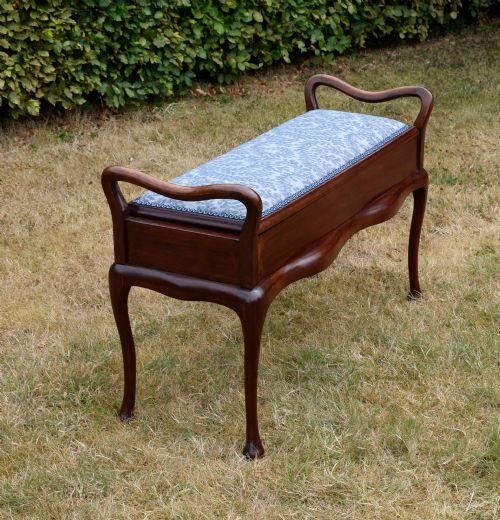
- A wider bench designed to seat two players simultaneously for piano four hands repertoire. These often include a hinged seat providing interior storage for music scores.
- Lyre back
- A chair back carved in the symmetrical outline of a classical lyre instrument. This motif is frequently observed on music chairs and harpist seats.
Dark Wood Music Stool: Frequently Asked Questions
How do I adjust the height on an antique music stool?
Many Victorian and Georgian music stools utilise a central wooden or metal screw thread concealed beneath the seat. Turning the upholstered top clockwise or anticlockwise raises or lowers the seating platform.
Other examples employ side levers or rack and pinion mechanisms to achieve the desired vertical position. Care should be taken not to force vintage mechanisms beyond their original limits.
What is the difference between a music chair and a piano stool?
Piano stools typically feature a backless round or rectangular upholstered top designed for compact placement at the instrument. They prioritise swivelling and height adjustment.
Music chairs incorporate a backrest, sometimes shaped as a lyre or configured with arms specifically for harpists and cellists. These provide greater back support during extended practice sessions.
Can I store sheet music inside these stools?
Certain Victorian duet stools and bench forms feature a hinged seat lid that opens to reveal a compartment beneath. This space was originally intended for organising and protecting paper scores.
Round swivel stools and standard adjustable pedestal models generally lack storage capacity due to the internal height adjustment mechanism occupying the central column.
How do I identify a Victorian music stool?
Victorian music stools frequently employ dark timbers such as rosewood, walnut and mahogany combined with heavy brass adjustment screws. They often showcase carved walnut cabriole legs or decorative turned pedestals dating from the nineteenth century.
Stylistic markers include Victorian Arts and Crafts influences, papier-mâché accents and robust revolving mechanisms. Maker stamps or paper labels underneath the seat sometimes confirm nineteenth century origin.