



Swivel Piano Chair
A swivel piano chair offers adjustable seating for the keyboard, combining mechanical ingenuity with period craftsmanship.

Identifying a swivel piano chair
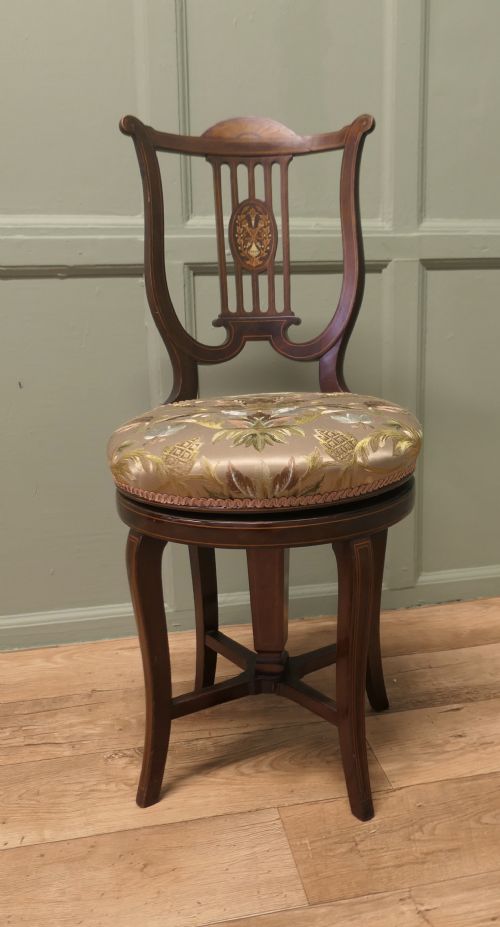
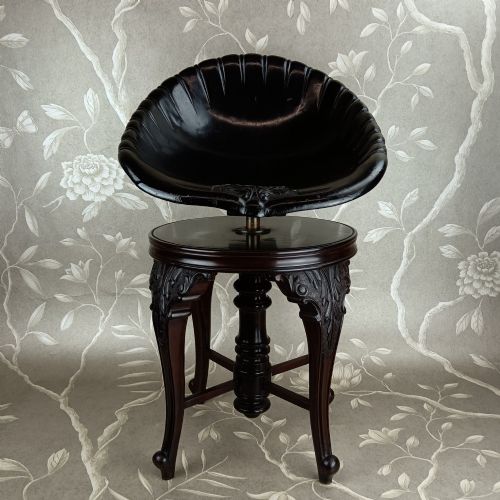
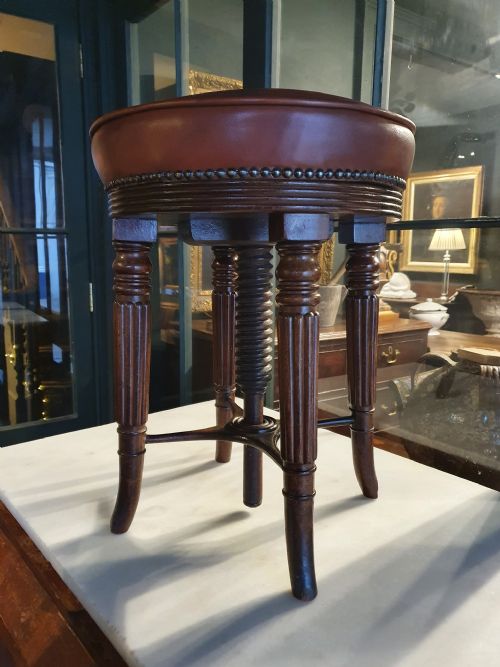
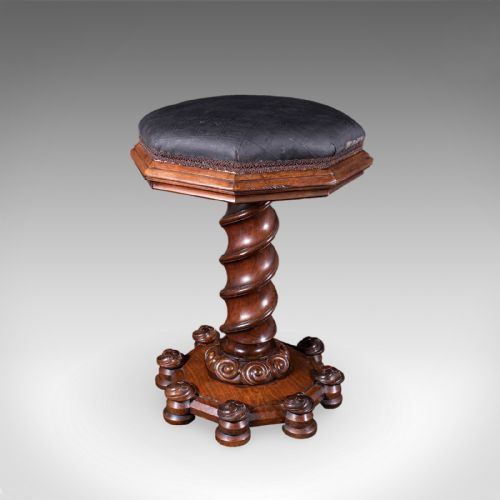
When you search for a swivel piano chair, you encounter 19th century seating designed for musicians and parlours. These pieces function as music stools, accent chairs, and height adjustable music chairs.
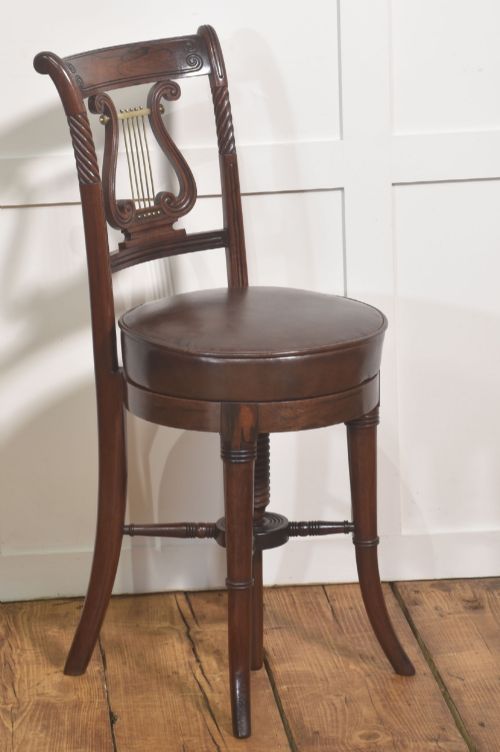
The most common versions on this page date from the Victorian era and the William IV period, alongside Regency and Sheraton Revival examples.
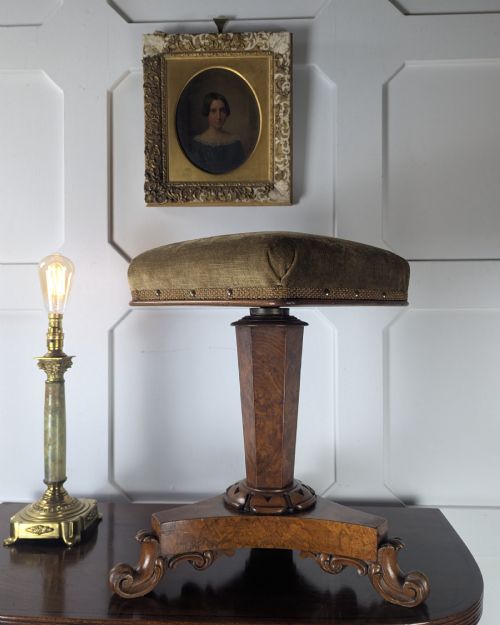
Forms include square top adjustable piano stools and revolving harpist music stools, featuring rotating mechanisms for player convenience.
Materials and construction
Cabinet makers utilised dense hardwoods such as mahogany, walnut, rosewood, and satinwood to build these revolving stools. Some unusual variants incorporated papier-mache alongside mahogany for decorative effect.
Metal and brass components formed the internal height-adjustment screws and swivelling mechanisms. Seats were upholstered in fabric or velvet to provide comfort during extended practice sessions.
Retail Price Guide 2026
Typical UK retail prices for swivel piano chair, calculated from the Sellingantiques database of over a million retail prices indexed since 2003. This retail price guide relies exclusively on Sellingantiques data; no external sources or auction records are used, so the figures do not describe the wider market.
Papier-mache music stools prove that Victorian musicians were not afraid to spin on papier-mache.
Assessing quality and craftsmanship
Superior examples display sophisticated carving on the timber frame, particularly around the legs and column. The integration of the swivel mechanism dictates how smoothly the seat rotates and raises.
Choice of timber elevates a piece, with figured walnut, rosewood, and satinwood representing finer work than standard mahogany. The retention of original upholstery materials and intact brass fittings also marks a higher standard of preservation.
The Swivel Piano Chair Glossary
- Swivel
- A mechanism allowing the seat to rotate fully on its base. This rotation helped musicians adjust their position easily without moving the entire stool.
- Revolving
- An alternative term for a seat that turns in a circle. It describes the primary mechanical action found on music stools from this era.
- Music stool
- A seat designed specifically for keyboard players and harpists. These often included height adjustment to suit different players.
- Papier-mache
- A composite material made from paper pulp or layers of paper bound with glue, then moulded and lacquered. It appeared on select fancy furniture items.
Frequently Asked Questions
How do you adjust the height?
Most of these chairs utilise a central screw mechanism operated by turning the seat itself. This raises or lowers the platform smoothly.
Some period examples rely on alternative mechanical ratchets or pins concealed beneath the upholstery to secure the desired height.
Were these only used for pianos?
While primarily designed for keyboard players, similar revolving stools served harpists and other musicians in the parlour. The adjustable height and swivel action suited any seated musician requiring mobility.
Today, they function well as accent chairs or desk seats in traditional interiors.
What woods were commonly used?
Cabinet makers worked with a variety of timbers depending on the fashion and period. Mahogany and walnut appear frequently in 19th-century workshop output.
More decorative pieces employed rosewood or satinwood, while papier-mache provided an exotic alternative for specific music chairs.
How do I date a piano stool?
Dating relies on stylistic clues such as the silhouette of the legs, the turning of the central column, and the choice of secondary woods. Victorian and William IV pieces often display distinct proportions and carving motifs.
Matching the materials and mechanical construction to known 19th-century manufacturing practices helps narrow the date range.