

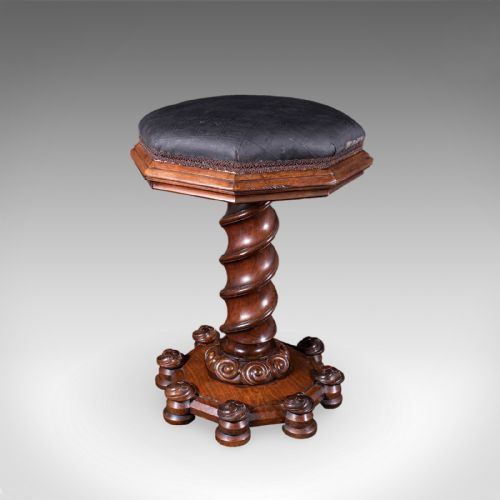


Adjustable Music Seat
An adjustable music seat provides the precise height required for performance, uniting mechanical ingenuity with period craftsmanship.
Adjustable Music Seat
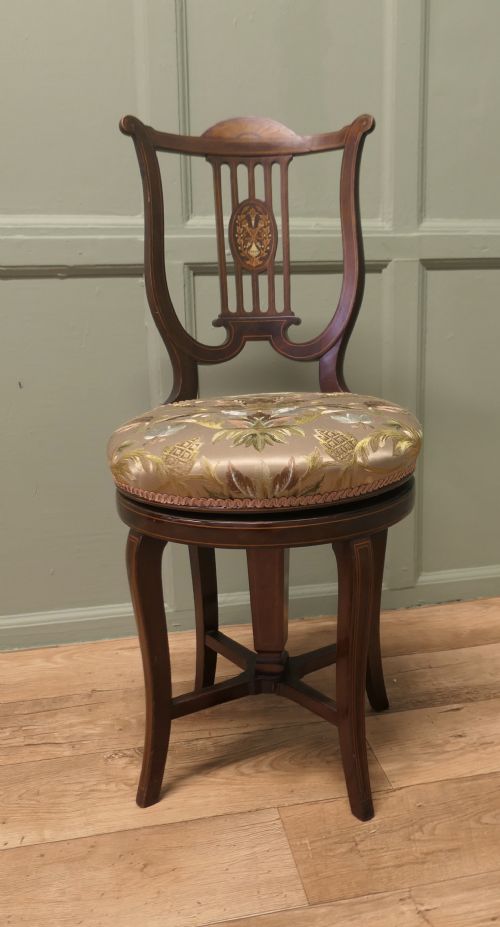
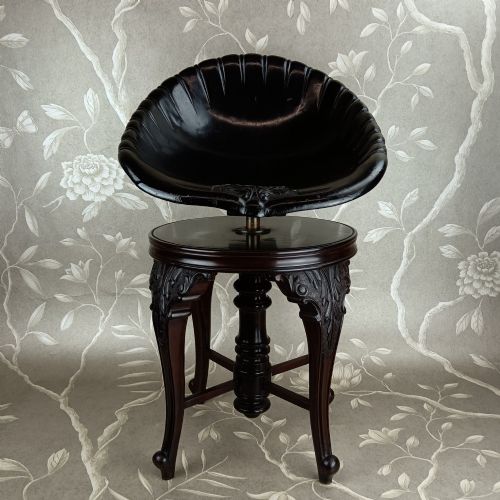
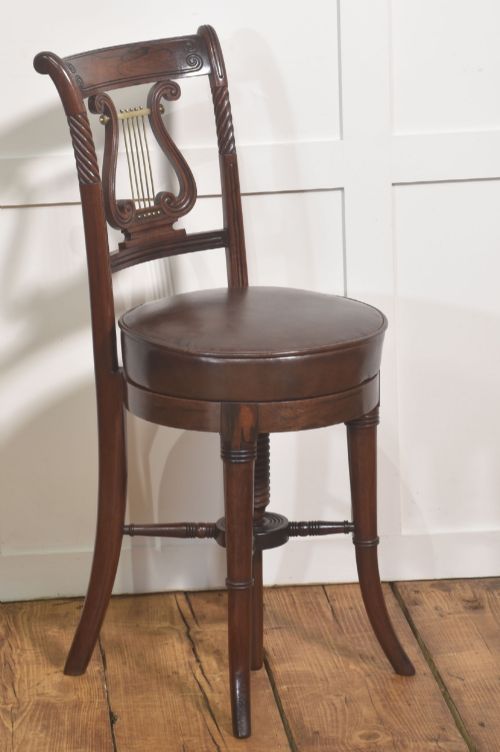
An adjustable music seat takes the form of a piano stool, revolving music chair, or dressing chair designed for musicians and performers. These pieces emerge primarily from the nineteenth century, encompassing Victorian, William IV, and Regency periods.
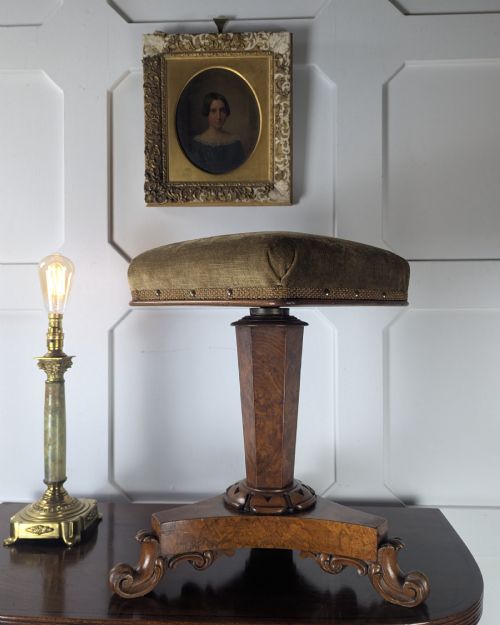
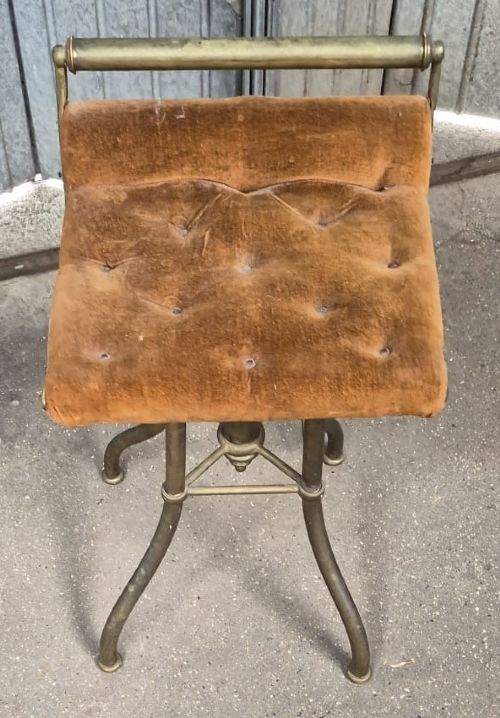
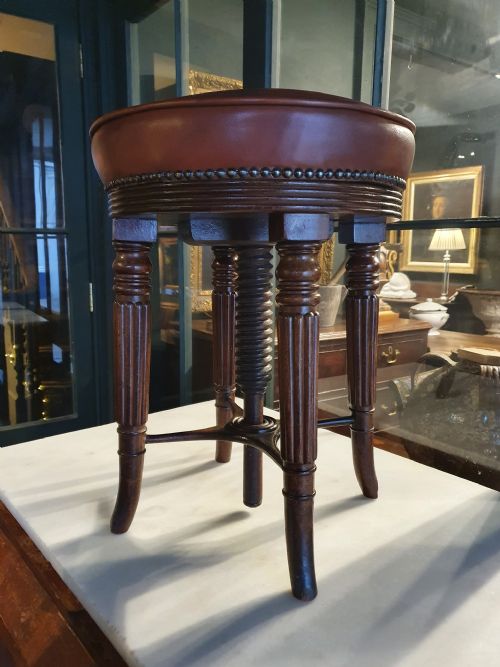
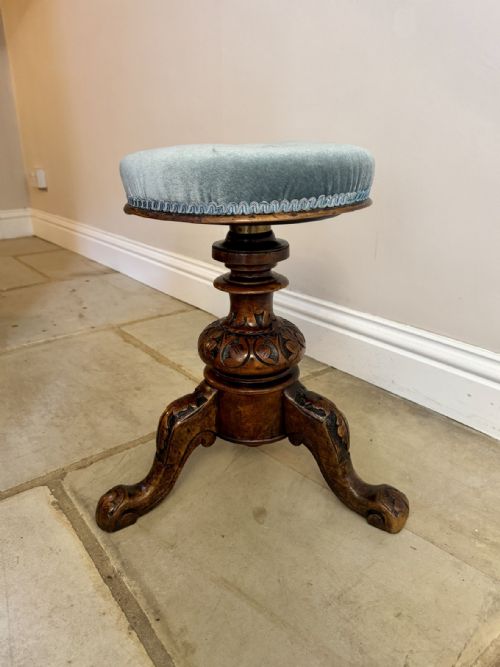
Buyers frequently encounter revolving walnut or mahogany designs alongside specialised pieces featuring brass frames or lyre backs. The selection includes rise and fall mechanisms alongside simple screw and swivel top configurations.
Origins span English workshops alongside French and Canadian examples, utilising dense hardwoods to support mechanical height adjustments. These utilitarian objects double as decorative furniture suited to domestic music rooms and parlours.
How They Were Made
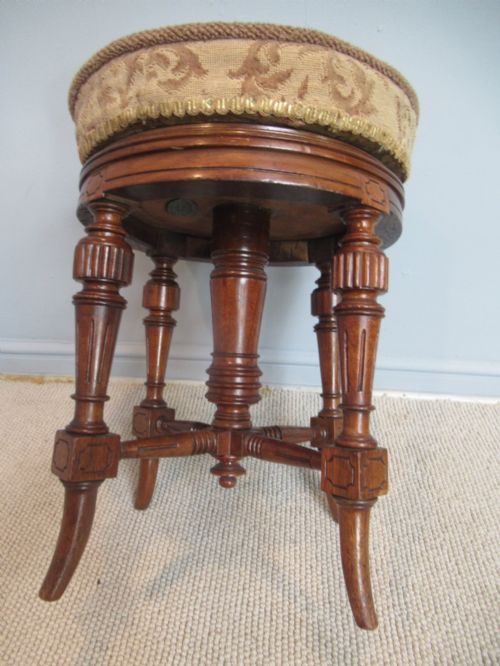
Cabinet makers constructed frames using figured walnut, mahogany, and rosewood, occasionally employing ebonised finishes or papier-mâché. Solid timbers provided the necessary structural integrity to house internal swivel and screw mechanisms.
Seating surfaces utilised brass fittings for rotating hubs alongside fabric, velvet, and leather upholstery buttoned over padding. Metal components facilitated the rising and falling actions required for performance adjustments.
Cellists enjoyed specialised revolving chairs designed with asymmetric supports to accommodate their instruments.
What Varies In Quality
Superior examples demonstrate meticulous carving on timber frames and robust internal mechanisms that operate smoothly without excessive play in the screw or swivel. The calibre of the timber, from highly figured walnut to dense rosewood, dictates the visual presence of the piece.
Upholstery execution and the retention of original brass hardware separate ordinary workshop output from finer productions bearing maker attribution. The integration of mechanical parts into the wooden structure reveals the maker's technical skill.
Jennens and Bettridge·Gillows·James Shoolbred
The Adjustable Music Seat Glossary
- Revolving
- Turning around an axis. This action allows the seated player to pivot toward sheet music or an audience.
- Rise and fall
- Moving vertically via a mechanical screw or rack. This adjustment accommodates players of differing heights.
- Lyre back
- A chair back shaped like the ancient musical instrument. This motif appears frequently on seating intended for music rooms.
- Canterbury
- A low stand with partitioned vertical sections. These compartments held sheet music beneath the seat.
Adjustable Music Seat: Frequently Asked Questions
How do adjustable music seats work?
These seats use a central wooden or metal screw mechanism that raises and lowers the top when turned. Swivel variants allow the platform to rotate freely on a threaded spindle.
Internal brass or iron components bear the weight while enabling smooth height modification for the musician.
Where were music seats placed?
Musicians positioned them beside upright and grand pianos, harps, or cellos in domestic parlours. Their compact footprint also suited dressing tables and small reception rooms.
Many designs matched the surrounding parlor furniture while offering specialised mechanical adjustments.
What woods are most common?
Mahogany and walnut appear with high frequency across nineteenth-century examples. Rosewood also occurs frequently in Regency and Victorian pieces.
Craftsmen selected these dense hardwoods to withstand the torque and pressure exerted by mechanical height adjustments.
How to identify a Victorian piece?
Victorian examples often feature rich walnut or mahogany timbers combined with turned legs and carved decoration. Upholstery frequently employs buttoned leather or velvet over padding.
Mechanical sophistication increased during this era, producing reliable swivel and screw mechanisms.