

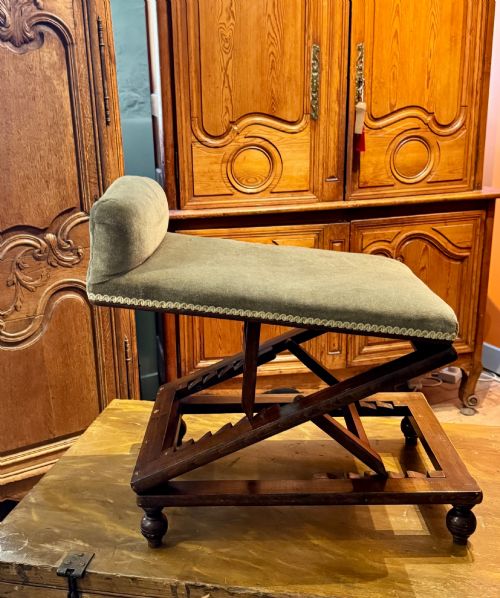
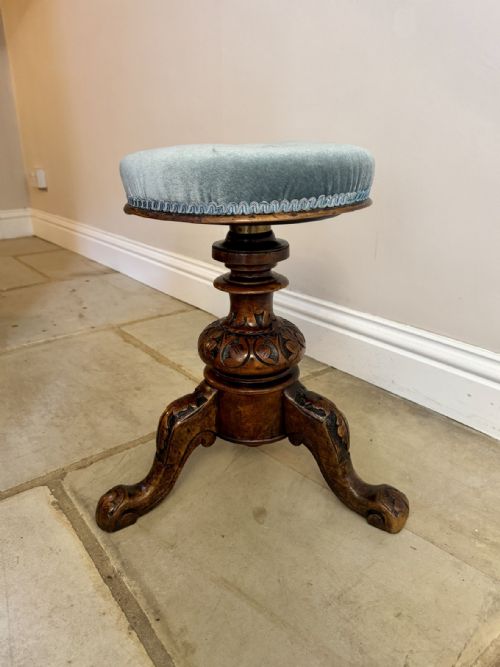
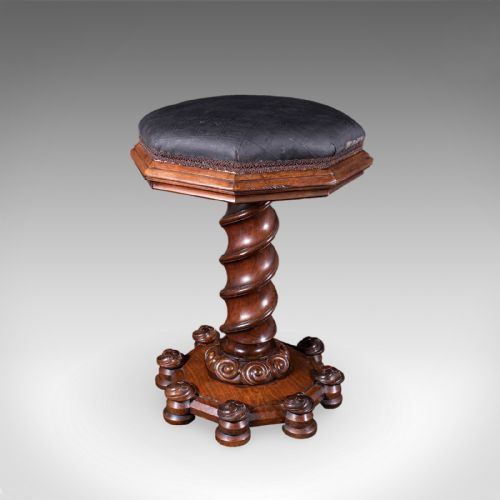


Antique Adjustable Stool
An antique adjustable stool is a mechanical seat for the music room or dressing table, offering both swivel action and height adjustment.
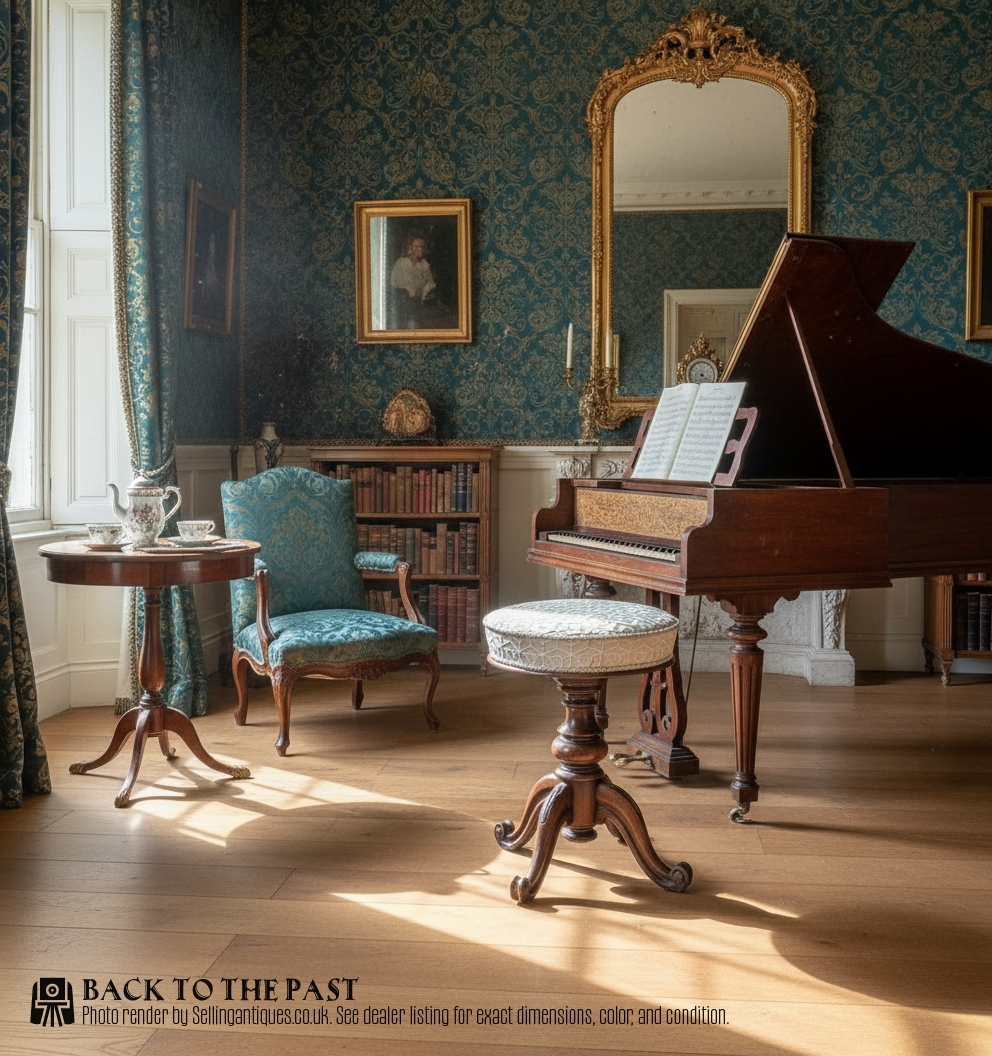
Anatomy of an antique adjustable stool
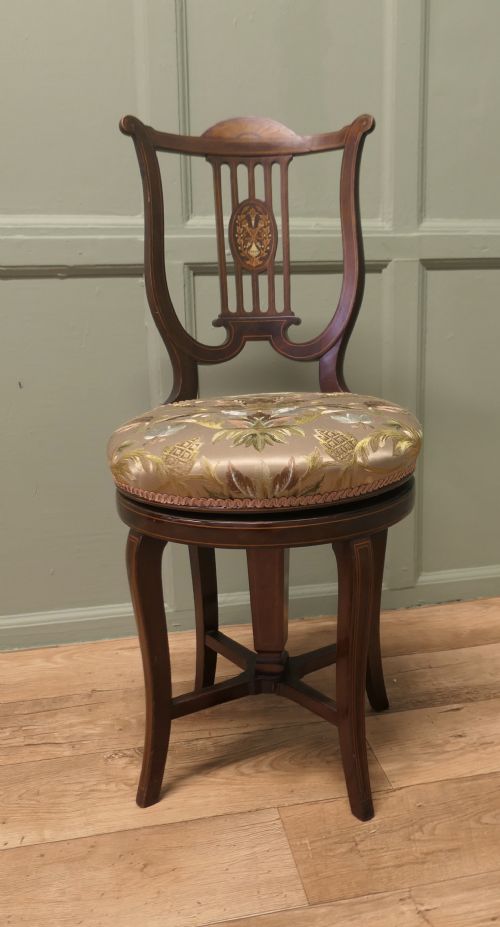
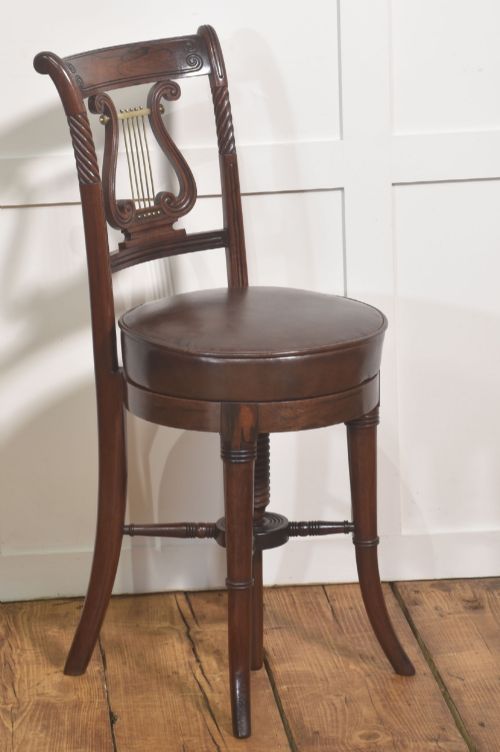
When you search for an antique adjustable stool, you encounter pieces designed primarily for the piano, dressing table, or music recital. The most common form on this page is the piano stool, originating across the nineteenth century in Victorian, Edwardian, and William IV styles.
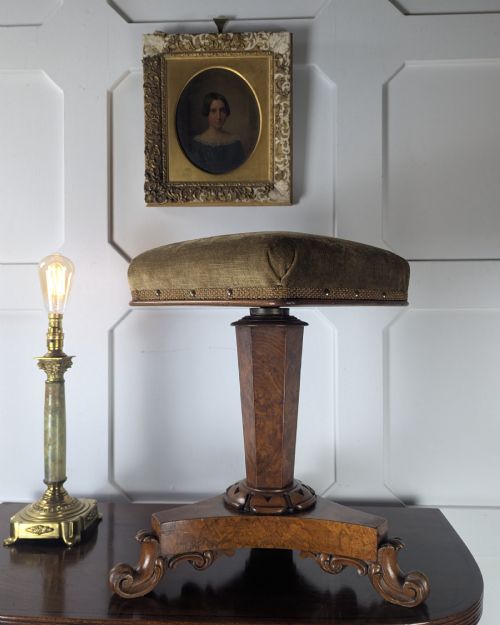
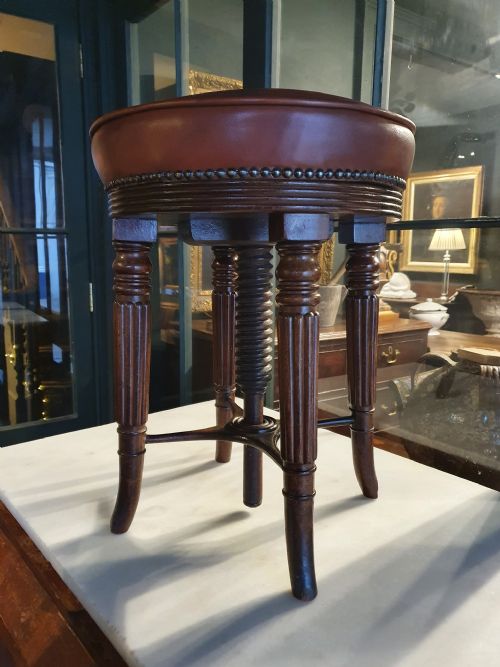
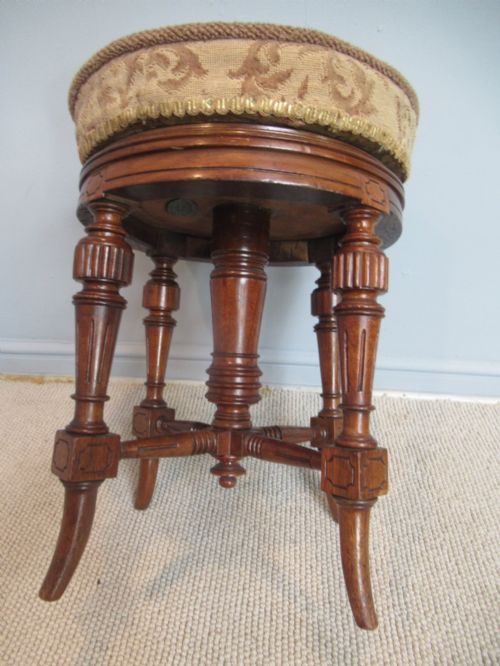
These seats frequently serve dual purposes, functioning as piano or dressing stools with circular tops. Makers constructed them in forms that either revolve on a threaded screw or use a rise and fall mechanism to alter height.
Originating predominantly from English workshops, these pieces reflect the domestic musical pursuits of the nineteenth century. Survivors range from simple revolving wooden seats to sophisticated examples with patent mechanisms and specialised foot details.
Materials and construction methods
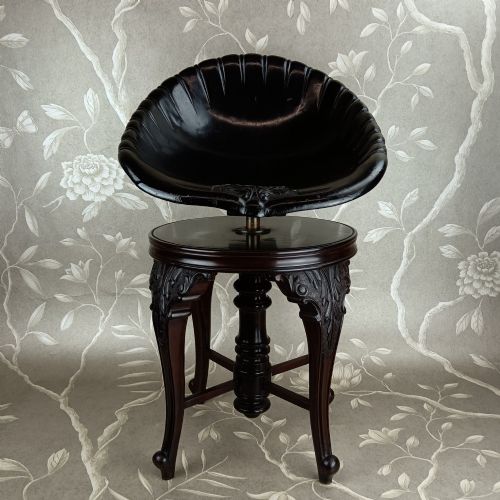
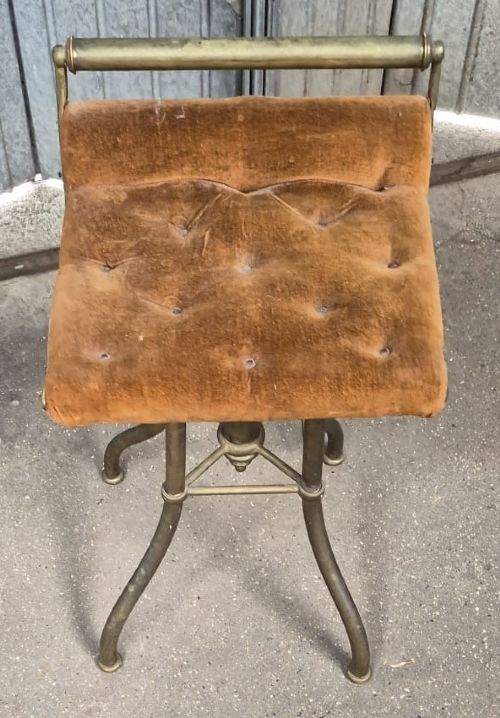
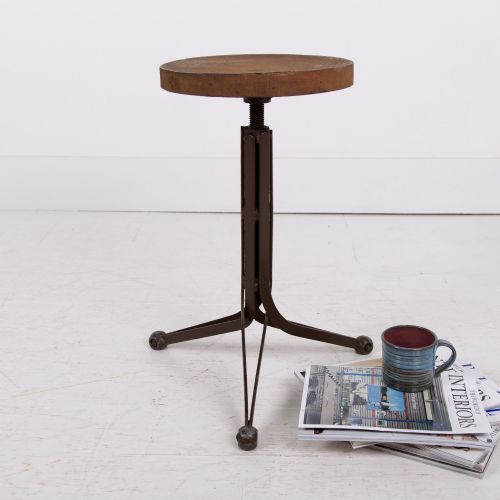
Cabinet makers utilised dense hardwoods including mahogany, walnut, rosewood, and ebonised timber. Certain industrial examples incorporate cast iron and exposed metal alongside wood.
Upholstery materials on the revolving or rising seats include leather, fabric, and needlepoint. Interior mechanisms rely on heavy brass screws, music risers, and iron bases to achieve height variation.
Retail Price Guide 2026
Typical UK retail prices for adjustable stool, calculated from the Sellingantiques database of over a million retail prices indexed since 2003. This retail price guide relies exclusively on Sellingantiques data; no external sources or auction records are used, so the figures do not describe the wider market.
The archive records nineteenth century adjustable stools spanning the Regency, William IV, Victorian, and Edwardian periods.
Distinctions in construction and finish
The sophistication of the internal mechanism separates standard production pieces from patented designs. Patent examples by makers like Marsdens or Brooks demonstrate superior engineering in their screw threads and height risers.
Timber selection and secondary details dictate quality across the range. Finer versions employ figured rosewood or carved walnut, occasionally featuring decorative glass ball feet rather than plain wooden or iron bases.
Marsdens Patent·Brooks·Thomas Organ Co
The Antique Adjustable Stool Glossary
- Revolving stool
- A seat with a top that turns on a central screw to rotate fully. This allows the player to pivot easily while seated at an instrument.
- Music riser
- The internal wooden or metal mechanism that elevates the seat platform. It operates by turning the top to increase or decrease total height.
- Aesthetic Movement
- A late nineteenth century design style emphasising simplicity and artistic decoration. Pieces in this manner often utilise ebonised timber.
- Rise and fall
- A mechanical action enabling the seat height to adjust vertically. This system accommodates different players and playing postures.
Frequently Asked Questions
How do you adjust the height?
Many examples operate on a central wooden or metal screw where turning the seat clockwise or anticlockwise raises or lowers the top.
Other pieces utilise internal music risers or patent mechanisms designed to lift the platform smoothly.
Were these only used for pianos?
While the vast majority served pianists and musicians during recitals, some examples double as dressing stools.
Their compact circular tops and adjustable heights suited vanity tables as well as music cabinets.
What woods were commonly used?
Victorian and nineteenth century makers heavily favoured walnut and mahogany for domestic musical furniture.
Rosewood, oak, and ebonised timbers appear alongside industrial pieces incorporating cast iron frames.
How do you date an antique stool?
Dating relies on timber choice, turning styles, upholstery methods, and mechanical patents recorded by firms like Marsdens or Brooks.
Victorian and William IV examples display distinct stylistic carving and joinery characteristic of their decades.