
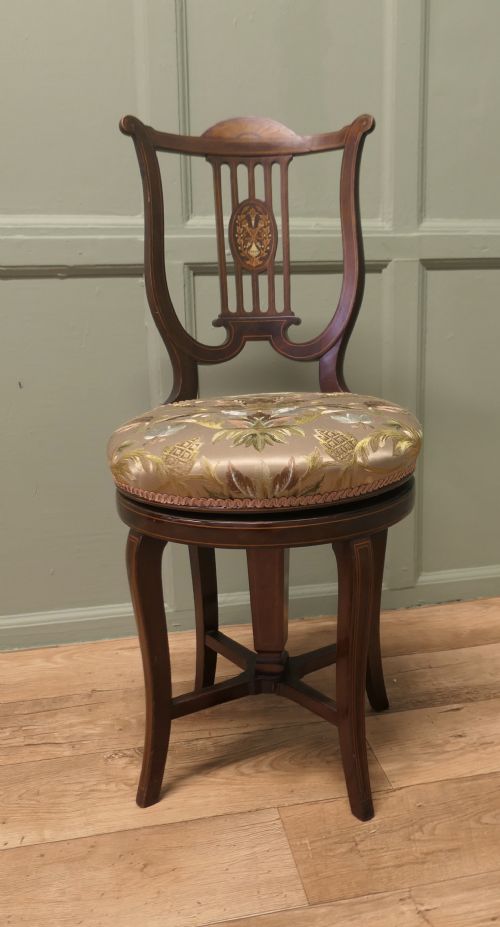
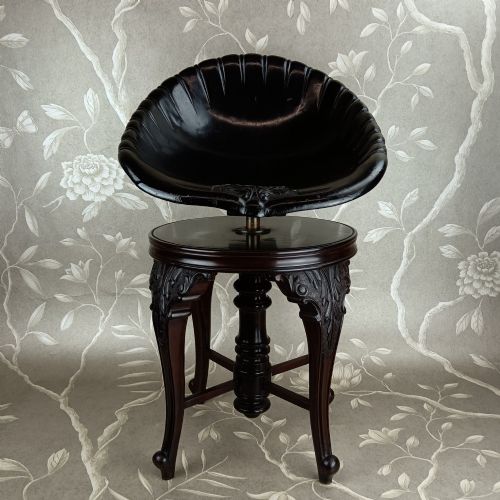
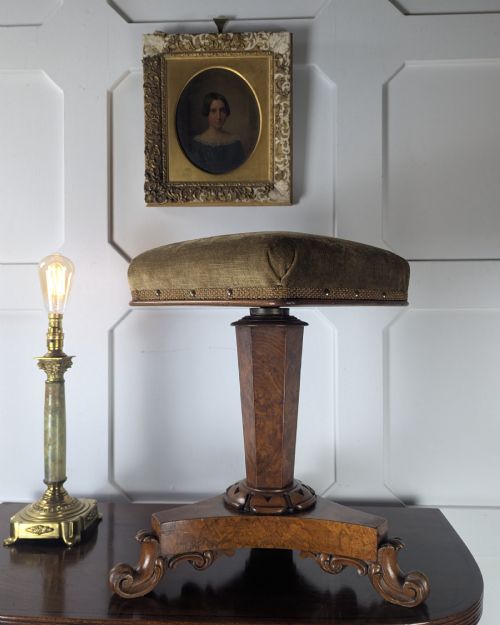
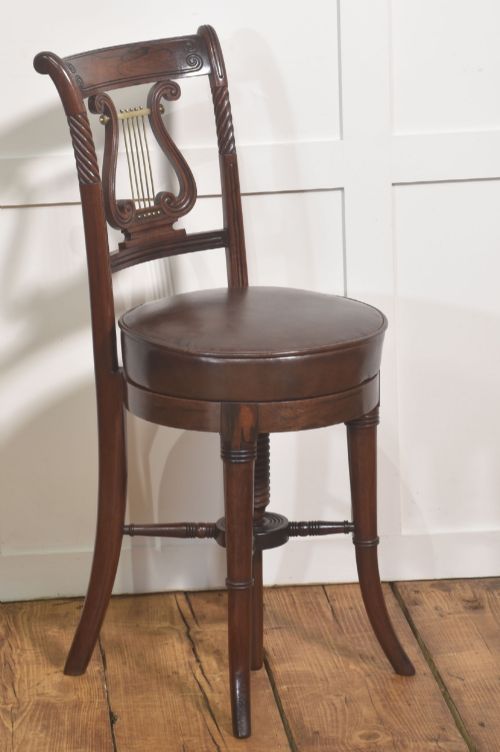



Revolving Music Seat
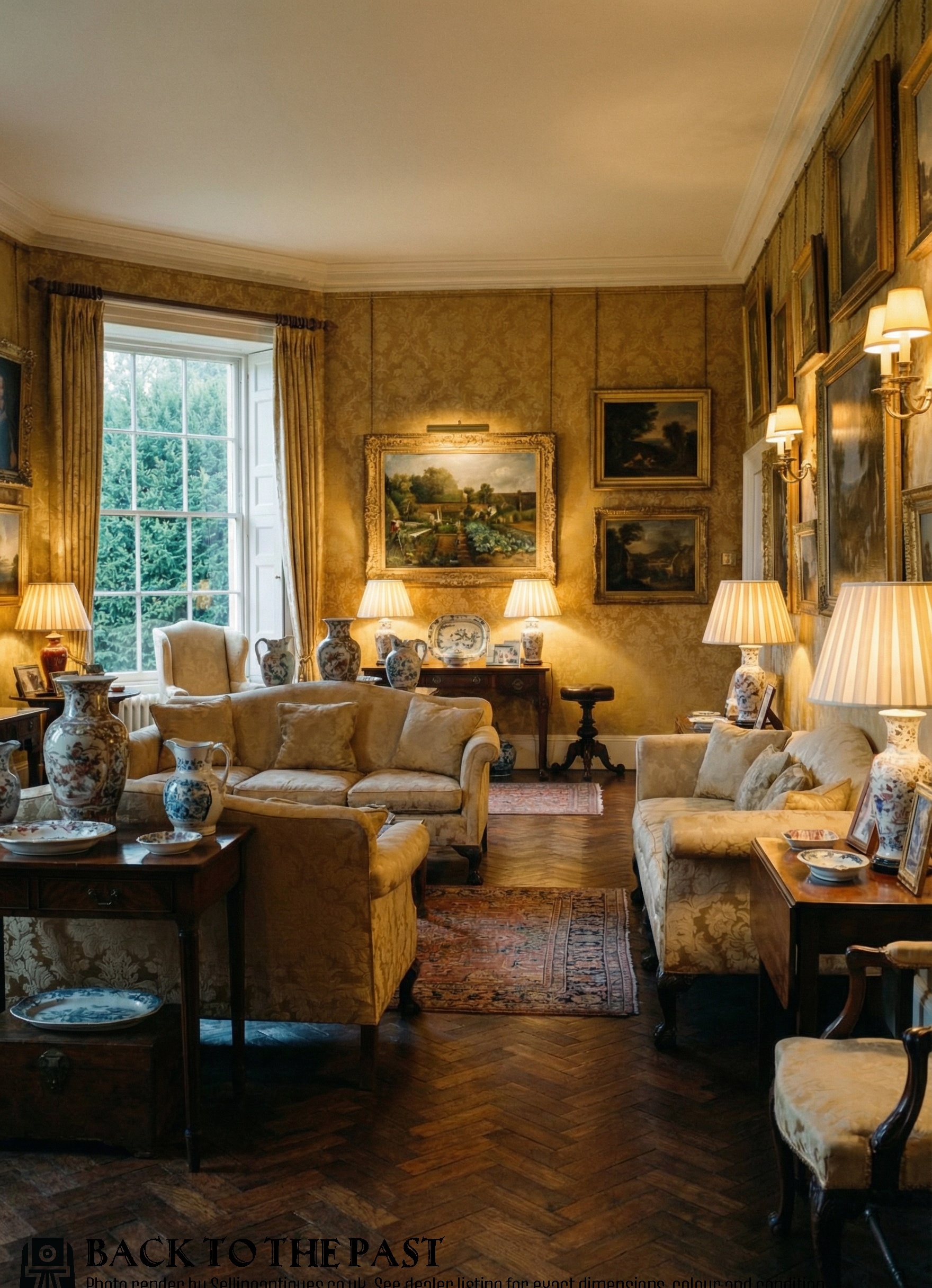
A revolving music seat sits by the instrument, offering the player a turn to face the room or the keyboard.
Revolving Music Seat
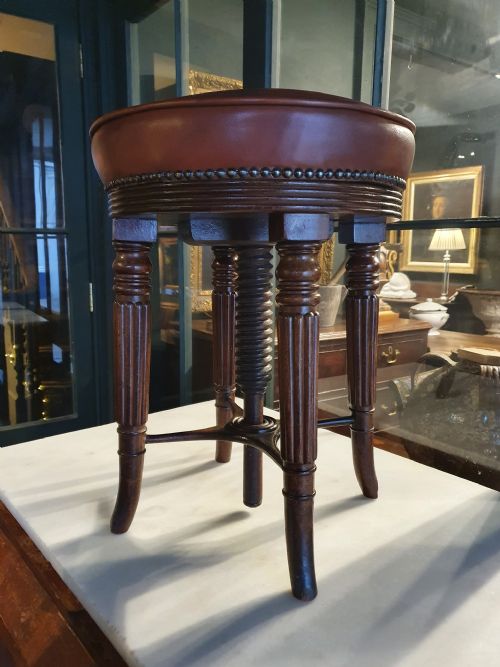
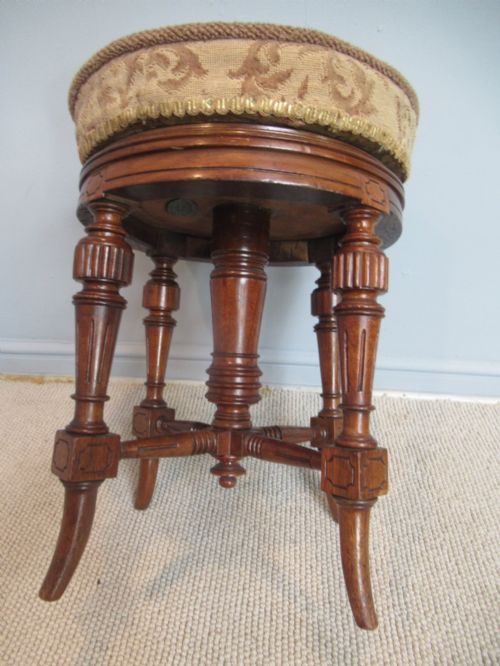
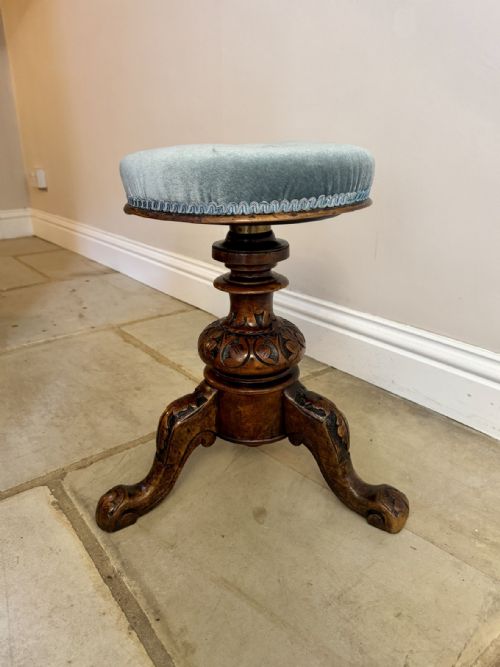
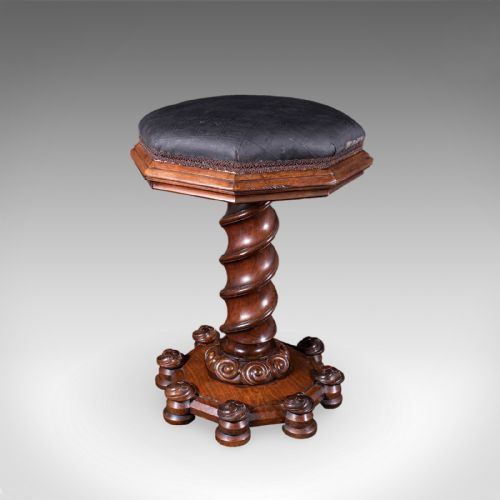
A revolving music seat is primarily found as a piano stool, music chair, or dressing chair designed for practical height adjustment at the keyboard. Most examples encountered here belong to the Victorian and Regency periods, spanning the nineteenth century.
The form encompasses simple circular tops on swivel bases alongside sophisticated lyre-back music chairs and harpist seats. Walnut, mahogany, and rosewood dominate the surviving inventory, often paired with period upholstery.
Makers adapted the revolving mechanism for organists, cellists, and domestic pianists who required mobility during long practice sessions. These seats bridge domestic comfort and functional musical accessories from earlier eras.
How they were made
Cabinet makers utilised dense hardwoods such as mahogany, walnut, and rosewood to construct sturdy frames capable of withstanding constant rotation and weight shifts. Brass mechanisms formed the central screw threads that allowed the seat height to rise and fall.
Upholstery techniques involved traditional stuffing finished with fabric, leather, or velvet on the revolving tops. Specialised pieces incorporated papier-mâché, ormolu mounts, and brass inlay to elevate the visual appeal of the instrument bench.
Listings feature mahogany, walnut, and rosewood predominantly, spanning the Regency and Victorian eras through to Edwardian variations.
What varies in quality
The refinement of the carving on the walnut or rosewood frames distinguishes standard production from exceptional studio output. Details like lyre backs, brass inlay, and crisp mouldings separate ordinary utility stools from high-end cabinet work.
The engineering of the swivel mechanism dictates the daily tactile experience of the seat. A smooth, stable rise and fall action without lateral wobble indicates superior period metalwork and precise joinery.
Jennens and Bettridge·Gillows·James Shoolbred
The Revolving Music Seat Glossary
- Rise and fall
- An adjustable mechanism operated by rotating the seat top on a central screw thread to alter height. This allowed musicians to find a comfortable posture relative to the keyboard.
- Swivel base
- A rotating pivot system allowing the upper portion of the stool to turn freely. This movement gave players flexibility when shifting between performance and social interaction.
- Lyre back
- A chair back shaped in the symmetrical outline of a classical musical instrument. It appears frequently on seating designed for harpists and cellists.
- Ormolu
- Gilt bronze mounts applied for decorative effect on sophisticated furniture frames. The technique adds metallic contrast to dark woods like mahogany.
Revolving Music Seat: Frequently Asked Questions
How do I adjust the height?
You simply grasp the upholstered top and rotate it clockwise or anticlockwise to wind the wooden or metal screw thread up or down.
This central post mechanism raises or lowers the seat level to suit different players at the keyboard.
Are these seats comfortable for daily use?
Original padding consists of traditional materials like horsehair beneath fabric, leather, or velvet coverings.
While firm by modern standards, they provide adequate support for short sessions at the piano or dressing table.
How do I date a revolving music seat?
Look to the secondary woods, turning styles, and structural hallmarks that shift from Regency classical lines to ornate Victorian carving.
Stamped maker marks or patent plaques underneath the swivel mechanism also help narrow the decade of production.
Can I use these at a modern desk?
Many nineteenth-century music stools offer a seat height that translates well to standard modern writing tables.
Check the minimum and maximum height range of the screw mechanism before placing one at a contemporary workspace.