
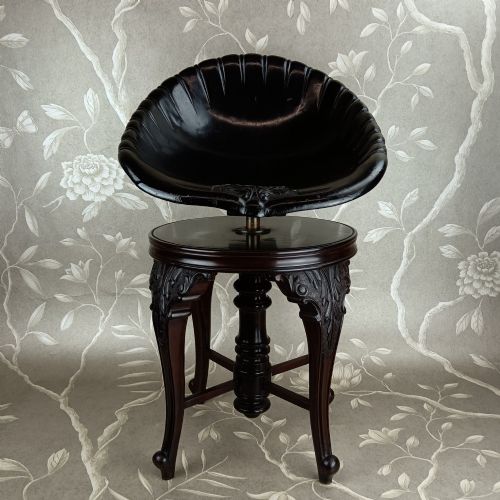


Carved Wood Music Seat
A carved wood music seat brings the functional elegance of the parlour and drawing room straight to your modern interior.
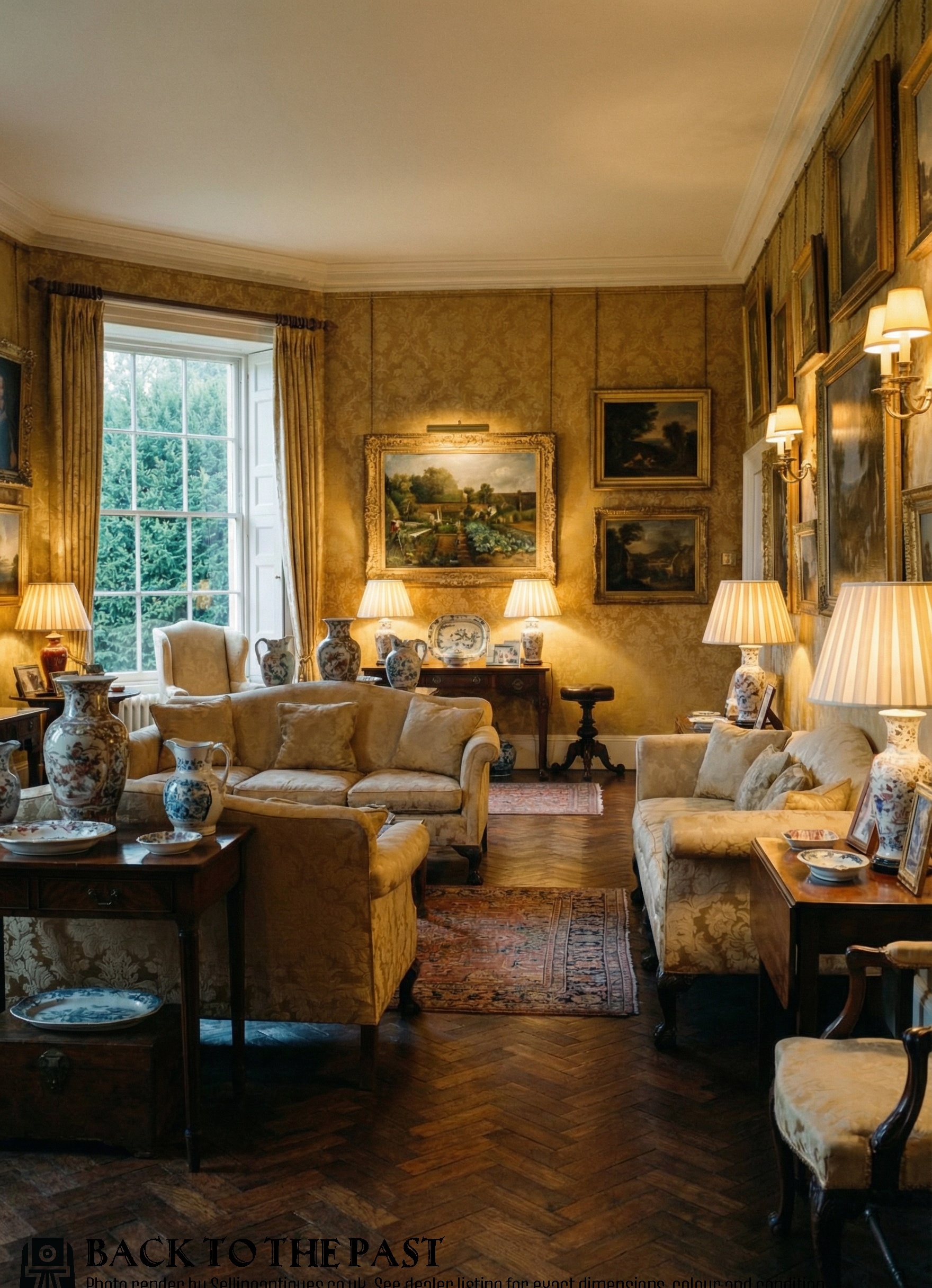
Carved Wood Music Seat
When you search for a carved wood music seat, you are looking at practical seating designed specifically for musicians and keyboard players. The examples on this page primarily take the form of piano stools, music chairs, and side chairs spanning the Georgian, Victorian, and Edwardian periods.
You will most frequently encounter nineteenth-century pieces designed for the drawing room, featuring adjustable mechanisms or revolving tops. These range from simple round seats to duet stools with hinged compartments for sheet music storage.
The selection includes varied stylistic influences, from plain mahogany frames to Swiss marquetry inlaid designs and Anglo-Burmese colonial carving. Each piece reflects the domestic musical habits and interior tastes of its era.
How they were made
Cabinet makers constructed these seats using dense hardwoods like mahogany, walnut, and rosewood, often enriching the timber with detailed carving or marquetry inlay. Brass mechanisms were integrated into the frames to allow for height adjustment and smooth rotation.
Upholstery played an essential role in construction, with fabric and velvet used to pad the seats for comfort during long practice sessions. Hinged compartments and mechanical screws required precise joinery to ensure durability alongside decorative appeal.
Listings feature mahogany, walnut, rosewood, and brass alongside fabric and velvet upholstery across the nineteenth and early twentieth centuries.
What varies in quality
The distinction between standard production and superior examples lies in the depth of the carving and the complexity of the timber figure. Finer pieces demonstrate precise marquetry inlay, robust revolving actions, and high-grade secondary timbers.
Design ambition also separates the ordinary from the exceptional, as seen in bespoke details like hinged duet lids, specialised brass screw mechanisms, and unusual regional styles such as Swiss or Anglo-Burmese work.
Jennens and Bettridge·Jas Shoolbred
The Carved Wood Music Seat Glossary
- Revolving piano stool
- A seat with a screw mechanism hidden beneath the top, allowing the player to adjust the height by spinning the cushion. This was a popular nineteenth-century innovation for keyboard players.
- Marquetry inlay
- The art of applying decorative pieces of veneer to a structure to form intricate patterns or pictures. Walnut and exotic woods were frequently utilised for this detailed work.
- Duet stool
- A wider seat designed to accommodate two musicians sharing a piano bench. These often incorporate a hinged lid providing internal storage space for sheet music.
- Padouk
- A heavy, durable tropical hardwood with a distinctive reddish hue. It was used in colonial furniture production, including specialised harpist chairs.
Carved Wood Music Seat: Frequently Asked Questions
Where were music seats used in the home?
These pieces were primarily housed in drawing rooms, parlours, and music rooms adjacent to pianos, harps, or music stands. They provided stable yet flexible seating for daily practice and home entertainment.
Because many include revolving tops or hinged storage for scores, they served a dual purpose as both functional instruments and decorative room furniture.
How do I care for the wood and upholstery?
Keep wooden frames conditioned with appropriate furniture wax and protect them from direct sunlight and extreme temperature fluctuations. This preserves the polish and prevents the timber from splitting.
Vacuum velvet and fabric upholstery gently with a soft brush attachment. Avoid harsh chemical cleaners on antique finishes and delicate brass fittings.
How can I tell a Victorian music stool from a Georgian one?
Georgian pieces generally display simpler, more restrained classical lines in mahogany or rosewood, reflecting earlier eighteenth and early nineteenth-century cabinet-making traditions. Their proportions tend to be formal and architectural.
Victorian and later nineteenth-century examples often embrace heavier carving, more complex mechanical adjustments, walnut veneers, and varied stylistic revivals including Swiss marquetry or colonial influences.