


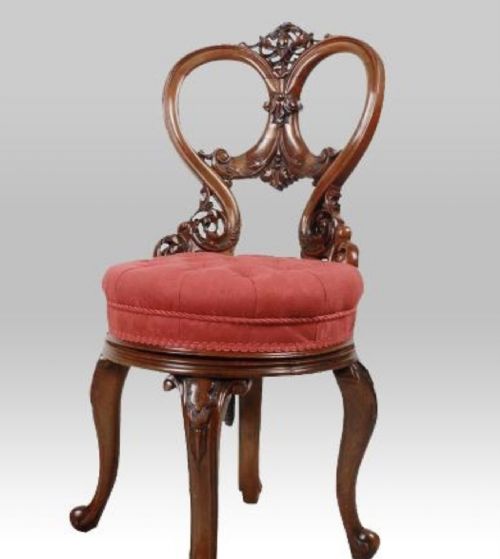


Carved Walnut Revolving Stool
A carved walnut revolving stool provides dependable height adjustment alongside rich timber grain, serving musicians and dressing tables alike.
Carved Walnut Revolving Stool
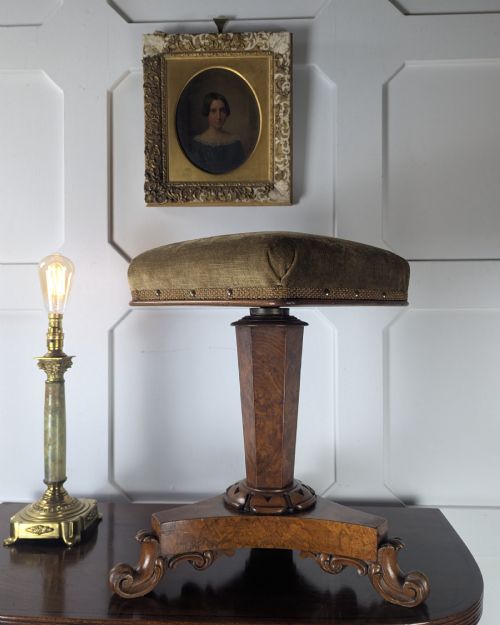
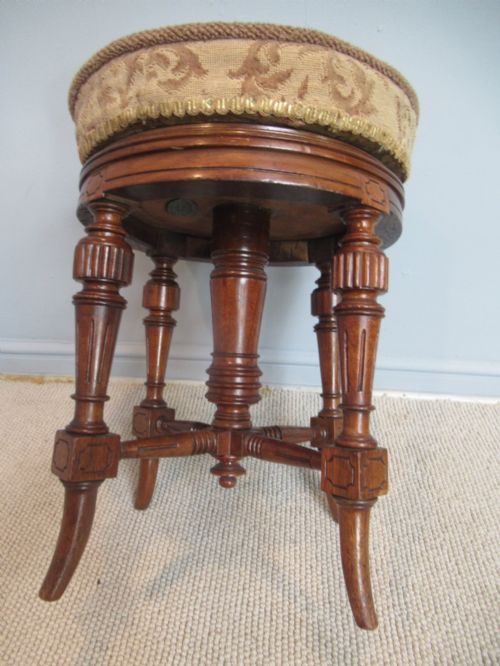
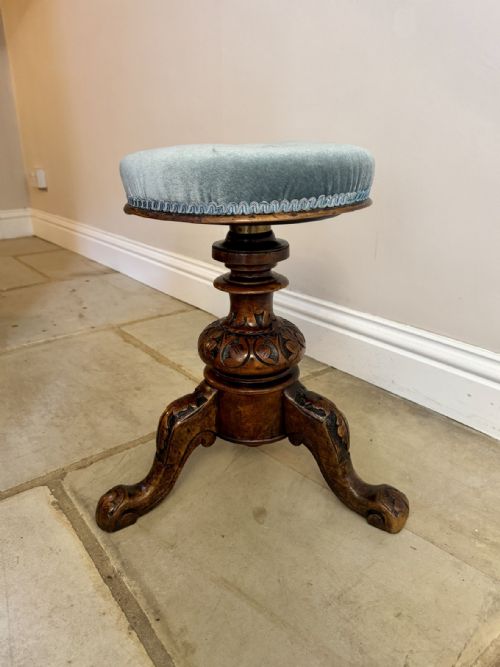
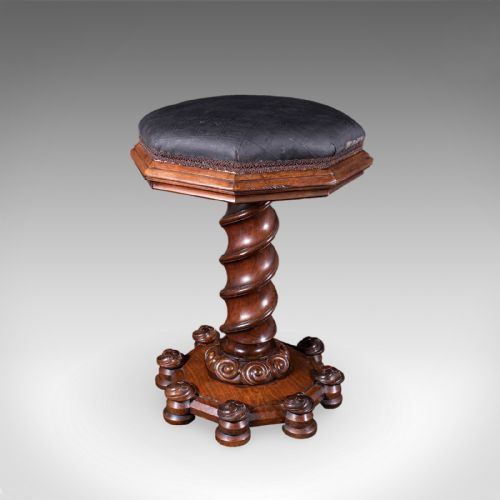
A carved walnut revolving stool functions primarily as an adjustable seat for the piano, organ, or dressing table, featuring a swivel top raised or lowered on a central threaded screw. When exploring a carved walnut revolving stool, buyers encounter numerous Victorian examples alongside earlier Regency and William IV pieces from the nineteenth century.
The predominant forms appearing here are piano stools and music chairs, often possessing tripod or pedestal bases that support the swivelling mechanism. French chateau and Italian grotto stylistic influences occasionally emerge among the standard Victorian silhouettes recorded across the archive.
Most items date from the mid to late nineteenth century, spanning decades such as eighteen fifty through to eighteen ninety, maintaining their original function as adjustable seats. These pieces combine utilitarian engineering with decorative carving upon the walnut timber.
Materials and construction
Makers utilised solid walnut for the structural framework, pedestal columns, and carved legs, frequently highlighting figured grain patterns across the circular seat tops. The timber provides both the necessary density for weight-bearing joints and a smooth surface for intricate carving.
Upholstery materials include velvet, leather, fabric, and tapestry, secured over padding to cushion the sitter during long periods at the instrument. Internal and mechanical components incorporate iron, metal, and brass to ensure the smooth operation of the rise and fall mechanism.
Organists and harpists shared the same revolving seats, ensuring centuries of musicians spun gracefully before hitting a note.
Judging the standard
Superior examples demonstrate crisp, deep carving upon the walnut pedestals and legs, contrasting with simpler turned columns found on basic workshop models. The precision of the revolving mechanism determines how smoothly the seat ascends and descends without lateral wobble.
The choice of covering material and the preservation of original upholstery textures contribute significantly to the overall distinction of the piece. Finer specimens exhibit well-figured timber grain and robust joinery that withstands decades of rotational movement.
The Carved Walnut Revolving Stool Glossary
- Revolving stool
- A seat featuring a swivelling top that turns on a central screw to alter the height.
- Rise and fall
- The mechanical action allowing the seat height to be adjusted up or down by rotation.
- Tripod base
- A three-legged support structure commonly found beneath nineteenth-century piano and music stools.
- Figured walnut
- Timber exhibiting highly decorative grain patterns, prized for aesthetic appeal in cabinet work.
- Pedestal stool
- A seat supported by a single central pillar rising from a stable foot.
Carved Walnut Revolving Stool: Frequently Asked Questions
How do I adjust the height on these stools?
The seat top rotates around a central metal screw mechanism, raising or lowering the seating platform as you turn it clockwise or anti-clockwise.
Most nineteenth-century examples rely on this straightforward threaded spindle system rather than levers or ratchets.
Were these originally made just for pianos?
While the majority served keyboard players in parlours and drawing rooms, many were also designed for dressing tables and harp practice.
The interchangeable height made them versatile furniture pieces for various seated tasks in the Victorian home.
How can I distinguish a Victorian piece from earlier periods?
Pieces from the Regency or William IV eras often display bolder architectural turns and heavier proportions compared to later Victorian designs.
Looking at the carving style and the configuration of the base usually clarifies the approximate decade of manufacture.
Can I use these stools with modern seating arrangements?
Their compact proportions make them suitable as occasional seats, dressing table chairs, or piano benches in contemporary interiors.
The adjustable mechanism remains fully functional for daily use if the internal wooden thread is treated with care.