
Antique Piano Seating
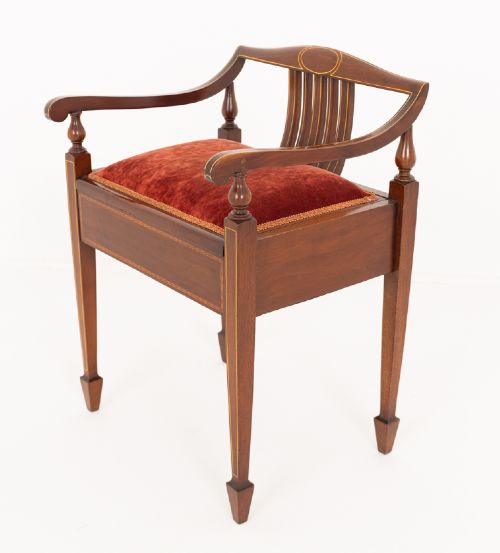
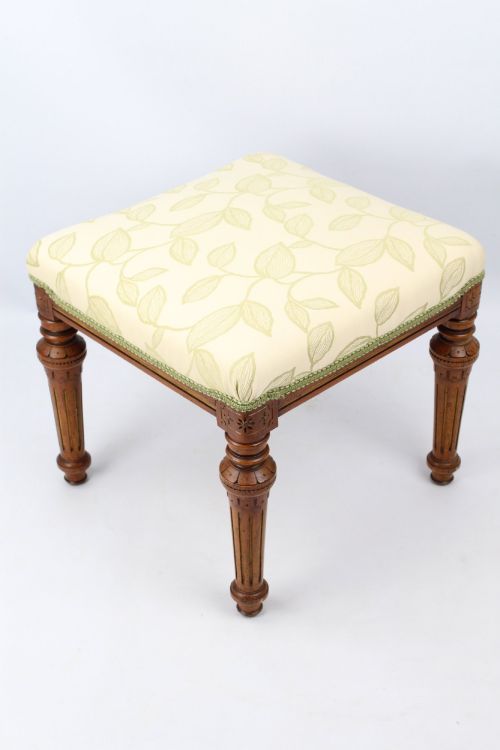
Antique piano seating comprises adjustable stools, swivel chairs, and benches designed for musicians, appearing primarily in Victorian and Edwardian iterations crafted from mahogany, walnut, and rosewood.
Antique Piano Seating
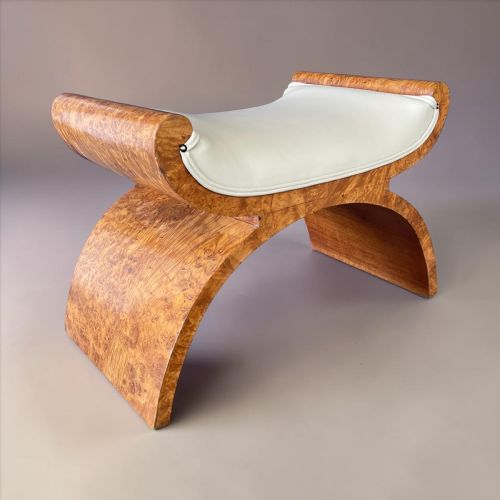
When buyers search for antique piano seating, they encounter various forms including piano stools, music chairs, duet benches, and revolving stools designed for keyboard players and harpists. The pieces on this page span several periods, from Regency and William IV to Victorian, Edwardian, and Art Deco.
The most common versions met here are Victorian and 19th century mahogany or walnut stools, often featuring adjustable mechanisms or revolving seats. Alongside dedicated piano stools, the selection includes dressing table chairs and window seats utilised in similar domestic spaces.
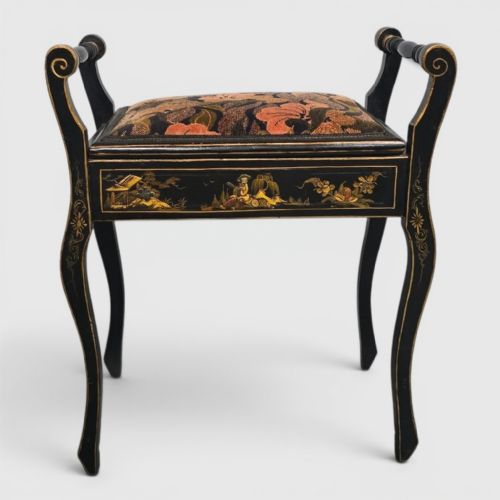
Makers and workshops range from Jennens and Bettridge to Harry and Lou Epstein, Charles Nosotti, and Jas Shoolbred. These pieces utilise styles such as Sheraton Revival, Chinoiserie, Arts and Crafts, and Queen Anne, reflecting the changing tastes of their respective eras.
Materials and construction
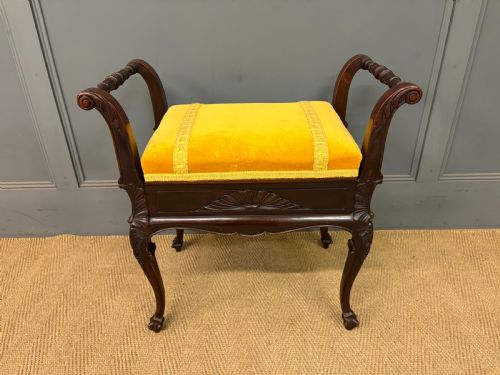
Upholstery materials recorded in the listings include fabric, velvet, leather, and tapestry needlepoint. Construction techniques allowed for mechanical adjustments, enabling players to alter seating height through rise-and-fall screws or revolving mechanisms.
One exceptional chapel organist found happiness on a Scottish walnut music riser.
Assessing craftsmanship
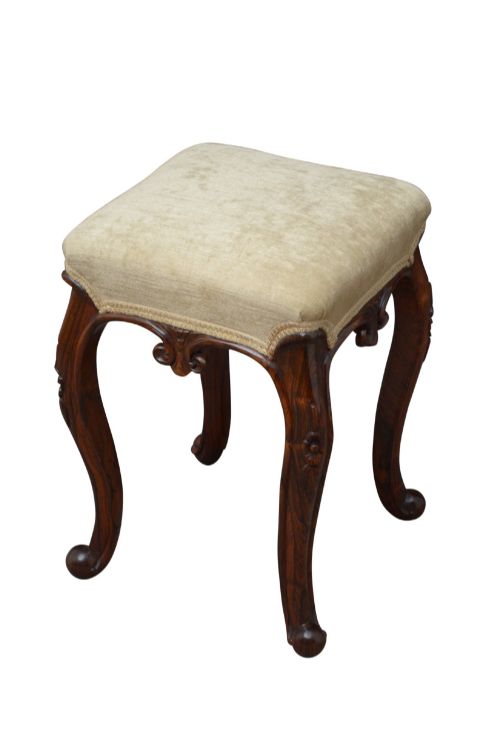
Quality in antique piano seating rests upon the rigour of the timber selection and the complexity of the woodwork, such as carved cabriole legs, cross stretchers, or intricate inlay. Dense timbers like figured walnut and rosewood indicate higher-tier commission work.
The sophistication of the mechanical engineering separates standard pieces from superior examples, particularly in smooth-operating revolving screws and adjustable rise-and-fall assemblies. Firm upholstery using period-appropriate textiles like tapestry or leather completes a higher-grade piece.
Jennens and Bettridge·Harry and Lou Epstein·Jas Shoolbred·Charles Nosotti
The Antique Piano Seating Glossary
- Revolving stool
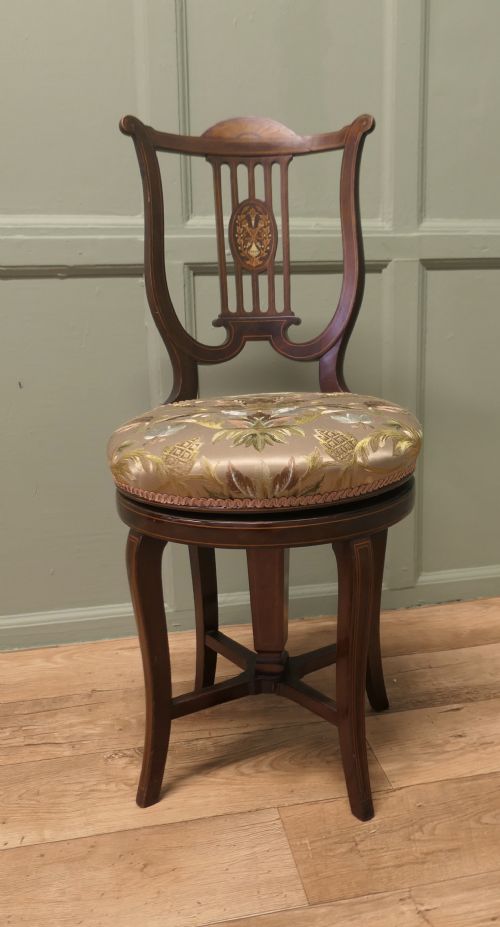
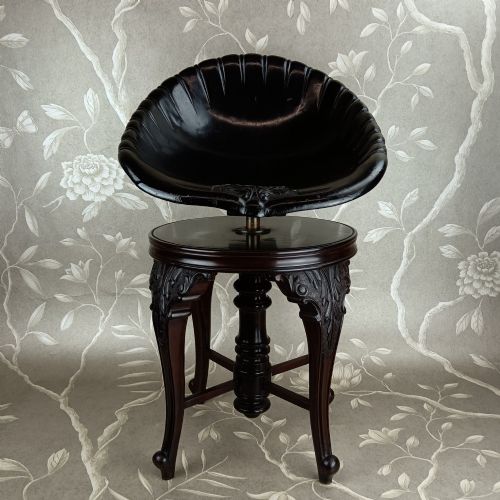
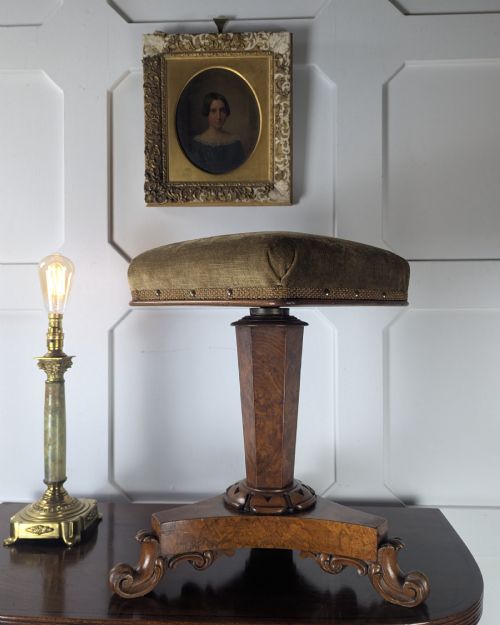
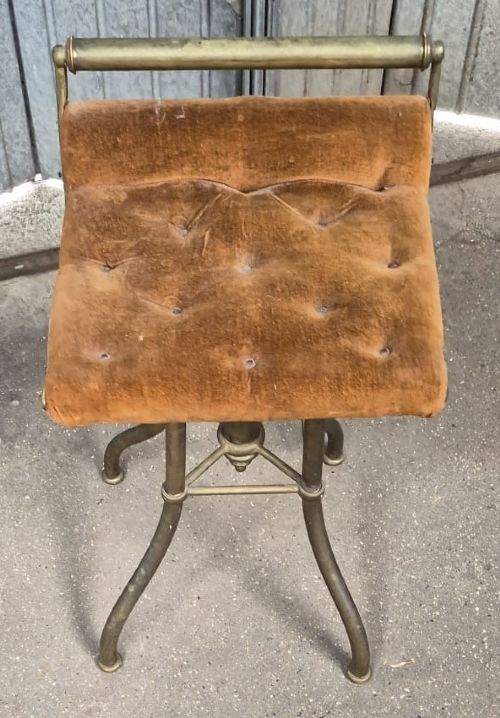
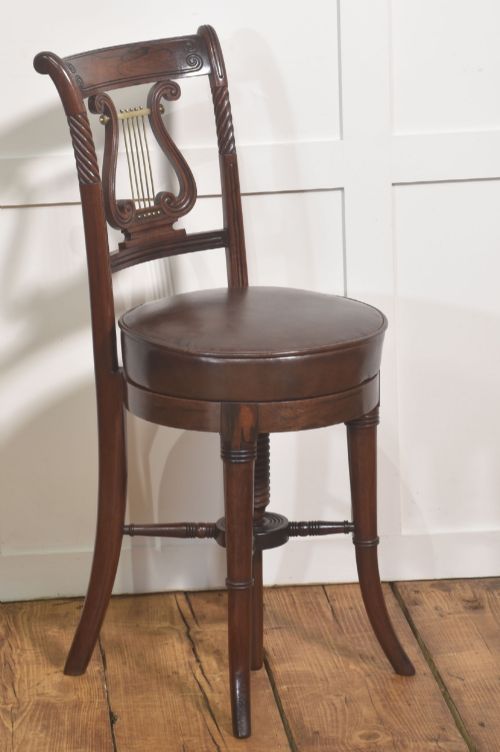
- A seat with a screw mechanism that allows the user to turn in a circle and adjust height. These were particularly popular for keyboard players requiring mobility.
- Cabriole leg
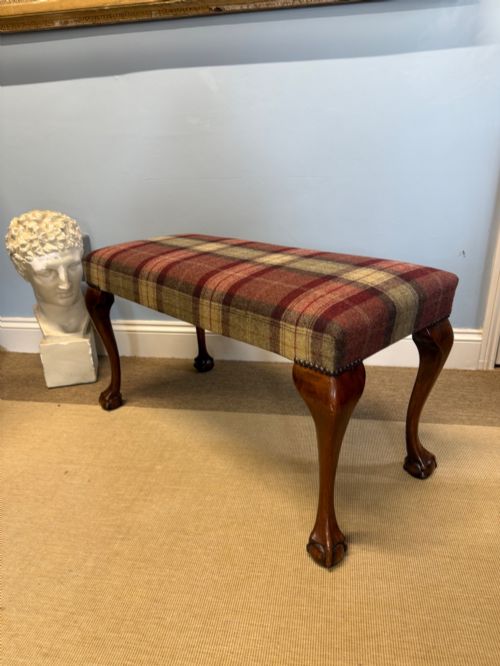
- A furniture leg that curves out and then in, resembling the leg of an animal. This form appears frequently on walnut and rosewood Victorian examples.
- Duet stool
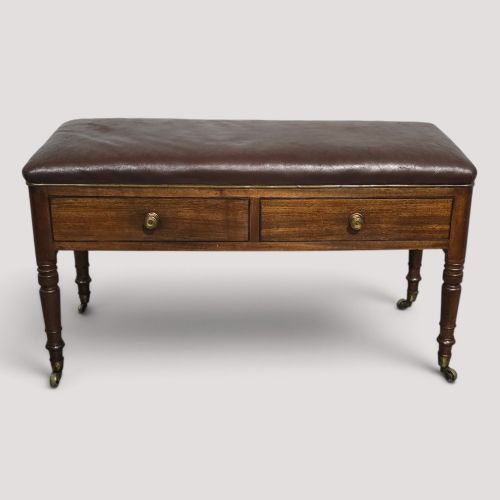
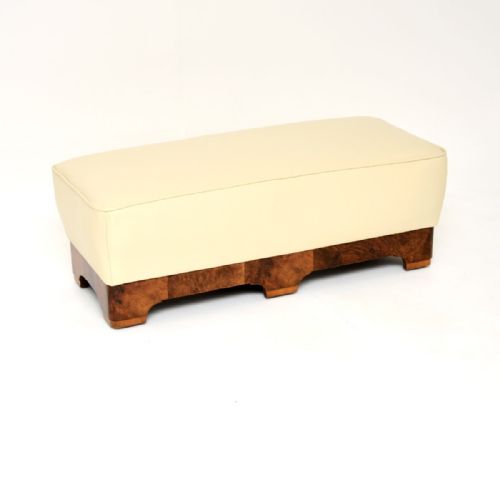
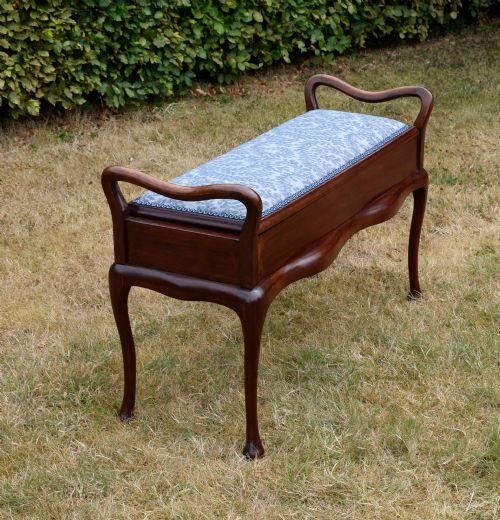
- An elongated bench designed to seat two musicians side by side. They often incorporate hinged seats revealing music storage compartments.
- Cross stretcher
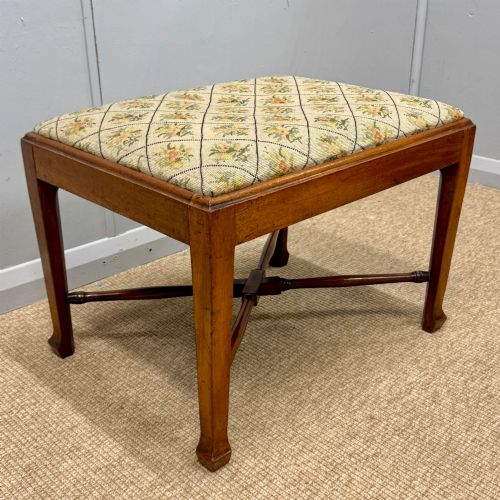
- Wooden bracing connecting the legs beneath a stool for added structural stability. They are typically found on dressing table and piano benches.
- Ebonisation
- The process of treating timber such as beech or fruitwood to resemble ebony. This dark finish appears on numerous Victorian and Edwardian examples.
Antique Piano Seating: Frequently Asked Questions
How do adjustable piano stools work?
Adjustable piano stools utilise a central threaded screw mechanism connected to the seat top. Turning the seat clockwise or anti-clockwise raises or lowers the height.
This allowed pianists to find an ergonomic posture relative to the keyboard. Many 19th-century models employ this rise-and-fall design.
Were duet stools used for two players?
Duet stools provide a wider bench surface intended to accommodate two people playing four-hand piano arrangements simultaneously. They offered shared seating alongside internal storage for sheet music.
These benches mirror the aesthetic style of single stools from the same period.
Can I use an antique piano stool daily?
Antique piano stools function well for daily seating when the mechanical height adjustment remains stable and sound. Checking the joints and central screw ensures structural integrity for regular use.
Their compact proportions also suit dressing tables or window bays in modern homes.