



Upholstered Music Stool
An upholstered music stool provides a seat for a keyboard player, designed with practical height adjustment or storage for sheet music.
Upholstered Music Stool
An upholstered music stool serves players at pianos, organs, and harps, combining seating with mechanisms for comfort during practice. These pieces appear frequently from the Victorian, Edwardian, and Regency periods.
The common forms include single seats, duet benches for two players, and swivel chairs that allow the pianist to turn. Many versions incorporate clever internal storage or mechanical adjustment to suit different players.
How they were made
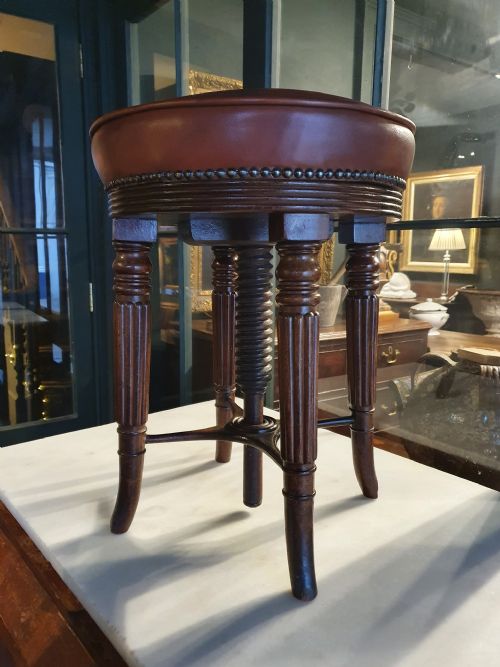
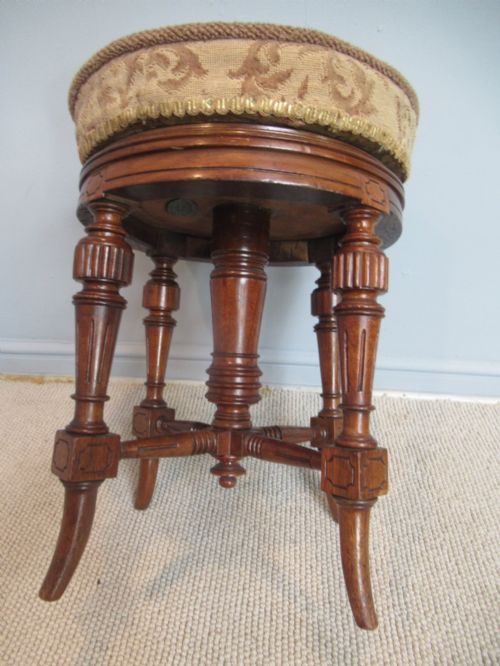
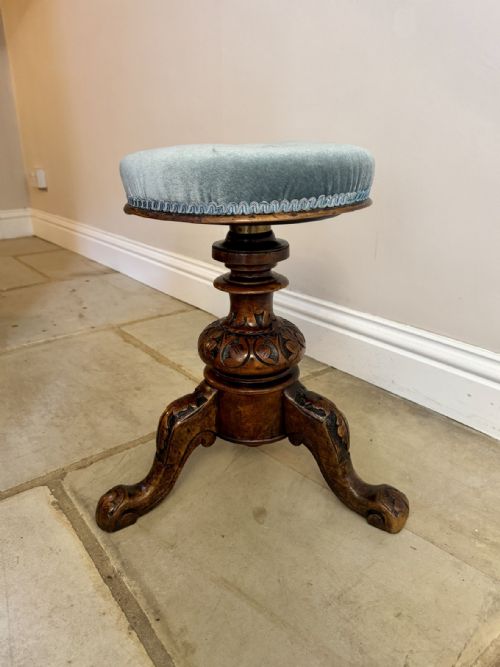
Cabinet makers built the frames primarily from dense hardwoods like mahogany, walnut, and rosewood, sometimes employing oak or inlay work for decoration. These structures support mechanical wooden or brass screw threads for height adjustment, alongside hinged lids for storage compartments.
Seats feature textile upholstery, including plush velvet, patterned fabrics, leather, and traditional stuffing materials. The tops are secured over wooden bases or revolving platforms to withstand regular movement.
Some Victorian harpists enjoyed dedicated revolving seats designed to accommodate the awkward angle of their instruments without tangling strings.
What varies in quality
The refinement of the timber carving and the complexity of the revolving or rise-and-fall mechanism dictate the tier of a piece. Finer examples display robust brass fittings, intricate woodwork, and resilient upholstery frameworks.
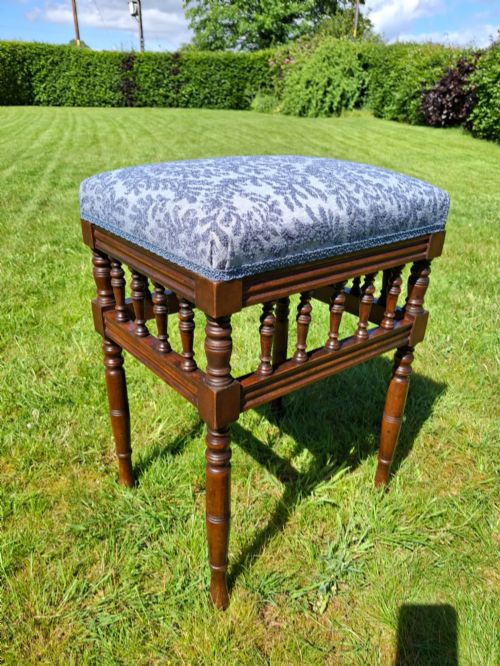
Standard production models utilise simpler turned legs and straightforward hinged seats without mechanical adjustment. The choice of rich timbers such as rosewood over basic pine or oak alters the character of the item.
Charles Nosotti·James Shoolbred·Rushworth and Dreaper
The Upholstered Music Stool Glossary
- Revolving
- A seat mechanism that rotates 360 degrees on a central wooden or metal screw. This allows the player to adjust height or turn towards a music stand.
- Rise and fall
- An adjustable height mechanism operated by turning the seat or a side handle. It shifts the seating platform vertically.
- Duet stool
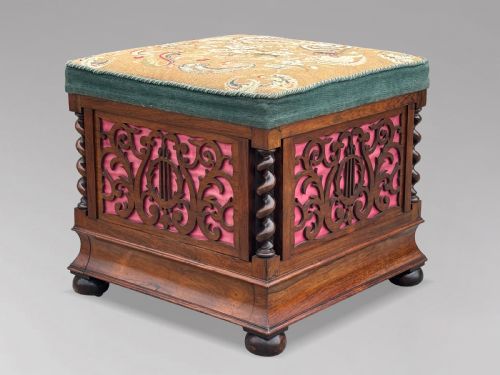
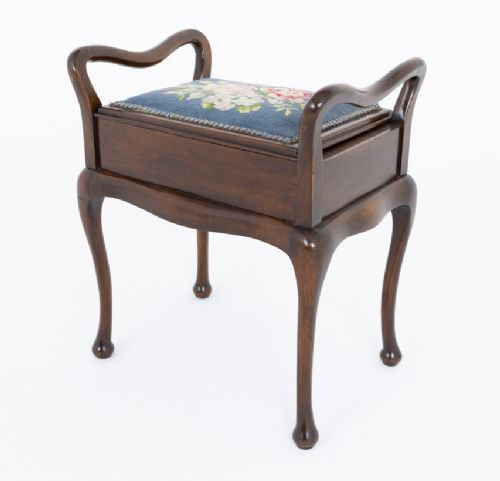
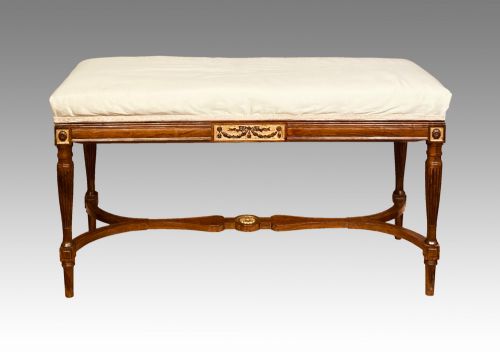
- A wider bench designed to seat two musicians side by side for piano duets. These often include hinged seats revealing music storage compartments.
- X framed
- A stool base constructed with intersecting diagonal timbers forming an X shape. This style appears in various revival periods.
- Canterbury
- A compartmentalised rack beneath or beside a seat used for holding sheet music and folios. It combines storage with a traditional stool form.
Upholstered Music Stool: Frequently Asked Questions
How do you adjust the height?
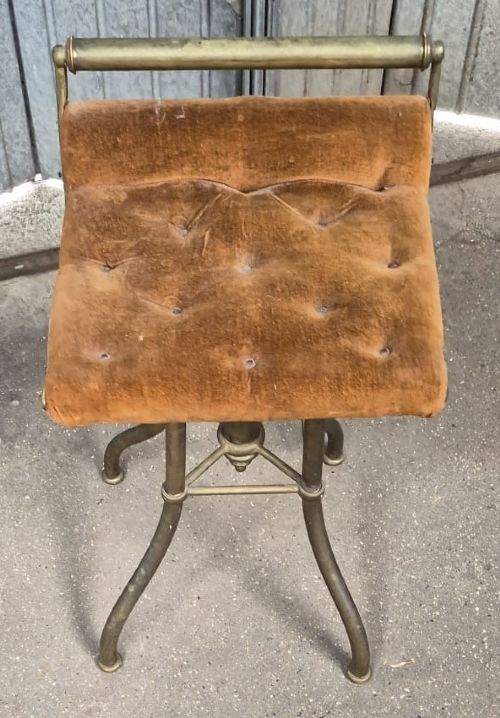
Many examples feature a revolving seat top that winds up and down on a central wooden or brass screw. Turning the seat clockwise or anticlockwise alters the vertical position.
Other designs utilise side handles or concealed rack-and-pinion mechanisms to raise the platform smoothly for the player.
What is a duet stool?
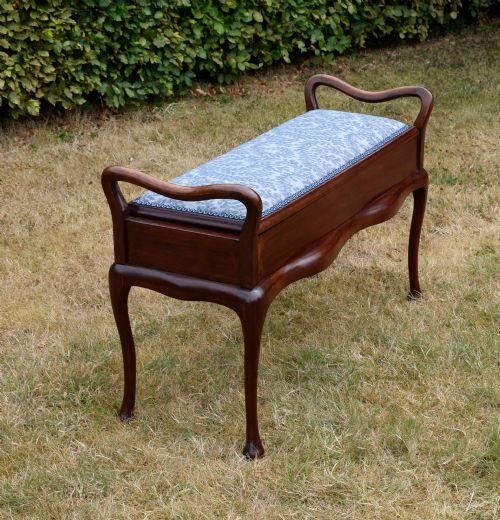
A duet stool is an elongated bench built to accommodate two musicians sharing a single piano keyboard. They provide extended seating space and frequently include internal storage.
These wider benches often feature hinged lids that open to reveal compartments for organising sheet music and folios.
How do I spot a Victorian piece?
Victorian examples often showcase dense timbers like walnut and rosewood paired with heavy turned legs and carved details. The mechanical rise-and-fall screw mechanism became particularly common during this era.
Upholstery on these pieces frequently utilises traditional materials and button-tufted fabrics that reflect mid to late nineteenth-century tastes.
Can I store music inside?
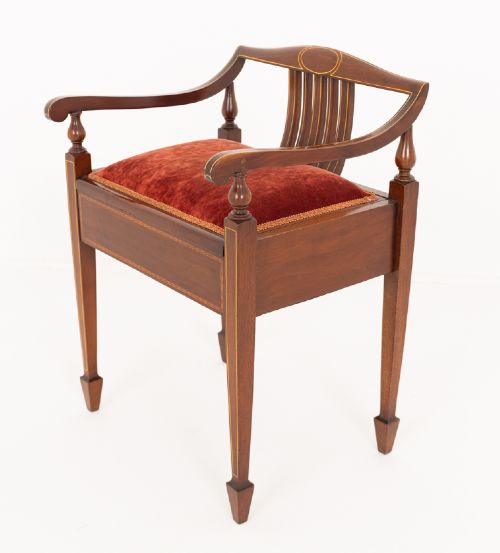
Certain designs incorporate hollow compartments beneath the seat accessible via a hinged lid or a drop-front door. These spaces were manufactured specifically to keep sheet music tidy near the instrument.
Solid revolving stools without lift-up tops naturally lack this internal capacity, relying instead on companion cabinets for storage.