



Brown Velvet Stool
A brown velvet stool brings rich textile warmth and sturdy timber framing into a room, spanning Victorian, Edwardian and earlier revival periods.
Brown Velvet Stool
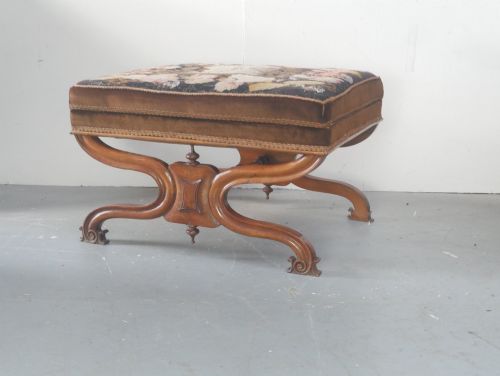
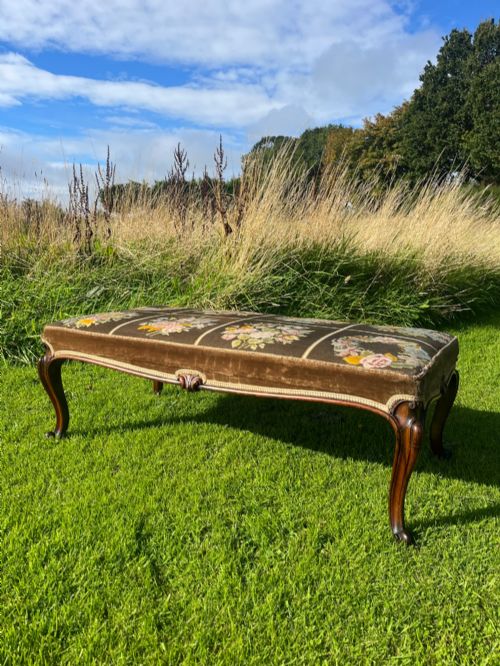
A brown velvet stool serves multiple domestic roles, appearing across this page as piano stools, dressing table stools, salon seats and footstools. These pieces originate across the nineteenth and early twentieth centuries, alongside period revival pieces drawing on George I, William IV and Regency designs.
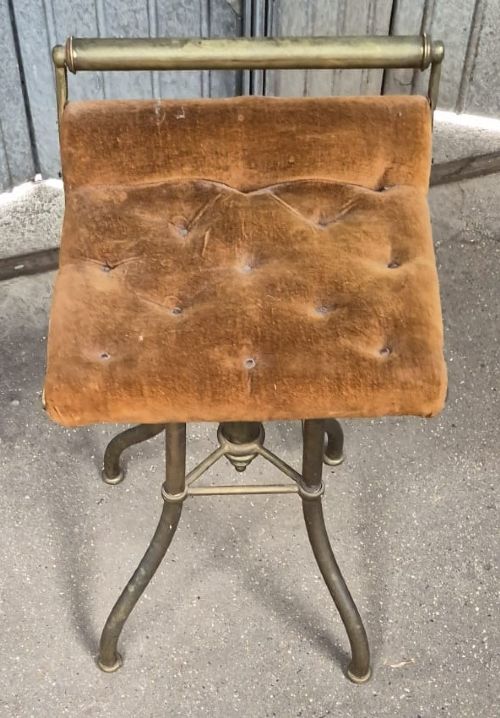
The primary forms found here include adjustable piano stools with rising seats, circular swivel examples, and low footstools or ottomans with needlepoint or upholstered tops. Timber frames span mahogany, walnut, figured walnut veneer and rosewood, supporting textile surfaces in various shades of brown velvet.
Makers and regional workshops produced diverse variations, from Scottish Baronial large stools to elegant cabriole leg dressing stools and brass-framed harpists seats. Buyers encounter both functional seating designed for musical instruments and decorative low furniture intended for the salon or dressing room.
How they were made
Cabinetmakers constructed the structural frames of these stools using solid hardwoods such as mahogany, walnut and rosewood, frequently employing figured walnut veneers on later pieces. Turning and carving shape the legs, which range from straight supports to cabriole profiles.
Upholstery techniques involve securing velvet, tapestry or textile coverings over padded seats, sometimes incorporating adjustable mechanical actions for piano stools involving brass and wood mechanisms. Metal components like brass frames appear on specialised seating such as harpists seats.
Brown Velvet Stool Retail Price Guide 2026
Typical asking prices for brown velvet stool among the pieces listed under this phrase on Sellingantiques today, from the lower quarter to the upper quarter. They describe what is for sale here now, not the wider market.
Musicians once relied on revolving velvet seats that spun like office chairs, proving the Victorians invented ergonomic fidgeting long before modern desks.
What varies in quality
The refinement of timber selection and cabinetwork determines the distinction between standard production and superior examples, particularly visible in the figuring of walnut veneers and the crispness of carved cabriole legs. Frame integrity relies upon traditional joinery rather than modern fasteners.
Mechanism precision in adjustable piano stools separates basic fixed seating from engineered rising seats that operate smoothly. The original state of the timber frame and the quality of the textile upholstery retain the piece's character.
James Shoolbred
The Brown Velvet Stool Glossary
- Cabriole leg
- A furniture leg that curves outward at the knee and tapers inward toward the foot, often ending in a pad or scroll. This shape draws on classical furniture traditions seen across eighteenth-century and Victorian pieces.
- Figured walnut veneer
- A thin slice of walnut timber with decorative grain patterns applied over a secondary wood core. Cabinetmakers utilised this technique to create rich visual surfaces on Victorian and Art Deco furniture.
- Adjustable piano stool
- A seat with a mechanism allowing the height to be altered for the pianist. These typically incorporate screw or rising-seat mechanisms operated by turning the top or using a side lever.
- Needlepoint
- Hand-stitched canvas work using yarn, frequently seen on Victorian footstools and ottomans. This textile technique creates durable, patterned top surfaces often paired with wooden frames.
Brown Velvet Stool: Frequently Asked Questions
How do I date a wooden stool?
Dating relies upon examining the timber species, construction joints and decorative styles present in the frame. Characteristics such as cabriole legs or specific veneer types align pieces with periods like the Victorian era or Edwardian times.
Secondary clues include the type of fixings, secondary woods used beneath upholstery, and any maker stamps or labels found on the underside of the wooden base.
Were piano stools always adjustable?
Not all piano stools possess height adjustment mechanisms. Many period examples served as fixed-height seats, while others utilised threaded wooden screws or scissor actions to raise and lower the velvet top.
Adjustable variants provided practical utility for musicians needing different heights at the keyboard, whereas simpler fixed stools functioned equally well as dressing table seats or small footstools.
How do I care for antique velvet?
Antique velvet requires gentle handling to preserve the pile of the textile. Regular light brushing with a soft brush removes dust without crushing the fibres.
Keeping such pieces away from direct sunlight prevents the brown dye from fading unevenly across the surface of the textile.
Can I use a piano stool as a footstool?
Piano stools function well as low seats or occasional perches, though their height often exceeds that of a traditional low footstool. Fixed piano stools translate easily into dressing table seats or decorative accent pieces.
Adjustable piano stools can be lowered to act as footrests, provided the mechanical action remains stable and secure under pressure.