
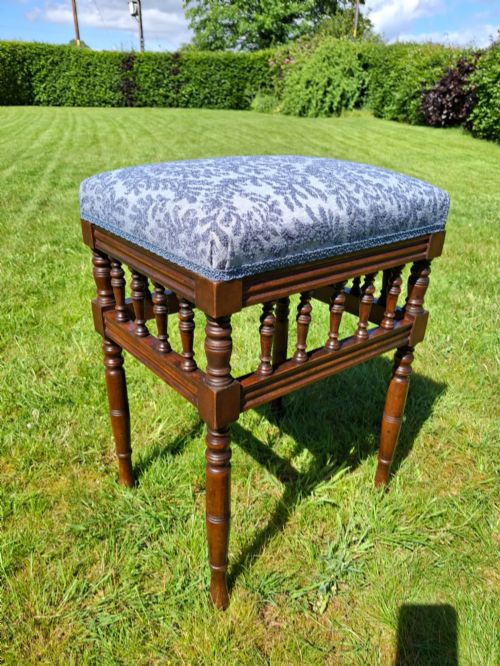


Mahogany Music Seat
A mahogany music seat brings solid timber and practical adjustment to the instrument bench, spanning single revolving stools and double duet formats.
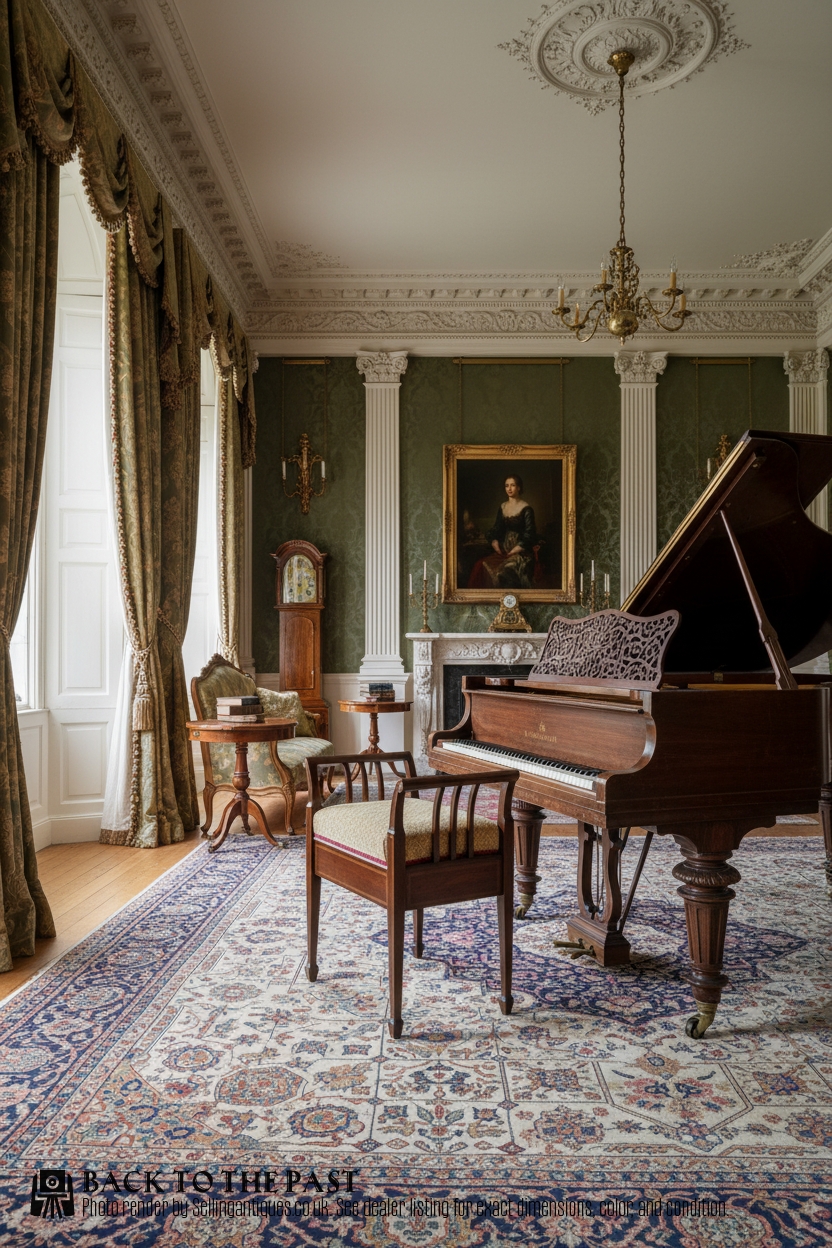
Mahogany Music Seat
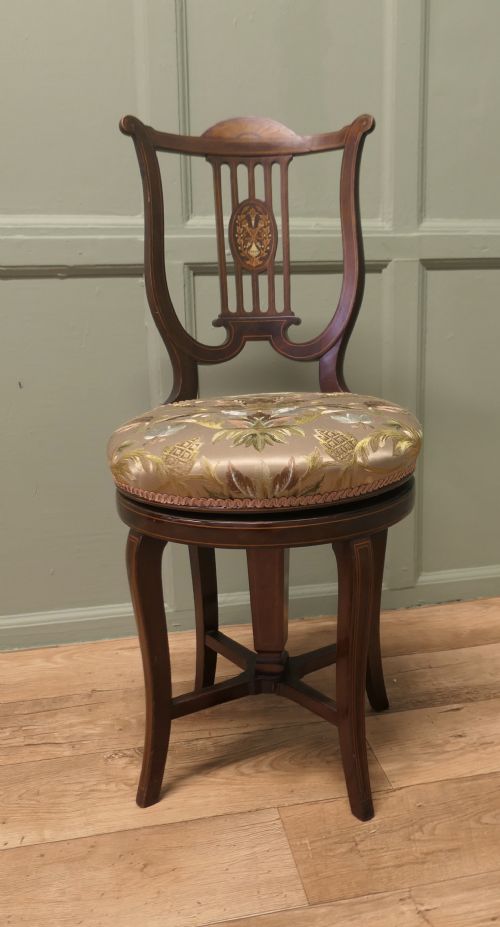
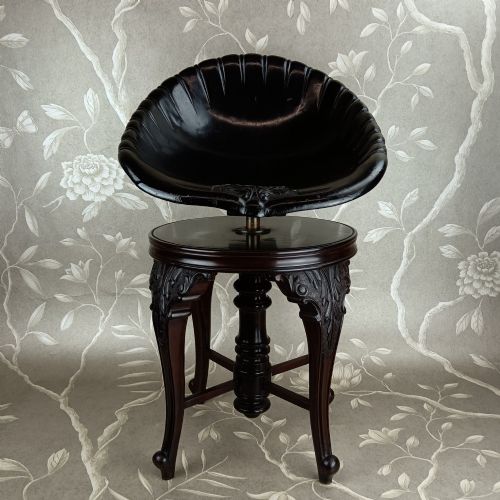
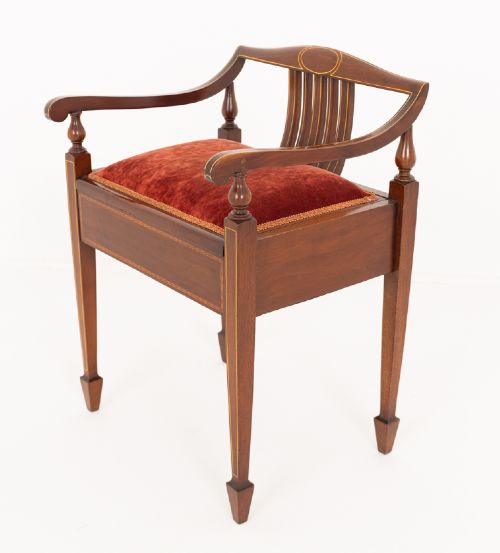
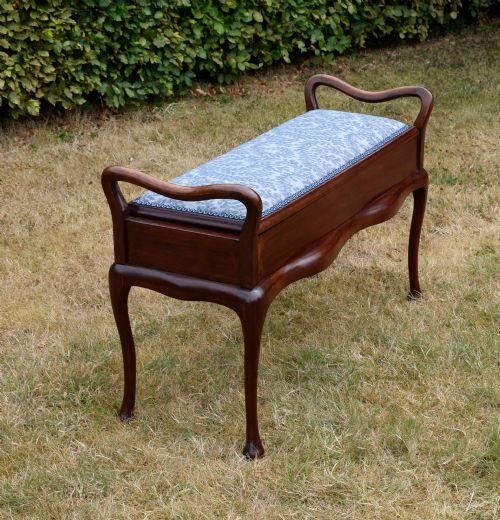
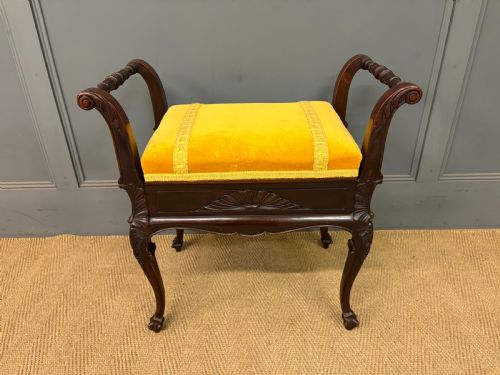
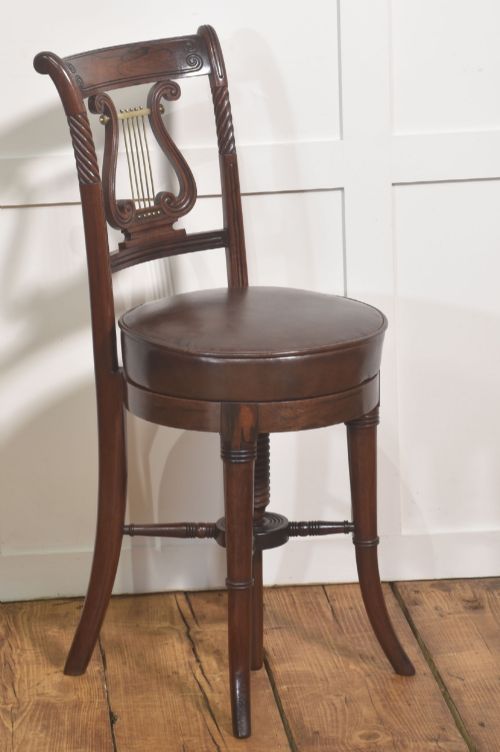
A mahogany music seat spans piano stools, music chairs, and duet benches originating from the nineteenth and early twentieth centuries. The selection ranges from compact revolving stools of the Victorian and Regency eras to Edwardian inlaid duet seats with box storage.
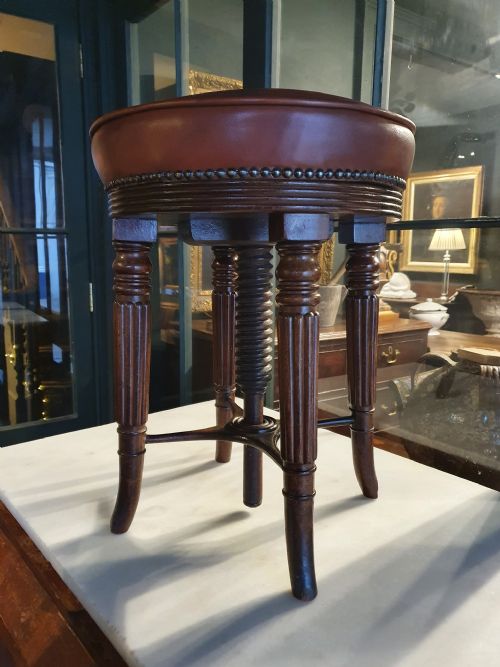
Makers designed these pieces specifically for keyboard players, incorporating swivel tops and winding mechanisms to adjust seating height. Buyers frequently encounter single round-top stools alongside wider duet versions built for two players.
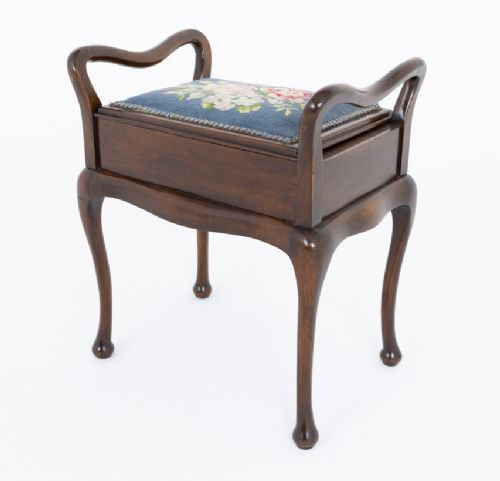
Styles trace popular revivals alongside period designs, encompassing Sheraton, Queen Anne, and William IV aesthetics. The timber frame anchors each piece, whether standing on cabriole legs or X-frame supports.

Materials and Construction
Makers constructed the primary frames from solid mahogany, occasionally incorporating contrasting stringing or marquetry inlay. Brass fittings appear within the internal screw mechanisms that allow the seat height to rise and fall.
Upholstery materials include leather, velvet, fabric, and needlepoint tapestry, often secured over padding. Secondary woods and metal brackets support the revolving tops and hinged lids of box seats.
Mahogany Music Seat Retail Price Guide 2026
Typical asking prices for mahogany music seat among the pieces listed under this phrase on Sellingantiques today, from the lower quarter to the upper quarter. They describe what is for sale here now, not the wider market.
Materials documented across the inventory include mahogany, brass hardware, velvet, leather, and needlepoint tapestry.
Distinctions in Build and Detail
The precision of the adjusting mechanism determines the mechanical fidelity of a revolving stool, separating smooth screw action from loose movement. Carved details on the mahogany frame and crispness of inlaid motifs indicate workshop standard.
Original upholstery and intact internal storage compartments preserve the integrity of the piece. Substantial timber gauge in the legs and frame separates utilitarian items from finer cabinetwork.
Jennens and Bettridge·Gillows·Jas Shoolbred·James Shoolbred
The Mahogany Music Seat Glossary
- Revolving stool
- A seat with a top that twists on a central wooden or metal screw to alter the height.
- Duet stool
- A wider bench designed to seat two piano players side by side.
- Box seat
- A piano stool featuring a hinged lid that opens to reveal storage space for sheet music.
- X-framed
- A seating support formed by two intersecting diagonal members shaped like the letter X.
- Needlepoint
- Stitched textile work commonly found covering Victorian and Edwardian piano seats.
Mahogany Music Seat: Frequently Asked Questions
How do I adjust the height on these stools?
Most antique music seats use a central screw mechanism hidden beneath the upholstery. Turning the seat top clockwise or anti-clockwise raises or lowers the height.
Some models feature side handles or metal ratchets instead of a revolving top. Users should operate these mechanisms gently to protect the internal wooden threads.
Can I use a music stool as a dressing chair?
Many compact piano stools and music chairs function well at a dressing table due to their similar height and small footprint. Adjustable revolving versions offer particular utility in bedrooms.
Buyers should check the seat height against existing furniture before purchase. The upholstery style can easily be adapted with new fabric to match bedroom interiors.
How do I spot an Edwardian piece?
Edwardian music seats frequently display lighter mahogany frames with decorative satinwood inlay and stringing. The tapered legs often end in spade feet rather than the heavier scrollwork of earlier periods.
Box seats and duet formats also proliferate in this era. The interior construction generally shows machine-sawn components alongside traditional joinery.
What is the difference between a duet and single stool?
A single piano stool provides a compact round or square top for one performer. A duet stool spans a wider rectangular frame built to accommodate two musicians.
Duet versions frequently incorporate hinged seats opening onto storage boxes for multiple music scores. Single stools more commonly rely on revolving pillar mechanisms for height adjustment.