


Antique Piano Seat
An antique piano seat offers both mechanical ingenuity and domestic comfort, spanning swivel music stools and long duet benches.

Antique Piano Seat
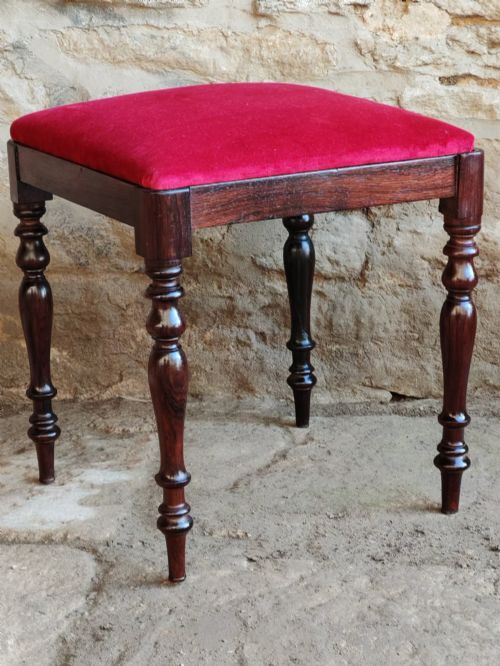
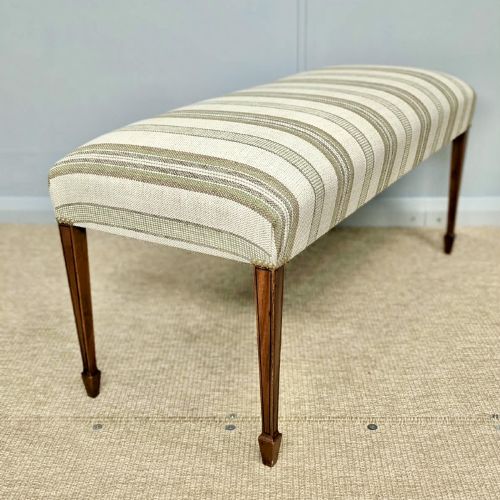
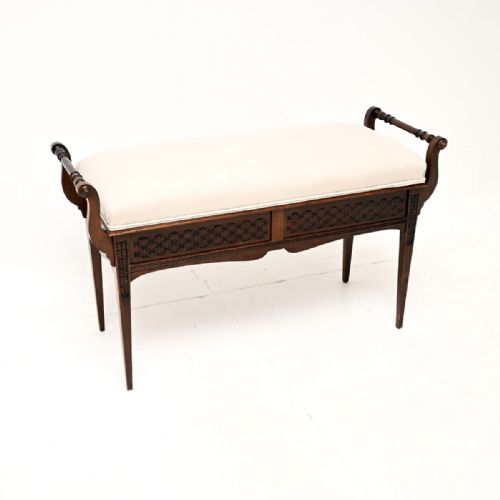
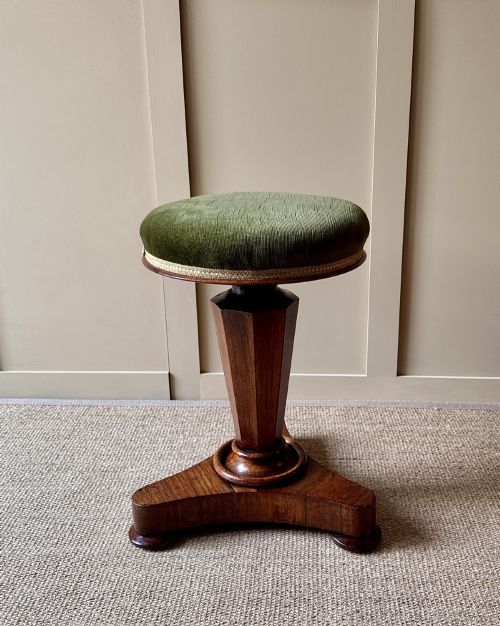
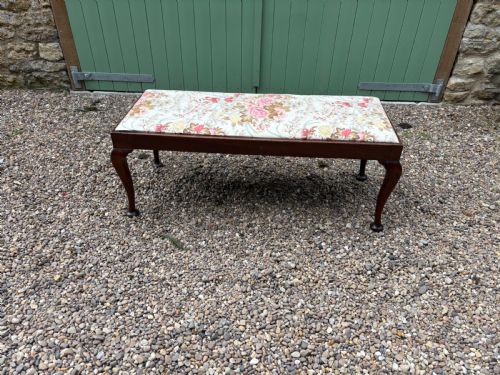
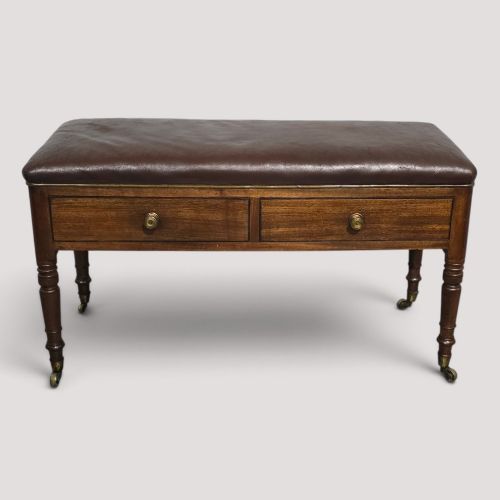
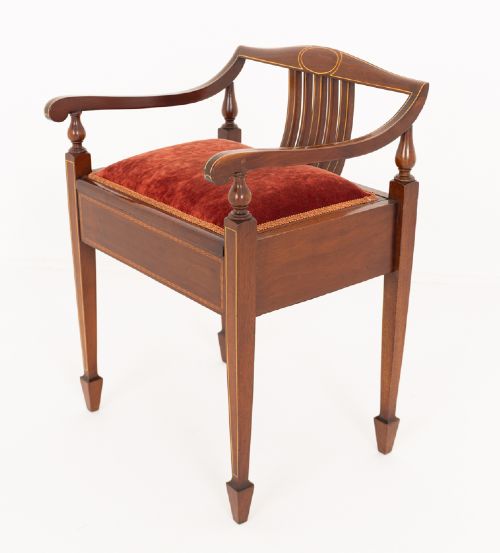
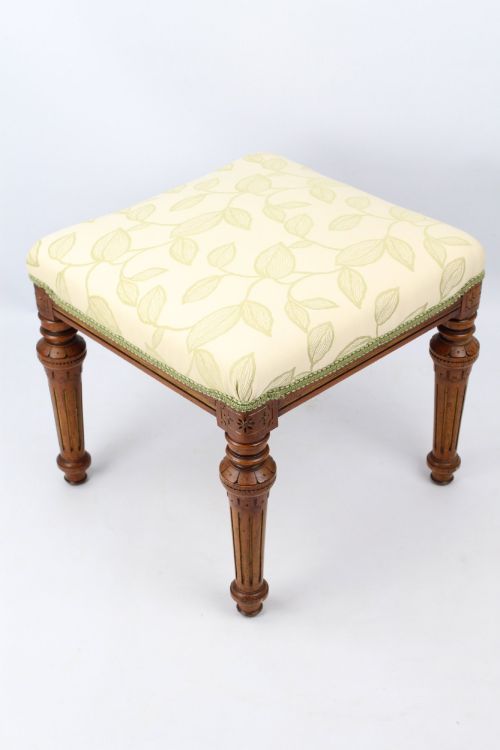
When you search for an antique piano seat, you encounter a specialised variety of domestic seating designed primarily for keyboard players and musicians. The selections range from single-person revolving stools to larger duet benches with lift-up lids for sheet music storage.
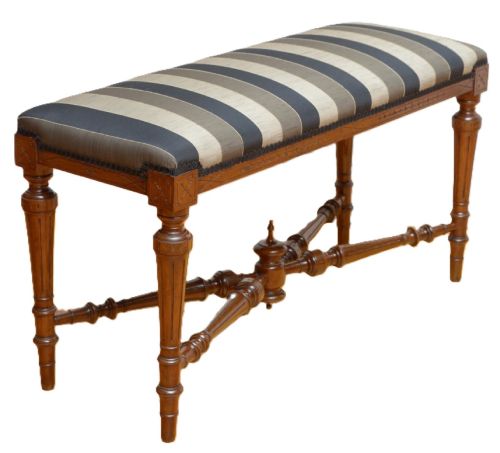
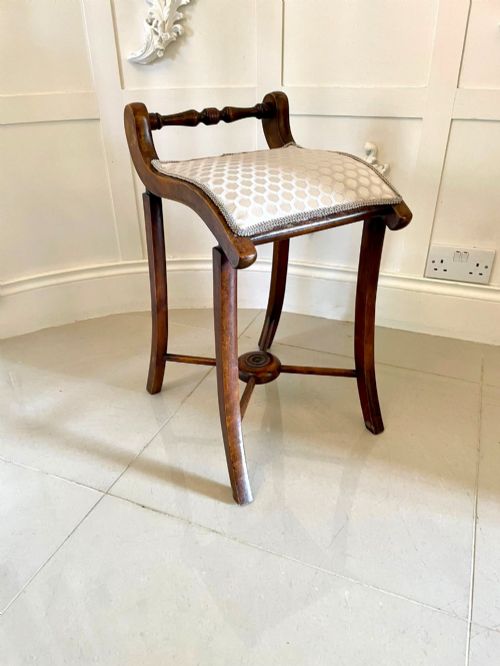
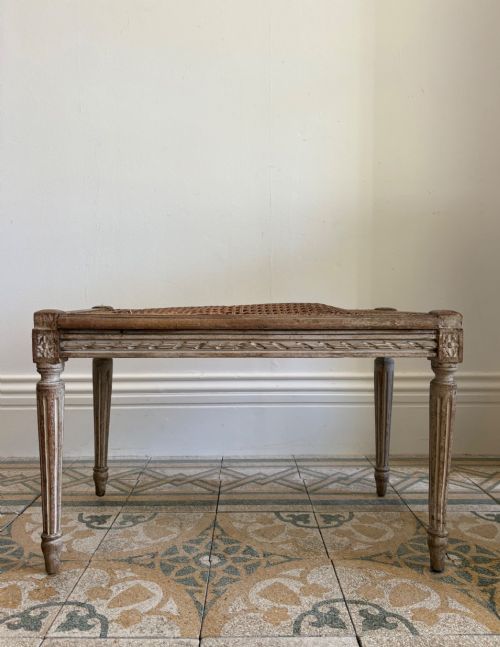
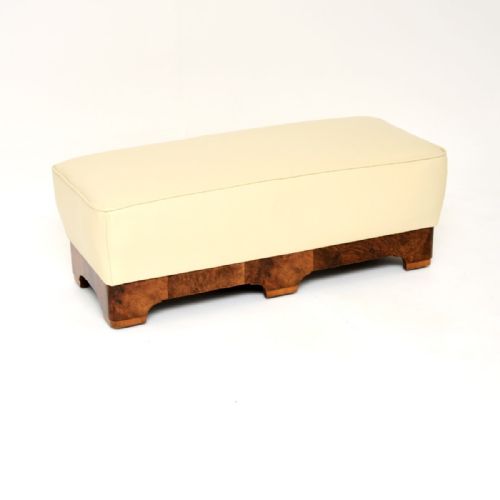
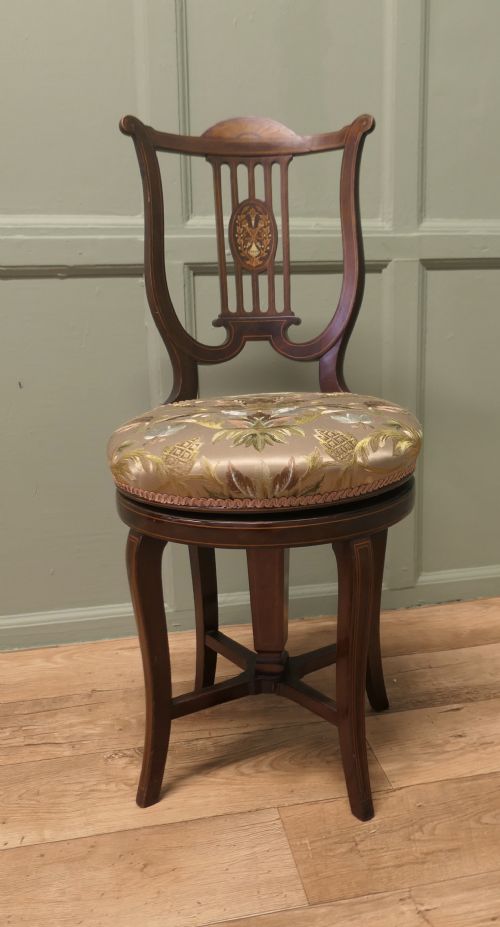
The prevailing examples on this page date from the Victorian and Edwardian eras, alongside earlier Regency designs and later Art Deco pieces. Formats span simple upholstered benches, X-frame stools, and music chairs equipped with rotating seats or mechanical height adjusters.

Materials and Construction
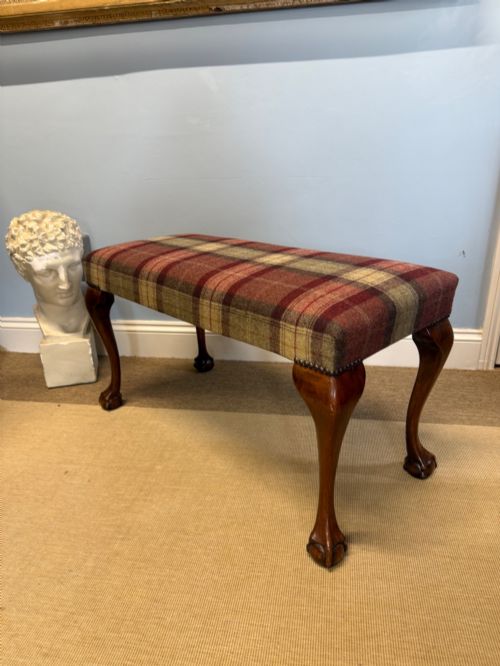
Cabinet makers utilised dense hardwoods such as mahogany, walnut, and rosewood, frequently incorporating carved cabriole legs, turned supports, or inlaid details. More unusual timbers like burr maple and goncalo Alves also appear across the surviving pieces.
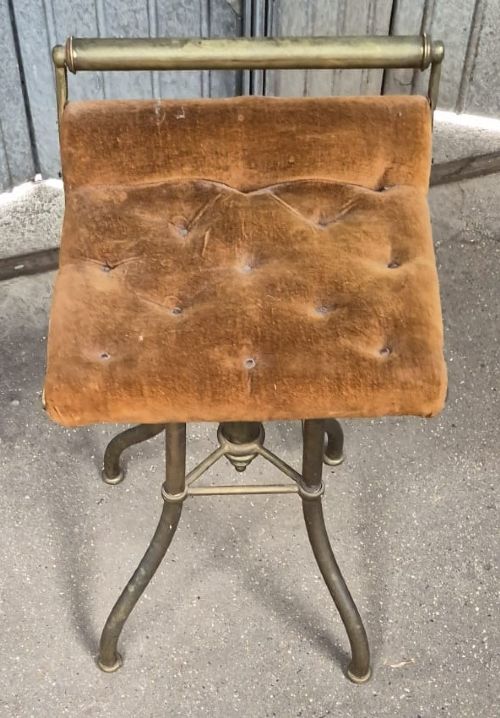
Upholstery methods varied from traditional horsehair stuffing beneath leather, velvet, and tapestry to needlepoint covers and brass framing. Many music stools incorporated rise-and-fall screw mechanisms or swivel pivots to accommodate the player's height.
Antique Piano Seat Retail Price Guide 2026
Typical asking prices for piano seat among the pieces listed under this phrase on Sellingantiques today, from the lower quarter to the upper quarter. They describe what is for sale here now, not the wider market.
Listings span the Regency, Victorian, Edwardian, and Art Deco periods, utilising mahogany, walnut, rosewood, and cast iron.
Assessing Craftsmanship
Quality rests in the robustness of the adjusting mechanism and the integrity of the timber framing. Superior examples feature smooth-operating screws, solid hardwood subframes, and precise joinery rather than loose joints or compromised swivel actions.
The refinement of the carving, the weight of the brass or cast iron hardware, and the fidelity of period upholstery materials separate standard utility seating from high-workshop production.
Jennens and Bettridge·Harry and Lou Epstein·Jas Shoolbred·Charles Nosotti
The Antique Piano Seat Glossary
- Duet Piano Stool
- A wider bench designed to seat two players side by side, frequently featuring a hinged lid concealing an internal music locker.
- Revolving Stool
- A seat mounted on a central threaded spindle that allows the pianist to adjust the height by spinning the top.
- Cabriole Leg
- A furniture leg that curves outward at the knee and tapers inward toward the foot, typical of Victorian and Georgian revival pieces.
- Tapestry Seat
- A top cover worked in needlepoint or woven wool, common on Edwardian and late Victorian music benches.
- X-Frame
- A folding or cross-stretcher base construction providing stable support for portable or adjustable seating.
Antique Piano Seat: Frequently Asked Questions
How do adjustable piano stools work?
Many Victorian and Edwardian examples utilise a central wooden or metal screw mechanism hidden beneath the upholstery. Turning the seat clockwise or anticlockwise raises and lowers the platform.
Other models employ rise-and-fall ratchets or side handles to secure the desired playing height.
What is the difference between a music stool and a duet bench?
Music stools are typically compact, single-person seats designed with swiveling tops or fixed heights for solo performers. They often feature lyre backs or simple revolving platforms.
Duet benches are elongated to accommodate two musicians and frequently include internal storage compartments beneath the hinged seat.
How do I date an antique piano seat?
Dating relies on combining the timber species, upholstery style, and mechanical fittings. Regency and William IV pieces often display heavy rosewood and bold architectural turning.
Later Victorian, Edwardian, and 1930s Art Deco examples introduce lighter mahogany frames, inlaid veneers, and different fabric choices like needlepoint or leather.
Can these seats be used at a dressing table?
Many period piano seats function equally well as dressing table stools or window benches due to their compact dimensions and decorative frames. Examples with upholstered tops, tapestry covers, or ebonised wood suit bedroom settings.
Their adjustable heights also make them practical for modern vanity surfaces.