
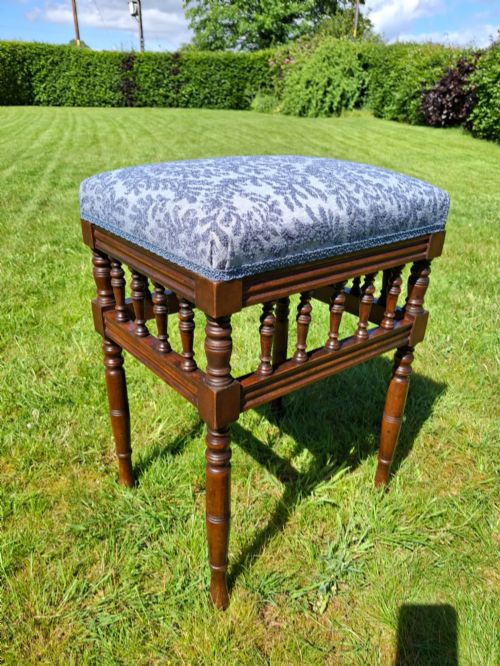


Mahogany Music Stool
A mahogany music stool brings solid timber, adjustable height and practical storage to a room, whether set beside a piano or utilised as a window seat.
Forms and Periods
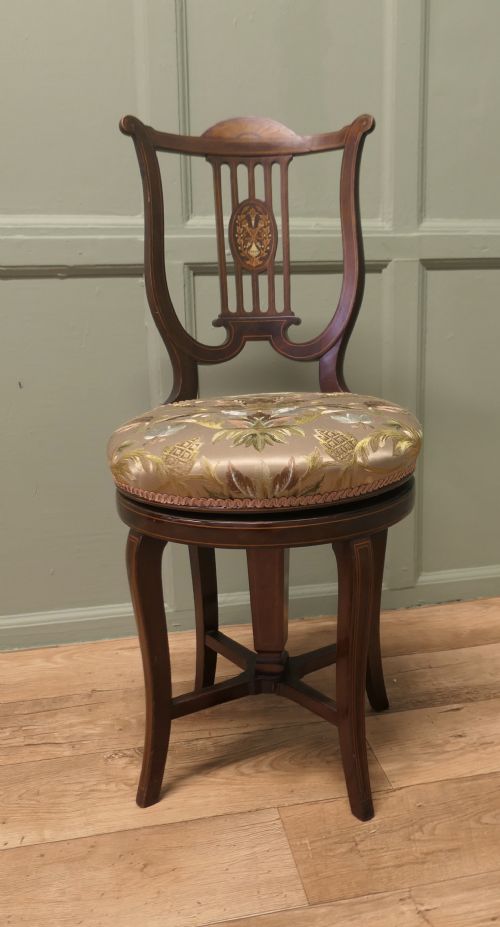
A mahogany music stool encompasses piano seats, duet stools, music cabinets and dressing stools originating from the nineteenth and early twentieth centuries. These pieces span Victorian, Edwardian, William IV and Sheraton Revival styles, reflecting the domestic musical pursuits of their original eras.
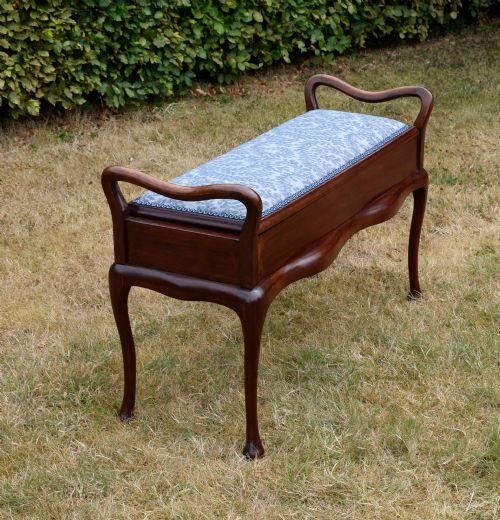
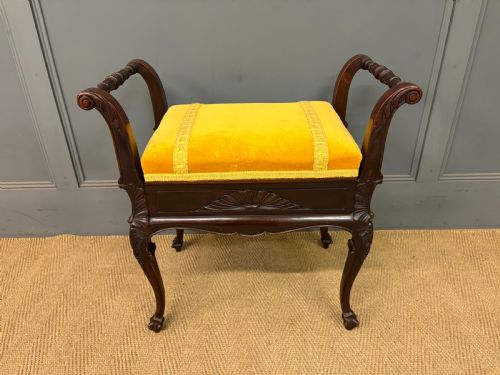
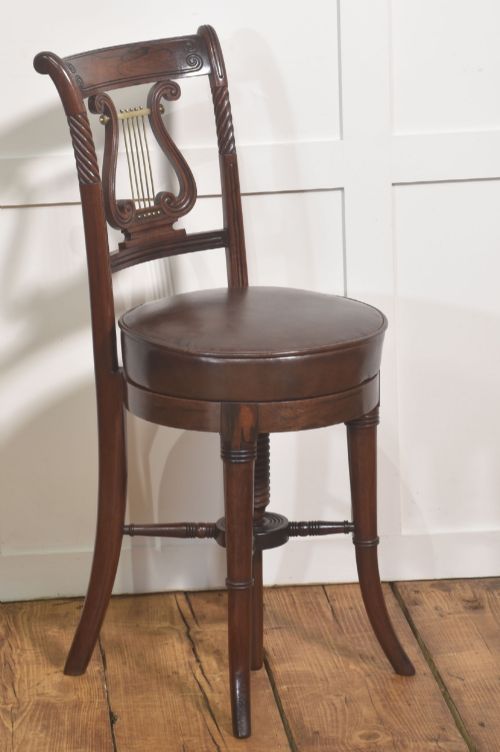
Buyers meet square tops, revolving seats, lifting lids, and cabinet drawers designed for sheet music storage. Versions range from simple single seats to longer duet proportions with lyre ends or upholstered tops.
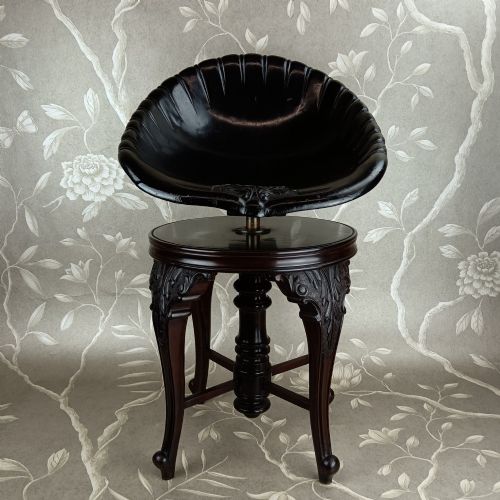
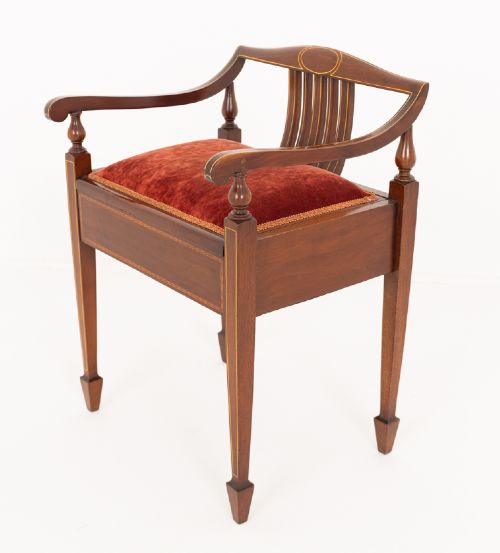
Victorian examples often bring height-adjustable mechanisms and rich upholstery, whilst Edwardian pieces frequently feature satinwood inlay and box seats with lifting lids.
Materials and Construction
Makers utilised solid mahogany, often combined with satinwood inlay, brass fittings and polished wood frames. Upholstery materials include leather, velvet, tapestry, needlepoint and fabric.
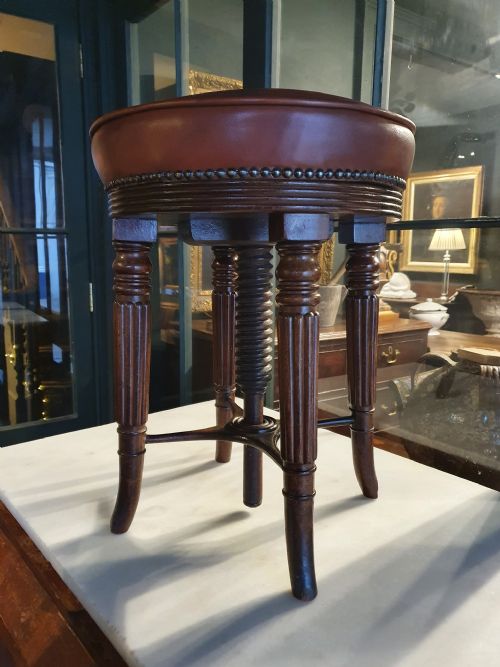
Adjustable models rely on mechanical screws for height alteration, whilst storage variants incorporate hinged lids, interior compartments and integrated music cabinet drawers.
Retail Price Guide 2026
Typical UK retail prices for mahogany music stool, calculated from the Sellingantiques database of over a million retail prices indexed since 2003. This retail price guide relies exclusively on Sellingantiques data; no external sources or auction records are used, so the figures do not describe the wider market.
The archive for this search phrase includes pieces spanning Victorian, Edwardian, William IV and Sheraton Revival periods, incorporating brass, leather, velvet and satinwood inlay.
Craftsmanship and Proportion
Superior examples display precise joinery, fine satinwood stringing and robust adjustable screw mechanisms that operate smoothly without play. Cabinet drawers fit flush and run cleanly within their housings.
The choice of secondary woods, the weight of the cast brass hardware, and the crispness of carved details such as lyre ends or Rococo flourishes distinguish standard workshop production from finer pieces.
Jennens & Bettridge·Rushworth & Dreaper·JAS Shoolbred & Co
The Mahogany Music Stool Glossary
- Duet stool
- A wider seating form designed to accommodate two players side by side at a piano. These often feature long rectangular upholstered pads and multiple adjustment screws.
- Lyre end
- A frame shaped in the classical silhouette of a musical lyre, frequently utilised as structural supports on the sides of Edwardian music seats.
- Satinwood inlay
- Contrasting blonde timber inserted into the dark mahogany surface to create decorative geometric or floral borders.
- Height-adjustable
- A mechanism allowing the seat to be wound up or down to suit the player, typically operated by rotating the upholstered top.
- Needlepoint
- Hand-stitched canvas work utilised for the decorative textile covers on Victorian and Edwardian seat pads.
Frequently Asked Questions
How do I adjust the seat height?
Many Victorian and Edwardian examples feature a central wooden screw mechanism concealed beneath the upholstery. Rotating the circular seat top clockwise or anti-clockwise raises or lowers the level.
Other variants utilise side levers or rack-and-pinion brackets to set the desired playing position.
What is the difference between a piano stool and a duet stool?
A standard piano stool provides a single square or round seat intended for one musician. A duet stool is built wider to accommodate two players simultaneously.
Duet forms frequently incorporate longer upholstered cushions, dual adjustment mechanisms, or wider cabinet compartments underneath.
How do I identify an Edwardian music stool?
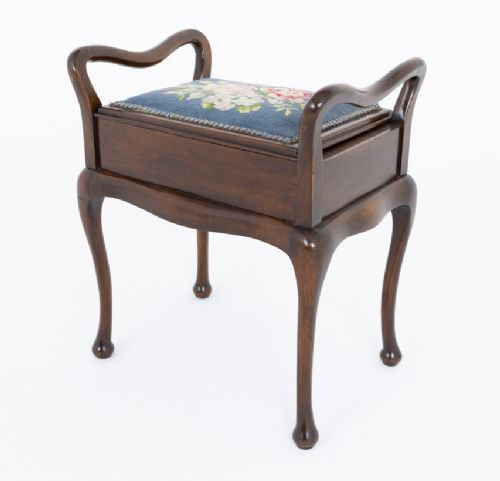
Edwardian pieces, dating from roughly the late Victorian era up to the First World War, often showcase lighter mahogany tones paired with satinwood stringing or inlaid motifs. They frequently feature box seats with lifting lids or integrated music drawers rather than mechanical screw posts.
Stylistic cues lean towards Sheraton Revival lightness, contrasting with the heavier, carved proportions of earlier Victorian designs.
Can I use a music stool as a dressing table seat?
These pieces function well in bedrooms and dressing rooms due to their compact footprints and comfortable upholstered pads. Many historical examples served a dual purpose for both dressing and music practice.
Box-seat versions also offer convenient interior storage for small daily items.